






18th Century Bombe Bureau
An 18th century bombe bureau brings swelling, curved timber fronts and intricate marquetry directly into a room, offering both a fitted writing desk and concealed storage.
18th Century Bombe Bureau
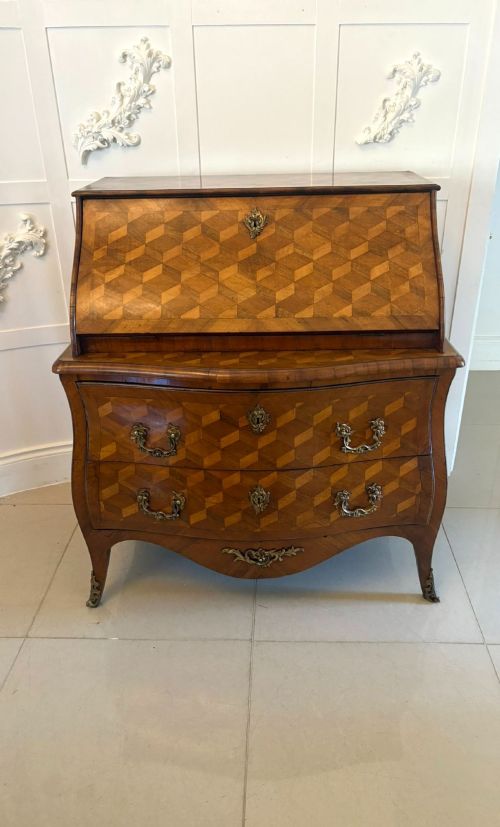
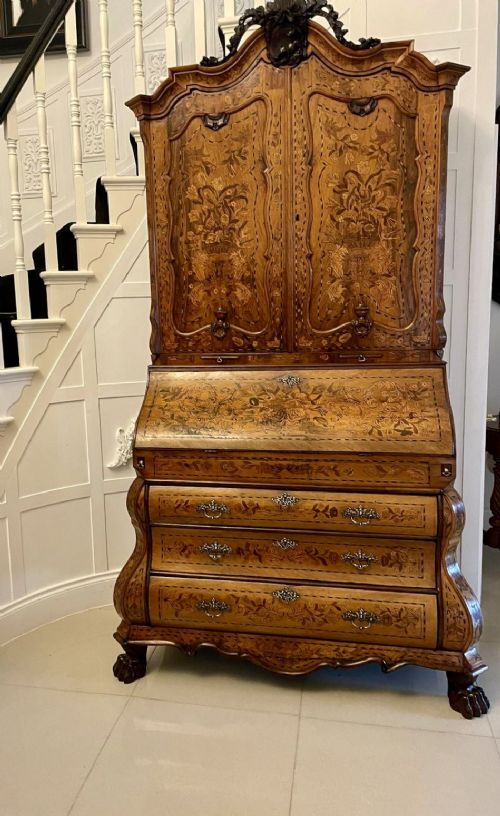
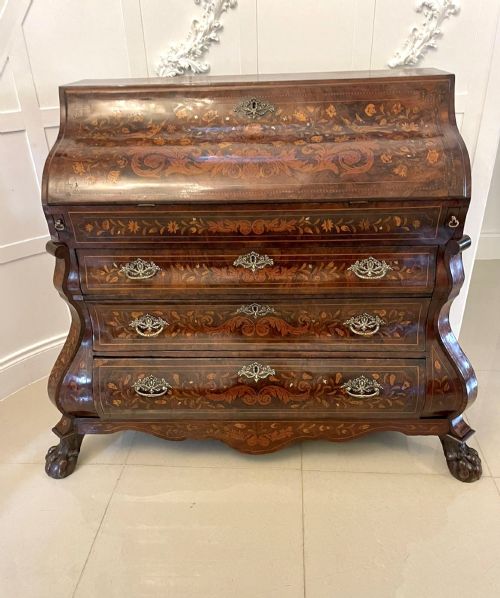
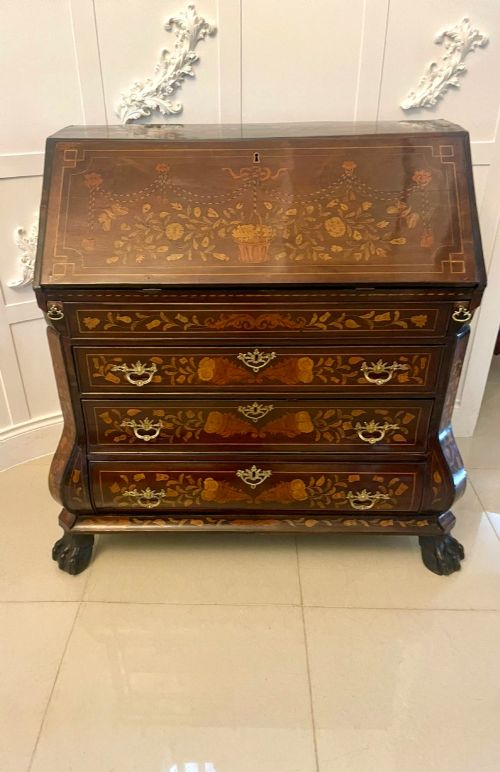
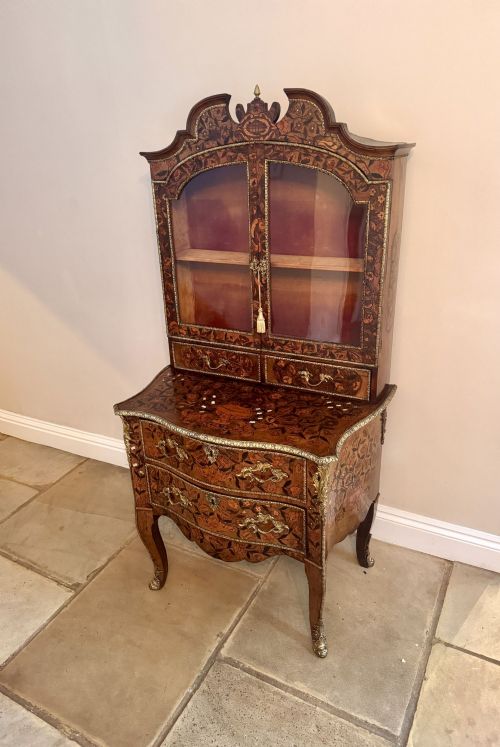
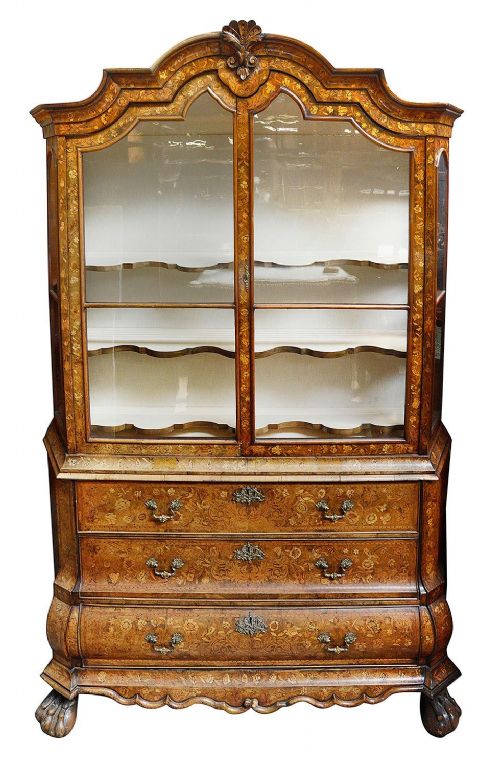
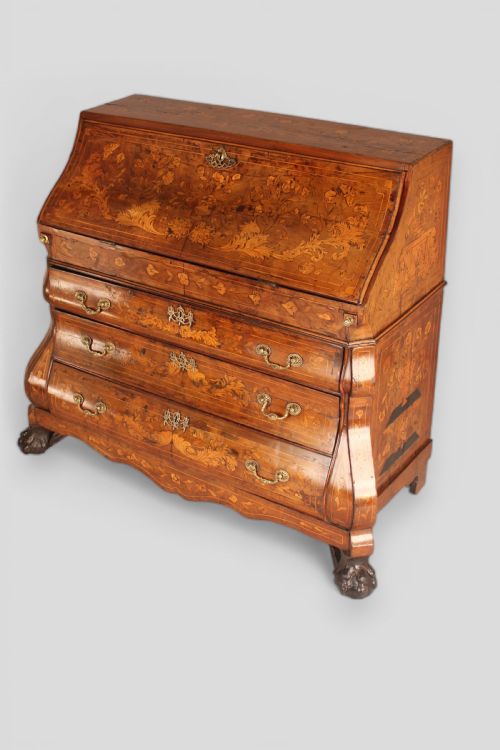
An 18th century bombe bureau is a substantial writing cabinet defined by its distinctive convex swelling profile and sloping fall-front desk. The forms seen across these listings include standard bureaux, tall bureau bookcases, and lower bombe shaped chests fitted with drawers.
Most examples originate from the Netherlands or France during the Georgian period, displaying either Dutch Baroque or Rococo influence. Buyers will frequently encounter walnut and burr walnut constructions heavily embellished with floral marquetry and fruitwood inlay.
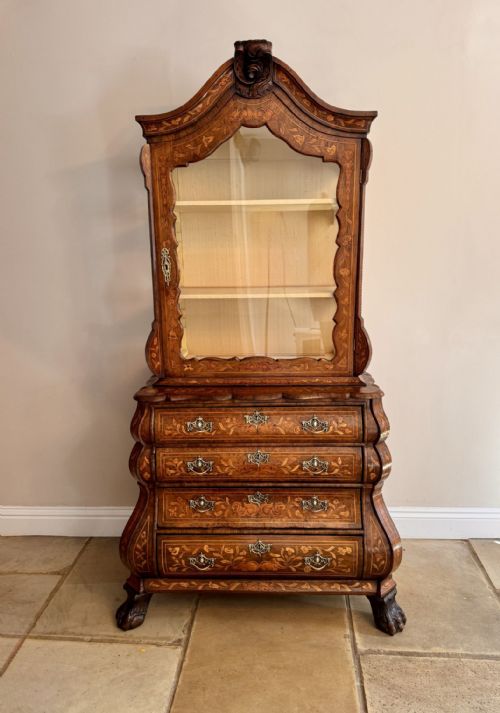
Alternative iterations stretch from compact writing desks to large vitrines and display cabinets on chests. While many pieces date strictly to the eighteenth century, later revivals from the nineteenth and early twentieth centuries also appear.
How they were made
Cabinetmakers built these pieces using solid foundations of oak or fruitwood, which were then veneered with choice cuts of walnut, burr walnut, rosewood, yew, or elm. Shaping the characteristic convex bombe curves required complex framing and timber manipulation beneath the surface veneers.
Surfaces were brought to life through intricate fruitwood marquetry and parquetry, often depicting elaborate floral motifs across the fall-fronts and drawer faces. Cast brass handles, escutcheons, and hinges completed the hardware, secured to support the heavy opening desks and cabinet doors.
18th Century Bombe Bureau Retail Price Guide 2026
Typical asking prices for 18th century bombe bureau among the pieces listed under this phrase on Sellingantiques today, from the lower quarter to the upper quarter. They describe what is for sale here now, not the wider market.
Walnut is the predominant wood across these listings, appearing alongside burr walnut, mahogany, rosewood, yew, and elm.
What varies in quality
Quality rests significantly in the ambition of the timber selection and the precision of the marquetry work. Finely figured burr walnut and balanced floral inlay across every curved drawer front distinguish the superior examples.
The architectural execution of the bombe swell itself determines the structural integrity and visual balance of the piece. Crisp joinery in the internal pigeonholes and secret compartments of the fitted desk interior further separates workshop standards.
The 18th Century Bombe Bureau Glossary
- Bombe
- A bulging, outward-curving profile found on the sides and fronts of furniture. This convex shaping demands advanced woodworking skill to maintain structural strength across curved wooden planes.
- Marquetry
- Decorative veneer patterns formed by fitted pieces of various coloured woods. Artisans assemble these thin slices to create pictorial designs, most commonly floral arrangements on these cabinets.
- Fall-front
- A hinged writing flap that drops down to create a horizontal desk surface. It conceals a fitted interior of small drawers and pigeonholes when closed.
- Parquetry
- Geometric mosaic woodwork arranged in patterns such as cubes or chequers. It differs from marquetry by utilising regular geometric repeats rather than pictorial subjects.
- Vitrine
- A glass-fronted display cabinet used for porcelain or curiosities. These often sit as the upper section of a bureau bookcase.
18th Century Bombe Bureau: Frequently Asked Questions
How do I use a bombe bureau desk?
The sloping fall-front unlocks and lowers to create a writing surface positioned above a bank of graduated drawers. Internal compartments and pigeonholes organise correspondence and small items.
Heavier bureau bookcases combine this desk function with upper shelving enclosed by glass or wooden doors for display and storage.
Where were bombe bureaux made?
The majority originate from continental workshops in the Netherlands and France during the Georgian era. Dutch cabinetmakers specialised in the pronounced swelling fronts and dense floral marquetry.
English makers occasionally adopted continental influences, though distinct regional styles persisted across European furniture centres.
What timbers should I expect to find?
Walnut and burr walnut dominate the primary surfaces, valued for their rich grain patterns and warm tones. Secondary structural framing typically relies on sturdy timbers such as oak or fruitwood.
Detailed inlay work incorporates lighter fruitwoods for contrast, while occasional examples utilise rosewood, yew, or elm.
How do I distinguish 18th century pieces from later copies?
Eighteenth-century examples display hand-cut joinery, aged secondary timbers, and natural wear patterns consistent with extended use. Construction techniques, nail types, and the patination of the wood reveal the age of the chassis.
Later nineteenth and twentieth-century interpretations often exhibit standardised machining and different internal framing methods beneath the veneer.