

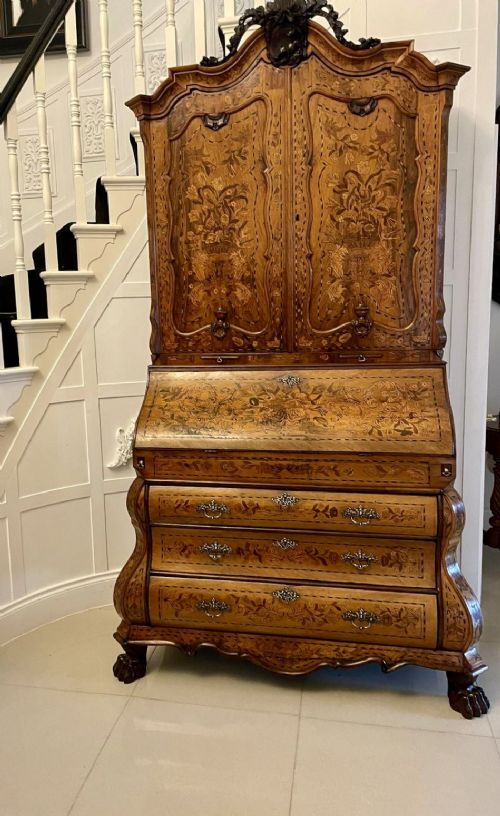
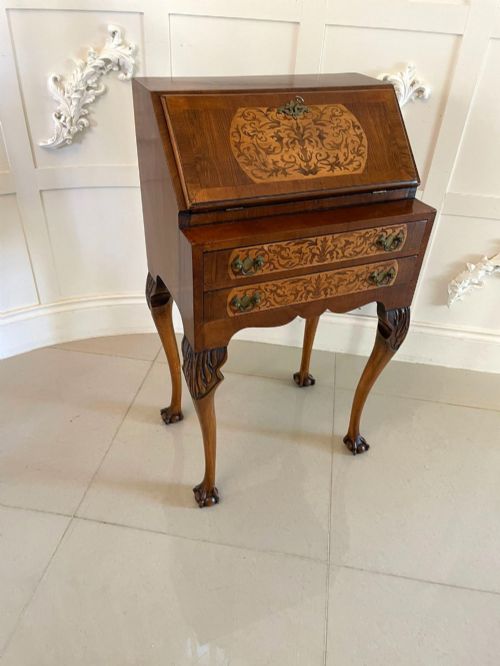
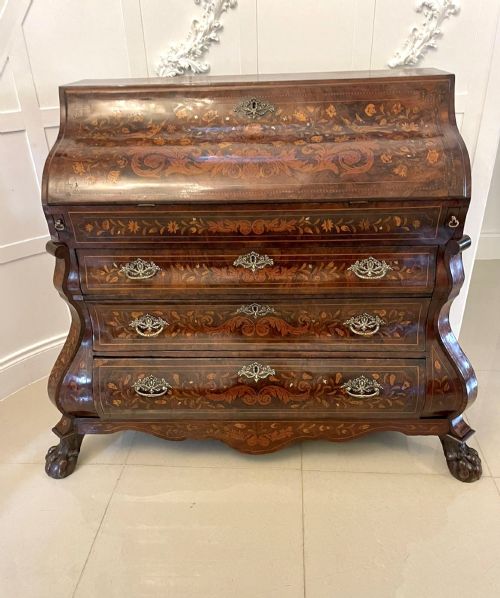
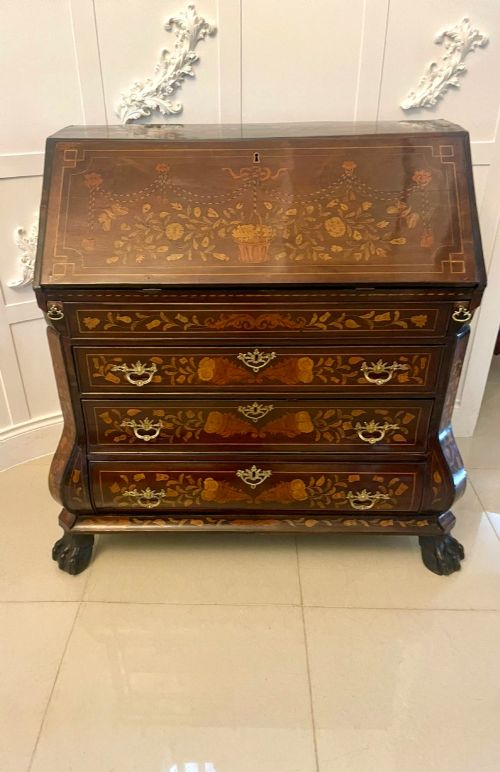

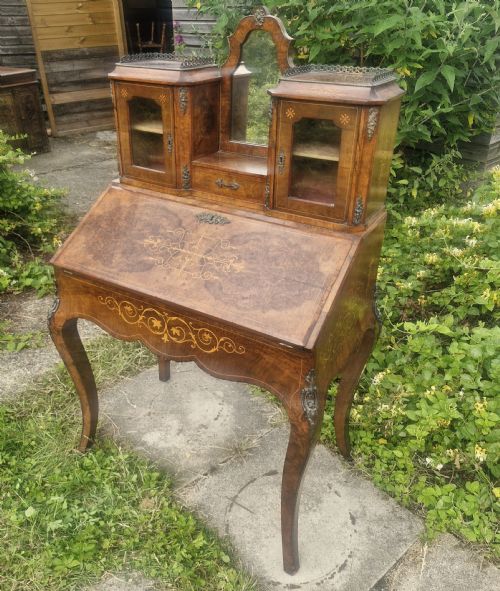


Marquetry Inlay Slant Front Desk
A marquetry inlay slant front desk brings together intricate wooden mosaic work and a practical writing slope from past centuries.
Marquetry Inlay Slant Front Desk
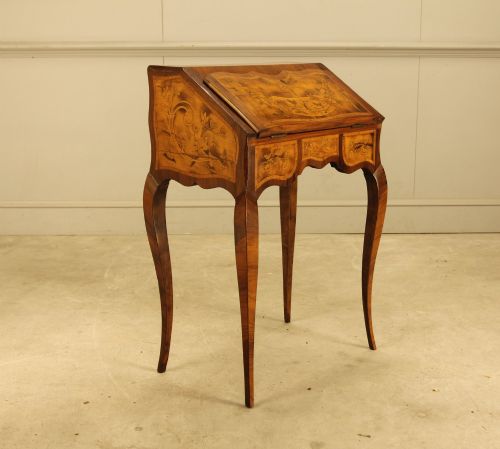
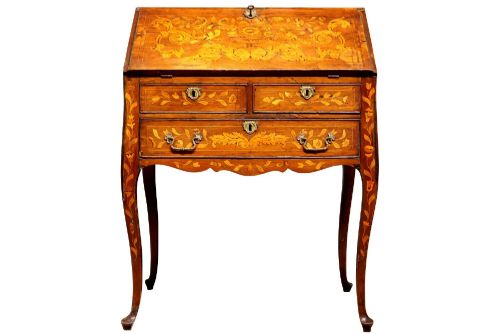
A marquetry inlay slant front desk encompasses traditional writing furniture including bureaus, bureau bookcases, and compact bonheur-du-jour designs. These pieces originate primarily from eighteenth and nineteenth-century workshops across England, Italy, Germany, and the Netherlands.
The user searching this phrase encounters numerous variations featuring a hinged flap that lowers to reveal fitted interior compartments. Burr walnut, mahogany, and rosewood forms dominate the selections, often displaying elaborate floral or geometric mosaic patterns across the fall front.
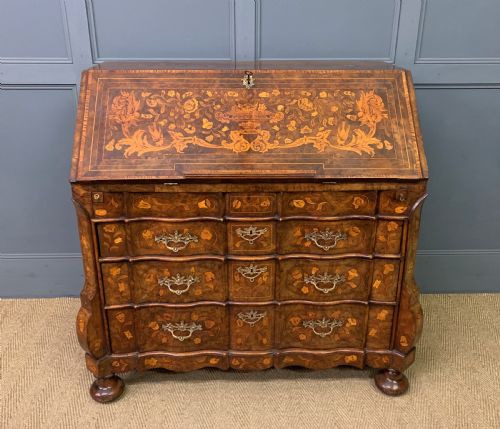
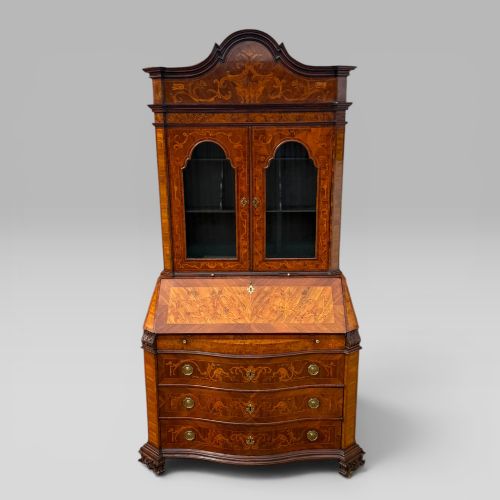
Bureau bookcases add upper shelving cabinets, while smaller lady's writing desks and Davenport designs offer compact proportions for domestic interiors. Eighteenth-century Dutch and Italian examples frequently utilise bombe profiles alongside intricate floral marquetry.
Materials and Techniques
Cabinet makers built carcases from sturdy secondary timbers like oak or pine, applying expensive veneers of walnut, kingwood, tulipwood, and mahogany over the structural surfaces. Fruitwoods such as boxwood and pearwood provided contrasting lighter tones for detailed pictorial scenes.
Marquetry execution required fine hand-cutting of diverse wood veneers assembled into paper patterns before gluing onto the furniture carcase. Ormolu mounts, brass stringing, and glazed cabinets completed the construction of high-status writing pieces.
Marquetry Inlay Slant Front Desk Retail Price Guide 2026
Typical asking prices for marquetry inlay slant front desk among the pieces listed under this phrase on Sellingantiques today, from the lower quarter to the upper quarter. They describe what is for sale here now, not the wider market.
Several desks conceal miniature secret drawers behind sliding pigeonhole partitions for storing private correspondence.
Craftsmanship and Proportion
Quality rests in the precision of the veneer cutting and the natural ageing of the timber grain. Superior examples display seamless integration of contrasting woods without lifting or excessive filler in the pictorial details.
The sophistication of the internal stationery compartments and the architectural harmony of the carcase determine the standing of each piece. Finely cast ormolu mounts and original brass hardware elevate the distinction of nineteenth-century revival desks.
The Marquetry Inlay Slant Front Desk Glossary
- Marquetry
- Decorative veneer work arranged in pictorial patterns using various coloured woods. This technique creates detailed floral or architectural scenes across the writing flap.
- Bombe
- A swelling outward contour found on the front and sides of eighteenth-century case furniture. This curved profile requires advanced woodworking skill to veneer successfully.
- Bonheur-du-jour
- A light ladies writing desk featuring a small cabinet or set of drawers on the upper surface. These refined pieces became popular during the nineteenth century.
- Bureau bookcase
- A two-part piece combining a lower sloping desk with an upper enclosed shelving cabinet. This form provides substantial storage alongside a fold-down writing surface.
- Davenport
- A compact pedestal desk with a sloped writing top and side drawers. Victorian examples often incorporate marquetry inlay across the sliding writing lid.
Marquetry Inlay Slant Front Desk: Frequently Asked Questions
How do I use a slant front desk?
Lower the hinged writing flap to reveal the internal pigeonholes and small drawers intended for correspondence and stationery. The sloping surface provides a traditional angled rest for writing letters.
Close and lock the fall front when finished to conceal writing materials and keep the desktop tidy. Many variants include internal secret compartments operated by hidden release mechanisms.
How do I care for antique marquetry?
Maintain stable room humidity and protect the polished wooden surfaces from direct sunlight to prevent veneer drying or fading. Apply traditional wax polish sparingly to nourish the timber grain.
Avoid placing hot items or liquids directly onto the antique veneer surfaces. Dust regularly with a soft dry cloth to prevent abrasive particles from accumulating in the wood grain.
How do I date an inlaid desk?
Examine the secondary timbers inside the drawer boxes, the style of the brass hardware, and the construction methods used for the dovetails. Eighteenth-century pieces often display hand-cut oak linings and intricate walnut marquetry.
Nineteenth-century revival pieces frequently incorporate machine-sawn elements and rosewood or kingwood veneers within French Louis XV styles.