

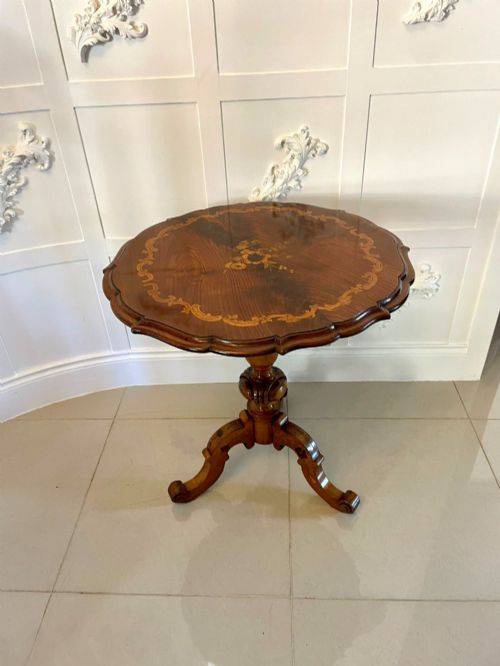
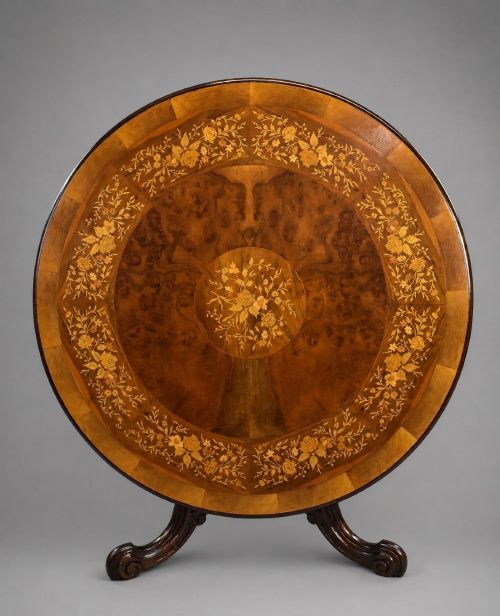
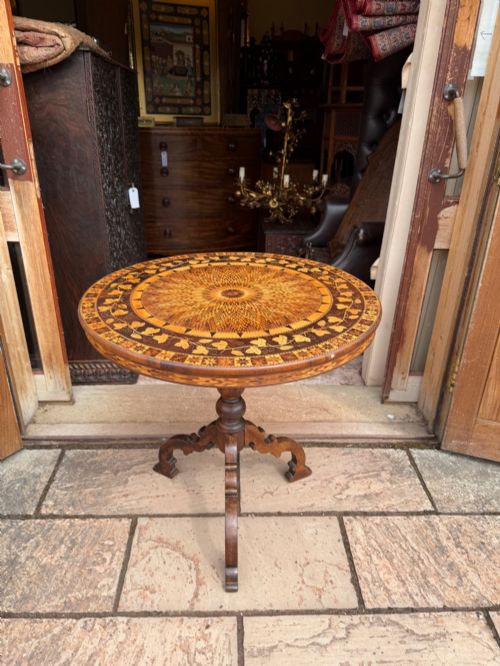
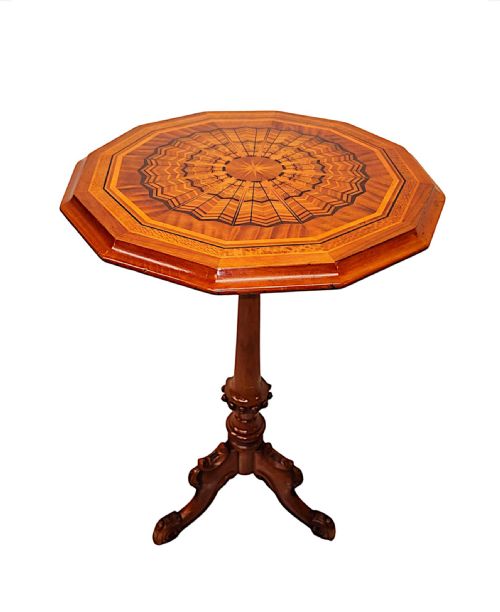





Marquetry Accent Pedestal Table
These marquetry accent pedestal tables bring intricate timber veneers and compact single-pillar forms into a room.
Marquetry Accent Pedestal Table
A marquetry accent pedestal table is a compact surface supported by a central pillar, finished with detailed wood inlay. When exploring this selection, buyers frequently encounter Victorian burr walnut examples alongside Italian Sorrento designs and occasional nineteenth-century pieces.
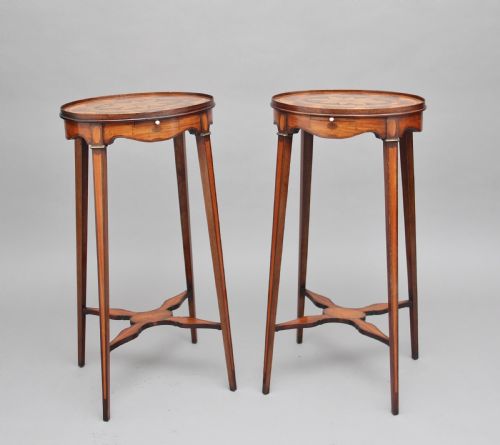
The assortment spans circular, oval, octagonal and tilt-top forms used as lamp tables, wine tables or small centre tables. These pieces originate from nineteenth-century English, French and Italian workshops, employing diverse exotic and native timbers.
Maltese, Anglo-Indian and Scandinavian variations also appear, demonstrating regional timber choices and distinctive inlay patterns such as compass roses and sunburst motifs.
Materials and construction
Cabinet makers constructed the foundational carcase from solid timbers like mahogany, walnut or oak, applying fine veneers of burr walnut, satinwood, rosewood, kingwood or olive wood over the top surfaces.
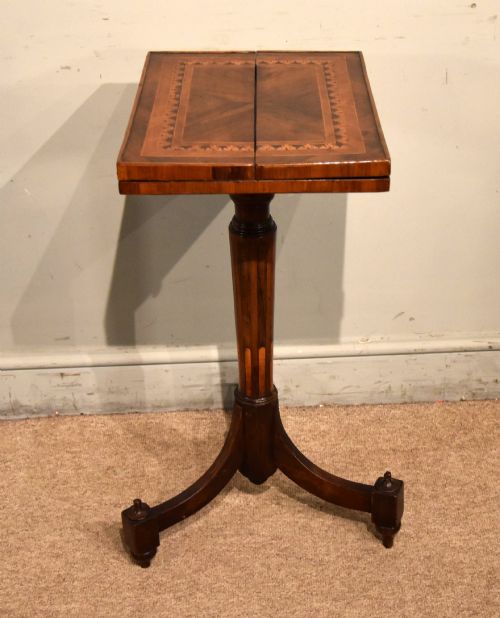
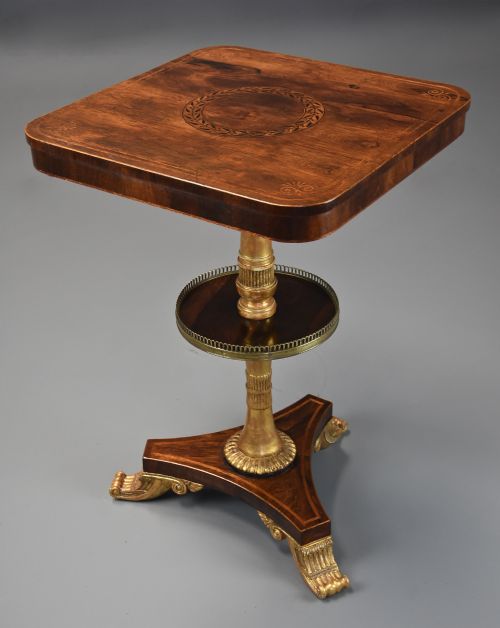
Complex pictorial or geometric marquetry patterns were hand-cut from contrasting wood veneers, sometimes incorporating bone, brass or specimen woods, then pressed into recesses on the tabletop.
Pedestal supports typically feature turned or carved columns rising from three-legged tripod bases, occasionally incorporating tilt-top mechanisms or multi-tiered structures.
Listings feature nineteen-century walnut, mahogany, rosewood and satinwood alongside twentieth-century art deco birch and occasional tables with brass mounts.
Determining quality
The standard of the marquetry work dictates much of the visual merit, where tight joints between contrasting veneers separate meticulous hand-cutting from simpler geometric banding.
Choice of timber grain also separates standard production from finer examples, particularly in the selection of richly figured burr walnut, olive wood or diverse specimen woods.
Structural integrity of the central pillar and tripod base determines longevity, with heavier hardwood legs providing better balance for heavy stone or multi-wood tabletops.
Gillows·A Hugnet Paris·George Bullock
The Marquetry Accent Pedestal Table Glossary
- Marquetry
- The art of applying fitted pieces of wood veneer to a structure to form decorative patterns or pictures. This technique defines the patterned surfaces seen across nineteenth-century tables.
- Specimen wood
- Furniture constructed from or inlaid with many different named tree species, often displaying natural colour variations. These timbers create mosaic effects on table tops.
- Gueridon
- A small French occasional table supported by one or more columns. The form originated in the seventeenth century and continued through later revival periods.
- Tilt top
- A tabletop hinged to the central pedestal so it can pivot vertically when not in use. This mechanism allowed tables to be stored flat against walls.
- Parquetry
- Geometric mosaic woodwork formed by small veneer blocks arranged in patterns. It differs from pictorial marquetry through its repeating angular symmetry.
Marquetry Accent Pedestal Table: Frequently Asked Questions
What is a marquetry accent pedestal table used for?
These small tables serve as functional surfaces for lamps, drinks or decorative objects in living spaces. Their compact single-pillar footprint allows them to fit beside seating or in smaller corners.
They also function as centre tables in larger rooms, where the inlaid top can be viewed from all angles.
How do I identify Victorian examples?
Victorian pieces frequently utilise burr walnut veneers with rich grain patterns and elaborate floral or scroll marquetry inlay. The timber frames often show deep warm patination characteristic of mid to late nineteenth-century finishing.
Base structures commonly feature carved tripod legs with scrolled feet typical of the period.
What is Sorrento ware?
Sorrento ware refers to decorative woodwork produced in the Italian town of Sorrento during the nineteenth century. These items feature intricate micro-mosaic and marquetry inlays depicting landscapes, figures or geometric motifs.
The tables often combine walnut and olive wood with contrasting light satinwood.
How do I care for inlaid wood tables?
Maintain stable humidity levels in the room to prevent the delicate veneer and tiny inlay pieces from drying out or lifting. Avoid placing the table in direct sunlight to protect the natural colours of the contrasting woods.
Clean surfaces gently with a soft dry cloth, avoiding harsh chemical polishes that can seep into veneer joints.