


Maritime Landscape Canvas
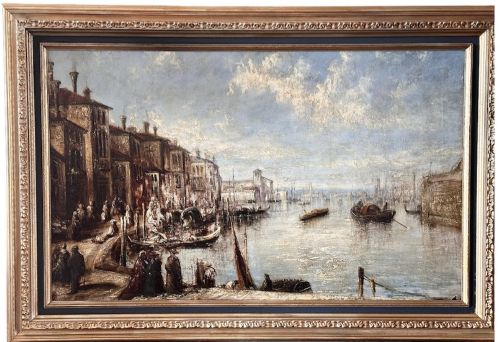
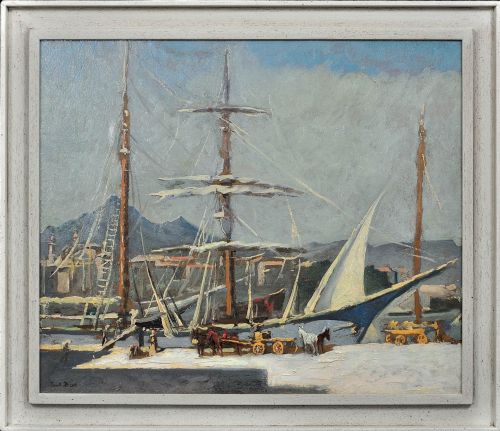
When you examine a maritime landscape canvas, you look at oil paintings on canvas and wood that capture rivers, harbours, and coastal scenes from the nineteenth and twentieth centuries.
Maritime Landscape Canvas
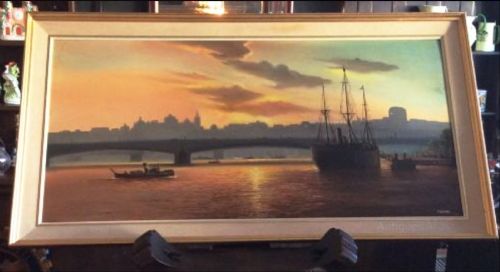
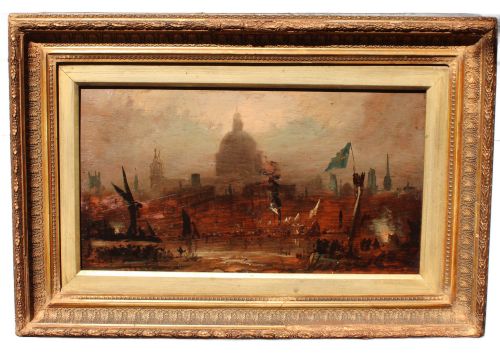
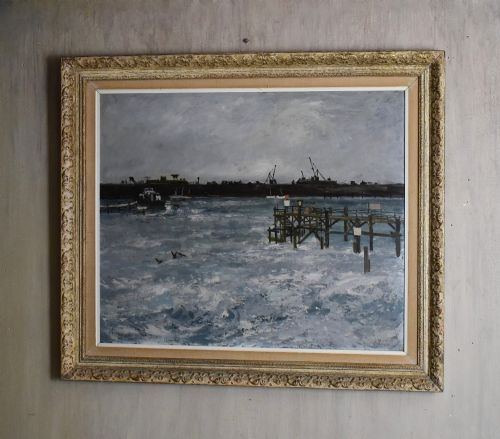
A maritime landscape canvas brings together the subjects of the sea, rivers, and coastal harbours onto traditional supports. These works range from early nineteenth-century depictions of the Thames to mid-twentieth-century harbour scenes from Cornwall and France.
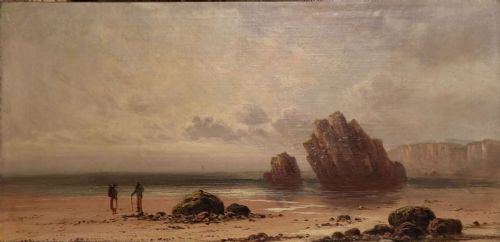
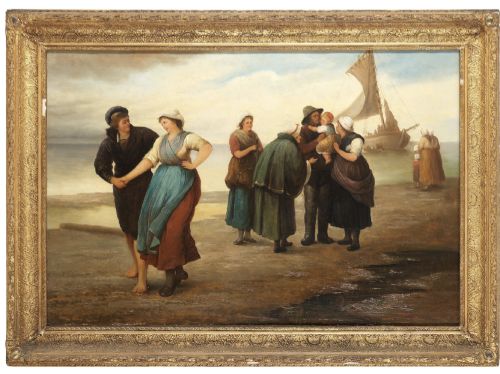
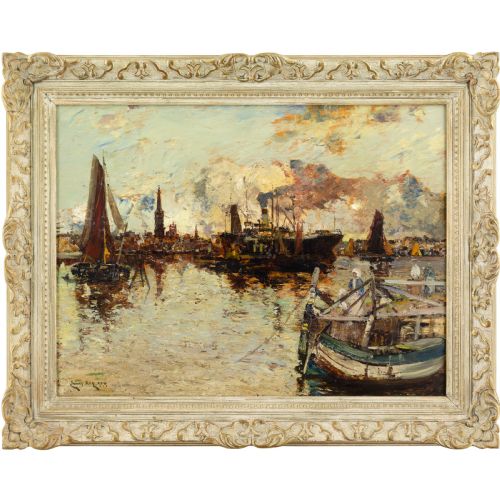
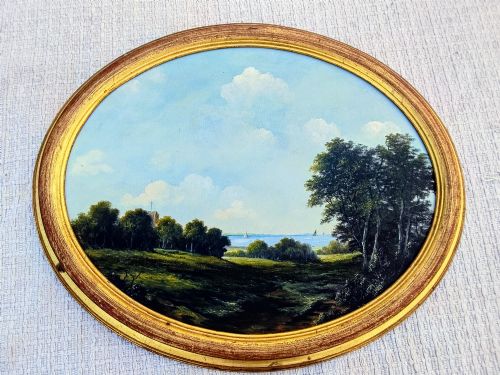
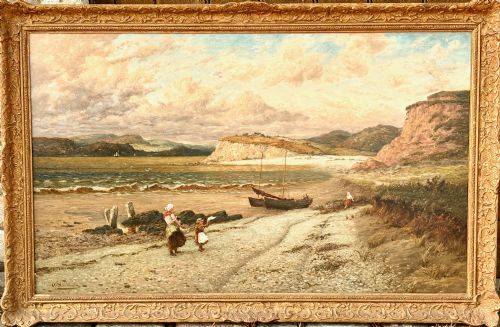
You will encounter pieces categorised under styles such as Victorian Marine, British Impressionism, and Post-Impressionism. The forms include oval sea views, panoramic river bridges, and detailed depictions of fishing boats at low tide.
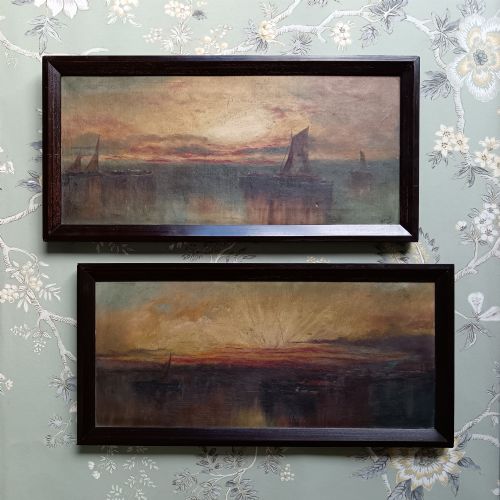
The origins span British, French, and Dutch traditions, reflecting both bustling commercial ports and quiet coastal stretches. Painters recorded these waters using oil paint on canvas, board, and panel, often housed within gilt wood frames.
How they were made
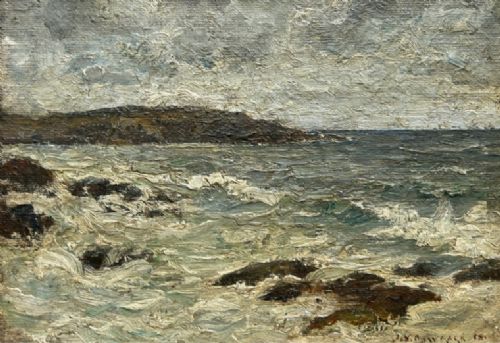
Artists built these maritime landscape canvas works using oil paint applied to woven canvas supports or wooden panels. Pigments were manipulated with brushes and palette knives, creating smooth atmospheric skies or thick impasto textures on coastal rocks and choppy waves.
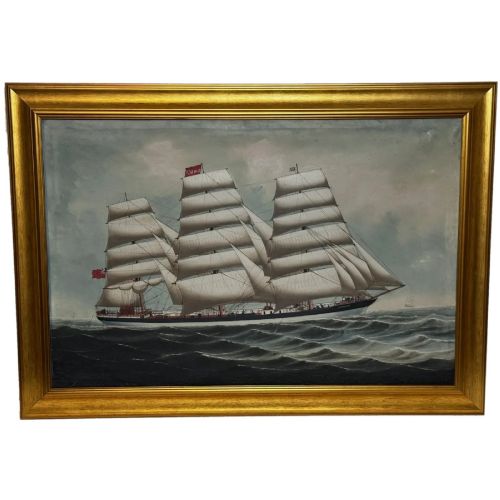
Many surviving examples are retained in their original gilt wood or moulded frames, which were designed to complement the maritime subject matter. The preparation involved stretching fabric over wooden frames or securing boards before applying priming layers.
Listings feature oil paint applied to canvas, wood, and board across Victorian, Edwardian, and mid-twentieth-century periods.
What varies in quality
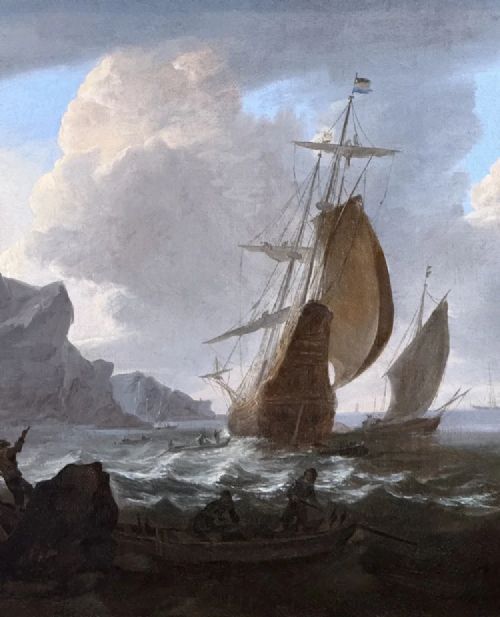
Quality in a maritime landscape canvas rests upon the artist's command of light, atmosphere, and maritime architecture. Stronger examples display accurate rigging, convincing water movement, and a coherent sense of coastal weather rather than stiff formulaic repetition.
The handling of the medium distinguishes the work, with assured brushwork and considered tonal balance marking out the more accomplished paintings. The integrity of the original canvas support and the preservation of the pigment layer also influence the standing of an individual piece.
Kenneth Cozens·Reginald Arthur Borstel·James Kay·Peter Brannan·Francis Moltino·Bernard Benedict Hemy·Thomas Creswick·Willem Bos·John Wilson Carmichael·Abraham Cooper·Thomas Hodgson Liddell·William Henry Williamson·John Holland·Walter Goodin·Charles William Wyllie·William Edward Webb·Edward Matthew Elliott·Louis Suire·Gyrth Russell
The Maritime Landscape Canvas Glossary
- Impasto
- Paint applied thickly to a canvas, standing out from the surface so that the texture of the brush or palette knife remains visible. This technique is frequently used in maritime works to render crashing waves or rough coastal terrain.
- Gilt wood
- Wood covered with a thin layer of gold leaf or metallic gilt gesso. Many period frames utilise this finish to enhance the visual weight of the painting.
- Board
- A rigid flat substrate used as an alternative to stretched fabric for oil paintings. Several mid-century works in the listings are executed on this firmer support.
- Seascape
- A work of art that depicts the sea, coastal views, or marine vessels. It forms the primary subject matter across the Victorian and twentieth-century inventory.
- Provenance
- The documented history of ownership of an artwork. Tracing the origin adds historical context to signed pieces by recorded painters.
Maritime Landscape Canvas: Frequently Asked Questions
How were these paintings framed originally?
Many nineteenth and twentieth-century works were housed in gilt wood frames designed to complement the tones of the oil paint.
Original framing often remains with the canvas, contributing to the historical character of the piece.
Can I identify the location in a painting?
Many titles and signatures explicitly record specific locations, such as the Thames, Venice, or Cornish harbours like St Ives.
Artists frequently inscribed details on the reverse or recorded identifiable landmarks like bridges and lighthouses.
How do I distinguish between periods?
Nineteenth-century works often show detailed academic or romantic approaches to shipping and coastal weather, while twentieth-century examples embrace impressionistic brushwork.
Materials and framing styles also offer clues to the era in which the canvas was painted.