



Brown Tones Maritime Artwork
Brown tones maritime artwork brings coastal scenes to interiors through restrained palettes of umber, ochre, and sepia.
Brown Tones Maritime Artwork
Brown tones maritime artwork encompasses historical paintings and watercolours depicting harbours, coastal landscapes, and ships at sea. These works span the nineteenth century through to the mid twentieth century, capturing British and European shorelines.
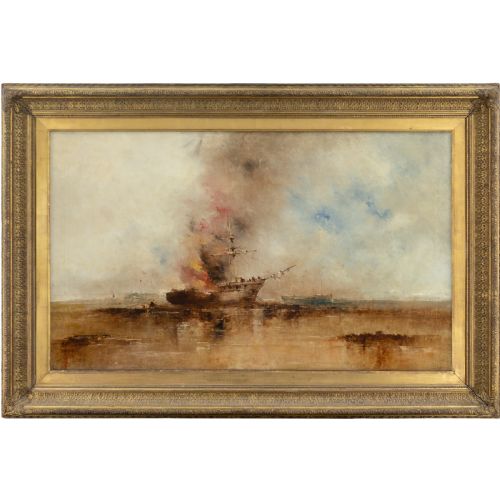
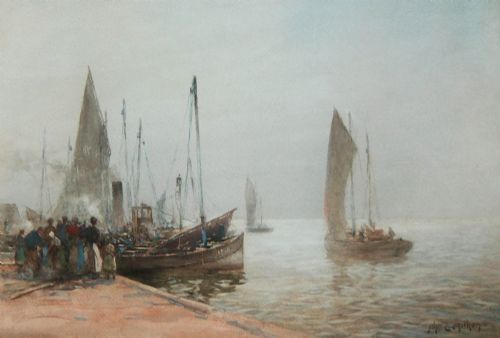
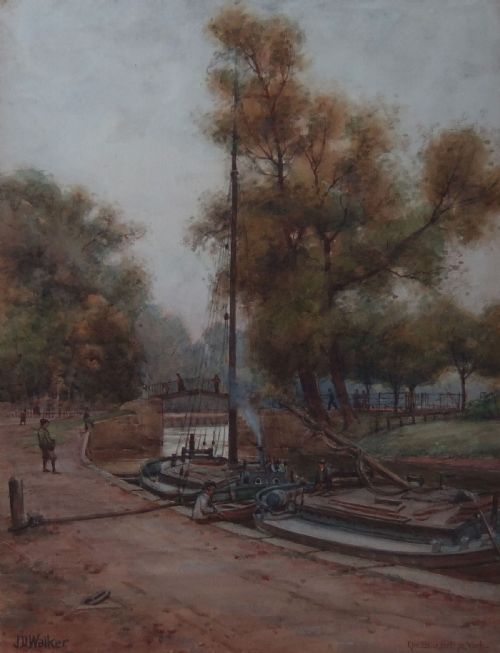
The pieces on this page lean heavily into subdued earth pigments, presenting river estuaries, fishing ports, and shipwrecks. Collectors encounter works executed in oil on canvas or watercolour on paper, framed predominantly in wood or giltwood.
Dating ranges from the Victorian era and Edwardian period into early twentieth century British schools and mid century impressionism. Buyers find named harbours from Yorkshire to Cornwall alongside scenes from the French Riviera.
Materials and technique
Artists utilise oil paint and watercolour pigment applied to canvas or paper supports. Oil paintings on canvas provide rich depth for dark hulls and stormy waters, while watercolour on paper achieves luminous coastal washes.
Works are preserved within wooden surrounds, frequently finished as giltwood frames that complement the muted palette. The physical construction relies on traditional stretched canvas techniques and stable watercolour layering.
Materials recorded across these listings include paper, oil paint, watercolour pigment, wood, and giltwood frames.
Assessing quality
Quality rests in the handling of light and shadow across maritime subjects, distinguishing atmospheric depth from flat representation. Skilled brushwork and pigment control define the distinction between accomplished marine painting and standard topographical record.
The strength of composition and the artist's ability to render water, sky, and vessel structure set finer pieces apart. Provenance and clear attribution to recorded painters elevate individual works within the broader category.
William McAlpine·James E Aitken·Alfred George Morgan·Gyrth Russell·Percy Brooke·Edward M Elliott·Harold E Frecker·Hendrik Yan Wolter·Owen Bowen·Frank Wasley·John D Walker
The Brown Tones Maritime Artwork Glossary
- Watercolour paint
- A water-based medium utilising finely ground pigments that create transparent washes on paper.
- Oil on canvas
- A painting technique where pigmented linseed oil is applied to a woven fabric stretched across a wooden frame.
- Giltwood frame
- A wooden picture moulding coated with a thin layer of gold leaf or metallic gilt finish.
- Estuary seascape
- A visual representation focusing on the tidal mouth of a large river where it meets the sea.
Brown Tones Maritime Artwork: Frequently Asked Questions
What periods do these artworks cover?
The selection spans from the nineteenth century through the Edwardian era up to mid-century impressionism.
Works date from the eighteen seventies through to the nineteen fifties.
How should I frame these paintings?
Most pieces arrive in period frames, such as wood or giltwood designs, which suit their age.
Retaining the original framing helps preserve the historical context of the artwork.
Are these works signed by the artists?
Several pieces feature artist signatures or attributions documented in the titles.
Signed works provide a direct link to the historical painters represented.
What subjects appear in these maritime scenes?
Subjects include bustling harbours, estuaries, shipwrecks, and coastal towns across Britain and Europe.
Depictions range from Yorkshire fishing ports to the French Riviera.