




Maritime Boat Harbour Art
Maritime boat harbour art records the bustling trade, quiet anchorages and weathered vessels of historic ports through the eyes of skilled painters.
Maritime Boat Harbour Art
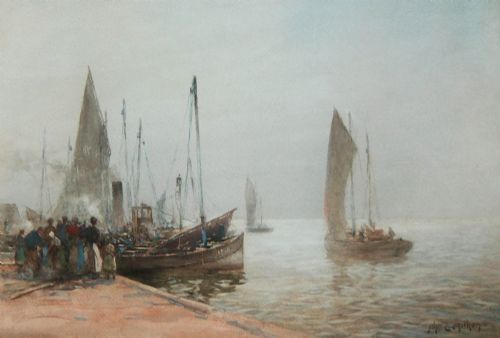
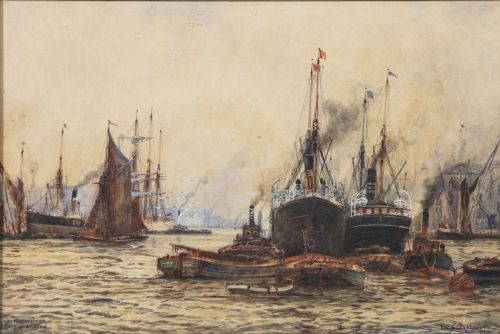
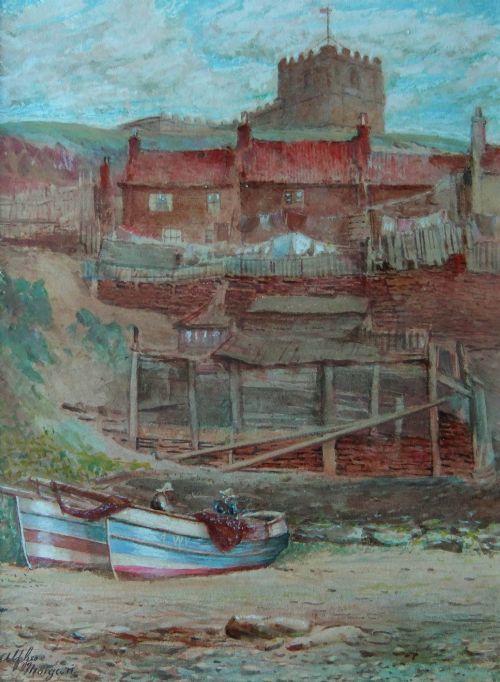
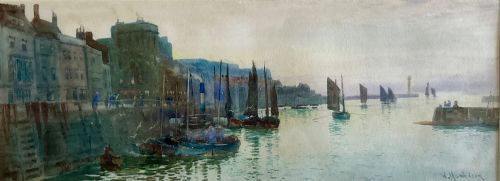
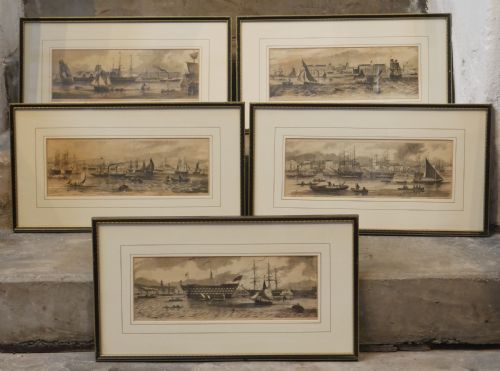
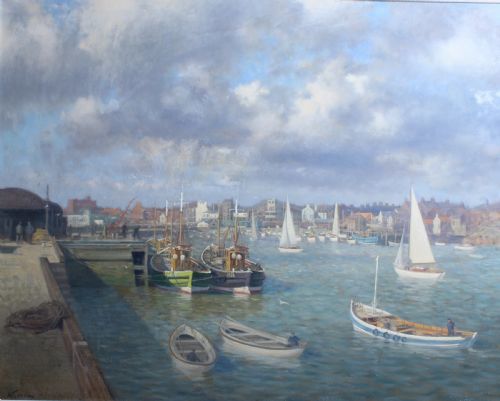
Maritime boat harbour art captures the working life of coastal settlements, river mouths and busy docks through painted compositions. Buyers encounter works stretching from the nineteenth century into the mid-twentieth century, recording specific locations such as Whitby, St Ives, Boulogne and London. These pieces document the everyday reality of fishing fleets, merchant shipping and tidal harbours before modern industrial changes.
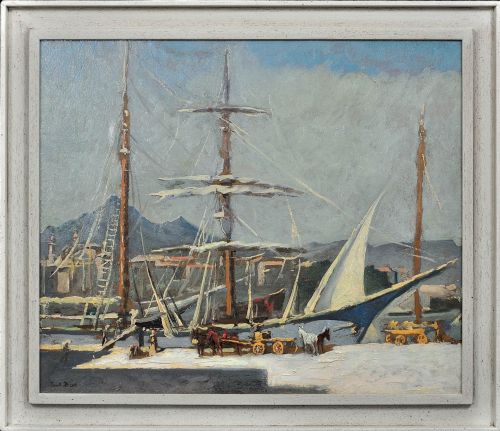
The selections on this page rely heavily on framed watercolours and oil paintings on canvas or board. Artists ranged from local West Country painters recording Cornish fishing villages to continental European travellers capturing Mediterranean ports along the French Riviera and Sicily. Subjects move between calm morning departures, low-tide anchorages and choppy seas surrounding laden vessels.
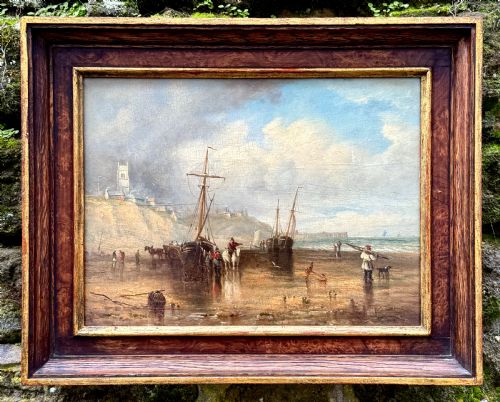
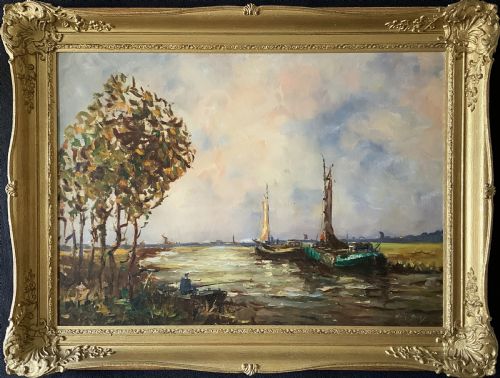
Framed artwork and wall art dominate the formats, often retained in period gilt frames that complement the coastal subject matter. Whether depicting a quiet Norfolk backwater or bustling Brixham trawlers, these paintings function as historical windows into maritime heritage.
How they were made
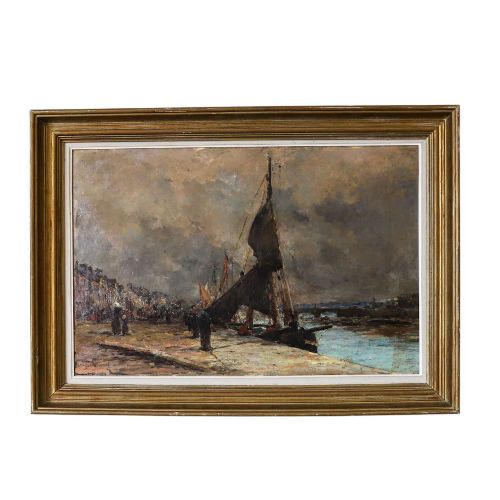
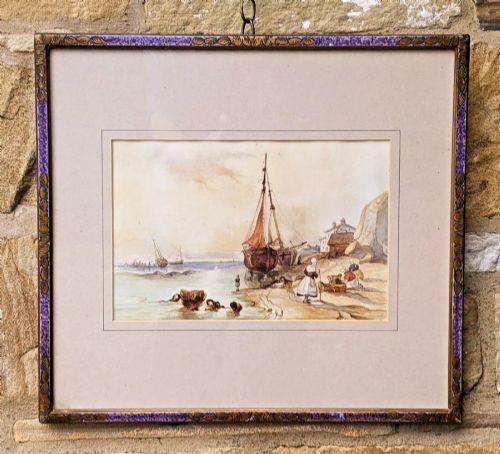
Artists deployed oil paint and watercolour on traditional supports including primed canvas, stretched paper, prepared boards and wood panels. Oil mediums allowed painters to build rich surface texture for choppy seas and heavy timber hulls, while watercolours captured the bright, translucent atmospheric conditions of coastal light.
Brushwork shifted according to the period and movement, moving from precise Victorian detailing and Edwardian realism towards looser impressionistic strokes by the mid-twentieth century. Pigments were applied directly en plein air or developed in studios from preliminary coastal sketches made on the quayside.
Protective framing played a vital role in preservation, with many works set behind glass for works on paper or housed within heavy gilded wood moulding for oil paintings. These traditional mountings secured the delicate paper and canvas surfaces against moisture and physical damage over decades.
Listings span from 1800 to 1960, utilising oil paint, watercolour, canvas, paper and glass across British and continental European scenes.
What varies in quality
Quality rests primarily on the artist's command of maritime architecture, rigging and tidal movement, alongside their ability to render light across water and stone. Master painters captured the precise weight of a fishing smack and the specific atmospheric haze of a northern port rather than relying on generic formulas.
Condition and originality separate exceptional pieces from lesser examples, particularly the survival of untouched paint surfaces and appropriate period framing. Works that retain their original pigments without heavy overpainting or stabilization issues command greater attention from serious collectors.
Kenneth Cozens·James E. Aitken·Frank William Scarbrough·Paul Bret·Hector Caffieri·Thomas Creswick·Willem Bos·Alfred G. Morgan·William Matthison·Walter Goodin·Paul Delvaux·William Edward Webb·Edward Matthew Elliott·Jean-Baptiste Olive·Raymond Picque·William Lee Hankey·Thomas Bush Hardy·Adrian Van Porten·Tom Clough·Fred Waugh·T.S. Wallis·John Bell·Ernest F. Hill·Alfred Henry Vickers·William Lambert Bell
The Maritime Boat Harbour Art Glossary
- Watercolour
- A painting method where fine pigment is suspended in a water-soluble binder applied to paper. This medium was favoured by coastal artists for its speed and ability to capture changing sea mists.
- Oil on Canvas
- Pigment mixed with drying oils applied to a woven fabric stretched across a wooden frame. It remains the standard durable medium for substantial marine and harbour scenes.
- British Impressionism
- A late nineteenth and early twentieth-century painting style focusing on natural light and loose brushwork. Practitioners applied these techniques to coastal villages and harbour life.
- Seascape
- A work of art depicting the sea, coastal views, ships and maritime activity. These pieces form the core of traditional marine collections.
Maritime Boat Harbour Art: Frequently Asked Questions
What periods do these harbour paintings cover?
The listings span from the early nineteenth century through the Edwardian era and into the mid-twentieth century. This timeline captures the transition from traditional sailing craft to early motorized fishing vessels.
Buyers will find Victorian and Edwardian watercolours alongside mid-century British and continental European oil paintings.
Where are most of these coastal scenes set?
Locations range widely across British fishing ports like Whitby, St Ives, Brixham and various London docks. Other works capture continental European harbours including Sicily, Cannes and the French Riviera.
Each region offers distinct architectural styles and types of working boats recorded by contemporary artists.
How should I care for an antique watercolour?
Works on paper require protection from direct sunlight to prevent the fading of delicate pigments and washes. Framing behind conservation glass helps block ultraviolet rays.
Keeping paintings away from damp environments ensures the paper and historic mounts remain stable over time.
How can I tell oils and watercolours apart?
Oil paintings feature a thicker, textured surface applied to canvas or wood boards, often housed in heavy gilt frames. Watercolours are executed on paper, display a translucent quality, and sit behind protective glass.
Examining the surface closely under good light reveals the distinct brush ridges of oil paint versus the flat stained fibres of paper.