



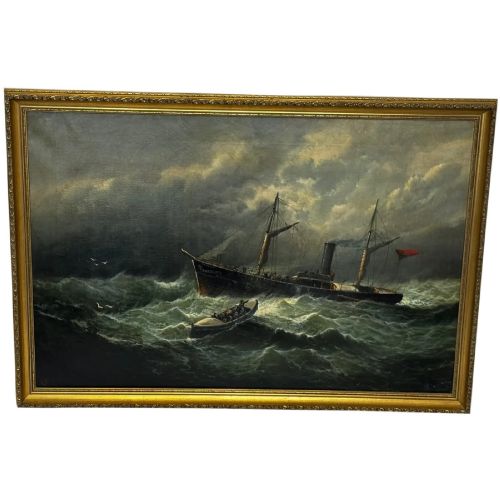
Maritime Art Oil Canvas
Maritime art oil canvas works capture the movement of open water and the weight of historic shipping through layered pigment and brushwork.
Maritime Art Oil Canvas
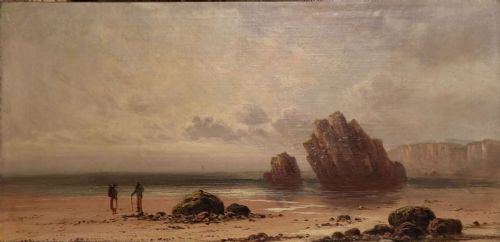
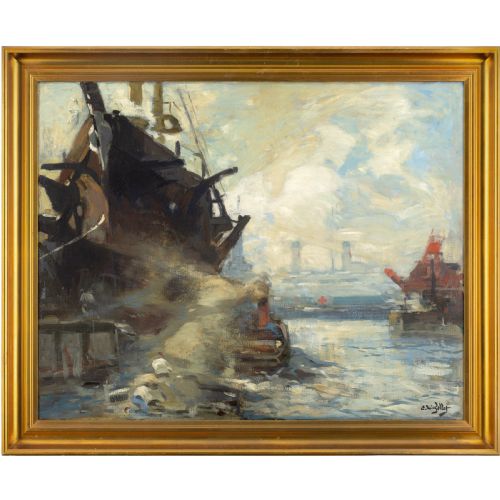
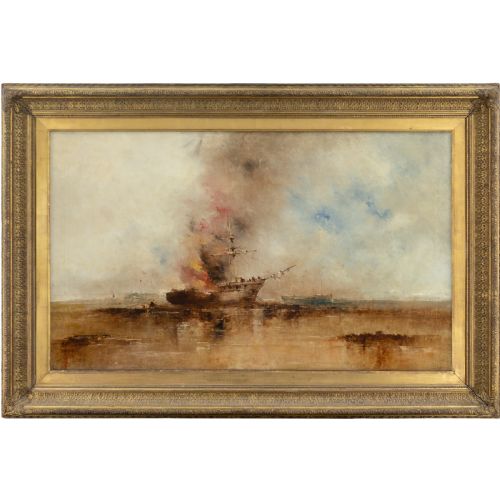
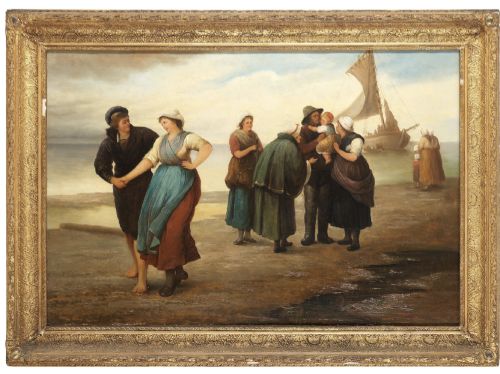
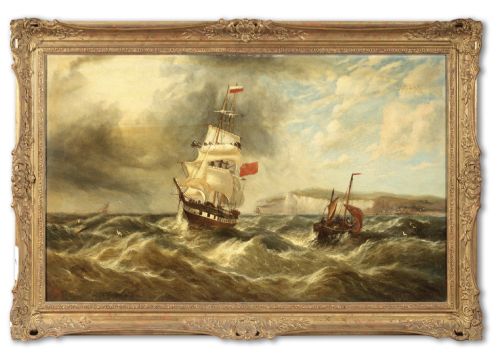
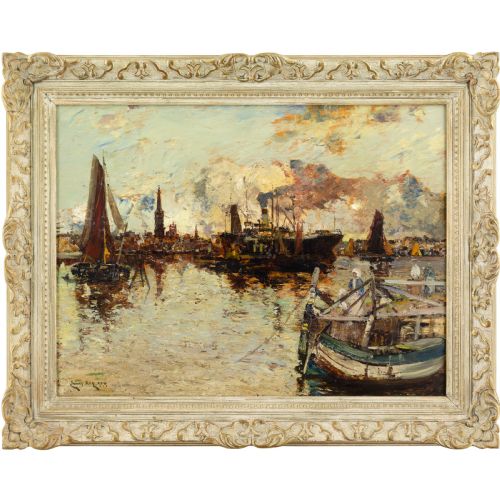
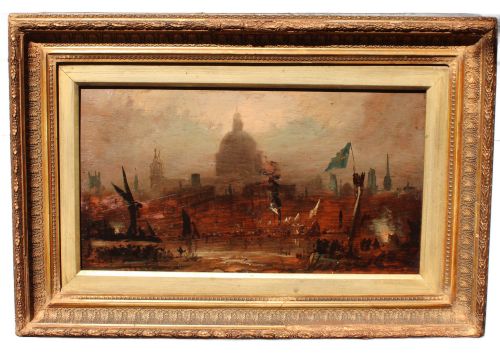
When you search for maritime art oil canvas, you are looking at paintings that record naval battles, merchant vessels, harbour scenes, and coastal waves. The examples you are most likely to meet on this page date from the nineteenth and early twentieth centuries, rendered by British and European painters.
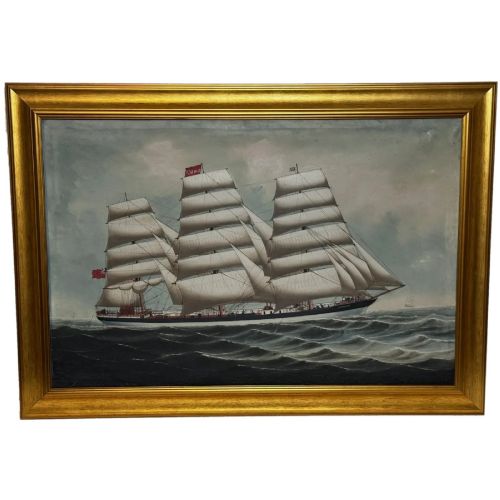
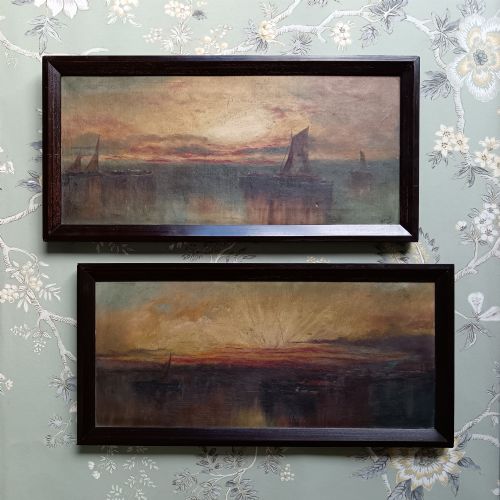
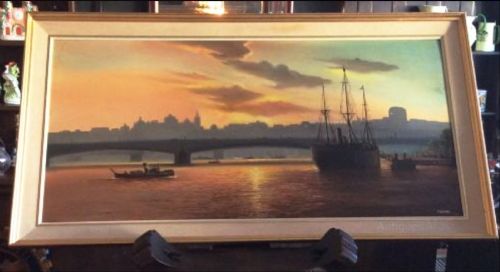
The subjects range from busy river traffic on the Thames and Venice lagoons to dramatic open seascapes featuring three-masted schooners and wartime hospital ships. These works vary from small oval sea views to expansive framed panoramic canvases depicting historical vessels in heavy gales.
How they were made
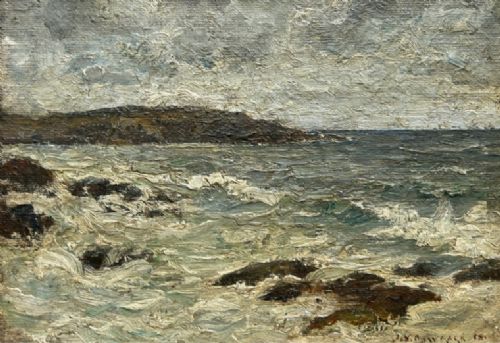
Artists built these compositions primarily using oil paint applied to stretched canvas or wooden boards, allowing for slow drying times and rich blending of water and sky tones. Pigments were worked with brushes and occasionally impasto knife techniques to give texture to turbulent waves and billowing sailcloth.
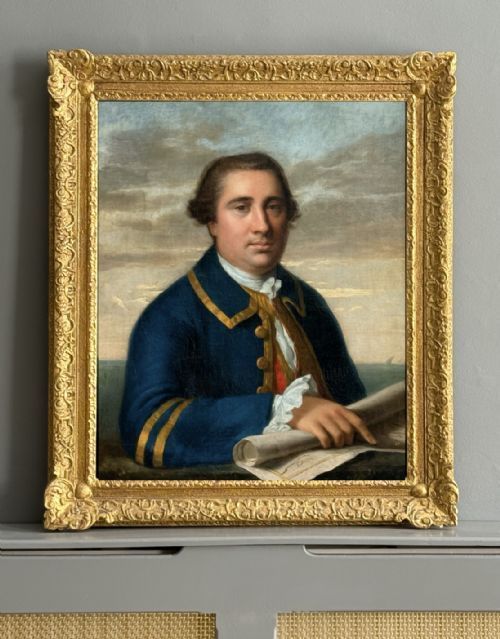
Finished works were typically set into wooden frames, frequently incorporating giltwood and gold leaf mouldings that complemented the maritime subject matter and protected the edges of the textile support.
Listings feature works spanning the eighteenth century through the post-war period, executed primarily in oil paint on canvas and wood.
What varies in quality
The distinction between ordinary and exceptional maritime art oil canvas works lies in the handling of light on water and the accurate depiction of rigging and hull architecture. Stronger paintings convey the true weight of a vessel responding to a heavy swell rather than simply mapping a silhouette against a flat horizon.
Pintura quality also depends on the expressiveness of the brushwork in the sky and atmosphere, where master hands achieve depth and luminous weather conditions using restrained colour palettes.
Eugène-Louis Gillot·William McAlpine·Reginald Arthur Borstel·Lemuel Francis Abbott·B. Nash·John Rose Miles·James Kay·William Broome·Bernard Gribble·Bonaventura Peeters·Peter Brannan·Francis Moltino·Paul Bret·Bernard Benedict Hemy·Thomas Creswick·Lucy Pratt·Cyril Walduck Edwards·Francis Hayman·Willem Bos·Cecil Allan Mould·John Wilson Carmichael·Lai Fong·Abraham Cooper·John Macvicar Anderson·Joseph Farquharson
The Maritime Art Oil Canvas Glossary
- Impasto
- Paint applied thickly to a canvas so that it stands out from the surface, creating visible brush or knife texture. This technique is often used in maritime works to give physical presence to churning foam and breaking waves.
- Seascape
- A painting depicting the sea, coastal views, or ships upon the water. These works form the core of historic marine painting.
- Barque
- A sailing vessel with three or more masts, square-rigged on the fore and main masts and fore-and-aft rigged on the mizzen. These ships appear frequently in nineteenth-century commercial maritime records.
- Giltwood
- Wood carved and covered with a thin layer of gold leaf or metallic gilt. Frames of this material are commonly found housing Victorian oil paintings.
- Provenance
- The documented history of ownership of a work of art. Clear provenance helps verify the attribution of unsigned or nineteenth-century marine canvases.
Maritime Art Oil Canvas: Frequently Asked Questions
How do I date a maritime oil painting?
Dating relies heavily on the rigging style of the depicted vessels, naval architecture changes, and the type of canvas or stretcher construction used behind the painting.
Signatures, artist registry records, and framing materials also provide clear chronological anchors for nineteenth and early twentieth-century works.
Were these paintings made at sea?
Most marine artists created detailed sketches and watercolour studies from life on deck or at the shoreline, returning to their studios to complete the final oil paintings on canvas.
Studio production allowed painters to manage large formats and build up rich layers of oil paint for dramatic sky and water effects.
What is the difference between marine art and landscape art?
Marine art specifically centres on the ocean, ships, harbours, and coastal activities where water dominates the composition and nautical knowledge is evident in the subject matter.
Landscapes focus primarily on terrestrial views, inland terrain, and rural scenery without the strong maritime elements.