



Marble Top Buffet Cabinet
A marble top buffet cabinet brings substantial stone surfaces and timber storage together into rooms that need weight and presence.

Marble Top Buffet Cabinet
A marble top buffet cabinet unites heavy stone slabs with timber storage frames across dining rooms and reception spaces. These items appear under various designations such as sideboards, credenzas, and side cabinets within the available selection.
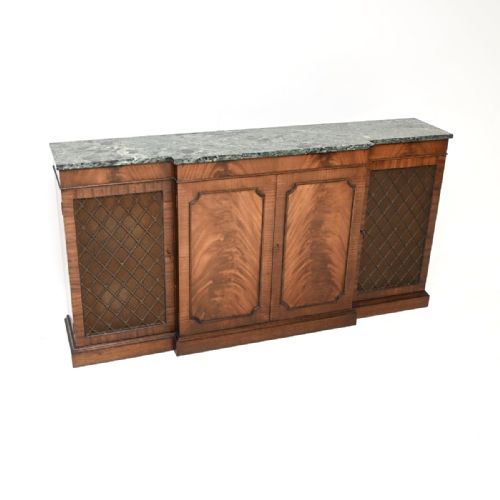
Victorian and nineteenth century pieces sit alongside twentieth century French styles on this page. Walnut, mahogany, and kingwood form the primary bodies supporting the stone tops.
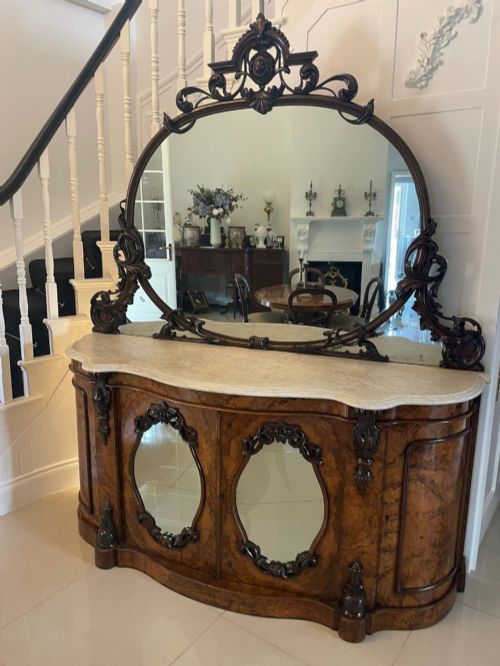
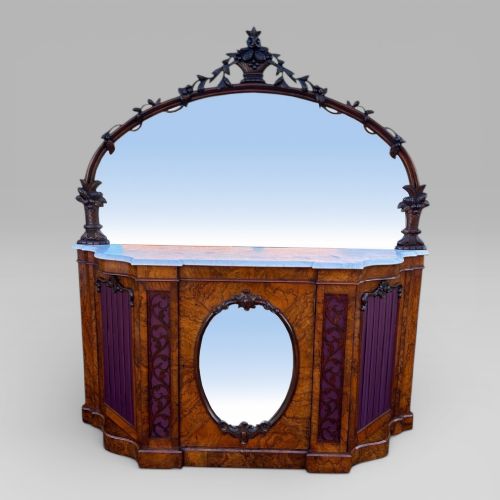
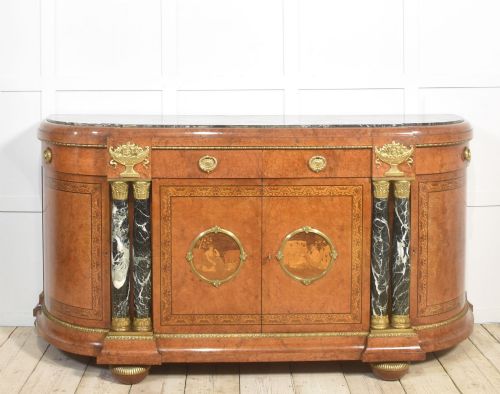
Mirror backs and grill fronts frequently accompany the stone surfaces on Victorian burr walnut examples. French models often introduce marquetry, ormolu mounts, and shaped carcasses into the selection.
How they were made
Cabinet makers constructed the foundational carcases using dense timbers such as walnut, mahogany, and kingwood. Veneers like burr walnut and birds eye maple were laid over secondary woods to create decorative grain patterns on door fronts and panels.
Marble slabs were shaped to fit the upper surfaces of the wooden cabinets, providing durable and cool countertops. Brass and ormolu mounts were applied as decorative framing around doors and structural edges.
Marquetry and parquetry techniques introduced contrasting wood veneers in geometric and floral patterns. Carved wooden details finished the cornices, mirror backs, and plinths of the larger Victorian and French pieces.
Materials appearing across the collection include brass, ormolu, burr walnut, and glass paired with heavy stone surfaces.
What varies in quality
The refinement of the timber veneers and the intricacy of the marquetry set the visual standard for each cabinet. Richly figured burr walnut and detailed floral parquetry distinguish superior examples from plain veneered carcases.
The quality of the marble top and its edge profiling signal the original investment in the piece. Thick stone slabs with sophisticated bevelling outclass thin or plain-cut replacements.
Mounts cast in ormolu and detailed wood carving demonstrate workshop skill levels. Crisp metal chasing and deeply undercut timber elements separate better examples from routine production.
The Marble Top Buffet Cabinet Glossary
- Credenza
- A low cabinet or sideboard, frequently featuring mirror backs and multiple doors. This form often includes extensive burr walnut veneers and curved glass panels.
- Ormolu
- Gilded bronze mounts applied to furniture for decorative effect. Makers used these cast metal ornaments to accentuate corners and door panels.
- Marquetry
- Inlaid wood veneers forming pictorial or decorative patterns. Artisans assembled different coloured timbers to create detailed scenes on cabinet doors.
- Parquetry
- Geometric wood inlay patterns resembling mosaics. This technique utilised contrasting timber grains to ornament cabinet surfaces.
- Buffet
- A sideboard or storage cabinet traditionally used for food service. These pieces provide surface space above enclosed cupboards.
Marble Top Buffet Cabinet: Frequently Asked Questions
Where should I place a marble top buffet cabinet?
These cabinets suit dining rooms, large hallways, or living spaces where surface display and concealed storage are both required. The stone top provides a durable station for serving or arranging decorative objects.
Ensure the floor bears the combined weight of the timber carcase and the heavy stone slab safely. Positioning the piece away from direct heat sources protects the timber veneers and structural joints.
How do I care for the marble top?
Wipe the stone surface regularly with a damp cloth and mild, neutral soap to remove dust and spills. Acidic liquids like wine or citrus juice can etch polished marble if left unattended.
Apply a specialist stone wax or sealer periodically to protect the polish from staining. Avoid placing hard or abrasive ceramic items directly onto the stone without protective pads.
What is the difference between a sideboard and a credenza?
Sideboards traditionally offer long lower storage with cupboards and drawers for dining utensils. Credenzas historically describe low furniture pieces that frequently incorporate decorative mirror backs or glass display sections.
Victorian makers often applied these terms interchangeably to heavy timber cabinets fitted with stone tops. The physical footprint and door configuration remain the primary distinctions in daily use.
How do I identify French styles from Victorian pieces?
French cabinets frequently feature ormolu mounts, kingwood veneers, and sweeping cabriole lines influenced by Louis XV and Louis XVI designs. Marquetry patterns on French pieces often display elaborate floral motifs.
Victorian furniture relies heavily on burr walnut, carved mirror backs, and heavier structural proportions. English examples tend towards architectural symmetry and darker mahogany tones.