
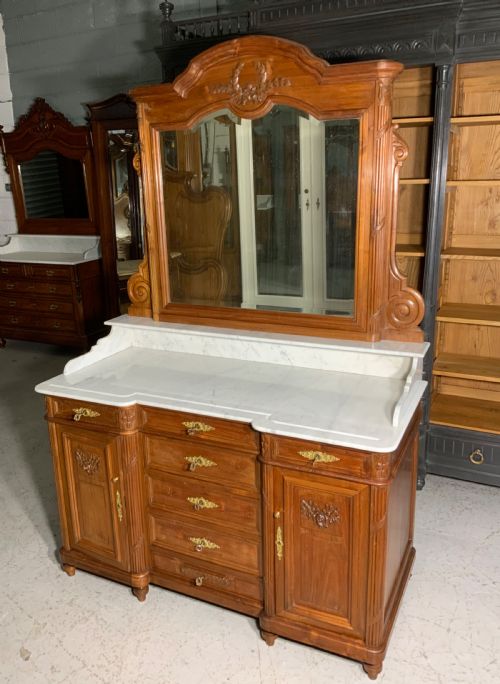
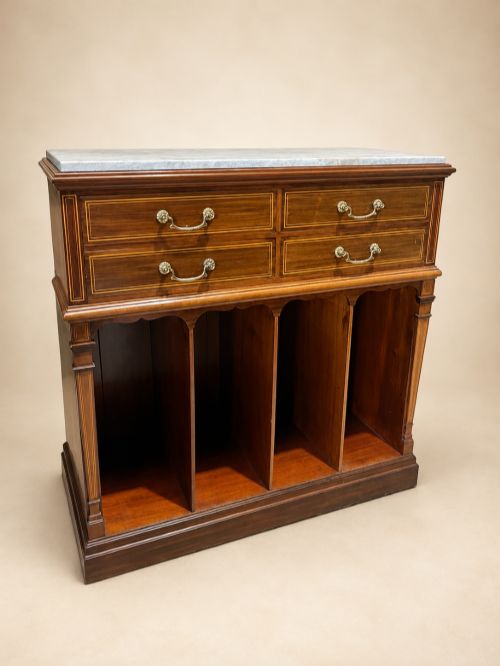
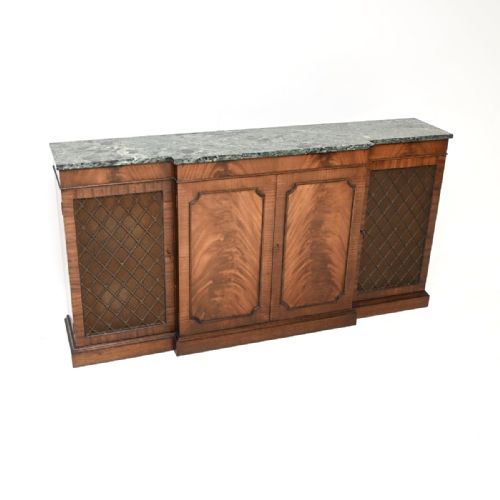
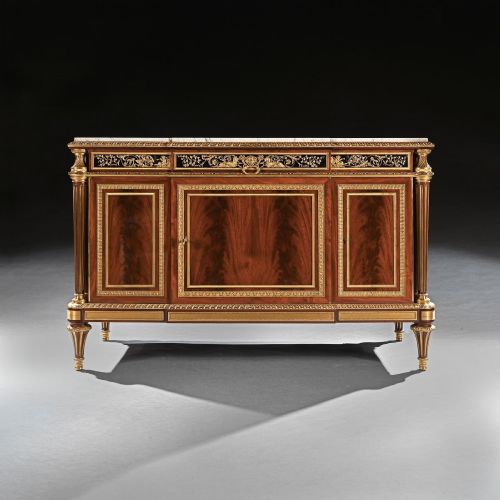


Mahogany Marble Top Credenza
A mahogany marble top credenza brings together rich dark timber and cool stone for a grand yet practical statement.
Mahogany Marble Top Credenza
When you search for a mahogany marble top credenza, you are looking at substantial timber storage pieces crowned with smooth stone slabs. These furniture forms appear across various eras, uniting cabinetry with a resilient stone surface suited for display and service.
The versions you are most likely to meet on this page span the nineteenth century into the early twentieth century. They draw upon diverse design traditions, ranging from French Empire and Louis XVI styles to Regency and Victorian aesthetics.
Makers utilised mahogany as the primary timber, frequently pairing it with marble tops in white or coloured varieties. These items function as sideboards, commodes, chiffoniers, and cabinets within domestic interiors.
How they were made
Cabinet makers constructed the carcasses using solid mahogany and figured veneers, often incorporating satinwood or marquetry details. These wooden structures support heavy stone slabs that rest precisely upon the upper framing.
Metal ornamentation played a significant role in embellishing the timber surfaces. Workshops mounted ormolu, gilt bronze, and brass trims along the mounts, pillars, and door surrounds to accentuate the classical lines.
Glazing, ceramic elements, and painted panels occasionally appear on door fronts and side panels. Artisans shaped the timber into straight, bow front, or serpentine configurations depending on the prevailing style.
Materials recorded across the inventory include mahogany, marble, brass, ormolu, glass, satinwood, ceramic, and paint.
What varies in quality
The distinction between ordinary and exceptional pieces lies in the selection of the timber and the precision of the parquetry or marquetry. Superior examples feature highly figured flame mahogany and intricate inlay work executed by skilled hands.
Mount quality separates high workshop production from standard commercial output. Fine ormolu and gilt bronze mounts display crisp chiselling and secure fixings rather than plain or cast brass substitutes.
The integration of the marble slab dictates overall refinement. Thicker stone slabs with polished bevels and matching grain patterns indicate superior craftsmanship compared to plain utility replacements.
Henry Dasson·Collinson & Lock London·Jean-Henri Riesener·Weisweiler
The Mahogany Marble Top Credenza Glossary
- Ormolu
- Gilded bronze mounts applied to furniture. This decorative technique adds metallic contrast to dark mahogany surfaces.
- Marquetry
- Inlaid patterns created using various coloured wood veneers. Artisans arrange floral or geometric motifs across the cabinet doors and drawers.
- Commode
- A low decorative chest of drawers or cabinet. These pieces often feature marble tops and gilt metal mounts.
- Chiffonier
- A tall sideboard or cabinet featuring shelves or cupboards. This form provides elevated storage within nineteenth-century dining and living spaces.
- Parquetry
- Geometric patterns formed by fitting wood pieces together. This technique decorates the exterior surfaces of select French cabinets.
Mahogany Marble Top Credenza: Frequently Asked Questions
What is a mahogany marble top credenza used for?
These pieces serve as heavy storage furniture in dining rooms, hallways, and principal reception spaces. The interior cavities house dinnerware, linens, or books while the surface holds serving items or decorative objects.
The stone top offers a durable, heat-resistant platform that easily withstands serving dishes or potted plants. This combination of enclosed timber storage and stone utility made them indispensable in grand nineteenth-century homes.
How do I care for the marble top?
Maintenance requires simple wiping with a damp cloth and mild neutral soap. Avoid acidic liquids like citrus juice or vinegar, which etch polished stone surfaces.
Applying a specialist stone sealer helps protect against stains from accidental spills. Treat the timber body separately using traditional wax polish to preserve the mahogany finish.
How do I distinguish French styles from English ones?
French examples often feature prominent ormolu mounts, marble tops, and elaborate marquetry reflecting Louis XVI or Empire aesthetics. English counterparts tend to rely on the natural grain of flame mahogany with more restrained brass detailing.
Proportions and foot designs also offer clues, as French pieces frequently utilise inverted pyramid feet or toupie feet. English makers favoured bracket feet or plinth bases depending on the Regency or Victorian period.
Are these pieces suitable for modern homes?
The substantial depth and weight require careful placement against a solid wall in a room with adequate proportions. They fit well in dining areas, wide hallways, or living rooms as media credenzas.
The robust marble surface makes them practical for daily use as coffee stations or display consoles. Their dark wood tones anchor contemporary minimalist interiors with historical texture.