
Marble Top Bedside
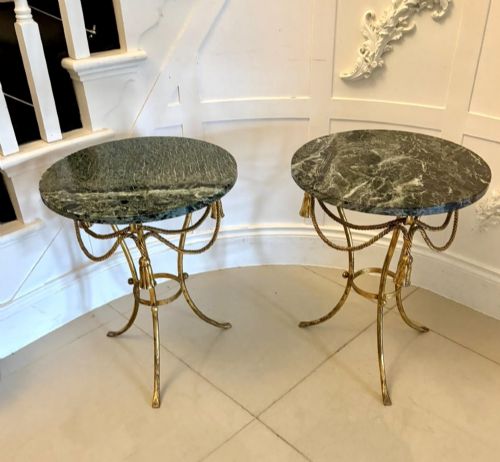
A marble top bedside table brings practical stone surfaces and Continental cabinetmaking into the bedroom.
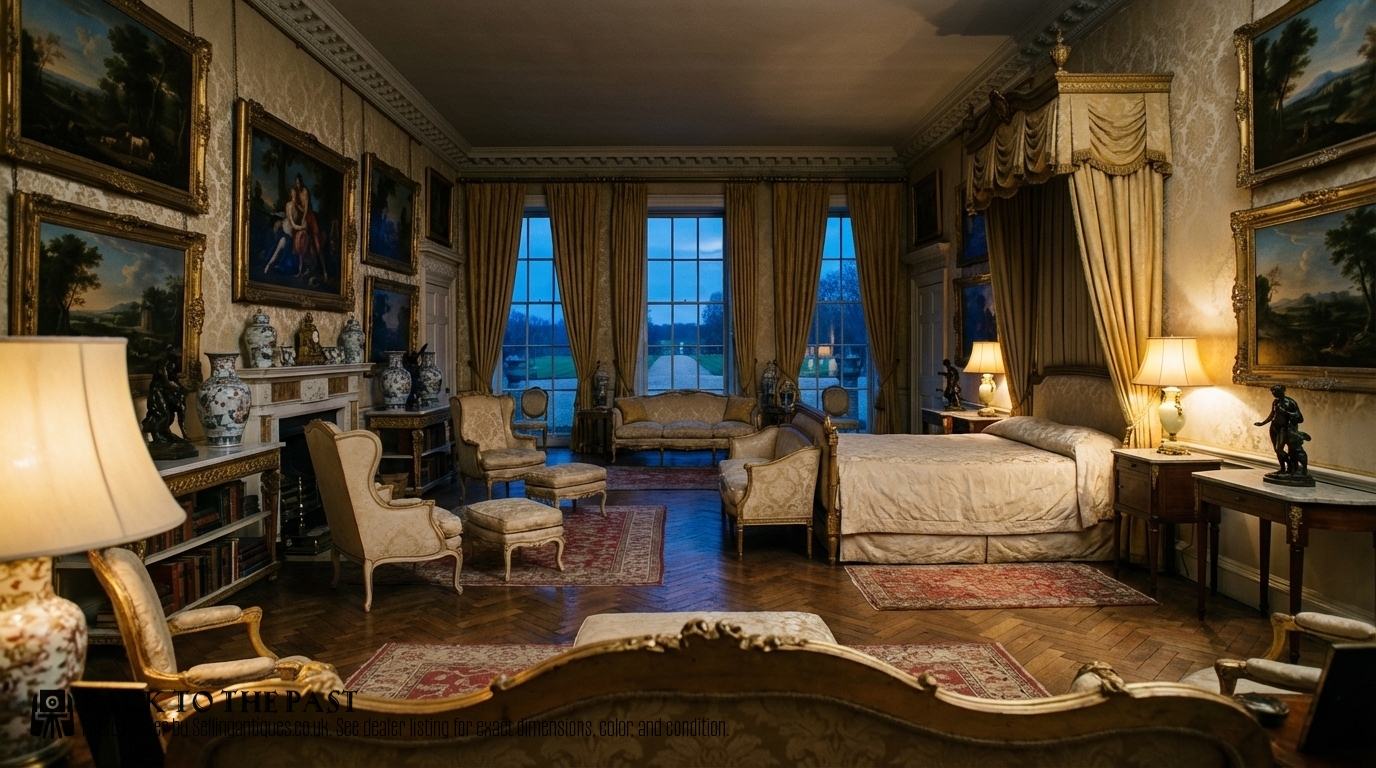
Marble Top Bedside
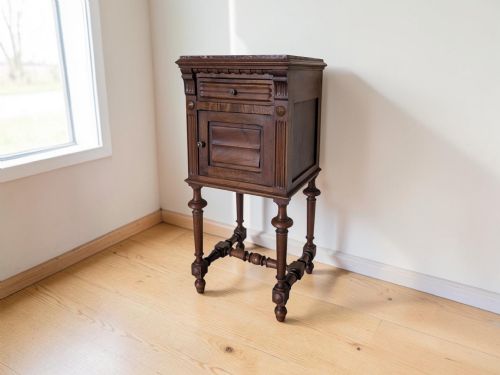
When searching for a marble top bedside, buyers encounter compact cabinets, small commodes and pedestals designed to sit beside a bed. The selection spans the nineteenth and early twentieth centuries, drawing heavily on Victorian and Edwardian periods as well as Continental revivals.
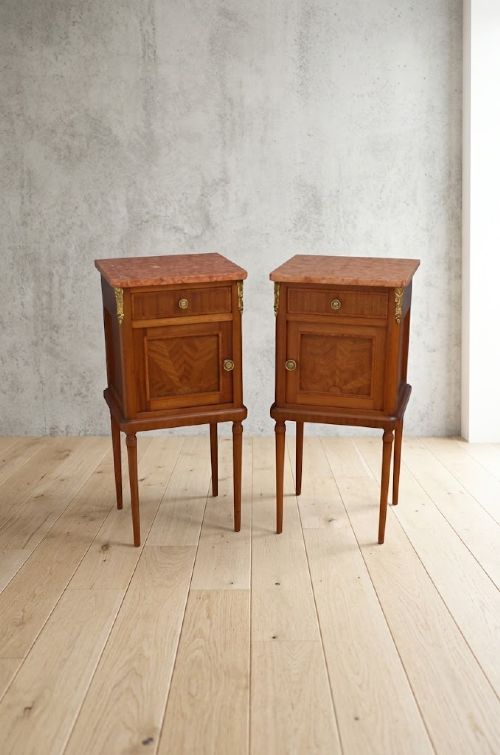
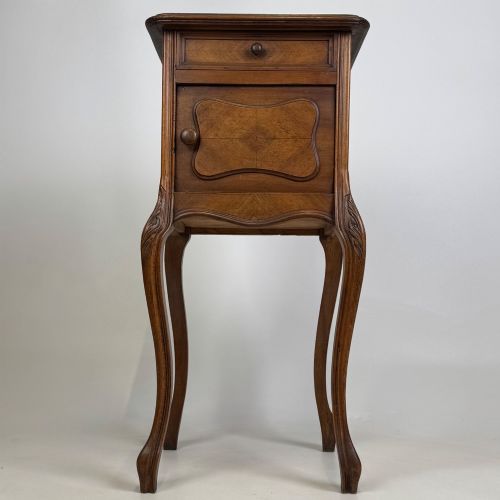
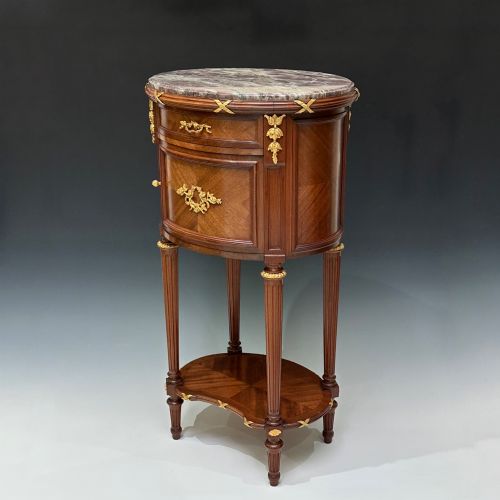
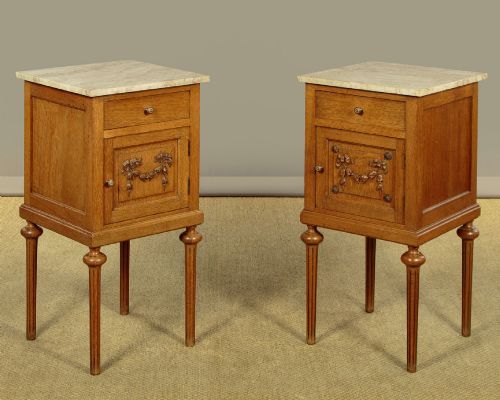
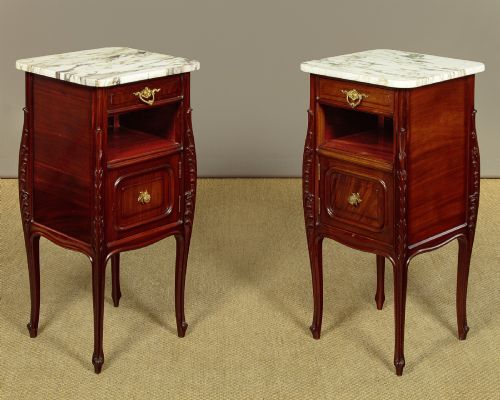
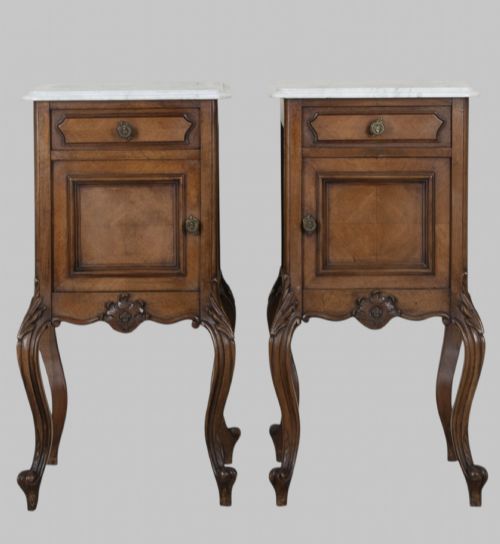
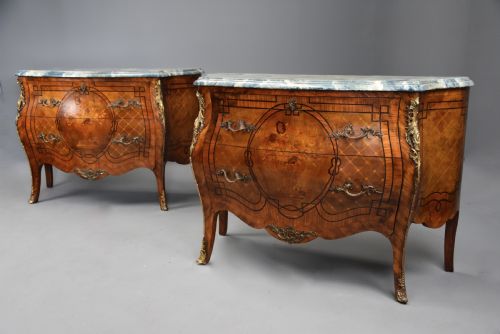
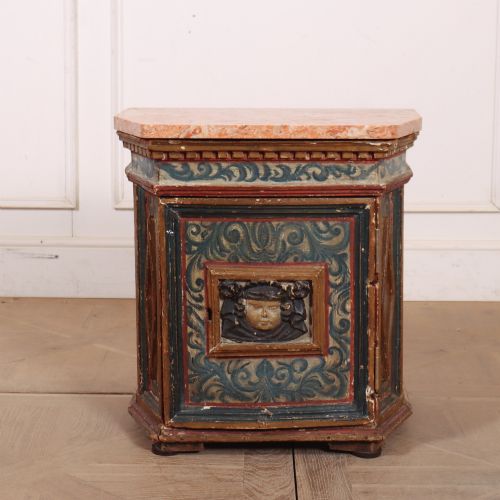
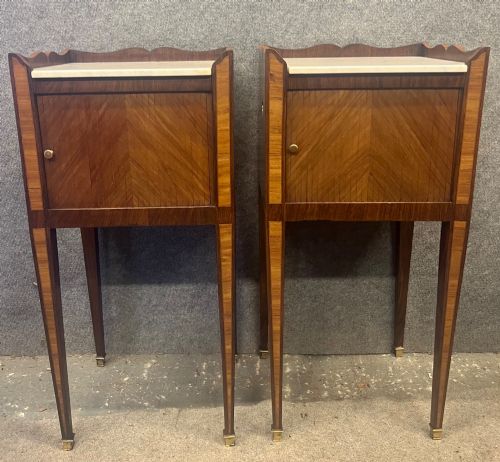
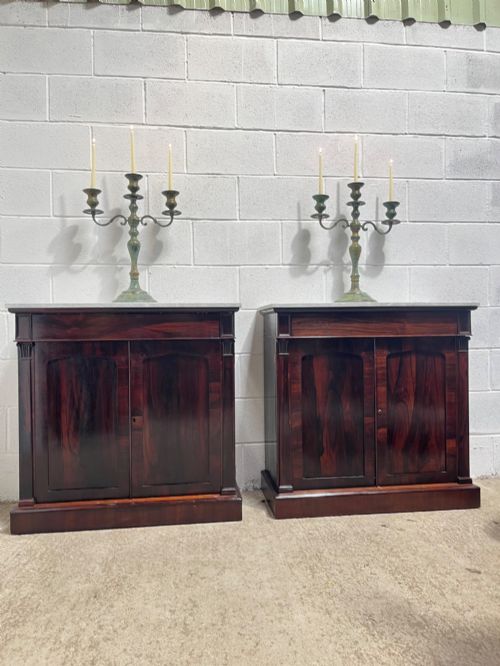
French workshop designs dominate the selection, appearing frequently in walnut, kingwood and mahogany alongside oak and painted finishes. Many examples survive as matched pairs, offering symmetrical proportions and enclosed storage beneath the stone slab.
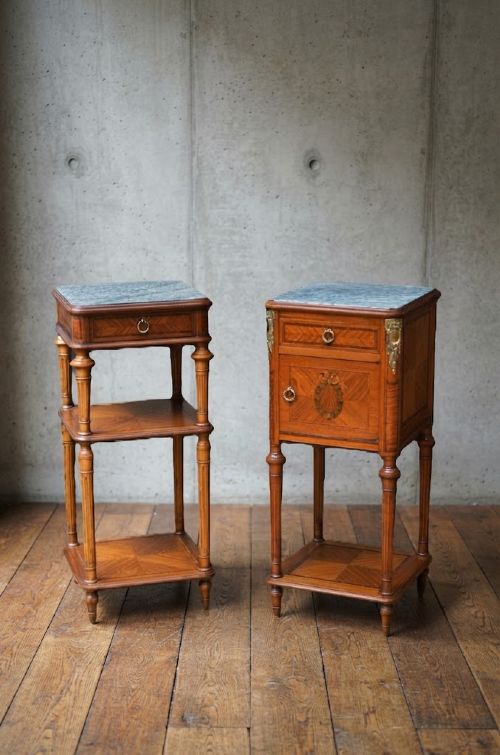
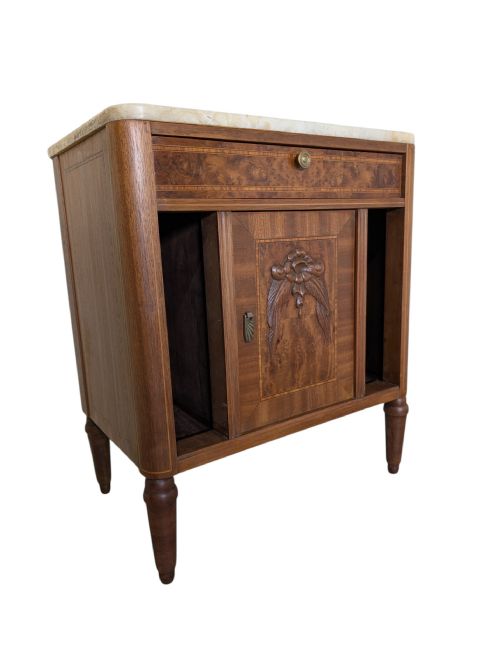
The architectural influences range from Louis XV and Louis XVI revivals to clean-lined Art Deco interpretations. These pieces function variously as bedside cupboards, small chests of drawers and open-shelf lamp tables.
Materials and Construction
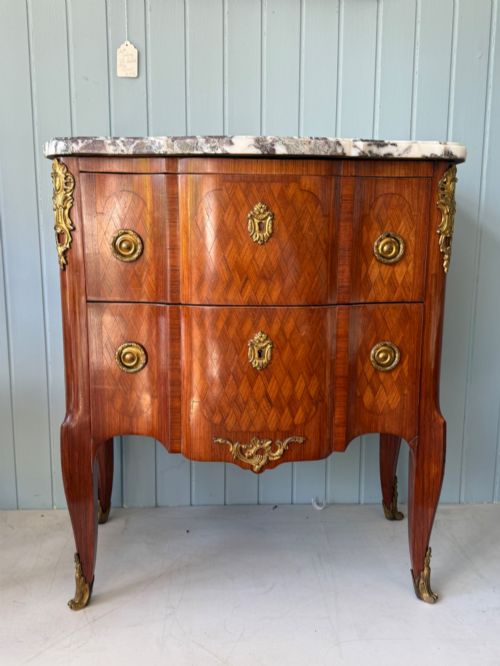
Cabinetmakers utilised dense timbers such as walnut, mahogany and oak for the carcase, frequently applying decorative veneers of kingwood, rosewood and satinwood to the exterior surfaces. Marquetry inlay and parquetry patterns add geometric or floral detailing across drawer fronts and sides.
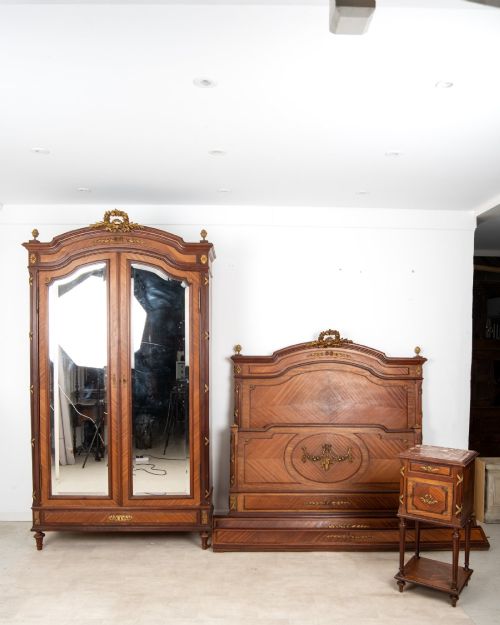
Heavy marble slabs, often white or veined, sit fitted to the upper surface to provide a durable and water-resistant top. Cast bronze, brass and ormolu mounts punctuate corners, handles and feet, particularly on pieces influenced by French rococo and neoclassical styles.
One Victorian mahogany cabinet conceals an internal safe, proving that even bedside storage occasionally required high-security measures.
Standards of Craftsmanship
Quality rests in the precision of the cabinet carcase and the integration of the stone top. Finer examples display tightly fitted dovetail joints, smooth drawer operation and well-matched timber veneers that wrap continuously around the curves of bombe forms.
The distinction between ordinary and exceptional pieces often lies in the mountings and surface work. Cast ormolu mounts with crisp chasing, genuine hand-cut marquetry and thick, richly figured marble slabs elevate the status of a bedside cabinet.
François Linke·E Kahn
The Marble Top Bedside Glossary
- Chevet
- A French term for a small bedside table or cabinet designed to stand beside a bed. These often incorporate a single drawer above a small cupboard.
- Ormolu
- Gilded bronze mounts applied to furniture for decorative effect. It gained widespread use in French cabinetmaking during the eighteenth century and later revivals.
- Bombe
- A swelling or outwardly curving furniture shape. It requires considerable skill in veneer work to follow the undulating contours.
- Marquetry
- The art of applying pieces of veneer to a structure to form decorative patterns or pictures. Cabinetmakers use various tinted woods to achieve contrast.
Marble Top Bedside: Frequently Asked Questions
What were marble top bedside cabinets used for?
These small cabinets served as bedside storage for personal items and supported a chamber candlestick or water jug before electric lighting. The stone surface protected the wooden carcase from spilled water or medicines.
Today they function as bedside tables where the stone top safely holds lamps, glasses and modern accessories.
Are most marble top bedside tables sold as pairs?
A significant portion of the selection comprises matched pairs made for twin beds. These pieces are often mirror-image or handed, meaning the door hinges or drawer configurations open in opposite directions.
Single cabinets also appear regularly for buyers requiring only one bedside surface.
How do I identify a French revival bedside cabinet?
French revival pieces display stylistic references to earlier periods such as Louis XV or Louis XVI. Look for cabriole legs, gilt bronze mounts, serpentine fronts and intricate marquetry inlay.
These details distinguish Continental furniture from simpler British or Scandinavian utilitarian designs of the same era.
How do I care for an antique marble top?
Marble is a porous stone that benefits from regular cleaning with a damp cloth and mild, non-acidic soap. Avoid abrasive cleaners or acidic liquids like citrus juice that can etch the polished surface.
Applying a specialist stone wax helps protect the finish from moisture rings and everyday wear.