


French Marble Cabinets
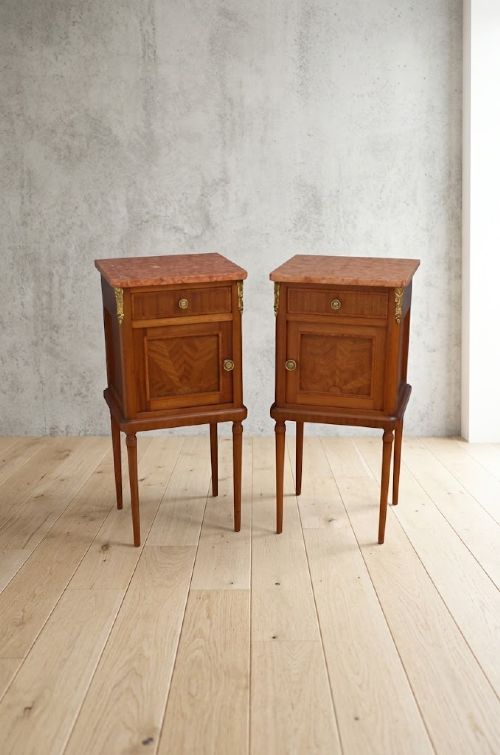
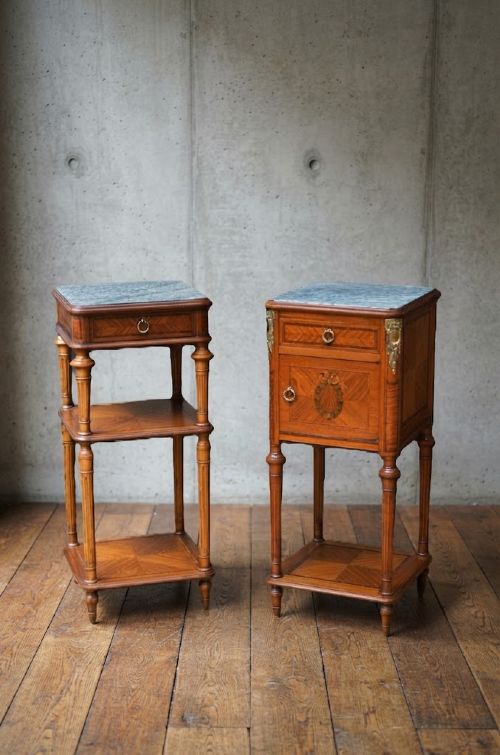
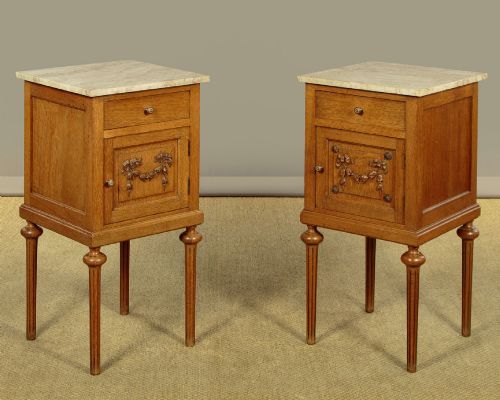
French marble cabinets bring together polished stone and fine cabinet-making in forms ranging from bedside tables to commodes.
French Marble Cabinets
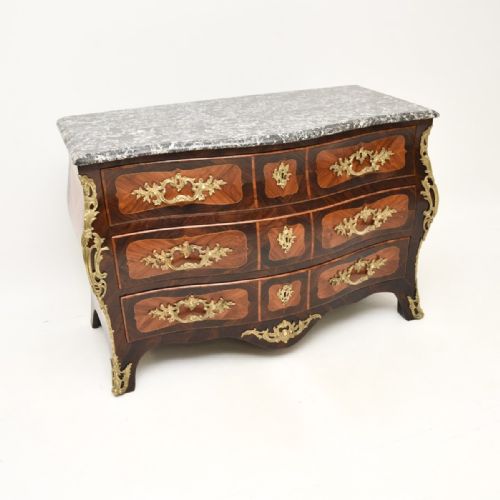
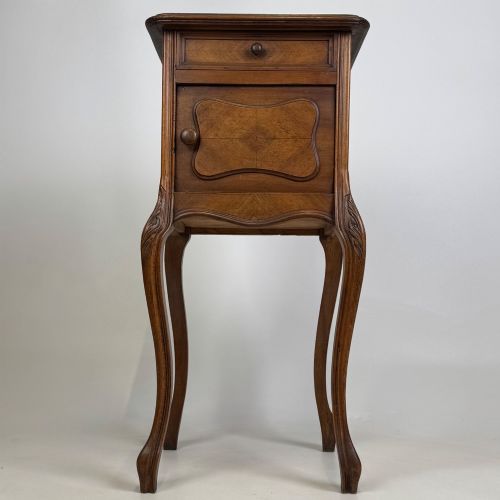
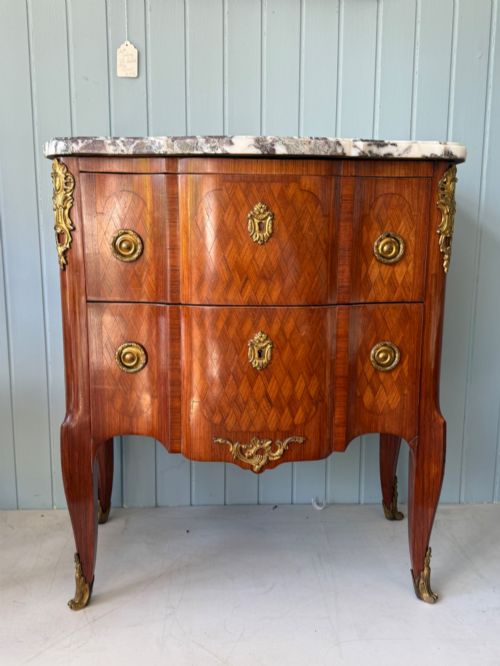
French marble cabinets encompass a variety of forms designed for storage and display, most frequently appearing as bedside cabinets, commodes, and vitrines. These pieces reflect historical revival styles such as Louis XV and Louis XVI, alongside later Art Deco and provincial designs.
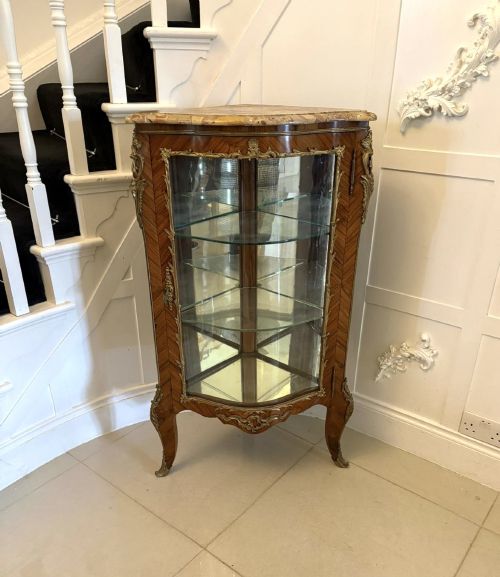
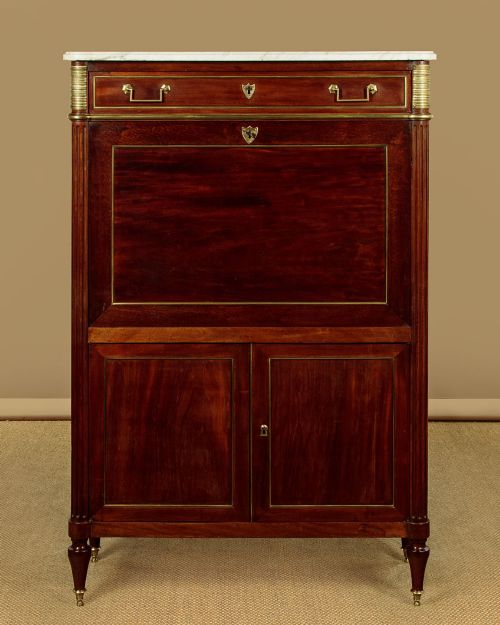
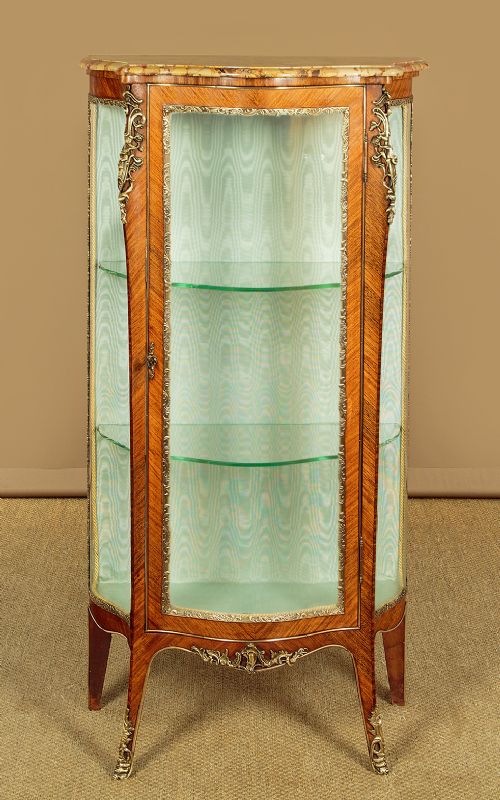
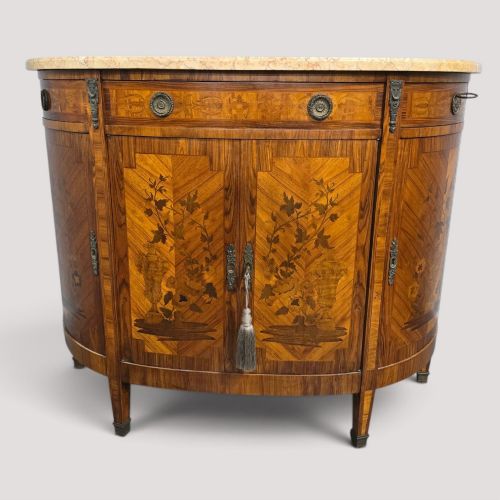
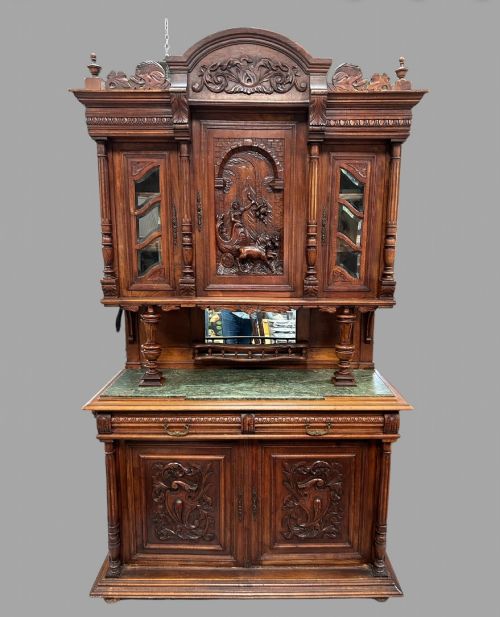
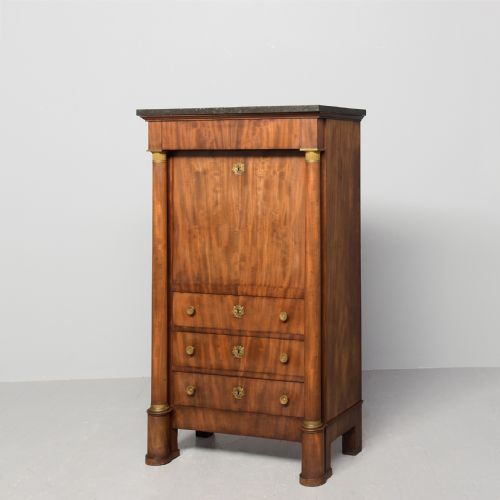
Bedside cabinets and commodes dominate the selection, often featuring fitted marble tops in grey or rouge varieties. Alongside these smaller pieces, larger credenzas, secretaire abattants, and display cabinets surface from the nineteenth and early twentieth centuries.
The origins span provincial workshops and metropolitan cabinet-makers, utilising woods like walnut, kingwood, mahogany, and oak. Buyers searching for french marble cabinets will encounter diverse formats shaped by changing domestic needs across the eighteenth, nineteenth, and twentieth centuries.
How They Were Made
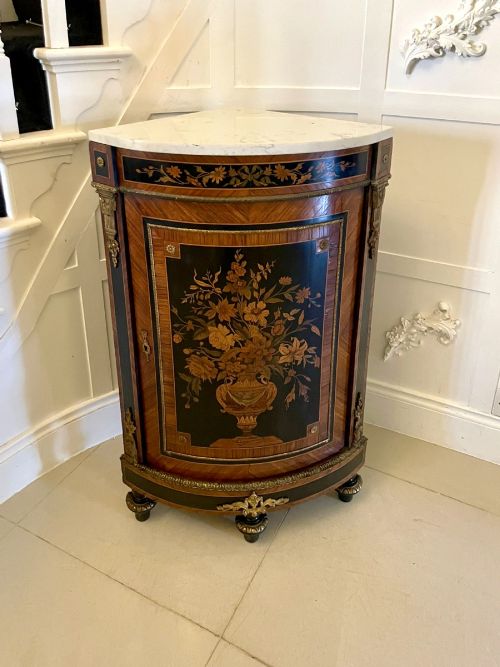
Construction relies on solid and veneered timbers such as walnut, mahogany, kingwood, and satinwood, often enhanced by intricate marquetry and parquetry patterns. Artisans shaped these woods into carcases supporting fitted marble slabs, secured to withstand daily domestic use.
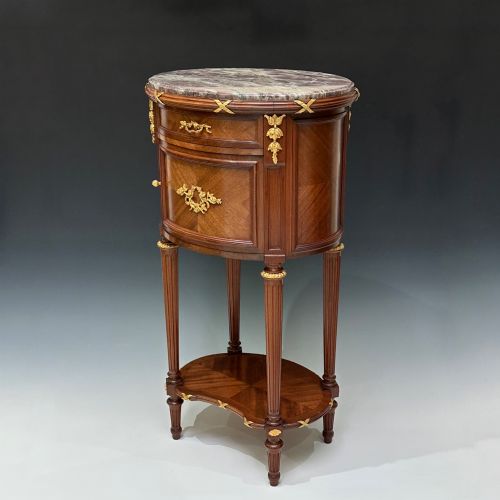
Metal components play a structural and decorative role, with ormolu, brass, and gilt bronze mounts fitted around drawers, doors, and corners. Vernis Martin finishes and hand-carved oak details further demonstrate the traditional techniques applied by period cabinet-makers.
Listings feature walnut, mahogany, kingwood, and oak across bedside cabinets, commodes, and vitrines.
What Varies in Quality
The standard of execution depends heavily on the precision of the marquetry inlay and the selection of cabinet timbers like kingwood and rosewood. Superior examples exhibit seamless timber matching and crisp, detailed casting in their ormolu or brass mounts.
The integration of the marble top also marks differences in grade, where thicker, well-polished stone slabs sit flush against the timber carcase. Maker attribution, seen in pieces bearing signatures from workshops like those of François Linke or Henry Dasson, separates standard production from exceptional works.
Jacques Bircklé·François Linke·Henry Dasson·Weisweiler
The French Marble Cabinets Glossary
- Ormolu
- Gilt-bronze mounts applied to furniture for decorative effect. This technique was widely utilised by French makers during the eighteenth and nineteenth centuries.
- Marquetry
- Decorative patterns formed by inserting small pieces of veneer into a wood foundation. It creates pictorial or geometric designs on cabinet doors and tabletops.
- Commode
- A low chest of drawers standing on legs or feet. French examples from the nineteenth century frequently feature shaped marble tops.
- Secretaire Abattant
- A tall upright cabinet with a drop-front writing flap concealing small drawers and pigeonholes. These pieces often combine fitted marble tops with concealed compartments.
- Vitrine
- A glass-fronted display cabinet intended for porcelain and small objects. These items showcase glazed panels supported by fine timber frames and gilt metal mounts.
French Marble Cabinets: Frequently Asked Questions
How were these cabinets used?
Bedside versions served to hold personal items and lighting next to a bed, while commodes provided general bedroom storage.
Larger display cabinets and secretaires functioned as reception room furniture for exhibiting porcelain and managing correspondence.
How do I live with marble top cabinets?
The stone surfaces offer a durable and water-resistant top layer that handles everyday objects easily.
Routine maintenance involves gentle cleaning of both the timber carcase and the polished stone to preserve the finish.
How do I tell periods apart?
Stylistic indicators such as Louis XV curves or Art Deco geometric lines point toward specific decades of manufacture.
Construction methods, wood types, and the design of the bronze mounts further help distinguish nineteenth-century revival pieces from earlier originals.