

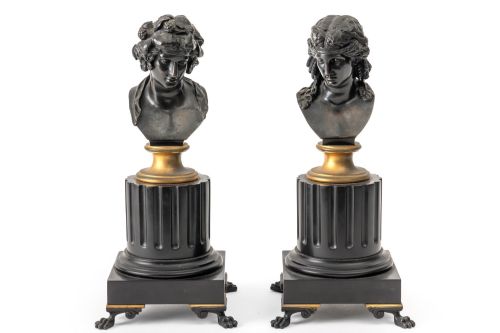

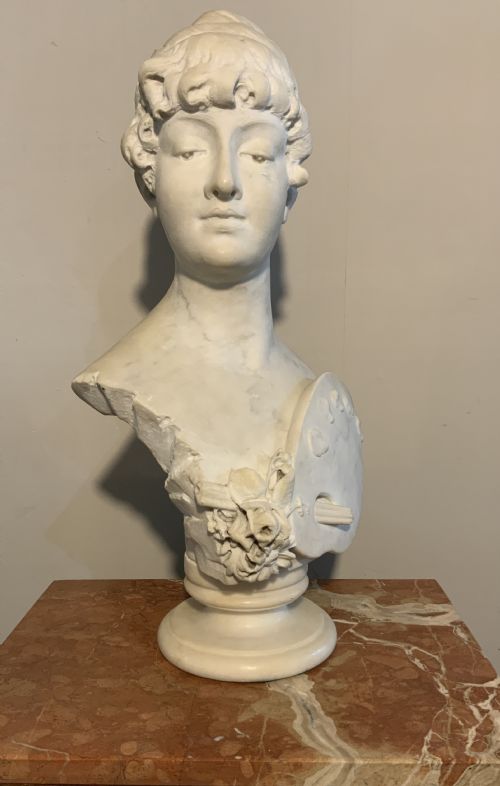
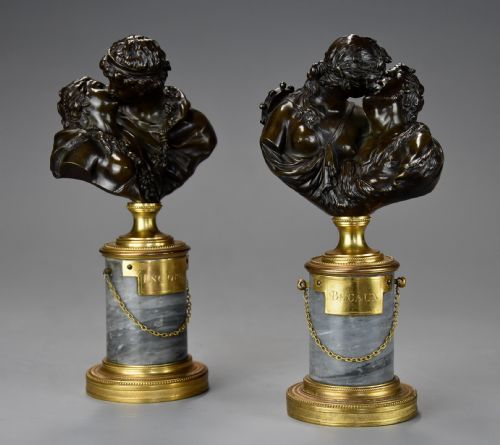
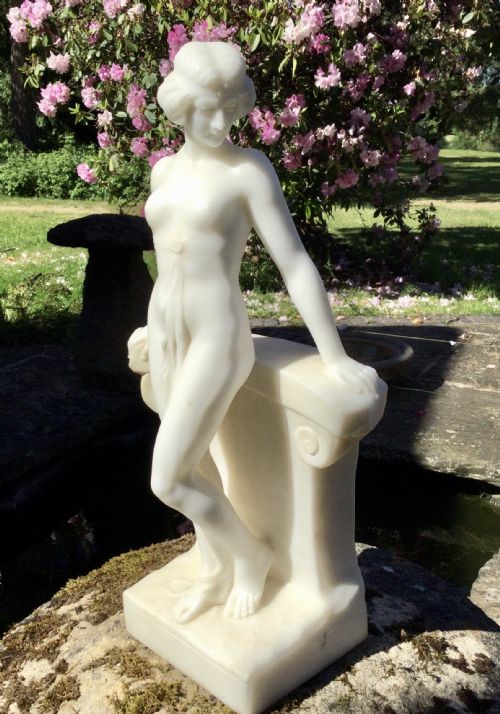
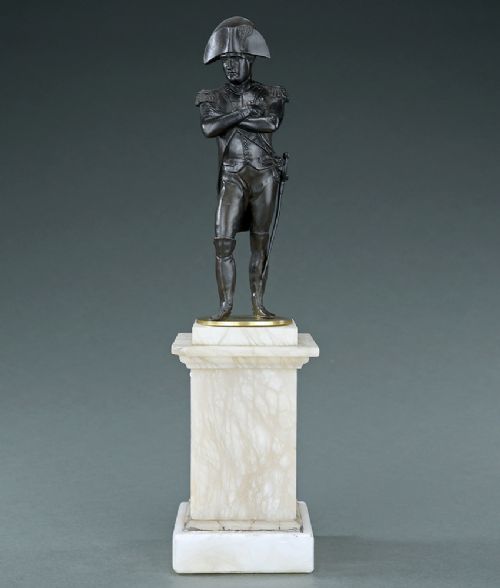
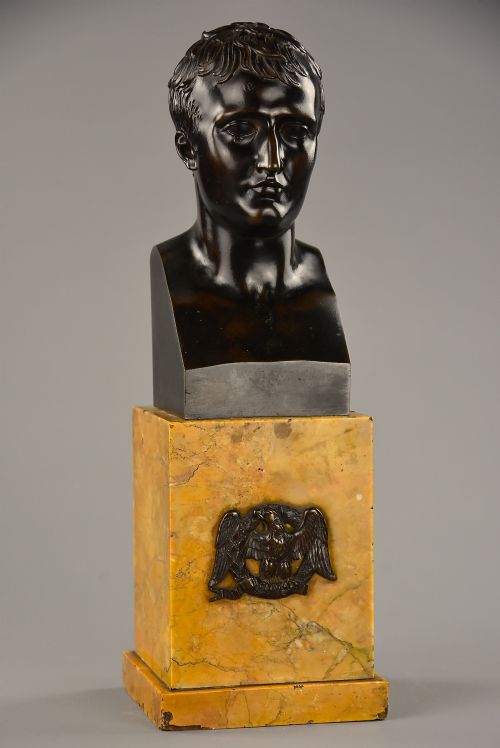


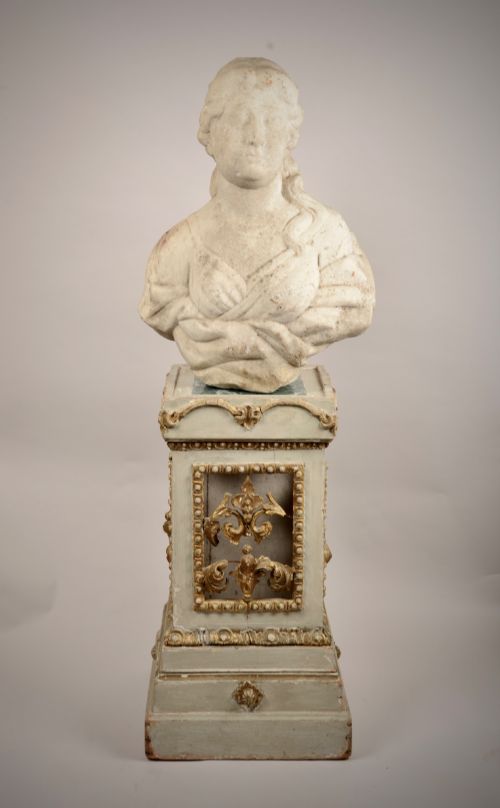


Marble Statue Pedestal
A marble statue pedestal elevates sculpture and ornament, bringing classical proportion and presence to a room through solid stone and mounted metal.
Marble Statue Pedestal
When searching for a marble statue pedestal, buyers encounter columns, torcheres, plinths and figural stands designed to support busts, bronzes and lamps. These structural pieces originate primarily in the nineteenth century, drawing on Neoclassical, Baroque and French Empire vocabulary.
The most common formats on this page include upright onyx torchere columns, circular faux marble supports and paired architectural columns fitted with ormolu collars. Such items range from modest library figure stands to towering ceremonial bases.
Materials extend beyond standard white marble into richly veined varieties, alabaster, stone and painted timber, often paired with cast bronze figure groups or sculptural busts.
Materials and construction methods
Carved natural stone, white marble and translucent alabaster form the structural core of these supports, shaped by hand into fluted columns and circular shafts. Masons turned heavy mineral blocks on lathes or carved capitals and bases directly from the solid mass.
Gilders and metalworkers enhanced the stone architecture by applying cast bronze mounts, ormolu collars and silvered patination to highlight architectural details. These applied bronze elements are secured via threaded pins or integrated directly into the stone top.
Marble Statue Pedestal Retail Price Guide 2026
Typical asking prices for marble statue pedestal among the pieces listed under this phrase on Sellingantiques today, from the lower quarter to the upper quarter. They describe what is for sale here now, not the wider market.
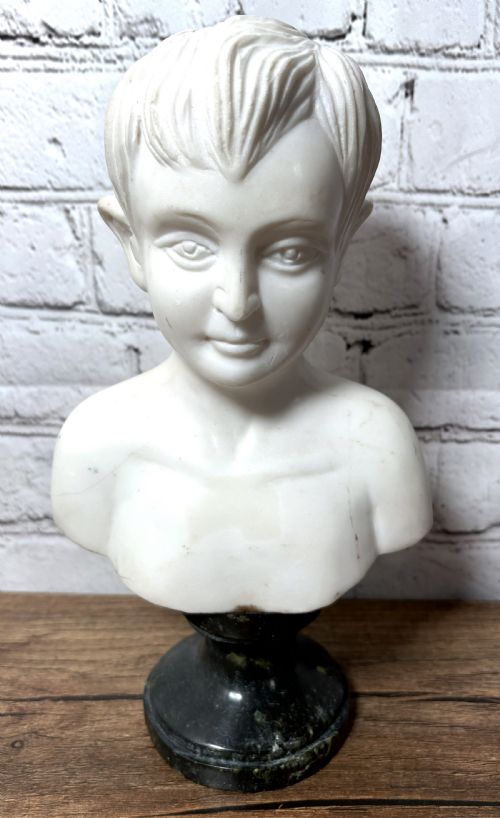
Children pushing carts and children playing music provide a surprisingly playful domestic counterpoint to austere neoclassical columns.
Distinctions in craftsmanship and material
Quality rests in the mineral selection, such as the density of the onyx, the depth of carving in the stone capital and the crispness of the cast bronze ormolu mounts. Finer examples display harmonious veining running continuously through the shaft rather than pieced assembly.
The integration between the primary stone column and any supporting metal collars or timber foundation marks the difference between standard utilitarian stands and high-status decorative art. Structural balance and precise weight distribution govern whether a pedestal supports heavy bronze sculpture safely.
Emile Guillemin·Jean Antoine Houdon·Antonio Merente·John Wenlock Rollins·F. De Luca·Eduardo Giolli·Claire Colinet·E.Villanis
The Marble Statue Pedestal Glossary
- Torchere
- A tall stand or column originally designed to carry a light source, frequently adapted as a pedestal for figures or urns. These slender shafts often feature stepped bases and decorative capitals.
- Ormolu
- Gilded bronze mounts applied to furniture, pedestals and clocks to accent structural corners and capitals. The technique involves fire-gilding a mercury and gold amalgam onto cast bronze.
- Plinth
- The flat slab or block forming the lowest division of a base, column or statue. It provides stability and visual separation between the floor and the main shaft.
- Alabaster
- A fine-grained, translucent stone used for figurative carving and lamp bases. Its softness permits delicate detail work but requires careful handling.
Marble Statue Pedestal: Frequently Asked Questions
How do I choose the right height for a statue pedestal?
Consider the eye level of the intended room and the height of the sculpture or bust intended for the top. Taller torcheres suit smaller bronze figures, while stout columns anchor larger marble busts.
Ensure the top platform matches or exceeds the footprint of the sculpture to maintain physical stability and proper visual proportion.
Can these pedestals support heavy bronze statues?
Many nineteenth-century pedestals and columns were engineered specifically to bear the substantial weight of cast bronze figures and marble busts. Solid stone and fitted bronze collars provide the necessary structural strength.
Check the weight distribution of your sculpture against the base diameter to ensure safe display without tipping.
What is the difference between onyx and marble?
Onyx is a form of banded chalcedony limestone known for its translucent quality and layered coloration, whereas marble is a metamorphic rock formed from recrystallised carbonate minerals. Both materials appear frequently in nineteenth-century decorative columns.
Onyx pedestals typically offer greater light transmission through the shaft, while marble provides a dense, solid appearance.
How should I clean a marble or alabaster pedestal?
Dust regularly with a dry, soft microfiber cloth to prevent particulate matter from settling into the porous stone or carved details. Avoid chemical solvents, abrasive scourers and excessive water.
Alabaster is particularly sensitive to moisture due to its softness, so any cleaning must remain completely dry.