
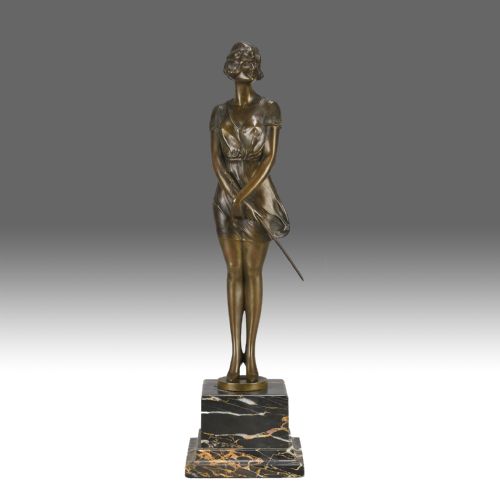
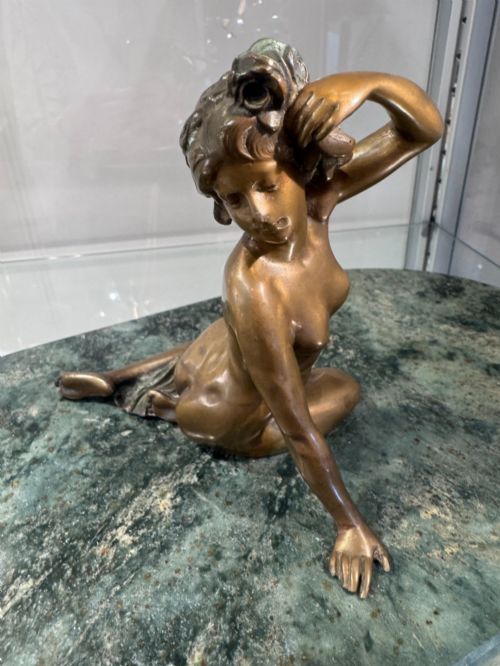
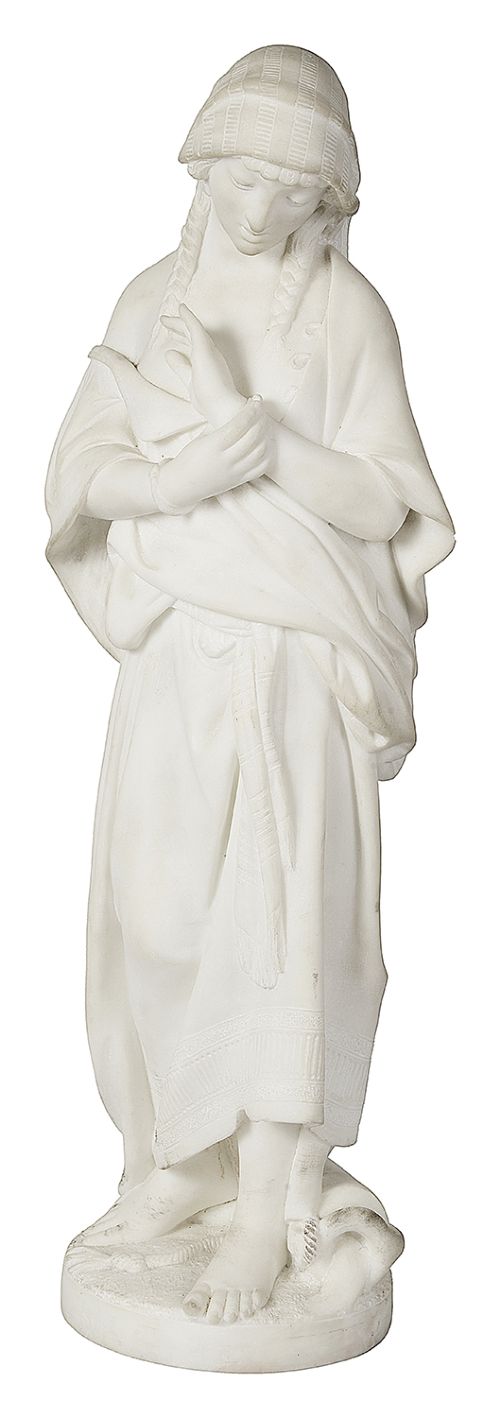
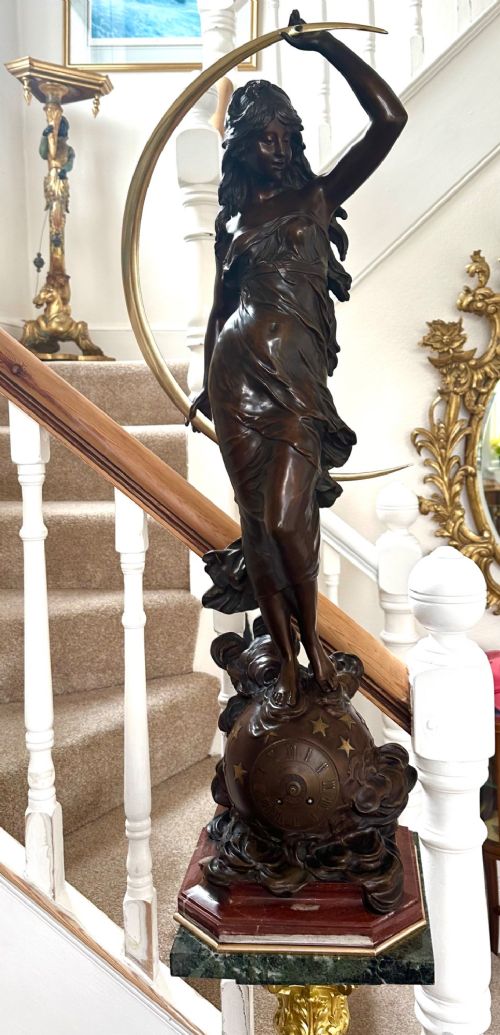
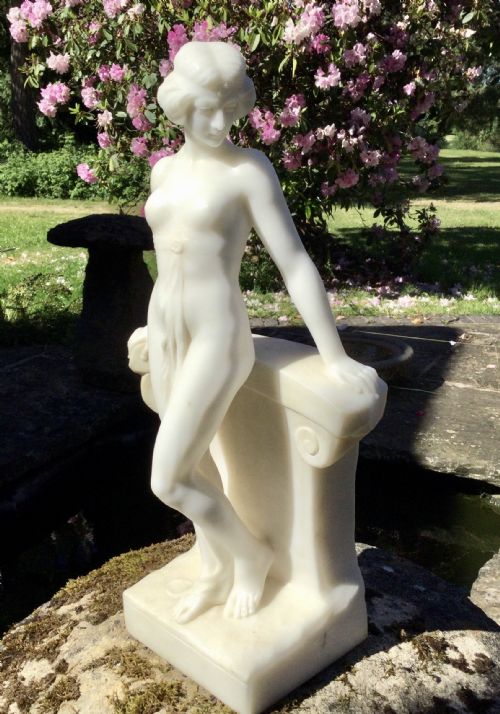
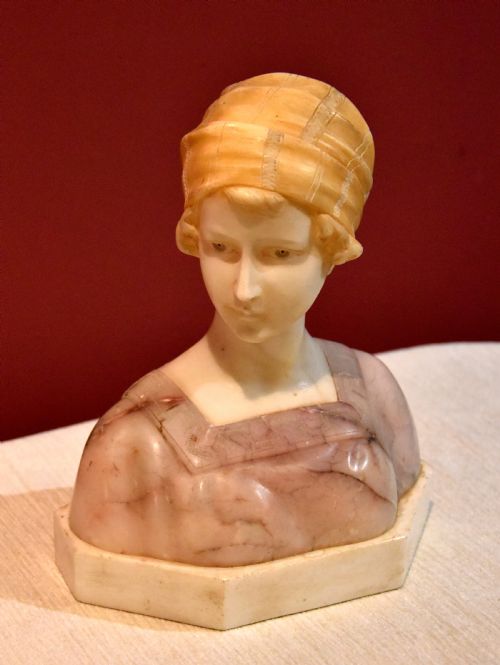
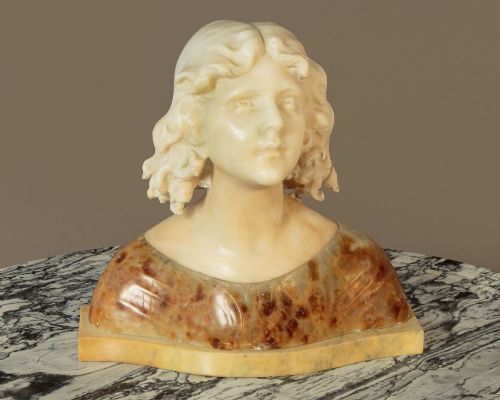


Marble Maiden Statue
These marble maiden statue pieces capture classical and modern figures in carved stone, offering timeless elegance for display.
Marble Maiden Statue
A marble maiden statue encompasses carved figures of women, girls, and classical figures originating predominantly from the nineteenth and early twentieth centuries. These works appear in forms such as full-length statues, portrait busts, and mantel clocks incorporating carved figures.
Buyers encounter interpretations stretching from Victorian Neoclassical and French Classical Revival to Art Nouveau and Art Deco. Carrara marble and alabaster dominate the material palette, often paired with bronze or brass elements.
Materials and carving techniques
Sculptors utilised white marble, Carrara marble, and translucent alabaster, shaping the stone by hand or with mechanical pointing machines to achieve fine anatomical detail. Parian porcelain and cast bronze or spelter also appear alongside stone bases such as Vert de Mer.
Listings feature works in marble, alabaster, bronze, brass, stone, Parian porcelain, and spelter across the nineteenth and early twentieth centuries.
Evaluating sculptural execution
The choice of material heavily influences the piece, with flawless Carrara marble and finely grained two-tone alabaster commanding greater appreciation than heavily repaired or uniformly coarse stone.
Bruno Zach·Barranti·Auguste Henri Carli·Zoldan Kovats·Eduardo Giolli·Charlotte Monginot·Gugielmo Pugi·Auguste Moreau
The Marble Maiden Statue Glossary
- Carrara marble
- A type of white or blue-grey marble quarried in the city of Carrara in Tuscany, Italy. This stone is famed for its consistent texture and historical use in classical sculpture.
- Alabaster
- A fine-grained mineral often used for carving decorative objects and portrait busts. Its soft translucency allows light to penetrate the surface.
- Parian porcelain
- A type of biscuit porcelain developed in Britain to imitate carved marble. It gained popularity during the Victorian era for portrait figures and literary characters.
- Vert de Mer
- A dark green ornamental marble with distinctive veining often utilised for bases and plinths. It provides a striking contrast to white marble and alabaster figures.
Marble Maiden Statue: Frequently Asked Questions
What periods do these cover?
The available selection spans from the mid nineteenth century through the Victorian era and into the early twentieth century. Art Nouveau and Art Deco styles appear alongside classical nineteenth century Italian works.
Most pieces date between eighteen-fifty and nineteen-thirty, reflecting changing aesthetic preferences across European sculpture studios.
Where were these pieces made?
Italy and France produced a significant portion of these carved figures, particularly centres like Florence and Carrara where stone working traditions thrived. British factories also contributed ceramic alternatives during the Victorian period.
Grand Tour souvenirs from Italy represent another common origin for nineteenth century marble carvings brought back by travellers.
How are busts mounted?
Portrait busts frequently sit on integrated stone plinths or distinct bases made from contrasting materials such as Verdi green marble. These mounts provide structural stability and elevate the carved subject.
Some examples integrate the figure into functional objects like mantel clocks or table lamps, combining illumination or timekeeping with sculpture.