




Marble Base Candleholders
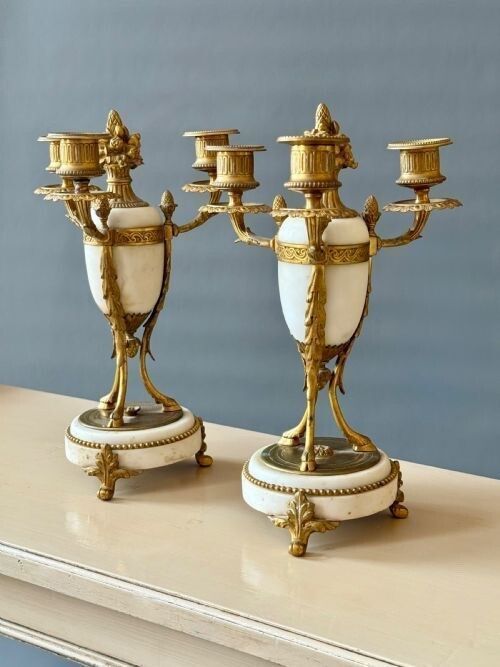
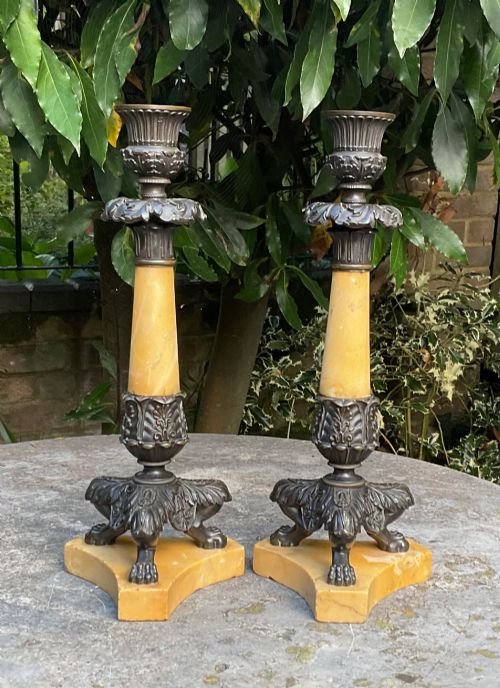
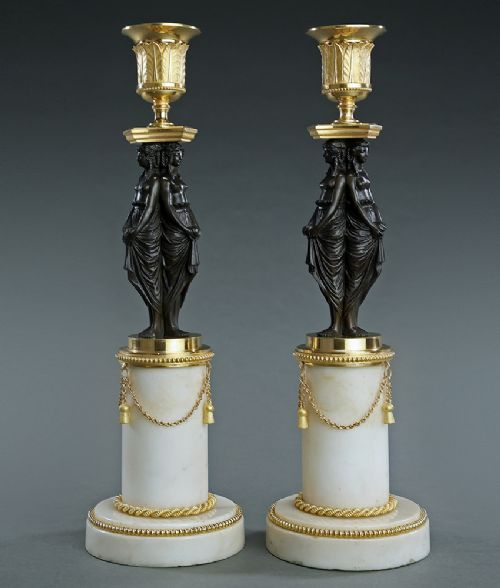
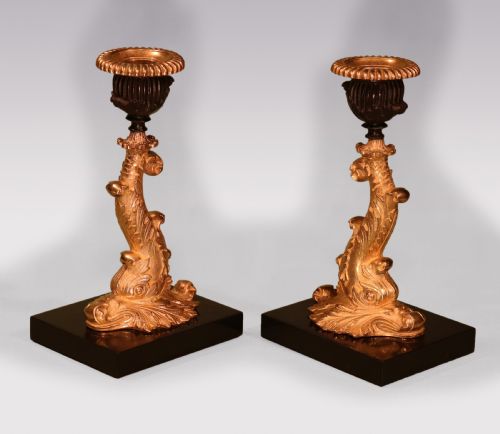
These marble base candleholders bring classical weight and rich metalwork into a room, combining solid stone with detailed bronze casting.
Marble Base Candleholders
When you search for marble base candleholders, you encounter substantial lighting pieces primarily produced during the nineteenth century in various French and Regency styles. These objects pair solid stone plinths with cast metal branches or candle sockets, creating a balanced weight that anchors a mantelpiece or side table.
The selections available on this page lean heavily towards pairs, featuring figures such as cherubs, putti, and dolphins integrated into the design. Styles range from strict Regency forms to elaborate Louis XVI revivals and French Neoclassical interpretations.
You will find both single candlesticks designed for one taper and multi-branch candelabra offering several lights. The materials consistently blend natural stone with patinated bronze, ormolu, and gilt metal details.
How they were made
The construction of these pieces relies on the combination of heavy stone work and detailed metal founding. Bases are shaped from marble and porphyry marble, turned or carved to support the upper metal elements securely.
The metal components, including figures like caryatids and cherubs, are cast in bronze or brass before receiving patination, gilding, or ormolu finishing. These elements are then assembled mechanically using threaded rods or pins to join the stone base firmly to the metal stem and branches.
Cherubs and putti feature heavily across these designs, occasionally holding up candle branches with expressions of mild exertion.
What varies in quality
Quality in these items is determined by the crispness of the bronze chasing and the selection of the stone base. Finer examples display deeply carved details in the figures and clean, well-finished mounts that fit tightly against the marble.
Claude Clodion
The Marble Base Candleholders Glossary
- Ormolu
- Gilded bronze produced through a mercury amalgamation technique. This finish gives the metal a deep, warm gold colour that resists tarnish.
- Candelabra
- A branched lighting fixture holding multiple candles. These often feature removable branch sections to function as simple candlesticks.
- Porphyry marble
- A dense igneous rock with large crystal phenocrysts embedded in a fine-grained groundmass. It was prized in antiquity and later revivals for its rich purple or reddish hue.
- Caryatid
- A sculpted female figure serving as an architectural support or stem. They appear frequently on classical and revival candlesticks.
- Patinated bronze
- Bronze treated with chemical solutions to produce a specific surface colour, usually dark brown or greenish brown. This treatment highlights the modelled details of figures and foliage.
Marble Base Candleholders: Frequently Asked Questions
How do I clean marble and bronze?
Clean marble bases gently with a soft cloth dampened in lukewarm water, avoiding harsh acids or abrasive cleaners that etch the stone.
Dust the bronze and ormolu parts carefully with a dry brush, keeping moisture away from vulnerable metal surfaces and historical finishes.
Are these candleholders wired for electricity?
Most period examples retain their original configuration designed strictly for wax tapers rather than modern electrical wiring. Altering them to hold lamps usually requires careful consideration of the hollow stems and original assembly.
Many collectors prefer to use them with standard candles to preserve their original structural integrity and historical form.
How can I tell Regency from Louis XVI style?
Regency pieces tend to feature bold architectural lines, classical motifs like dolphins, and restrained mounts derived from British and French Regency design. They often use dark patinated bronze contrasted with bright gilt metal.
Louis XVI style items lean heavier on exuberant French ornamentation, including cherubs, floral garlands, and formal neoclassical symmetry popular during the nineteenth-century revival periods.