

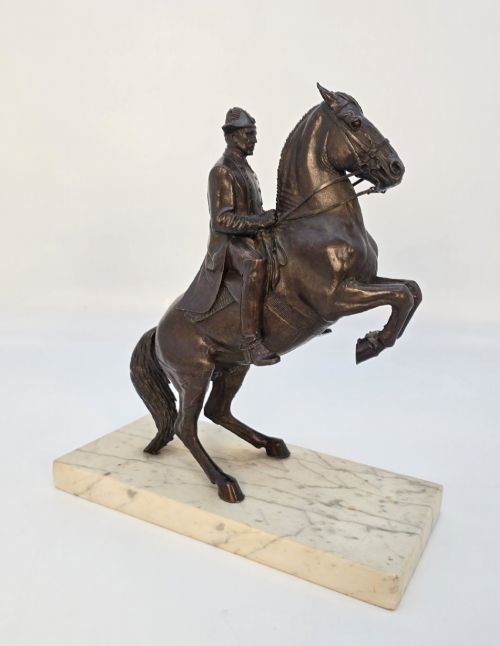


Marble Base Bronze Horse
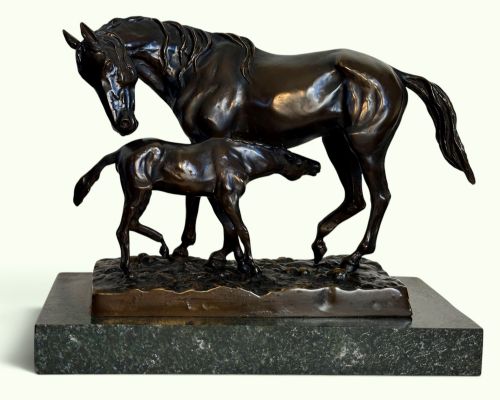
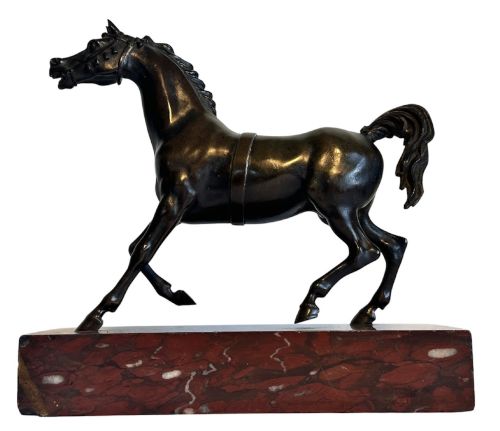
A marble base bronze horse brings the dynamic weight of nineteenth century animalier sculpture and grand tour classicism straight to the mantelpiece.
Marble Base Bronze Horse
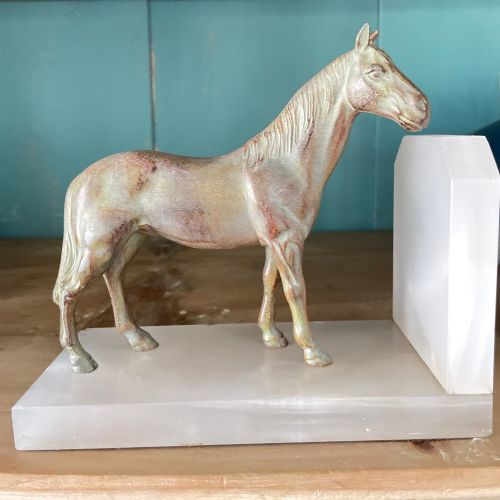
A marble base bronze horse combines cast metal animal studies with heavy plinths in white marble, green marble, or onyx. These pieces range from compact nineteenth century French animalier groups to substantial Art Deco bookends and Grand Tour souvenirs.
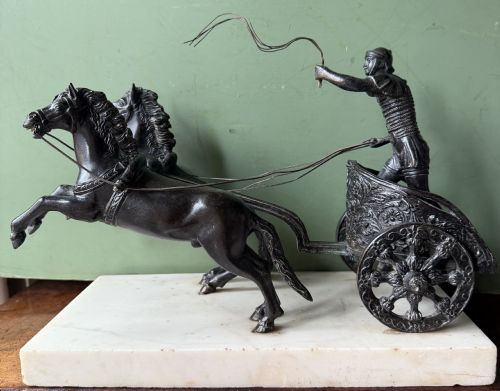
The selections span mid nineteenth century Italian studies, French equestrian figures, and twentieth century Austrian foundry work. Buyers encounter subjects from single stallions and mares with foals to historical figures like Napoleon and Colleoni mounted on stone plinths.
Object types on this page stretch beyond standalone sculptures to include functional bookends and architectural groups involving riders, charioteers, and quarrymen. The unifying element across these varied forms remains the heavy stone foundation supporting the cast metalwork.
Materials and casting techniques
Foundries utilised traditional lost wax or sand casting methods to capture the musculature and movement of equine subjects in bronze. These casts received varying treatments, from bright patination to dark, rich patinated bronze surfaces that highlight anatomical detail.
The resulting metal figures were then mounted onto fitted stone plinths, utilising marble and onyx bases that provide stability and visual contrast. Different green and white marble varieties anchor the heavier nineteenth century statues and twentieth century bookends alike.
Marble Base Bronze Horse Retail Price Guide 2026
Typical asking prices for marble base bronze horse among the pieces listed under this phrase on Sellingantiques today, from the lower quarter to the upper quarter. They describe what is for sale here now, not the wider market.
Listings feature periods spanning from the mid nineteenth century up to 1950, utilising bronze, patinated bronze, marble, green marble, and onyx.
Factors determining the quality of cast bronzes
Quality rests in the crispness of the chase work, where skilled hands refined the raw bronze casting to define sinew, mane, and harness details. Sharp articulation distinguishes superior sculpture from softer, less detailed production.
The integration between the heavy metal figure and its stone plinth reveals much about the piece's construction. Well proportioned marble and onyx bases with secure mountings elevate the overall presence of the animalier study.
Christophe Fratin·E Drouot·Franz Bergman·Xavier Raphanel·P J Mene
The Marble Base Bronze Horse Glossary
- Animalier
- A nineteenth century artistic movement focused on the realistic portrayal of animals, particularly horses and big cats. Sculptors in this tradition captured creatures in motion or repose with careful anatomical study.
- Patinated Bronze
- Bronze that has been chemically treated to alter its surface colour, producing tones from warm brown to deep black. This finish protects the metal and accentuates sculptural depth.
- Grand Tour
- A traditional trip through Europe undertaken by upper class scholars and collectors who acquired small bronzes and antiquities as souvenirs. These reduction casts often depicted famous public monuments.
- Onyx
- A banded variety of chalcedony frequently utilised for decorative desk objects and twentieth century bookend bases. Its translucent layers offer a distinct alternative to traditional marble.
- Plinth
- The heavy base or platform upon which a bronze sculpture is mounted. In these pieces, marble or onyx plinths provide essential ballast and visual framing.
Marble Base Bronze Horse: Frequently Asked Questions
What periods do these bronze horses cover?
The pieces span from the mid nineteenth century through to the mid twentieth century, encompassing Victorian animalier works and later Art Deco interpretations.
Foundry output from these decades reflects shifting tastes in equestrian sculpture, moving from academic realism toward stylised decorative objects.
How do I care for a bronze on marble?
Dust the bronze gently with a soft brush and avoid harsh chemical cleaners that might strip the original patination.
Keep marble and onyx bases away from moisture and sudden temperature changes to protect the polished stone surfaces.
Are these sculptures solid or hollow cast?
Most figurative bronzes are hollow cast to manage weight and metal usage during the foundry process, though smaller elements can be solid.
Despite being hollow, the combined weight of the metal figure and the heavy stone base remains substantial.
What is a Grand Tour bronze?
Grand Tour pieces were acquired by travellers in Europe during the nineteenth century as miniature replicas of famous classical or Renaissance monuments.
Subjects often included historical figures on horseback mounted upon compact marble plinths designed for display in a study.