
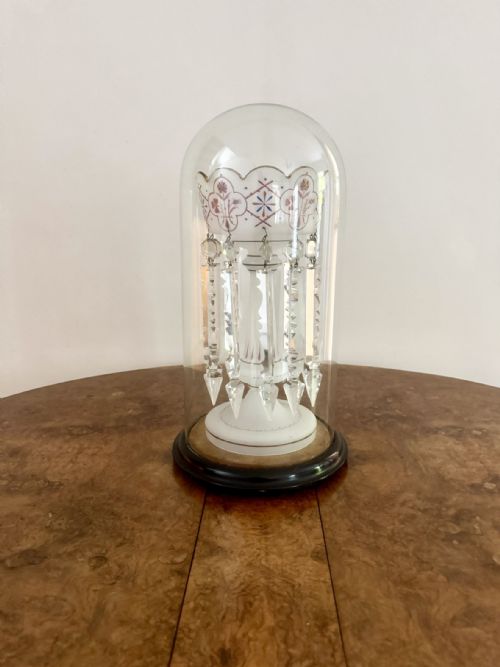


Mantelpiece Glass Drops
Mantelpiece glass drops bring flickering hearthside light and deep colour into a room, catching the eye with hanging crystal prisms.
Mantelpiece Glass Drops
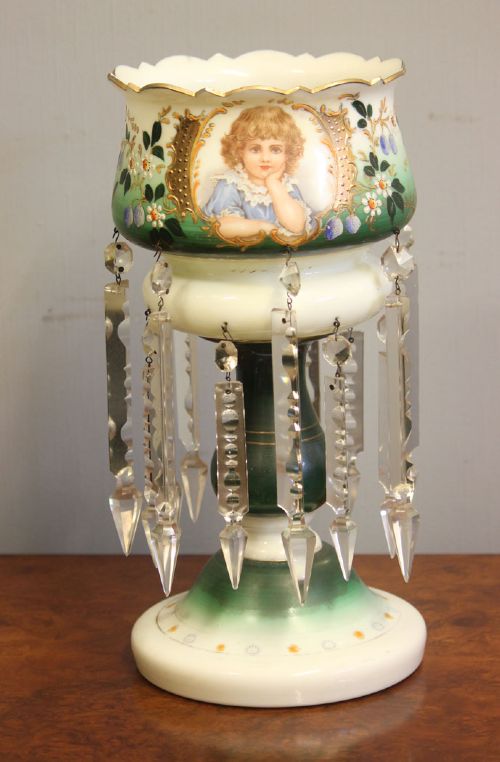
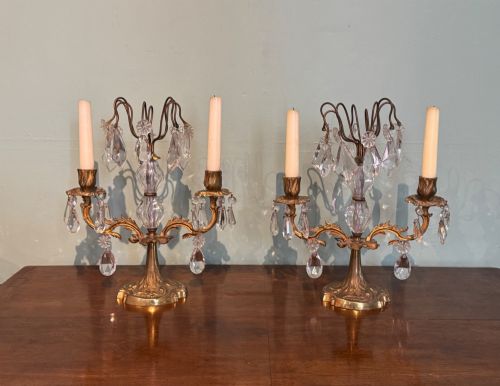
When you search for mantelpiece glass drops, you are looking at mantel lustres, candlesticks, and candelabras designed to sit on a fireplace ledge. These decorative objects combine a central vase or pillar with delicate hanging glass prisms that diffuse candlelight across a room.
The versions you are most likely to meet on this page date from the nineteenth century, including Victorian and Regency periods. They appear in forms such as pairs of table lustres, single mantle lustres, and pieces accompanied by glass domes.
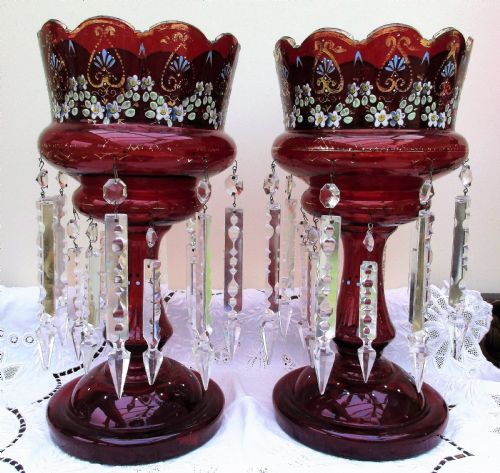
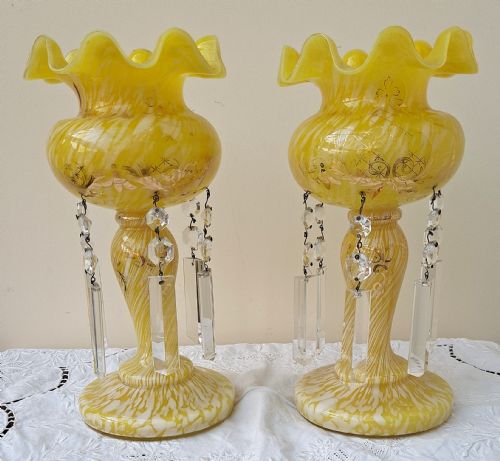
Makers fashioned these pieces in ruby glass, cranberry glass, yellow glass, and clear cut crystal. They often incorporated gilt highlights and enamel details to enhance their visual weight on a mantelpiece.
How they were made
Craftsmen shaped these items from molten glass, utilising blowing and moulding techniques before cooling and hand-cutting facets into the surface. Clear cut crystal and coloured glass such as ruby and cranberry formed the foundation of each lustre.
Artisans applied gold leaf and enamel decoration directly onto the glass body to add surface pattern and contrast. Individual glass drops were cut, drilled, and suspended from the rims using metal wires or pins.
Current listings span the nineteenth century, featuring Victorian and Regency styles in crystal, ruby glass, and cranberry glass.
What varies in quality
The distinction between ordinary and exceptional examples lies in the depth of the glass colour and the crispness of the facet cutting. Pieces featuring rich cranberry or ruby glass alongside sharp, clean cutting on the hanging drops command greater attention.
Completeness dictates the standing of a piece, particularly whether the original set of hanging glass prisms remains intact. The application of gold leaf and enamel details also separates standard production from more finely finished work.
The Mantelpiece Glass Drops Glossary
- Lustre
- A decorative tabletop vessel fitted with hanging glass prisms designed to reflect light. These items typically sat on mantelpieces flanked by candlesticks.
- Candelabra
- A branched candlestick holder designed to hold multiple candles at once. These often incorporated glass drops around the central stem.
- Cranberry glass
- A transparent pinkish-red glass produced by adding gold to the molten batch. It gained popularity during the Victorian era for decorative tableware and mantel ornaments.
- Gilt
- A thin layer of gold applied to the surface of glass or metal for decoration. This finish added reflective warmth to nineteenth-century decorative objects.
Mantelpiece Glass Drops: Frequently Asked Questions
What are mantelpiece glass drops?
These items are the hanging glass prisms attached to nineteenth-century mantel lustres and candelabras. They were designed to catch and scatter candlelight across the room.
Today, they survive as decorative mantelpiece ornaments that reflect period glassmaking techniques.
How were mantel lustres used?
Victorian households placed them on fireplace mantelpieces to illuminate rooms before electric lighting became common. The hanging glass drops multiplied the light from candles placed in the central sockets.
They also served as ornamental centrepieces during the darker winter months when hearths were unlit.
How do I identify Victorian glass?
Victorian pieces frequently display deep ruby or cranberry coloration combined with hand-cut crystal facets. They often feature gilt ornamentation and enamel painted details on the main body.
Examining the weight and the way the glass prisms are attached helps distinguish nineteenth-century examples from later reproductions.
Why do some lustres have domes?
Glass domes were sometimes paired with delicate table lustres to protect them from dust and soot in coal-heated rooms. This pairing kept the fragile hanging drops and gilt surfaces clean.
Surviving examples with their original domes offer a complete snapshot of Victorian display habits.