


Vintage Red Glass Vase
A vintage red glass vase brings striking colour to a room, catching the light through deep ruby, cranberry, or cameo layers.
Vintage Red Glass Vase
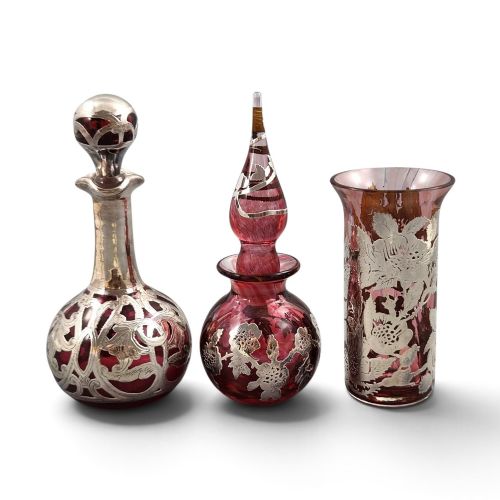
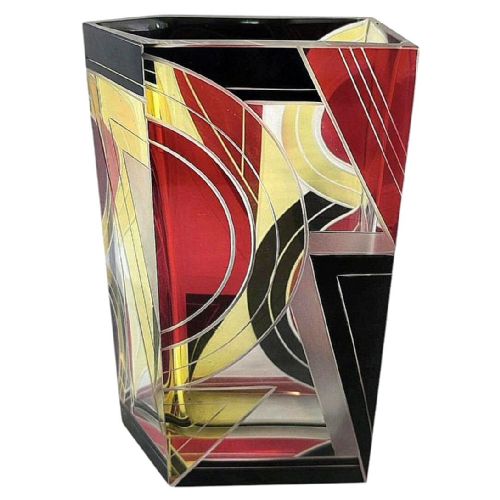
A vintage red glass vase encompasses pieces ranging from Victorian ruby glass and cranberry vessels to Art Deco geometric enamelware and cameo glass. When exploring a vintage red glass vase, you encounter items shaped by periods spanning the nineteenth century through the 1930s, alongside related vanity sets and mantel lustres.
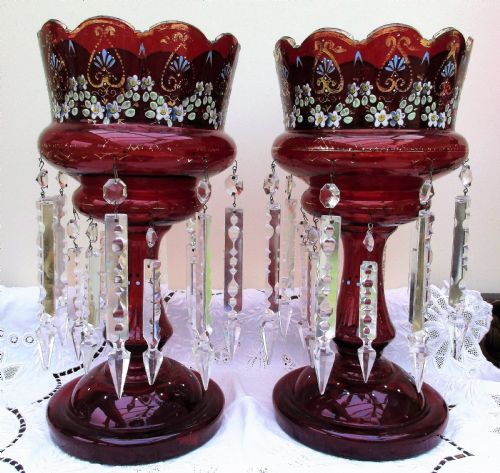
Victorian examples often take the form of richly coloured ruby lustres or delicate Mary Gregory small vases, while later twentieth-century iterations lean towards clean Art Deco lines and opaque finishes. Each variation offers a distinct aesthetic rooted in its period of manufacture.
Materials and technique
Makers utilised high-lead crystal, ruby glass, and cranberry glass as the foundational mediums, often casing layers of different coloured glass together. This cased technique allowed artisans to cut through an outer red layer to reveal a contrasting crystal base underneath, particularly visible in cameo pieces.
Surface decoration frequently involved hand-applied enamel details and intricate gold leaf gilding, requiring precise thermal control during firing. Acid etching and cameo carving emerged as primary methods for creating textured relief patterns on floral and aquatic motifs.
The listings span from the Victorian era and 1880 through Art Nouveau and Art Deco periods up to the 1930s.
Assessing quality and execution
The standard of a piece rests on the depth of the glass colour, the precision of the cased layers, and the crispness of any cameo carving or enamel decoration. Superior examples display flawless fusion between the red exterior and the underlying crystal, free from internal cloudiness or bubbles.
Execution of surface detailing distinguishes workshop output, where hand-painted enamel and gilt work exhibit steady brushwork and balanced composition. The reputation of the maker, such as Galle or Thomas Webb & Sons, further influences the standing of an individual vessel.
Thomas Webb & Sons·Val St Lambert·Galle·Gorham
The Vintage Red Glass Vase Glossary
- Ruby glass
- A deep red glass coloured historically through the addition of gold chloride into the molten batch. This traditional method yields a rich, translucent tone prized in Victorian tableware and decorative vessels.
- Cranberry glass
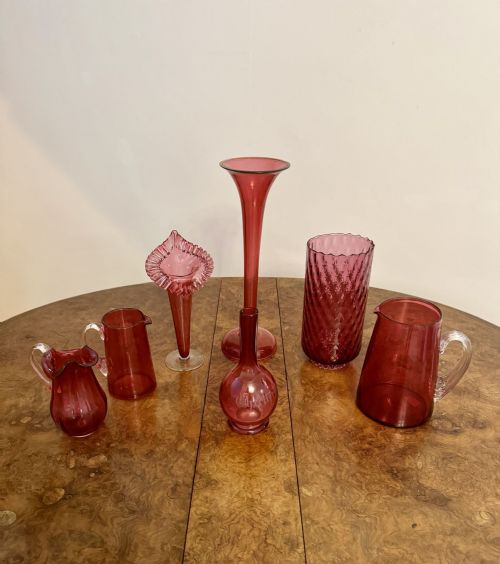
- A transparent pinkish-red glass produced by adding copper or gold to the melt, widely utilised during the nineteenth century. It appears frequently in nineteenth-century tablewares and mantel lustres.
- Cameo glass
- A vessel formed by fusing two or more distinct layers of glass, then carving away the exterior layer to create a raised relief design. This demanding technique reached exceptional heights during the Art Nouveau period.
- Mantel lustres
- Decorative garniture vases hung with prismatic glass drops designed to reflect candlelight from a fireplace mantel. They are typical of Victorian interior decoration.
- Enamel decoration
- The application of coloured glass powders fused to the surface of a vessel through firing. It allows for intricate geometric or botanical patterns across Art Deco and earlier items.
Vintage Red Glass Vase: Frequently Asked Questions
What is the difference between ruby and cranberry glass?
Ruby glass possesses a deeper, more saturated crimson tone, historically achieved through gold-based colouring agents. Cranberry glass tends toward a lighter, pinker hue.
Both materials were staples of nineteenth-century production, but their visual weight and transparency differ notably in direct light.
How can I date a red glass vase?
Examine the silhouette, manufacturing technique, and any signature or registry marks present on the base. Victorian pieces often feature heavy hand-finishing or prismatic lustres, while 1930s items lean toward geometric Art Deco forms and opaque finishes.
Stylistic cues such as cameo carving indicate specific movements like Art Nouveau.
Where should I display a vintage red glass vase?
Position the vessel near a natural light source, such as a windowsill or a well-lit shelf, to illuminate the translucent qualities of the red glass. Ensure it rests on a stable surface away from high-traffic areas to prevent accidental knocks.
Pairing the piece with neutral backgrounds allows the rich colouration to stand out effectively.