

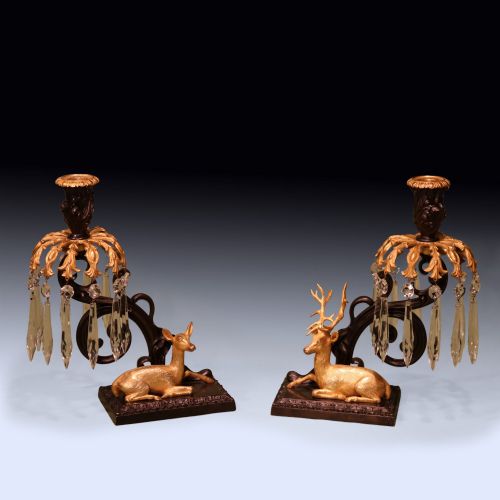


Victorian Crystal Lustre Pair
These Victorian crystal lustre pair examples bring dramatic sparkle to a room, catching the light through cut crystal drops and coloured glass.
Victorian Crystal Lustre Pair
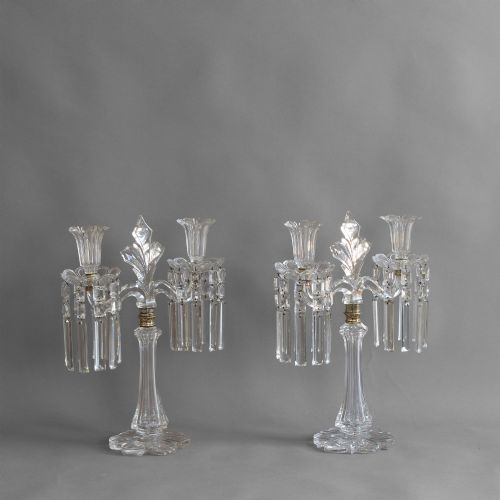
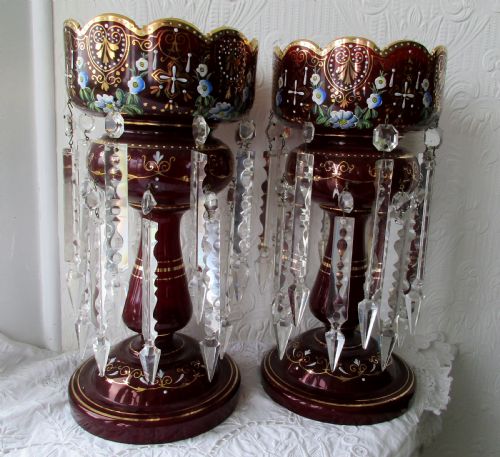
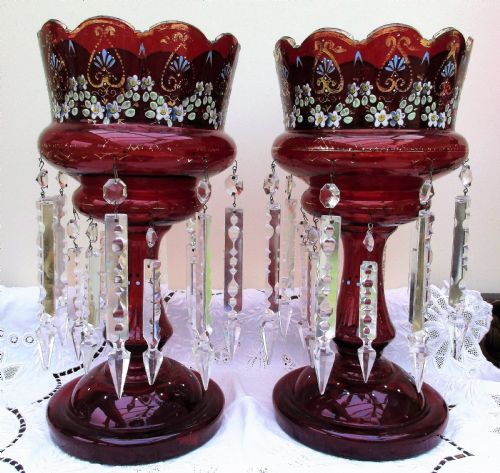
A victorian crystal lustre pair functions as both a decorative garniture and a mantel centrepiece, designed to catch and refract ambient light. You are most likely to meet ruby glass, green glass, and clear cut glass versions across nineteenth century and Victorian periods on this page.
The form typically comprises a central vase or candlestick stem fitted with a ring of hanging crystal prisms, known as drops. These pieces sit on mantelpieces, tables, and sideboards, originating from English, French, and Bohemian workshops.
Making the lustres
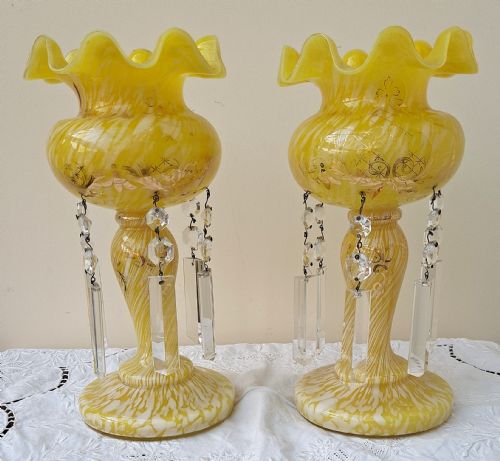
Makers utilised lead crystal, ruby glass, opal glass, and uranium glass, often shaping them through blowing and heavy moulding. Artisans then applied wheel-cutting, gold leaf, and enamel painting to the glass bodies.
Metal components incorporate brass, bronze, and ormolu, securing the glass bowls and candle nozzles. Cut crystal drops hang from the top rims via brass pins or wire.
Quality differences
The clarity and weight of the glass set finer examples apart from simpler moulded wares, alongside the depth of hand-cut facets on the crystal drops. Cut glass and overlay glass demand greater skill in execution than plain pressed vessels.
Mounts in gilt bronze or heavy brass indicate superior production, particularly when combined with hand-painted enamel decoration or matching original storm shades.
The Victorian Crystal Lustre Pair Glossary
- Lustre
- A type of candelabra or ornamental vase fitted with hanging glass prisms. These prisms catch and refract candle or natural light.
- Drop
- A cut crystal pendant suspended from the rim of a lustre. Drops are also known as prisms or spears.
- Overlay glass
- A technique where a layer of coloured glass is fused over a clear or contrasting body. Artisans then cut through the top layer to reveal the colour underneath.
- Flash glass
- Glass covered with a thin surface layer of coloured glass before being cut. This method creates vibrant tones without excessive weight.
- Cricklite
- A brand of patented table lamp and candelabra system using heavy pressed glass bases and storm shades. Clarkes produced these in the late Victorian era.
Victorian Crystal Lustre Pair: Frequently Asked Questions
What are crystal lustres used for?
These pieces served as decorative mantel ornaments in nineteenth-century drawing rooms, often flanking clocks or mirrors to enhance candle illumination.
Today, they function as striking decorative focal points on mantelpieces and sideboards, bringing period character and colour to a room.
How do I hang the crystal drops?
Crystal drops hang from small pierced holes around the upper rim of the glass bowl, secured by matching brass or wire loops.
Take care when handling them during cleaning, as individual drops detach easily from their mounting pins.
How do I tell Victorian lustres apart from later copies?
Examine the cut crystal drops for hand-polished facets and slight irregularities typical of nineteenth-century glass production. The glass bodies often show heavy bases, pontil marks, and hand-applied enamel or gilding.
French and Bohemian pieces frequently feature distinct overlay colours and heavier bronze mounts compared to standard English glassware.
Can I use candles in them?
Many examples include central sockets intended for taper candles alongside the decorative drop ring.
Exercise caution if burning candles near antique glass and delicate enamel work to prevent heat damage or wax accumulation.