





Male Nude Bronze Statue
A male nude bronze statue brings classical antiquity and muscular form directly into a room, capturing the human figure through centuries of foundry tradition.
Male Nude Bronze Statue
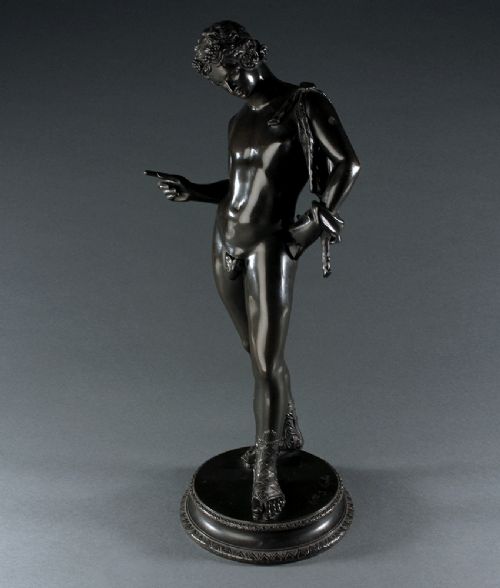
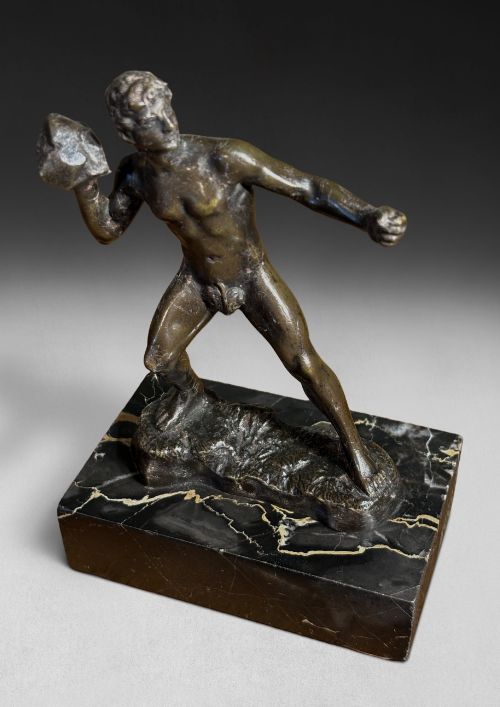
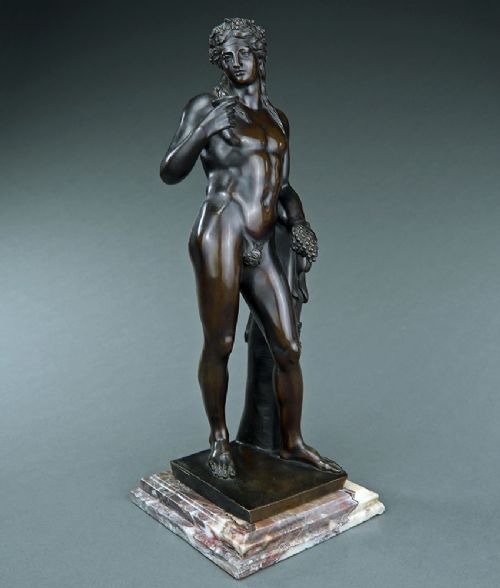
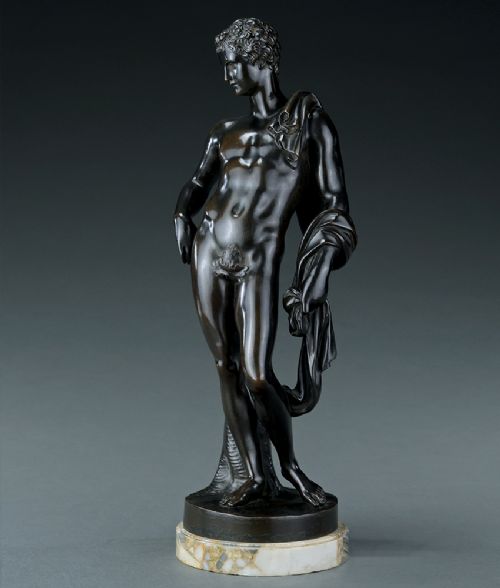
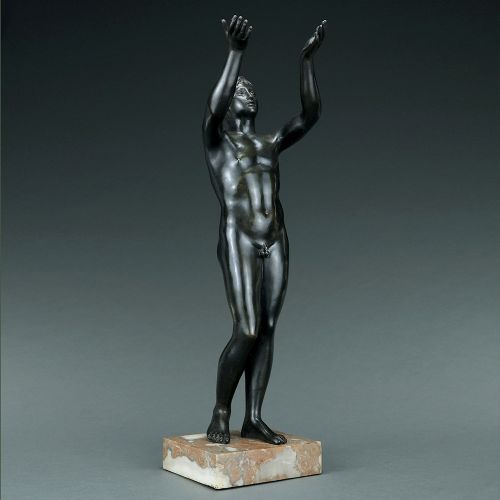
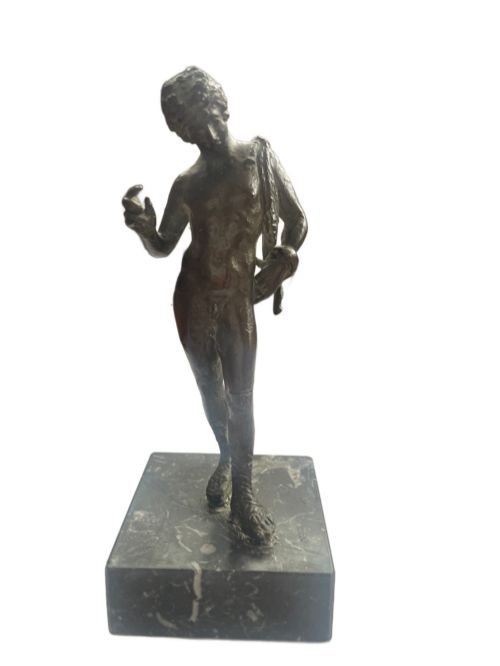
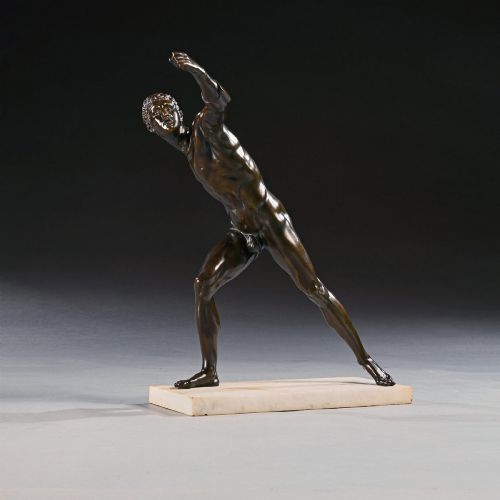
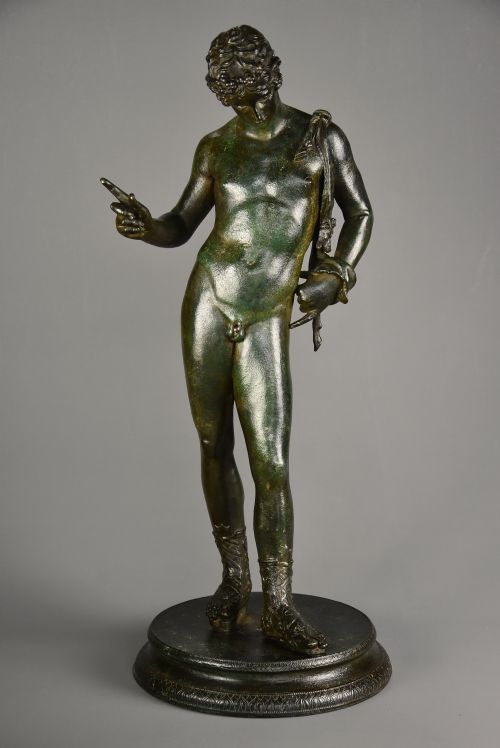
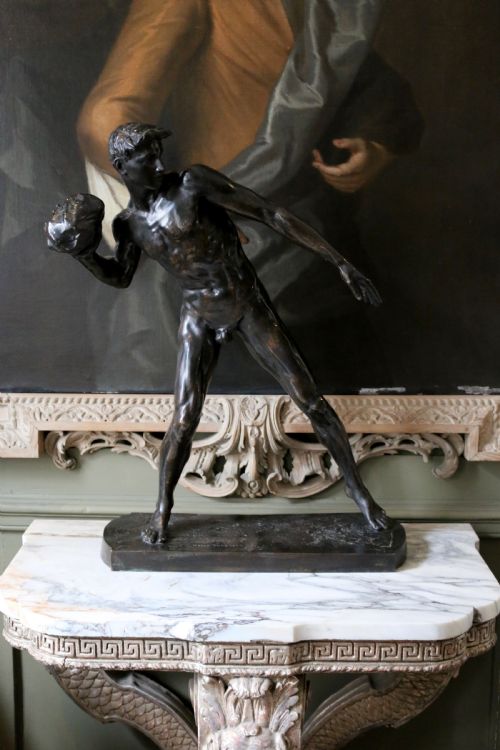
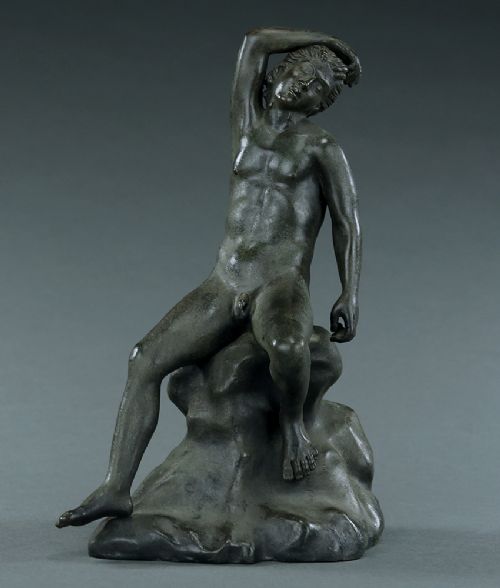
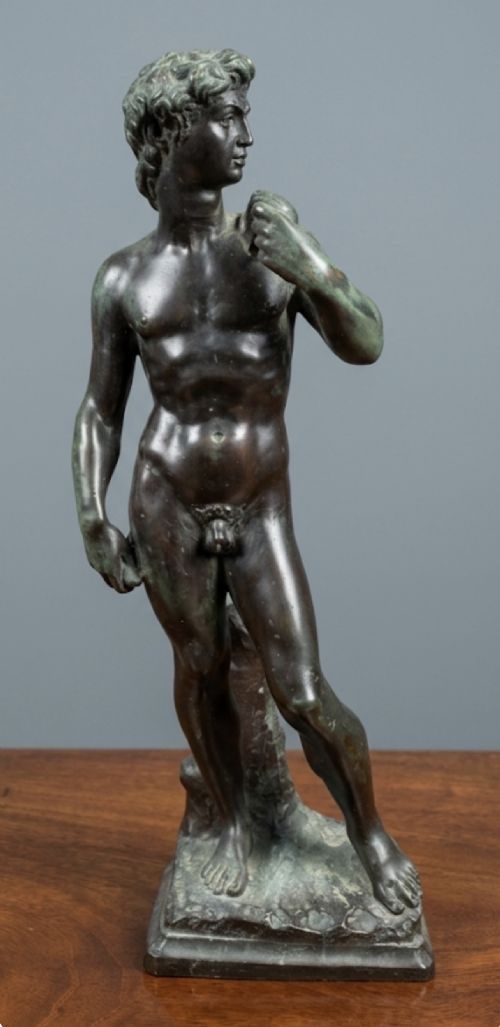
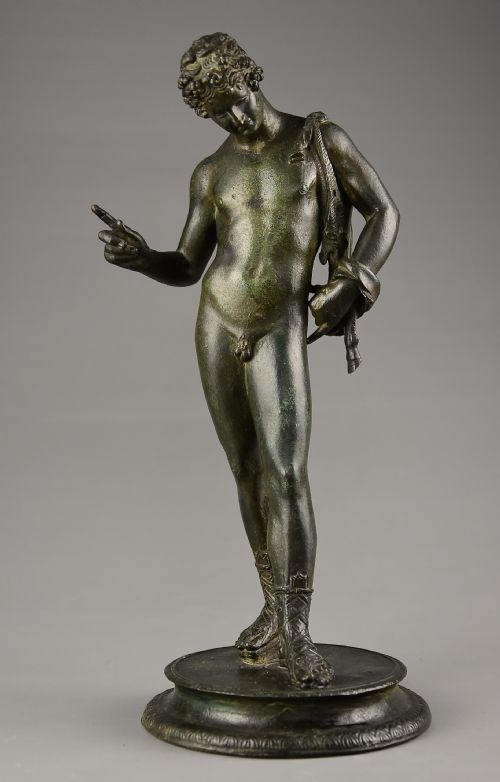
A male nude bronze statue embodies classical and neoclassical ideals, often drawing heavily on ancient Greek and Roman prototypes discovered during European travels. These figures range from heroic mythological subjects like Dionysus and Narcissus to athletic competitors and classical gladiators.
The selections available here lean strongly towards nineteenth-century Grand Tour souvenirs produced in Italy and France, alongside later Art Deco and academic realisms. Buyers encounter everything from library-scale reductions of famous antiquities to larger gallery pieces mounted on stone or fossil marble bases.
Materials and casting methods
Foundries utilised traditional metal casting techniques to capture musculature and anatomical detail in bronze, applying patination ranging from dark green verdigris to deep blackish-brown finishes. Many examples incorporate heavy stone plinths or fossil marble bases to support the weight of the metal figure.
The surface finish relies on chemical patination applied to the bronze, highlighting the contours of the body and mimicking the appearance of excavated antiquities or polished contemporary foundry work.
Male Nude Bronze Statue Retail Price Guide 2026
Typical asking prices for male nude bronze statue among the pieces listed under this phrase on Sellingantiques today, from the lower quarter to the upper quarter. They describe what is for sale here now, not the wider market.
Several figures of Narcissus spend eternity gazing down at their own toes.
Distinctions in quality and execution
Quality rests upon the crispness of the chasing and the precision of the anatomical definition, separating hurried commercial souvenirs from workshop pieces that capture the fluid tension of muscle and bone. A superior casting retains the subtlety of the sculptor's original modeling without softening details around the hands, face, and torso.
The depth and variation of the patination further distinguish the work, as skilled finishers built up layers of colour that give the metal a convincing sense of depth and weight rather than a flat, uniform spray.
Jean de Roncourt·Hamo Thornycroft·Raoul Francois Larche·Franz Iffland·Michele Amodio
The Male Nude Bronze Statue Glossary
- Grand Tour
- A traditional travel itinerary undertaken by European nobility and intellectuals through France and Italy to study classical art. Souvenirs purchased along the way included small-scale bronze sculptures cast after ancient statues.
- Patination
- The process of applying chemical treatments to the surface of bronze to alter its colour and texture. Dark brown, green, and verdigris patinations are common on these figures.
- Neoclassical
- An artistic movement drawing inspiration from the classical art and culture of ancient Greece and Rome. This style heavily influences the posture and proportion of nineteenth-century bronze figures.
- Fossil Marble
- A natural limestone containing visible fossilised marine organisms, frequently used as a heavy supporting base for nineteenth-century cabinet bronzes.
- Lost-wax casting
- A metalworking method where a molten metal is poured into a mould that has been created by means of a wax model. This technique allows for intricate detail in figurative bronze work.
Male Nude Bronze Statue: Frequently Asked Questions
What is a Grand Tour bronze?
A Grand Tour bronze is a small or cabinet-scale sculpture purchased by travellers visiting archaeological sites and museums in Italy and France during the nineteenth century. These pieces were cast after famous ancient sculptures like the Borghese Gladiator or the Narcissus of Pompeii.
They served as portable studies of classical antiquity for private libraries and studies across Europe.
How do I identify the subject of a figure?
Subjects are typically identified by specific attributes or classical iconography, such as the panther skin and ivy associated with Dionysus or Bacchus. Figures like Narcissus often gaze downward toward a base or pool of water.
Inscriptions on the bronze or historical foundry marks can also clarify the specific antique sculpture that inspired the piece.
Are these pieces solid bronze?
Most nineteenth-century and later bronze sculptures are cast using the hollow method to conserve metal and reduce weight, though smaller elements like limbs or weapons may be cast solid. The interior is often filled with core material from the foundry process.
Despite being hollow, these figures possess considerable weight, particularly when mounted upon dense marble or stone plinths.
How should I clean my bronze statue?
Bronze requires minimal maintenance beyond gentle dusting with a soft, dry cloth to prevent the accumulation of airborne grime. Avoid using water, household cleaners, or polishes, as these can strip the original chemical patination from the surface of the metal.
Occasional application of microcrystalline wax can help protect the finish if the piece is kept in a dry environment.