



French Bronze Athletic Statue
A French bronze athletic statue captures the human form in motion, offering collectors dynamic sculptural energy and classical strength for display.
French Bronze Athletic Statue
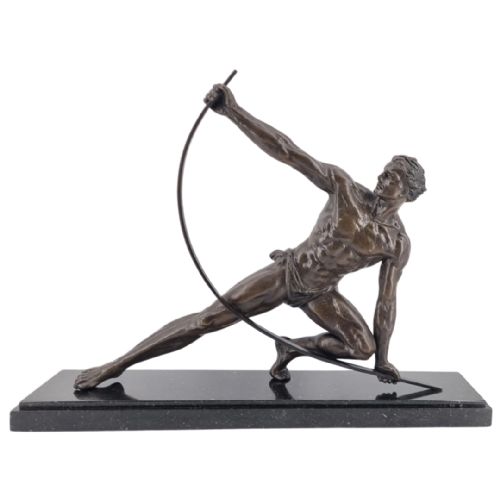
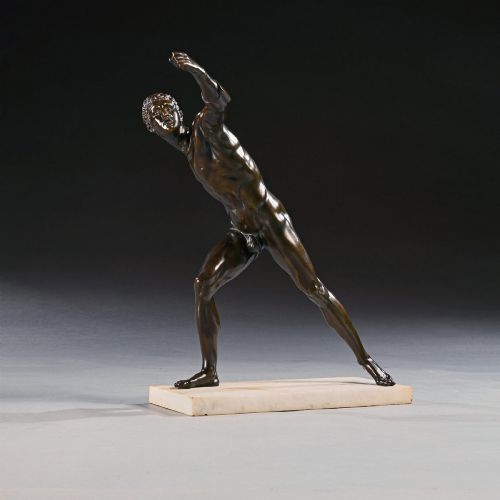
A french bronze athletic statue represents male figures engaged in physical exertion, combat, or classical mythology, spanning the nineteenth century through the Art Deco period. These sculptures capture athletes, gladiators, and mythological runners in detailed motion, often mounted on stone or marble bases.
Buyers will most frequently encounter works from the Art Deco period of the nineteen twenties and thirties, alongside nineteenth-century classical revivals and neoclassical interpretations. The forms range from tennis players and ice skaters to ancient gladiators and Olympian figures, reflecting shifting aesthetic ideals across decades.
How they were made
These sculptures are produced primarily in bronze, sometimes utilising silvered bronze or patinated surfaces to accentuate musculature and drapery. Many pieces employ spelter as an alternative metal, combined with marble, stone, or wood for structural bases.
Foundries utilised traditional casting techniques to capture fine anatomical details and signatures. Surface finishes were applied through chemical patination or silvering to achieve the desired metallic lustre.
French Bronze Athletic Statue Retail Price Guide 2026
Typical asking prices for french bronze athletic statue among the pieces listed under this phrase on Sellingantiques today, from the lower quarter to the upper quarter. They describe what is for sale here now, not the wider market.
Sculptural subjects range from ancient Roman gladiators to modern tennis players and ice skaters.
What varies in quality
Quality rests in the crispness of the casting and the sensitivity of the chisel work applied after the metal leaves the mould. Superior examples retain sharp facial expressions and well-defined musculature without soft edges.
The choice of base material and the sophistication of the patination also distinguish finer works from standard production pieces. Signatures from established sculptors elevate the standing of a piece within its period.
Jean de Roncourt·L Gerfaux·Desire Grisard·Claire Colinet·Eden Antony Paul Noel
The French Bronze Athletic Statue Glossary
- Patina
- The chemical colouration or ageing applied to the surface of the bronze. This finish protects the metal and defines the sculptural contours.
- Spelter
- A zinc-based alloy frequently used as a substitute for bronze in decorative figures. It is lighter and softer than true bronze.
- Neoclassical
- A style drawing inspiration from the classical art and culture of ancient Greece and Rome. It emphasises proportion, restraint, and heroic themes.
- Art Deco
- The dominant design style of the nineteen twenties and thirties characterised by streamlined geometric forms and dynamic movement. Sculptures from this era often celebrate modern sports and athleticism.
French Bronze Athletic Statue: Frequently Asked Questions
How do I identify a true bronze?
True bronze is a heavy copper alloy that feels cold to the touch and does not attract a magnet. It often shows a rich, stable patination developed over decades.
Alternative metals like spelter are lighter, softer, and may reveal a greyish metal beneath chips in the finish.
Where should I display these statues?
These sculptures suit prominent placement on sturdy surfaces such as mantelpieces, desks, or dedicated pedestals where their three-dimensional form can be viewed from multiple angles.
Ensure the display location avoids direct sunlight and excessive humidity to protect both the metal patina and the marble or stone base.
How do I distinguish nineteenth-century works from Art Deco pieces?
Nineteenth-century examples typically draw heavily on classical revival themes, featuring subjects like Roman gladiators and mythological figures with traditional anatomical proportions.
Art Deco pieces, originating around the nineteen twenties and thirties, favour streamlined modern athletes such as tennis players and ice skaters with stylized geometry.
What is the purpose of the marble base?
Marble and stone bases provide essential physical stability for heavy metal sculptures, anchoring the dynamic centre of gravity of an athletic figure in motion.
They also offer a contrasting architectural finish that elevates the visual presentation of the bronze above the furniture surface.