

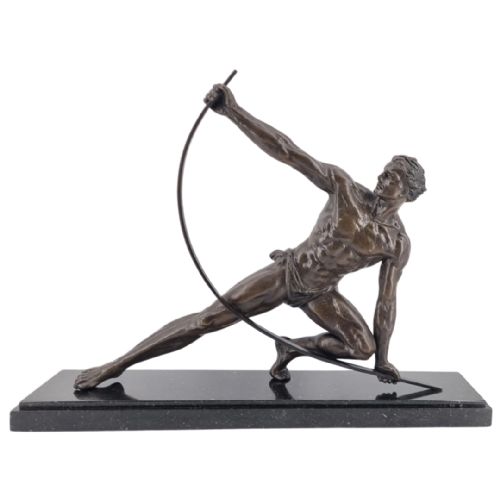


Art Deco Athletic Figure
An art deco athletic figure captures physical exertion with stylised geometry, bringing energetic movement and striking metallic forms into a room.
Art Deco Athletic Figure
An art deco athletic figure represents sportsmen, gladiators and classical competitors captured mid-movement during the interwar decades. These sculptures and table lamps celebrate human strength through stylised musculature and dynamic postures.
Most examples originate from France and date around the nineteen thirties, though a few appear from the nineteen twenties and early nineteen forties. The forms range from small desk studies to large sculptural table lamps involving athletes, tennis players and skaters.
How they were made
Foundries cast these figures in bronze, spelter and metal alloy, frequently applying a silver-plated or patinated finish to enhance the metallic sheen. Many sculptures mount directly onto solid marble bases to provide weight and stability.
Makers integrated functional elements into the artistic design, such as incorporating lamp fittings into athletic figures holding balls. Artisans utilised chrome, wood and opal glass to complement the primary metal components.
Art Deco Athletic Figure Retail Price Guide 2026
Typical asking prices for art deco athletic figure among the pieces listed under this phrase on Sellingantiques today, from the lower quarter to the upper quarter. They describe what is for sale here now, not the wider market.
Current listings demonstrate a strong reliance on bronze and spelter, frequently paired with marble bases and occasionally adapted into table lamps.
What varies in quality
Materials dictate the standing of a piece, with heavy patinated bronze and genuine marble commanding greater presence than lighter spelter or plated substitutes. The integration of functional lighting within an athletic composition also influences the sophistication of the design.
Jean de Roncourt·L Gerfaux·Desire Grisard·Claire Colinet·Bruno Zach
The Art Deco Athletic Figure Glossary
- Spelter
- A zinc alloy frequently utilised as a cost-effective alternative to bronze during the period. It takes patination well but remains softer than copper-based metals.
- Patination
- The surface coloration and ageing applied to metal sculptures. This chemical treatment enhances the visual depth of the musculature and clothing.
- Chiselling
- The secondary hand-finishing process applied to a metal casting after it leaves the foundry. Skilled artisans use chisels and files to sharpen the surface details.
- Opal glass
- A translucent milky glass used in lighting components. It diffuses light softly across the metal figure.
Art Deco Athletic Figure: Frequently Asked Questions
What materials are these figures made from?
Foundries cast these pieces primarily in bronze and spelter, alongside various metal alloys and silver-plated finishes. Many examples mount upon solid marble plinths.
Secondary materials include chrome, wood and opal glass, particularly in sculptural works that double as table lamps.
How do I identify a signed piece?
Artists typically inscribed their signatures directly into the metal base or along the lower edge of the sculpture during the casting process. These signatures often correspond to French bronze sculptors active in the nineteen twenties and thirties.
Unsigned pieces remain common and usually rely on the quality of the casting and the specific alloy used to indicate their origin.
Where were these sculptures produced?
The vast majority of these athletic figures originate from France, reflecting the centre of art deco design during the interwar period. Parisian foundries produced both limited bronze editions and mass-market spelter alternatives.
These pieces served as interior decorations, athletic trophies or functional lighting for contemporary homes.
How do I care for a bronze or spelter figure?
Dust the surface gently with a soft, dry cloth to prevent the accumulation of grit within the recesses of the casting. Avoid chemical cleaners or polishes that might strip the original patination.
Keep the sculptures away from direct heat sources and excessive moisture to protect both the metal surfaces and the underlying marble bases.