
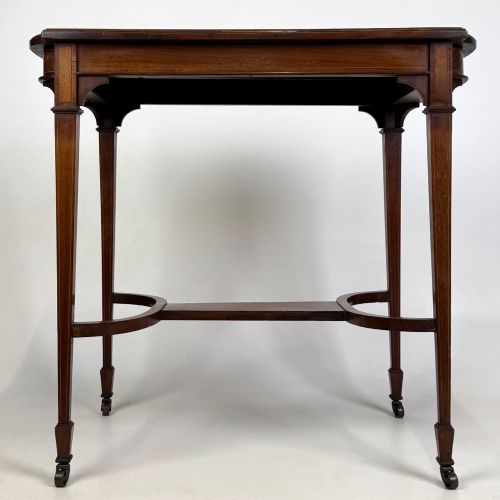
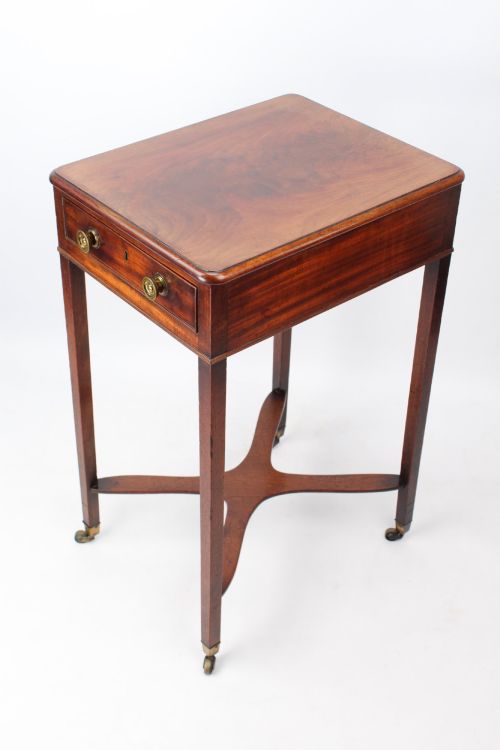
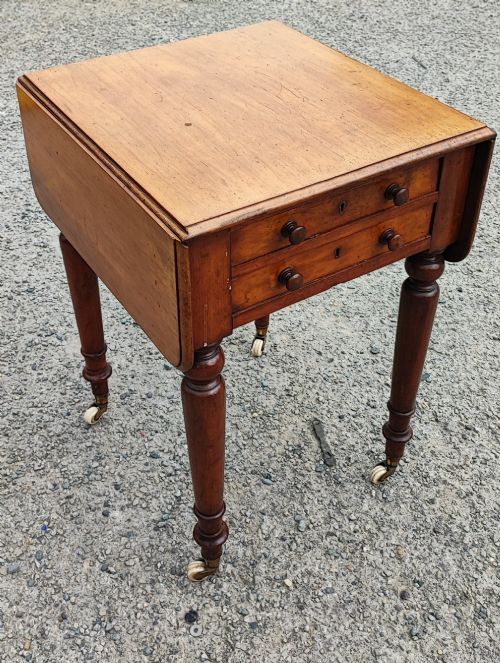
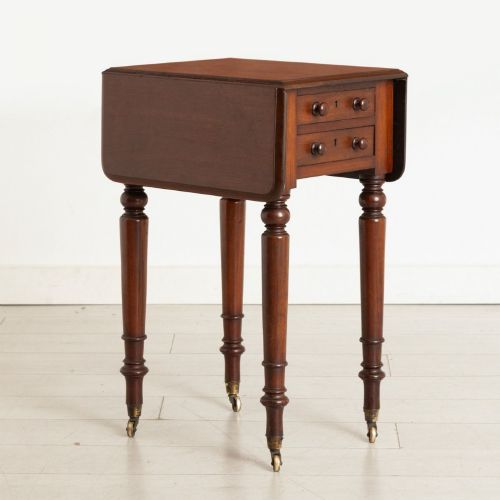






Mahogany Work Table Castors
Mahogany work table castors anchor small mobility-assisting furniture built for needlework and writing.
Mahogany Work Table Castors
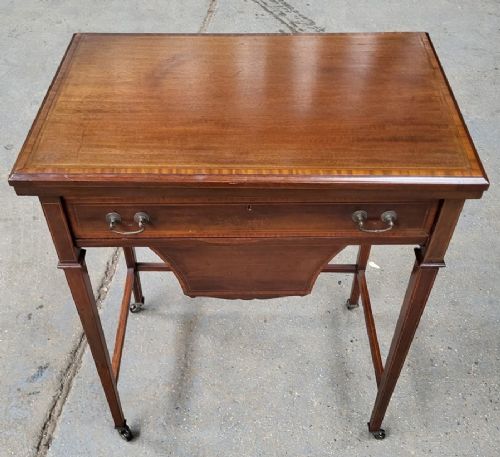
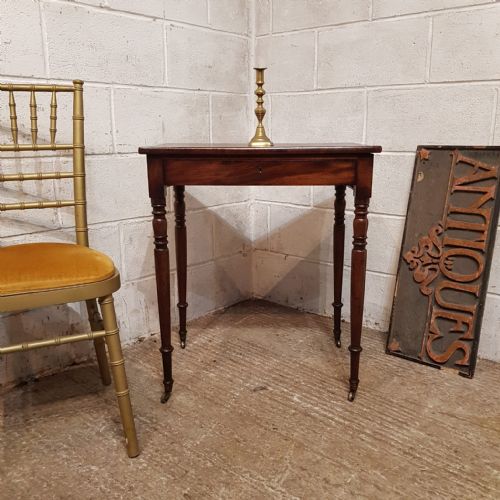
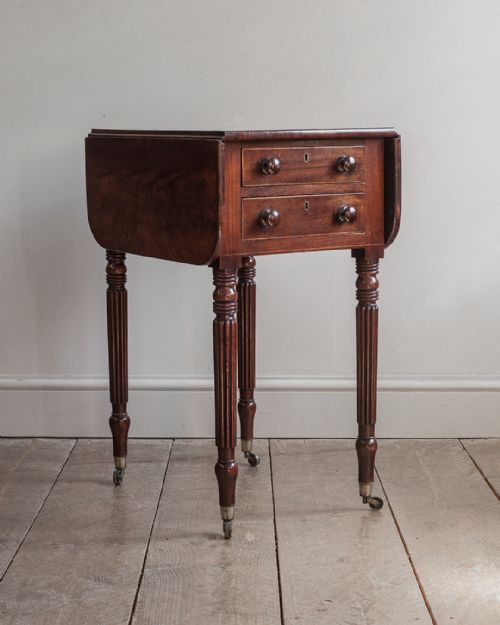
Mahogany work table castors belong to small utility tables designed for sewing, needlework and occasional writing. These items emerge primarily across Georgian, Regency, William IV and Victorian periods, taking forms such as drop-leaf Pembroke tables, sewing tables and small side desks.
The pieces listed on this page focus heavily on Regency and Victorian examples, often featuring single drawers, fitted interiors or drop leaves. Buyers encounter these versatile tables serving as compact lamp stands or bedside pieces in modern homes.
Originating predominantly from the nineteenth century, these pieces combine domestic utility with decorative cabinet-making. The castors themselves allowed users to reposition delicate sewing tables easily across carpeted drawing rooms.
Materials and construction methods
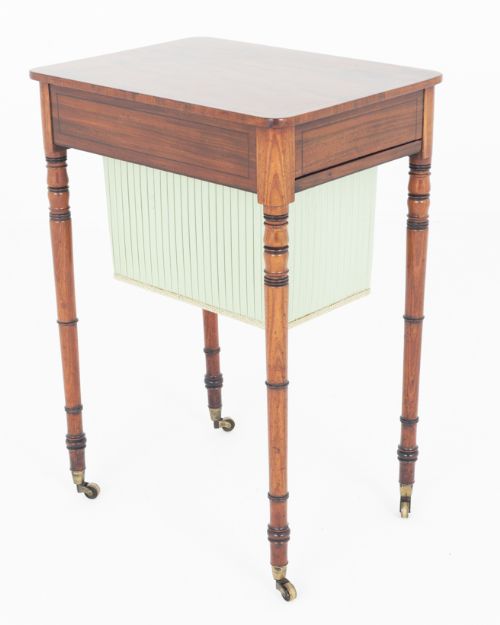
Cabinet-makers relied on solid mahogany and rich mahogany veneers, occasionally incorporating satinwood, boxwood inlay and fabric elements for interior work bags. Brass fittings provided sturdy housing for the small wheels that supported the base of each leg.
Construction techniques included drop leaves, dovetailed drawers and turning, allowing makers to build sturdy yet portable furniture. The castors were usually fitted into the bottom of tapering or turned legs to facilitate smooth movement without damaging floors.
Listings feature mahogany, satinwood, and boxwood inlay across nineteenth-century work tables, sewing desks, and Pembroke forms.
Distinctions in craftsmanship
Quality rests in the crispness of timber figuring, the integration of fine boxwood or satinwood inlay, and the retention of original brass hardware. Superior examples display restrained proportions, careful secondary framing woods, and smooth-running drawer mechanics.
The presence of original castors and complete internal fittings for sewing or writing elevates an example significantly. Pieces that retain their period character without excessive timber replacement command closer attention from traditional collectors.
The Mahogany Work Table Castors Glossary
- Castor
- A small wheel mounted on a swivel assembly attached to the bottom of a leg, allowing furniture to move smoothly.
- Pembroke table
- A small rectangular table with hinged drop leaves on either side, often fitted with a single drawer.
- Work table
- A specialised small table designed for needlework, sewing, and light writing tasks, frequently featuring an interior bag or compartments.
- Satinwood
- A pale, durable exotic timber prized for contrasting inlay work and banding on fine period furniture.
- Drop leaf
- A hinged flap on a table surface that can be raised to extend the top or lowered to save space.
Mahogany Work Table Castors: Frequently Asked Questions
What is a mahogany work table?
A mahogany work table is a compact nineteenth-century piece of furniture designed specifically for sewing, needlework, and light writing tasks. They typically include small drawers and sometimes fabric bags suspended underneath.
These tables were kept in sitting rooms where ladies could perform close handwork. Their small scale and mounted wheels made them easy to shift toward a light source.
How do I identify a Regency work table?
Regency work tables usually date from the early nineteenth century and display classical restraint, clean lines, and dark mahogany surfaces. They frequently feature pedestal bases or slender turned legs ending in small brass castors.
Look for refined proportions, subtle brass mounts, and well-fitted internal compartments for thread and needles. Many examples also incorporate drop leaves to save space.
Were these tables used for writing?
Many work tables doubled as compact writing desks, featuring pull-out slides or shallow top drawers fitted with writing surfaces. Their height and small proportions made them suitable for drafting brief letters.
While primarily built for needlework, their versatile surface layout meant owners frequently utilised them for general occasional use.
How do I care for antique mahogany?
Care for antique mahogany by keeping it away from direct sunlight and sudden humidity changes to prevent the timber and veneer from splitting. Dust regularly with a dry, soft cloth and avoid modern silicone polishes.
Waxing occasionally with traditional beeswax helps maintain the natural sheen of the wood without building up heavy chemical residues.