


Mahogany Window Stool
A mahogany window stool provides a slender seat for a corridor or bay, built from dense timber and covered in woven fabric, leather or cane.
Mahogany Window Stool
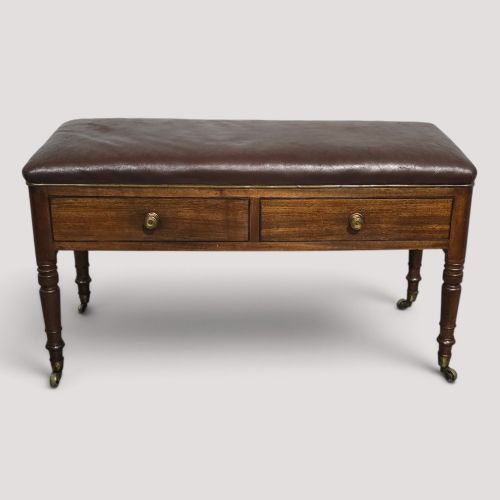
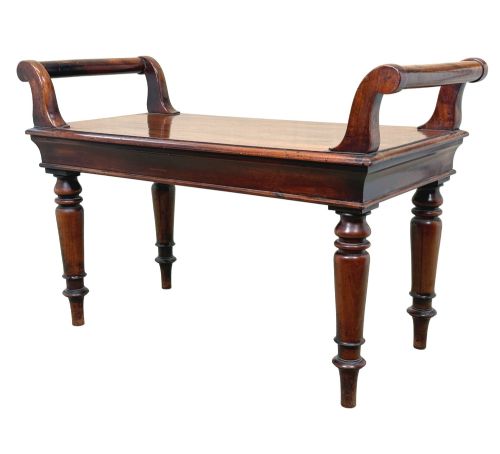
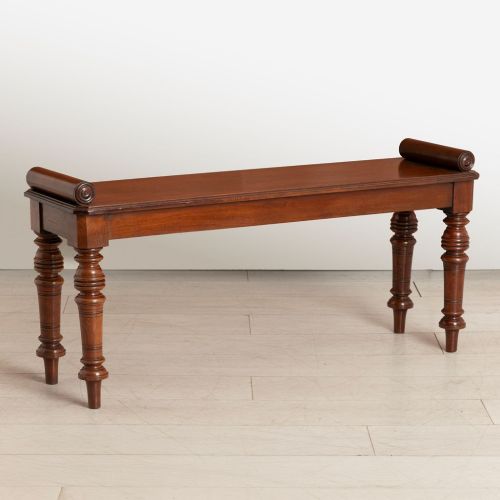
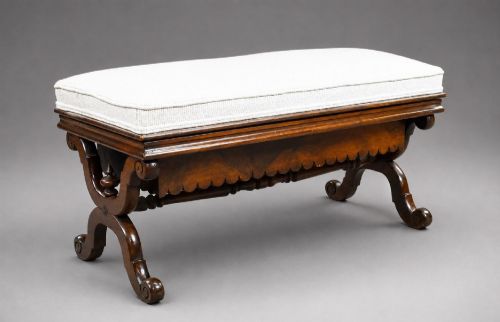
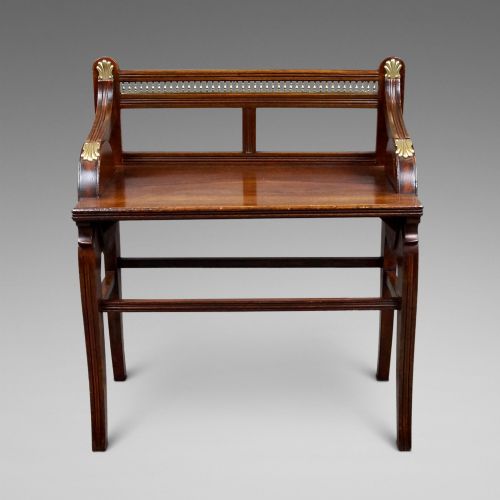
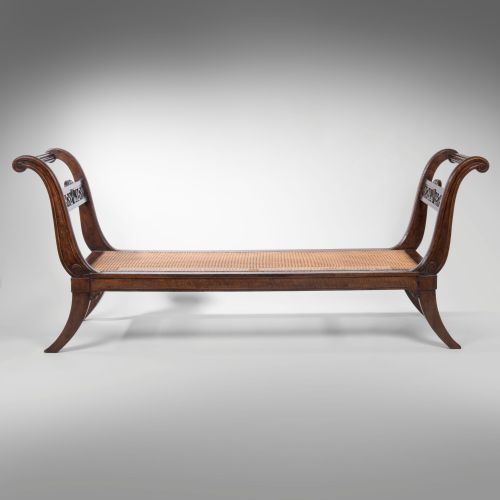
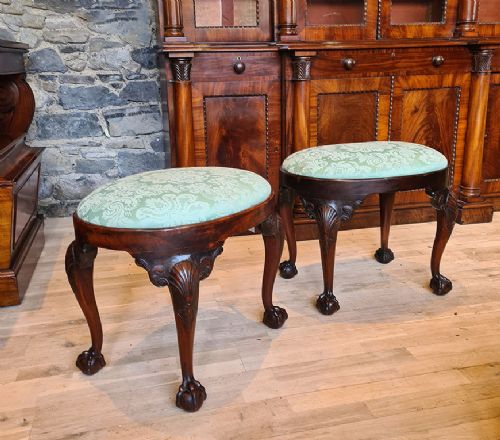
A mahogany window stool combines the low form of a long bench with the compact footprint of a footstool, designed to sit beneath glazing or along a hallway. These pieces serve as flexible seating in period interiors, appearing in various forms from simple rectangular dressing stools to substantial X-frame window seats.
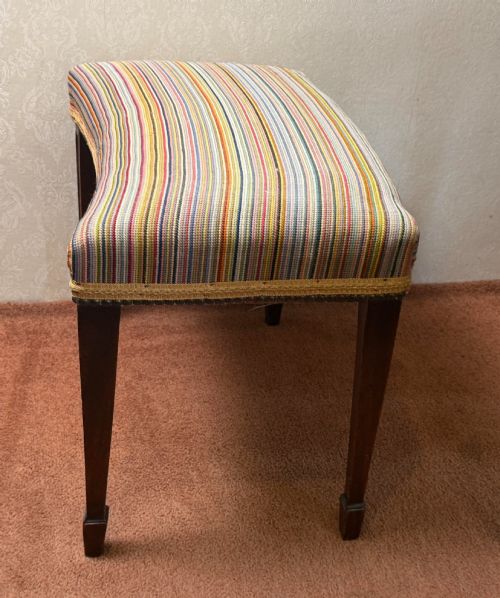
The pieces listed here span the Georgian, Regency and Victorian eras through to the Edwardian period, with structural variations ranging from square tapering legs to carved cabriole supports. Most examples rely on solid mahogany frames, housing upholstered pads covered in velvet, leather, kilim or printed textiles.
Buyers encounter numerous variations in scale, from single dressing stools to long duet music seats and deep country house storage ottomans. The selection covers formal styles with parcel-gilding alongside simpler vernacular pieces intended for domestic utility.
How They Were Made
Makers constructed these frames predominantly from solid mahogany, utilising its dense grain to support slender tapered, fluted or carved cabriole legs without splitting. Joinery typically involved traditional mortise and tenon joints, glued and pegged to withstand the lateral stress of shifting weight.
Upholstery techniques varied according to period, employing traditional stuffing materials secured over webbing, often finished with brass-studding or decorative braid. Alternative seating surfaces utilised woven cane panels or supple leather hides pulled tight over internal frames.
Several Victorian duet stools hide hinged storage beneath their cushions, once stuffed with sheet music and secrets.
What Varies in Quality
Quality rests primarily in the timber selection and the crispness of the hand-carved detail on the frame, distinguishing workshop productions from mass-manufactured items. Well-proportioned legs and tight, stable joints reflect superior cabinet-making standards.
The execution of the upholstery and the choice of covering material indicate the original commission's tier, ranging from plain functional textiles to detailed buttoning and imported designer velvets.
Jas Shoolbred·Hallett & Sons·Morris & Co·Gillows
The Mahogany Window Stool Glossary
- X-frame
- A structural support formed by two intersecting diagonal members creating a cross shape. This classic ancient form provides exceptional load-bearing strength while offering a light, architectural silhouette.
- Cabriole leg
- A furniture leg that curves outward in a convex arc at the top and inward in a concave arc below, ending in a pad, scroll or claw foot. This decorative shape derives from animal limbs.
- Duet stool
- An elongated seating form designed to accommodate two people side by side. These pieces frequently feature hinged tops revealing internal storage compartments for sheet music.
- Parcel-gilt
- A decorative treatment where specific carved details or highlights on a wooden surface receive a thin application of gold leaf. This technique adds focal points against dark polished timber.
- Tapering leg
- A support that gradually narrows in diameter from the upper frame down to the foot. This profile lightens the visual weight of heavy hardwood furniture.
Mahogany Window Stool: Frequently Asked Questions
Where should I place a window stool?
These pieces fit naturally beneath low window sills, along narrow hallways or at the foot of a bedroom bed. Their shallow depth allows them to occupy circulation spaces without obstructing movement.
They also serve well beside pianos or dressing tables where a supportive, armless seat is practical.
How do I care for mahogany frames?
Keep wooden surfaces away from direct heat sources and strong sunlight to prevent the timber from drying out or fading. Dust regularly with a dry cloth and apply a quality beeswax sparingly to maintain the polish.
Avoid liquid polishes containing silicones, which can penetrate porous finishes and damage the wood over time.
How do I identify the period of a stool?
Dating relies on examining the leg style, timber characteristics and upholstery construction methods. Georgian pieces display restrained classical proportions, while Regency items often incorporate bold architectural elements like X-frames.
Edwardian examples frequently show lighter framing and revived historical motifs from earlier centuries.