

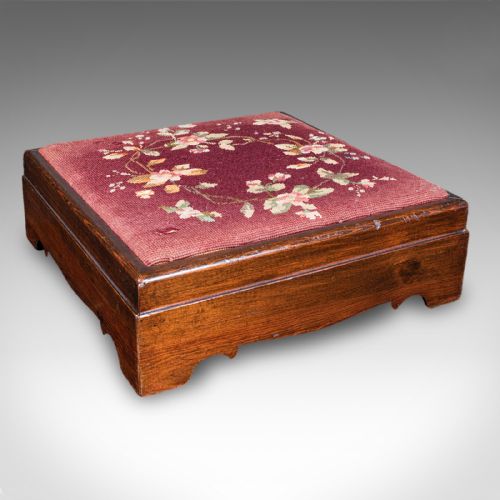


Burgundy Upholstered Stool
A burgundy upholstered stool brings deep colour and period timber into a room, offering a low seat or footrest finished in rich hide, velvet or tapestry.
Burgundy Upholstered Stool
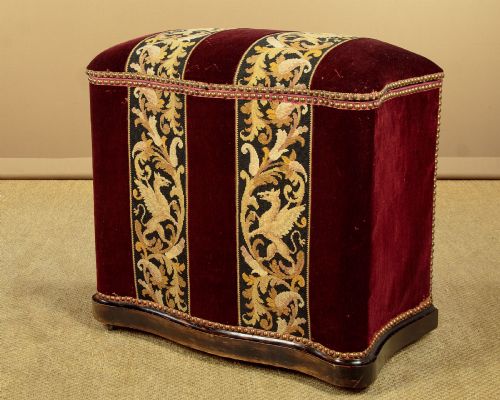
When you search for a burgundy upholstered stool, you encounter low seating designed for the fireside, dressing room or centre of a room, most frequently formed as a footstool, long stool or dressing stool. These pieces span several eras, appearing across the Victorian, Edwardian and George III periods.
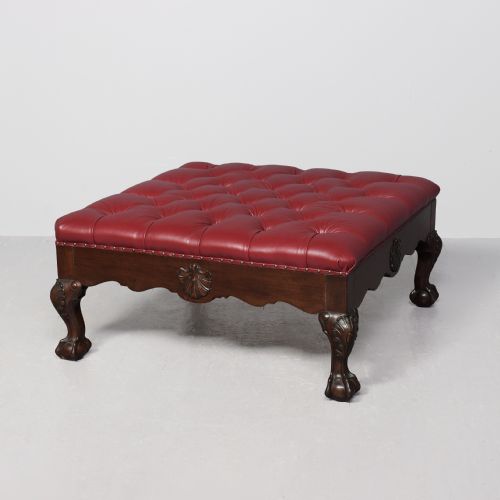
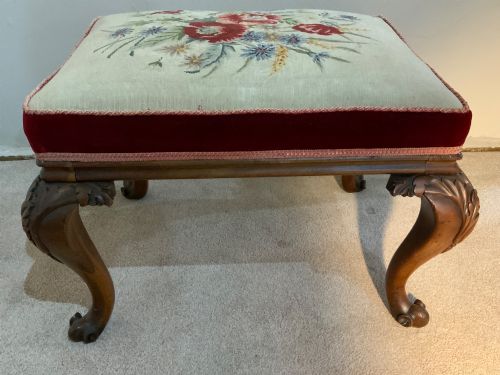
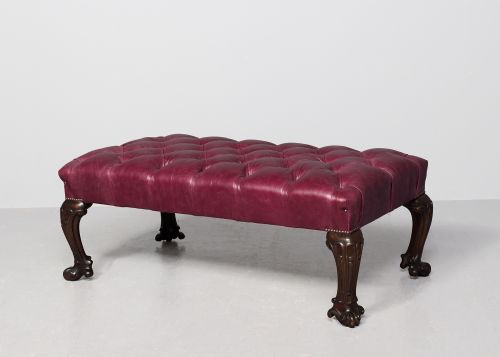
You are most likely to meet mahogany frames on this page, often built in revival styles such as Chippendale and Queen Anne, alongside simpler pitch pine or rosewood examples. The upholstery predominantly takes the form of buttoned red hide or burgundy leather, frequently accented with brass studding, though tapestry, wool, velvet and general fabric also feature.
How they were made
Makers constructed these frames chiefly from solid mahogany, walnut, pitch pine and rosewood, shaping timbers to support frequent use as footstools and benches. Joinery methods varied according to the period, securing the legs and seat rails firmly before padding.
Upholsterers applied horsehair or traditional stuffing beneath top covers of leather, hide, needlepoint or fabric, securing the edges with brass studs on many formal examples. Buttoning was employed on leather and hide tops to create a firm, tufted surface that held its shape over decades of use.
Burgundy Upholstered Stool Retail Price Guide 2026
Typical asking prices for burgundy upholstered stool among the pieces listed under this phrase on Sellingantiques today, from the lower quarter to the upper quarter. They describe what is for sale here now, not the wider market.
Listings feature mahogany as the dominant timber, paired primarily with leather and hide upholstery.
What varies in quality
The distinction between a standard stool and an exceptional one rests primarily on the depth of timber carving and the scale of the frame. Larger proportions and heavier mahogany timbers, particularly those executed in specific revival styles, command greater presence.
The choice of covering material and the precision of the leatherwork also determine the grade of a piece. Smooth, thick hides finished with neat hand-placed brass studding elevate the work above simpler fabric or plain upholstered variants.
The Burgundy Upholstered Stool Glossary
- Hide
- A strong, heavy animal skin used for upholstery. It provides a durable, wipe-clean surface on Victorian and Georgian style stools.
- Buttoned
- A method of upholstery where buttons are pulled deep into the padding. This secures the filling and creates a distinctive diamond pattern on leather tops.
- Brass-studded
- A decorative technique using small brass nails driven along the edges of the upholstery. It fastens the material while adding a metallic border.
- Needlepoint
- A form of stitched canvas work using wool. It appears on period footstools to provide a textured, patterned top.
- Centre stool
- A larger freestanding stool designed to sit in the middle of a room rather than against a wall.
Burgundy Upholstered Stool: Frequently Asked Questions
What rooms suit a burgundy upholstered stool?
These stools fit well beside a fireside, at the end of a bed as a dressing stool, or positioned centrally in a study. Their low profile makes them versatile for adding extra seating without blocking sightlines.
The rich tones of the burgundy leather or fabric complement traditional wood furniture and warm interior palettes. They function equally well as a resting place for feet or as a casual seat.
How do I care for leather upholstery?
Leather and hide surfaces benefit from occasional cleaning with a damp cloth and the application of a suitable nourishing cream. This prevents the material from drying out and maintains the depth of the burgundy colour.
Keep these stools away from direct heat sources and strong sunlight to protect the timber frame and prevent the leather from fading.
How do I date a mahogany stool?
Dating relies on examining the timber grain, the joinery methods underneath, and the style of the legs. Victorian and Edwardian examples often show machine-sawn components, while 18th-century pieces display hand-worked tool marks.
Revival pieces from the late 19th century imitate earlier Georgian or Chippendale designs, using older aesthetic forms built with the manufacturing methods of their own era.
Are long stools different from footstools?
Long stools and benches provide extended seating platforms, often intended for dressing rooms or long hallways. Standard footstools and ottomans are more compact and designed primarily to support the legs while seated.
Both variants share similar upholstery treatments, including buttoned hide and brass studding, but differ fundamentally in their proportions.