

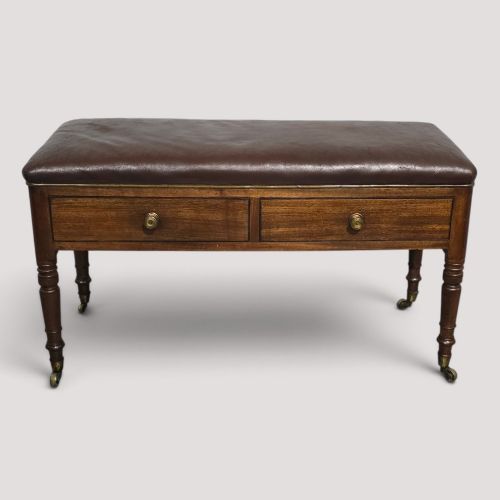
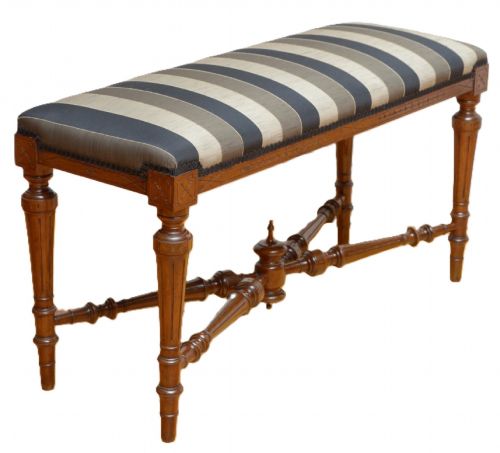


Duet Piano Bench
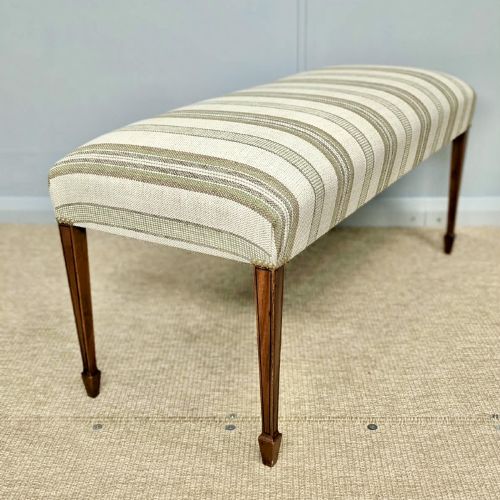
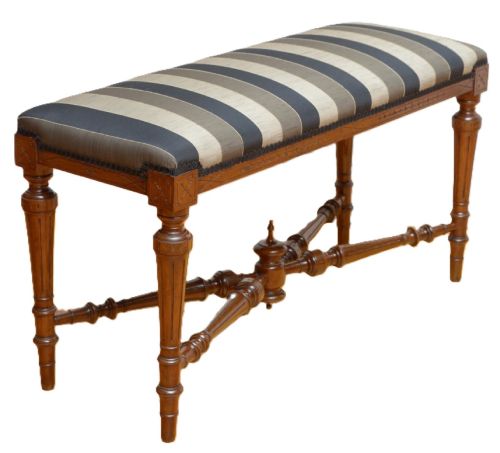
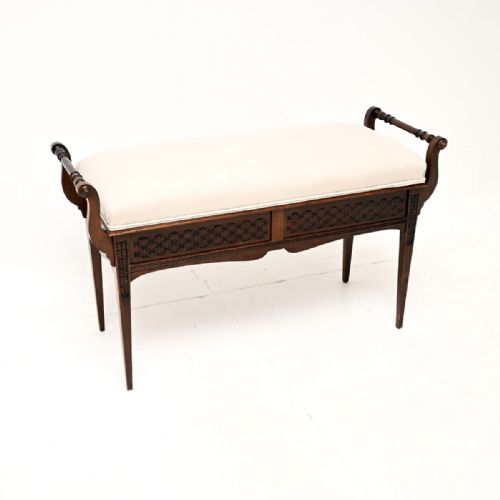
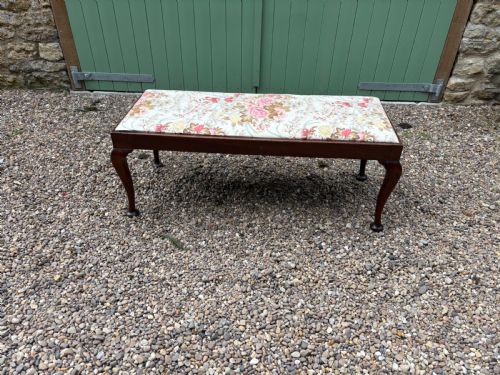
These duet piano bench pieces offer wide seats and upholstered tops for shared playing, spanning Victorian to Edwardian periods in mahogany and walnut.
Duet Piano Bench
A duet piano bench provides a long, shared seat designed for two players at a keyboard instrument. The listings on this page show these versatile items functioning equally well as window seats or freestanding benches.
The versions most commonly met here originate from the Victorian and Edwardian eras, alongside pieces from the 1900s, 1890s, and 1860. Styles range from straightforward mahogany forms to Queen Anne Revival, Neoclassical Revival, Georgian Revival, and Louis XVI interpretations.
Makers such as Charles Nosotti and Eavestaff appear in the records, marking out specific cabinet-making origins among the standard piano stools and duet stools. Object types cross between dedicated music stools, window seats, and general benches.
Materials and construction methods
Timbers dominate the construction of these seats, with mahogany, walnut, and rosewood forming the primary structural frames. Giltwood and brass details appear occasionally, adding metallic highlights to French and period pieces.
Duet Piano Bench Retail Price Guide 2026
Typical asking prices for duet piano bench among the pieces listed under this phrase on Sellingantiques today, from the lower quarter to the upper quarter. They describe what is for sale here now, not the wider market.
Piano benches often keep their original hinges, ready to swallow centuries of forgotten sheet music once more.
Assessing craftsmanship and finish
The grade of timber selection and the precision of cabinet joinery set the baseline for each bench. Finer pieces display carefully figured mahogany or walnut veneers and solid framing that withstands the repeated motion of shared seating.
Upholstery execution and the integration of functional elements like hinged compartments elevate certain examples above standard utility seating. The presence of documented maker attributions, such as Charles Nosotti, further distinguishes individual pieces.
Charles Nosotti·Eavestaff
The Duet Piano Bench Glossary
- Duet stool
- A long seating form built to accommodate two musicians side by side at a piano. These pieces often feature hinged lids revealing interior music storage.
- Hinged seat
- A top lid that lifts upward on pivots to access a compartment beneath. This built-in space holds sheet music and performance books.
- Inlaid
- Woodwork decorated by inserting contrasting strips or patterns of material into recessed areas of the primary surface. Edwardian mahogany pieces frequently employ this decorative technique.
- Window seat
- A long, narrow bench traditionally placed beneath a casement. Several duet examples serve this secondary domestic purpose.
Duet Piano Bench: Frequently Asked Questions
What is a duet piano bench used for?
These long benches provide stable, extended seating for two people sharing a single keyboard instrument. They also function successfully as standalone window seats in living spaces.
Their proportions allow them to fit beneath standard windows or alongside music cabinets while offering practical interior storage for scores.
How do I identify an Edwardian duet piano bench?
Edwardian examples typically showcase light mahogany construction, often enhanced with delicate inlaid patterns. They date from the early twentieth century and lean toward refined domestic elegance.
Their profiles remain lighter and more restrained than their heavy Victorian predecessors, reflecting changing interior tastes of the period.
Can I use these benches in other rooms?
The versatile forms seen across these listings suit placement in hallways, bedrooms, and reception spaces as well as music rooms. Their upholstered tops provide comfortable seating wherever a long, narrow bench is required.
Upholstery fabrics such as velvet adapt easily to diverse domestic colour schemes and room functions.
What materials were used for these seats?
Cabinet makers relied primarily on dense hardwoods including mahogany, walnut, and rosewood to build the structural frames. Giltwood and metal elements appear on specific French and revival styles.
Seating surfaces feature traditional fabric or velvet upholstery, sometimes supported by brass hardware and internal hinges.