
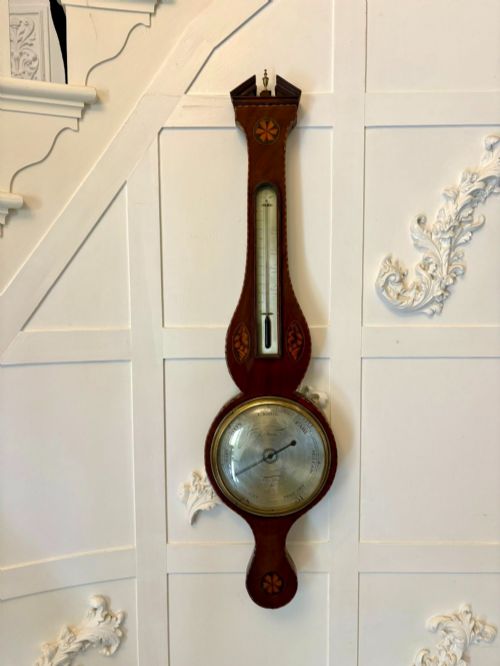
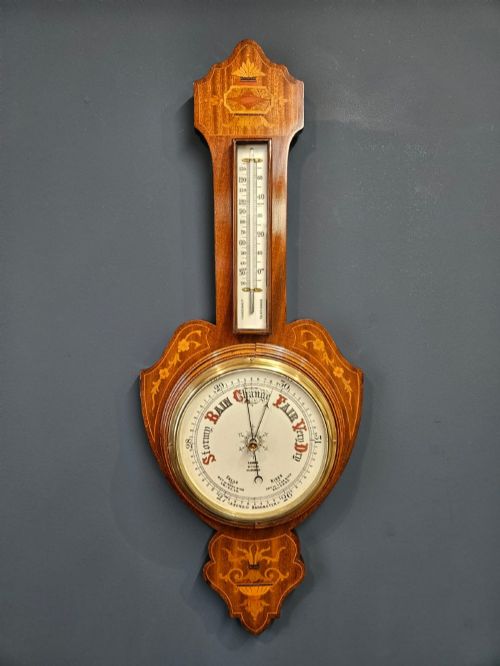
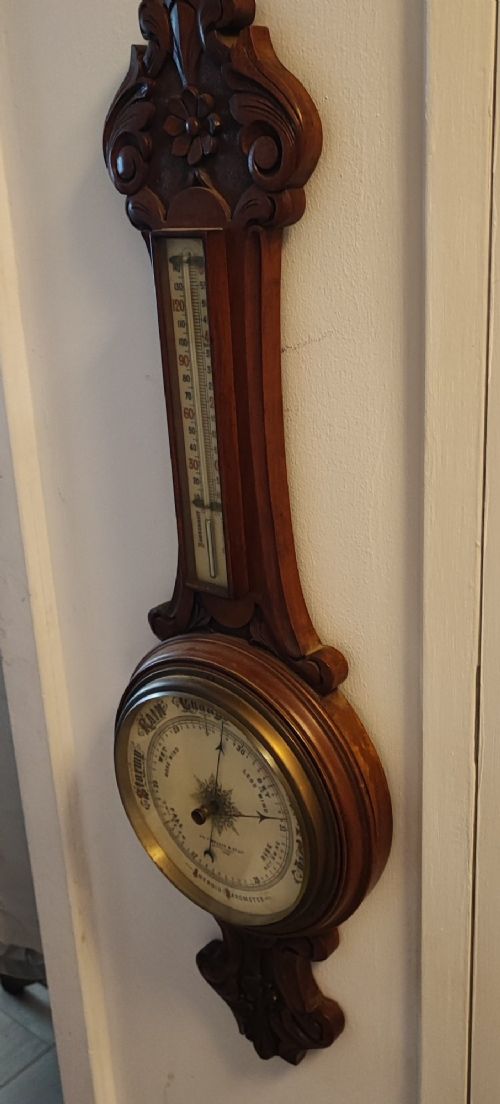
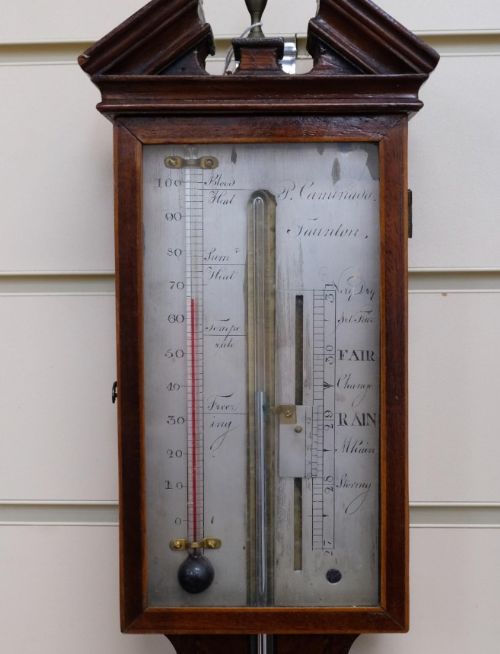


Mahogany Wall Thermometer
A mahogany wall thermometer is a precision weather instrument housed in rich timber, prized for practical domestic utility and Georgian elegance.
Mahogany Wall Thermometer
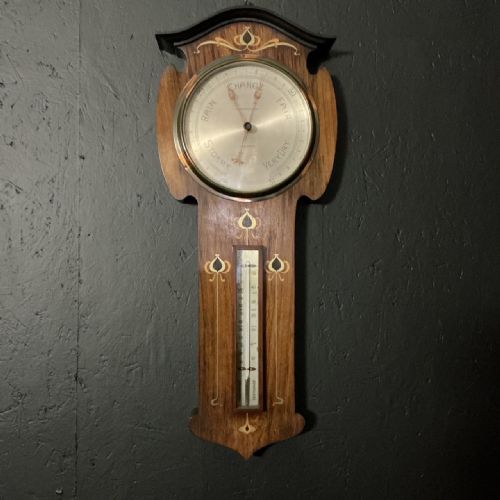
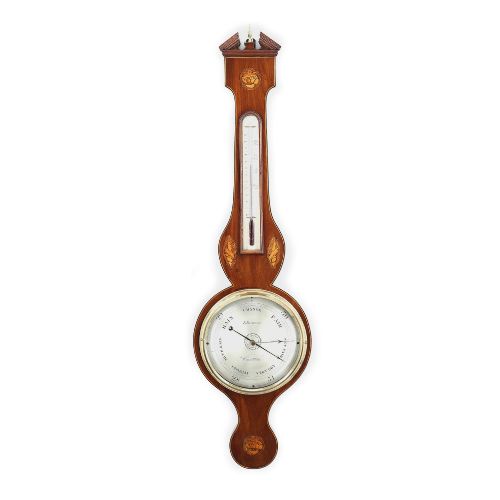
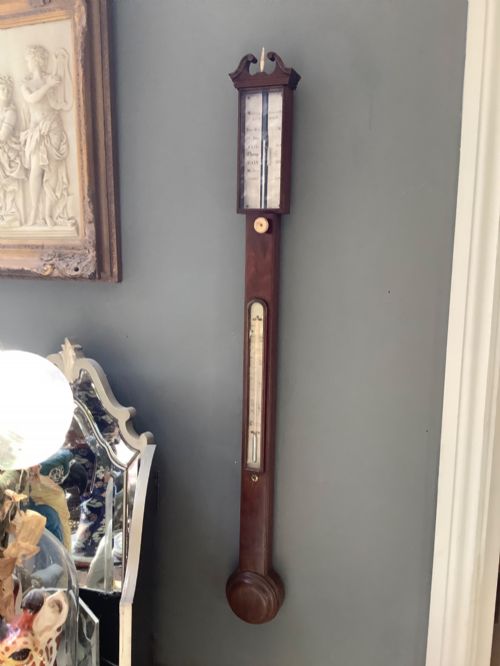
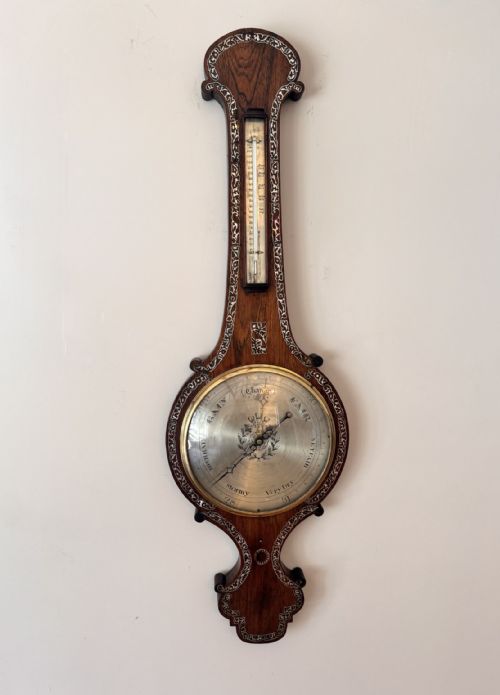
A mahogany wall thermometer is a domestic instrument designed to measure atmospheric temperature, frequently found combined with barometers in eighteenth and nineteenth-century domestic interiors. When searching for this specific item, buyers encounter distinct wall-mounted wooden housings ranging from simple Georgian stick designs to elaborate Victorian wheel and banjo configurations.
The versions most commonly met on this page span the Georgian and Victorian eras, utilising dense mahogany cases often enhanced with brass fittings, silvered metal dials, and delicate wood inlay. These instruments served both a utilitarian purpose in domestic hallways and a decorative role as refined pieces of furniture.
The structural forms vary from slender rectangular wall thermometers to larger wheel barometers incorporating thermometer scales on the main body. The timber grain and dial layout dictate the visual character of each piece, linking scientific observation with traditional cabinet making.
Factors determining quality
The distinction between ordinary and superior examples lies in the refinement of the cabinet work and the crispness of the dial engraving. Finely executed shell inlay, well-figured mahogany timber, and original brass fittings elevate an instrument above standard production pieces.
Maker signature engraving on the silvered metal scale also indicates a higher grade of production, particularly when associated with recorded provincial or London instrument makers. The integrity of the case construction and the survival of original glass and mercury columns complete the standard of excellence.
Recorded instrument makers hail from provincial English towns and London workshops alike, spanning locations from Cambridge to Glasgow.
George Adams of Fleet Street·P. Caminada·B. Besozzi·Prada of High Wycombe·Molton of Norwich·Luisetti of London·Giana·Jenkins Of Old Swindon·Cox of Plymouth Dock·James H Kelly·W.E. Pain·Vecchio & Co·J Groce·J C Moretti·Dominic Gatty·Schiavi·George Dollond·Polti of Exon
The Mahogany Wall Thermometer Glossary
- Banjo barometer
- A household weather glass housed in a shaped wooden case resembling a banjo, typically featuring a hygrometer, thermometer, and large round dial. This form became dominant during the Georgian and Victorian periods.
- Stick barometer
- A tall, narrow wall instrument containing a vertical mercury tube exposed against a long register plate. It represents the most scientifically accurate domestic barometer type of its era.
- Silvered brass
- A metal alloy treated with silver powder to create a matte white finish for instrument dials. Graduation lines and maker names are engraved into this surface and darkened for legibility.
- Inlay
- The technique of embedding contrasting woods or shell into recesses cut into the mahogany surface. Geometric lines and floral motifs frequently decorate the perimeters of better cases.
- Aneroid barometer
- A weather-measuring device that uses an evacuated metal box to sense pressure changes without employing liquid mercury. This mechanical system emerged later in the nineteenth century.
Mahogany Wall Thermometer: Frequently Asked Questions
What is a mahogany wall thermometer?
A mahogany wall thermometer is a temperature-recording instrument mounted within a wooden housing designed to hang upon a domestic wall.
These pieces combine functional science with cabinet making, often integrating barometer tubes and humidity dials into the wooden case.
How do I tell Georgian from Victorian pieces?
Georgian instruments generally feature restrained classical proportions, finer string inlay, and simple architectural pediments.
Victorian examples tend towards larger proportions, bolder wood grains, and more elaborate crests such as onion tops.
Were these instruments used outdoors?
These instruments were intended exclusively for indoor domestic spaces such as hallways, libraries, and drawing rooms.
Exposing the mahogany cases and sensitive glass tubes to outdoor weather would quickly damage the wood and mechanisms.
What does a mercury thermometer indicate?
A mercury column expands or contracts with ambient temperature changes against an engraved scale to show exact degrees.
In these antique instruments, the mercury operates within a sealed glass tube mounted directly onto the wooden backboard.