

Mahogany Vanity Mirror Drawers
Mahogany vanity mirror drawers offer tabletop convenience and compact storage, uniting solid timber framing with adjustable glass plates.
Mahogany Vanity Mirror Drawers
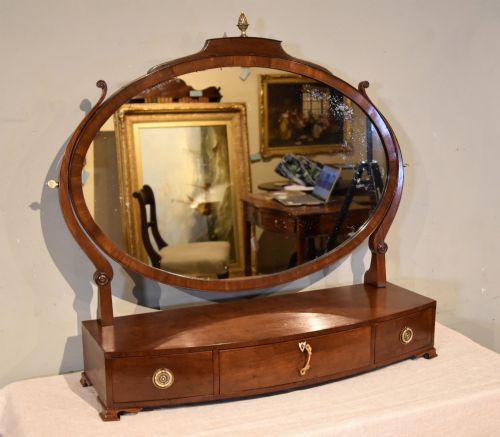
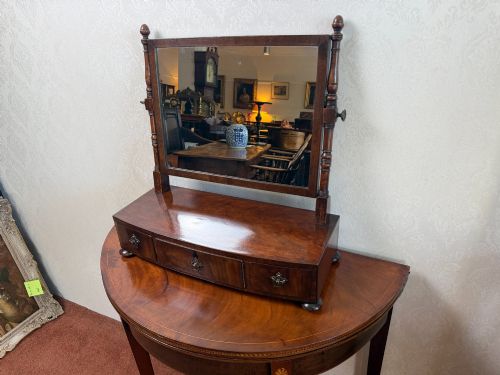
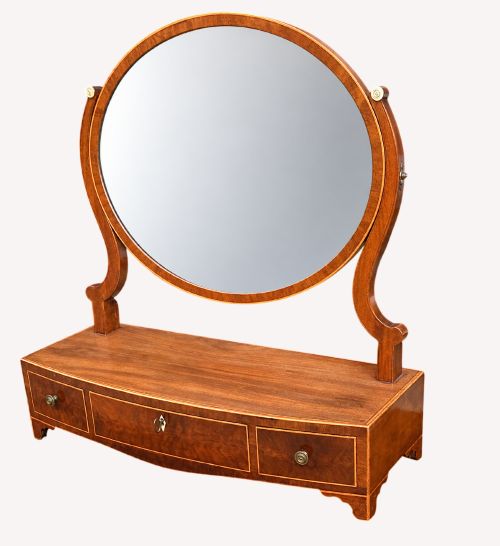
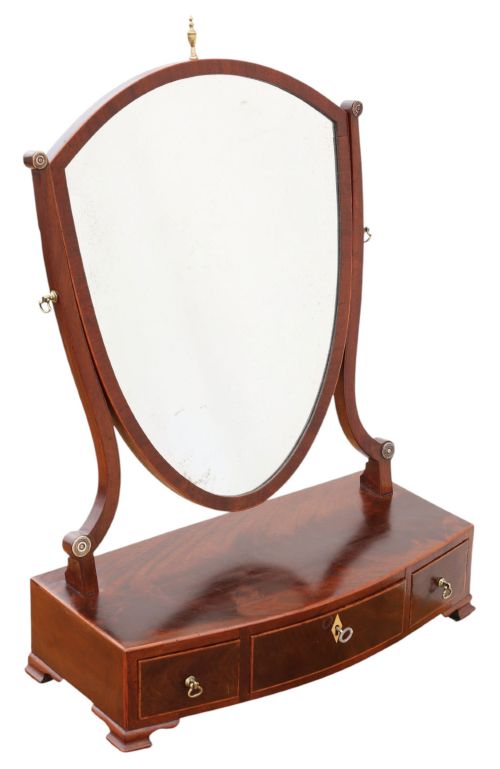
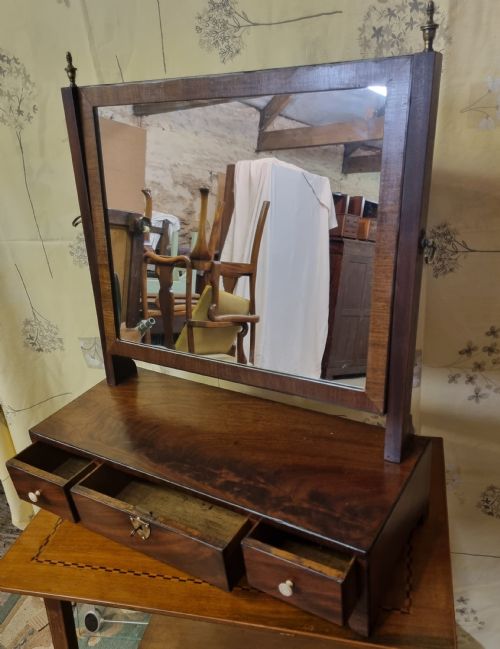
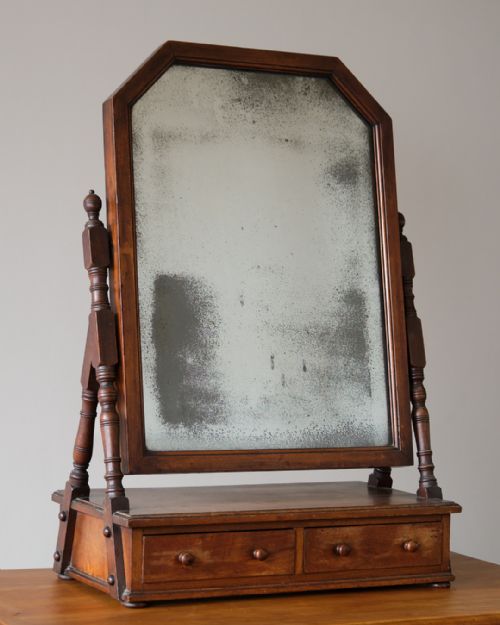
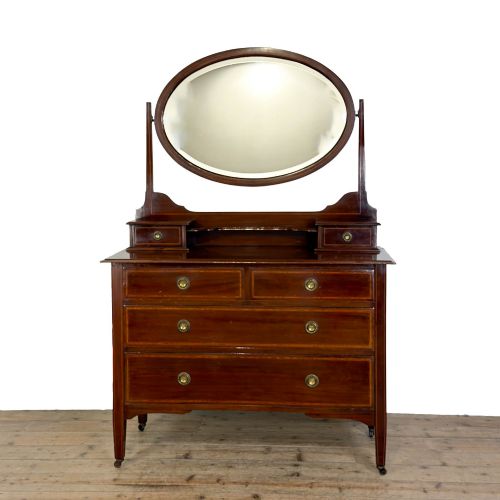
Mahogany vanity mirror drawers combine a pivoting glass frame with a fitted box base containing small storage compartments. These pieces sit atop larger chests or dressing tables to provide a personal grooming station.
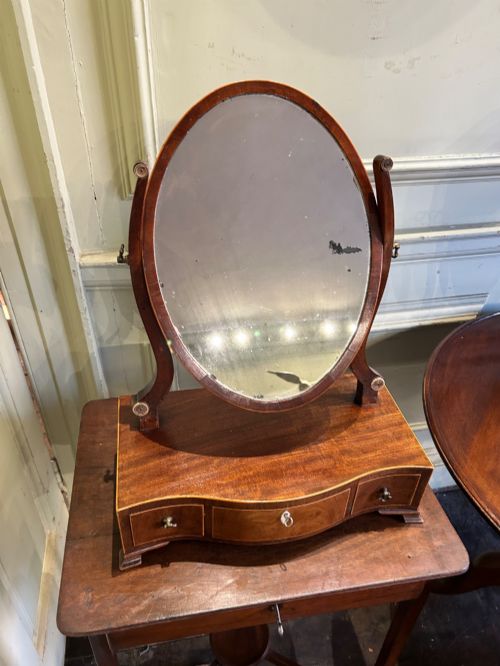
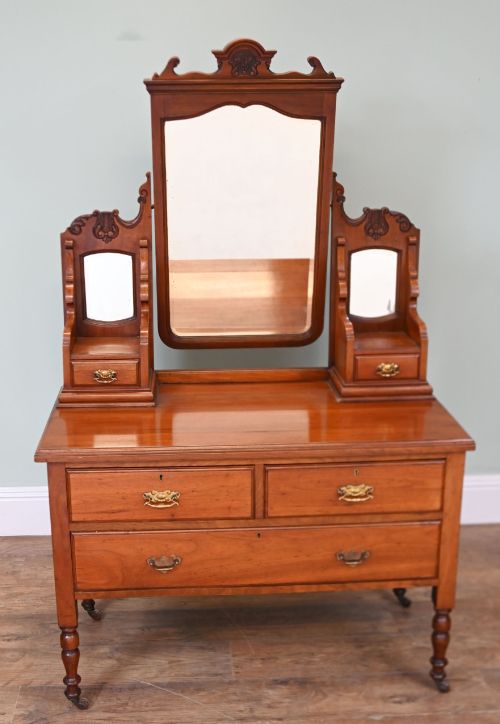
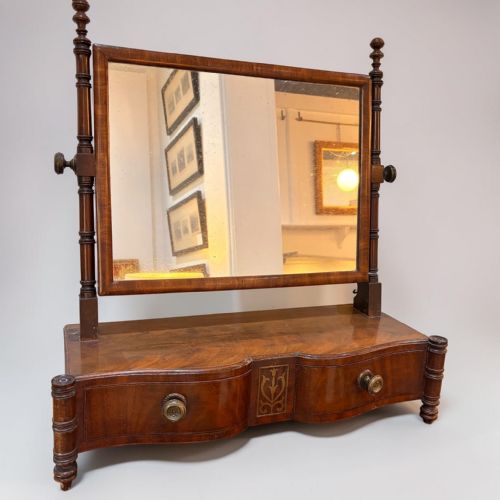
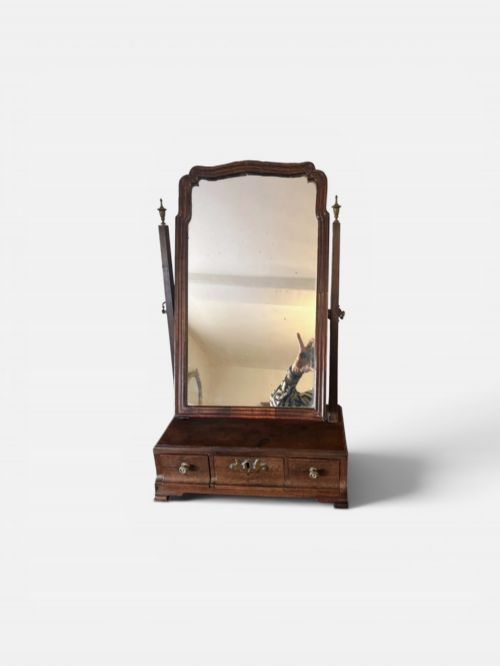
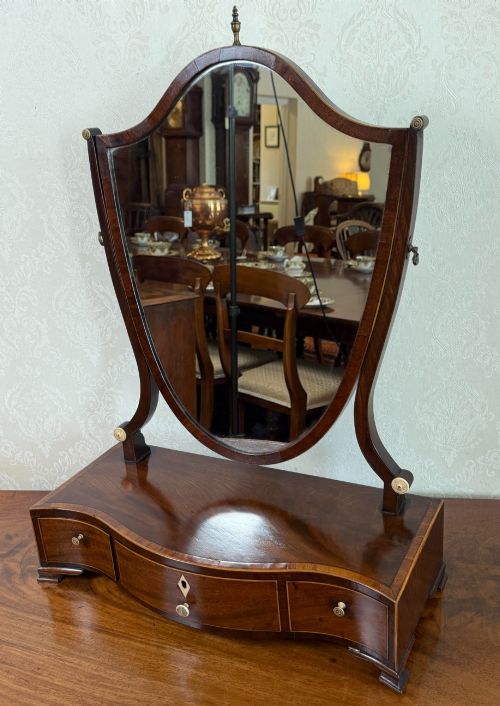
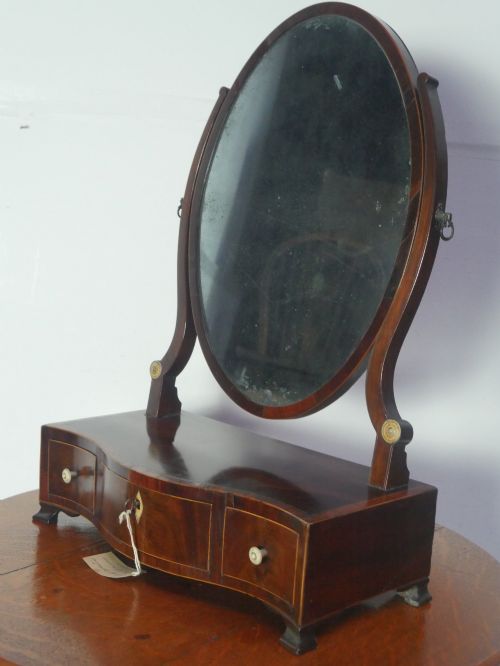
The versions most commonly found span the eighteenth and nineteenth centuries, taking forms from simple rectangular toilet mirrors to shaped serpentine variants. Makers produced these items across Georgian, Regency, and Victorian periods for domestic bedrooms.
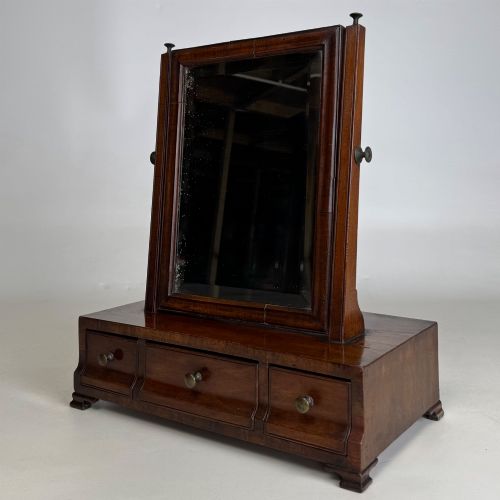
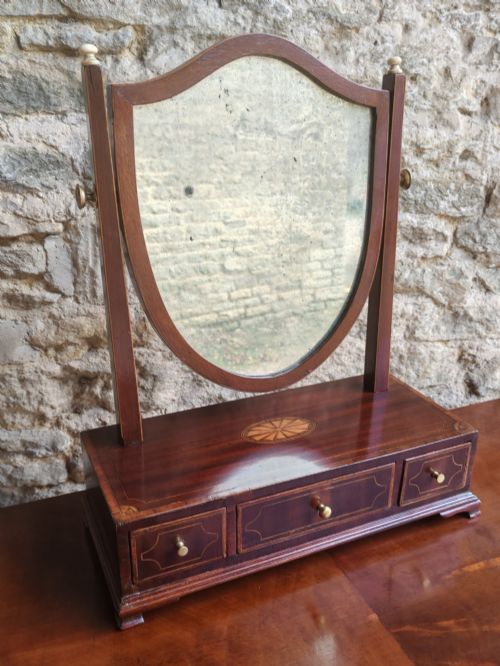
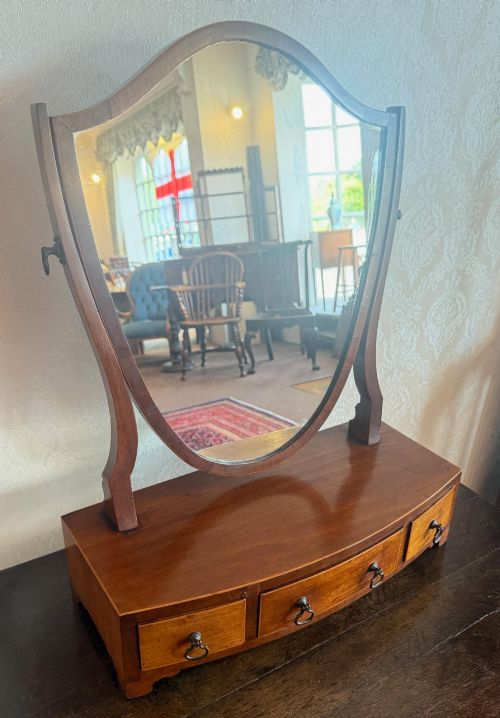
Surviving examples range from plain box stands with three small drawers to sophisticated crossbanded designs with bone escutcheons. Buyers encounter both rectangular swing plates and upright shield shapes mounted on scrolling side arms.
Materials and construction methods
Cabinet makers utilised dense tropical timber alongside native secondary woods, applying fine crossbanding and stringing to drawer fronts. Brass knobs, swing pins, and ivory or bone escutcheons punctuate the polished surfaces.
The mirror glass itself sits within a rebated wooden frame held by adjustable side screws, allowing the user to tilt the reflection. Dovetail joints secure the small drawers, while bracket feet or ogee supports elevate the base.
Mahogany Vanity Mirror Drawers Retail Price Guide 2026
Typical asking prices for mahogany vanity mirror drawers among the pieces listed under this phrase on Sellingantiques today, from the lower quarter to the upper quarter. They describe what is for sale here now, not the wider market.
A gentleman's shaving stand ensures you can check your whiskers while wondering where all your small buttons disappeared to.
Distinctions in craftsmanship
Finer examples display careful timber selection with matched flame mahogany veneer across the fall and drawer fronts. Superior cabinet work shows tight hand-cut dovetails and well-turned support arms that hold their tension without slipping.
Lower tiers of production rely on simpler butt joints and thicker, less figured boards with plain brass fittings. The depth of the hand-polished finish and the clarity of the original mirror plate further separate standard workshop output from exceptional pieces.
Heal & Sons
The Mahogany Vanity Mirror Drawers Glossary
- Toilet mirror
- A small movable looking glass designed to sit upon a dressing table or chest. These pieces typically incorporate a set of miniature drawers in the base.
- Shield mirror
- A looking glass cut into the shape of a heraldic shield, popular during the eighteenth century. This silhouette softens the rigid geometry of earlier rectangular frames.
- Serpentine
- A curved line of furniture fronts featuring a convex centre flanked by two concave curves. This shaping requires specialist woodworking skill to execute cleanly on small drawer banks.
- Crossbanding
- A narrow strip of veneer laid across the grain of the primary panel to form a decorative border. Cabinet makers utilised this technique on quality drawer edges.
- Escutcheon
- A protective plate surrounding a keyhole, often fashioned from brass, bone, or ivory. These small details anchor the visual balance of the miniature drawer fronts.
Mahogany Vanity Mirror Drawers: Frequently Asked Questions
How were these mirrors used historically?
Occupants placed them upon dressing tables or chests of drawers in bedchambers for morning grooming and shaving. The small drawers held rings, pins, cosmetics, and shaving gear.
The adjustable glass plate allowed the user to change the angle of the reflection as needed.
How do I date a mahogany mirror base?
Examine the construction of the drawers, paying attention to the tightness of the dovetails and the thickness of the timber boards. Eighteenth-century examples often feature delicate ogee bracket feet and hand-cut elements.
Later Victorian versions tend to show heavier proportions, machine-sawn components, and different secondary woods inside the drawer boxes.
Where should I place one in a modern home?
They fit naturally on top of modern chests of drawers, sideboards, or dressing consoles to add vertical height and reflective light. The base compartments remain useful for storing jewellery, keys, or everyday trinkets.
Keep them away from direct sunlight and excessive heat sources to protect the polished wood finish.