
Mahogany Vanity Dressing Mirror
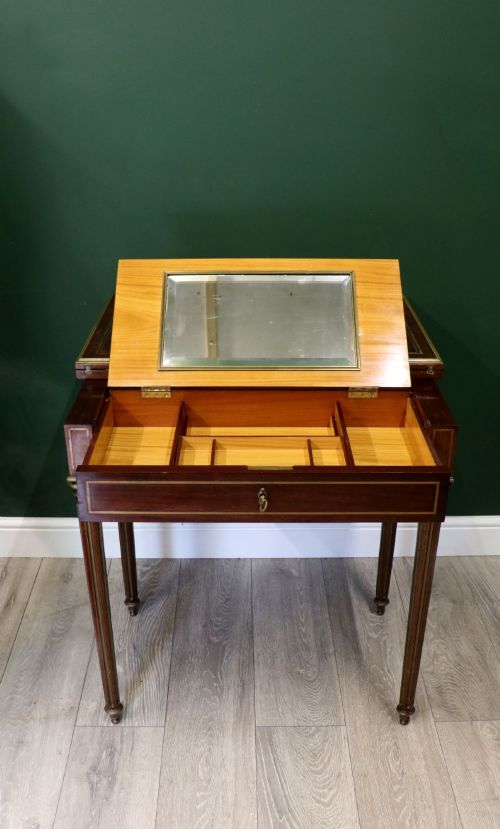
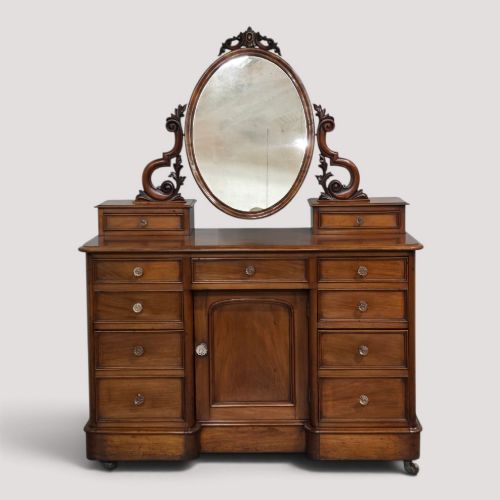
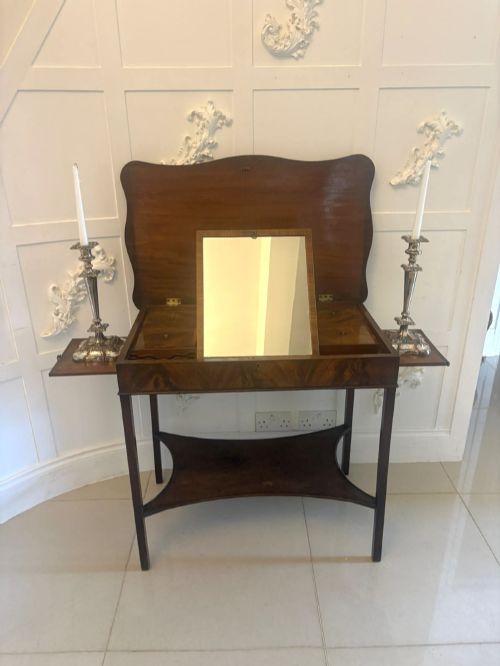
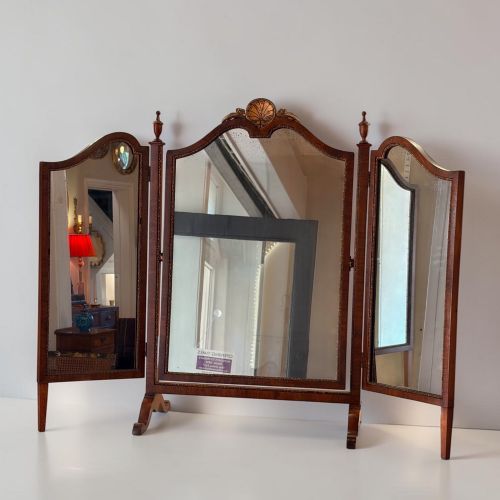
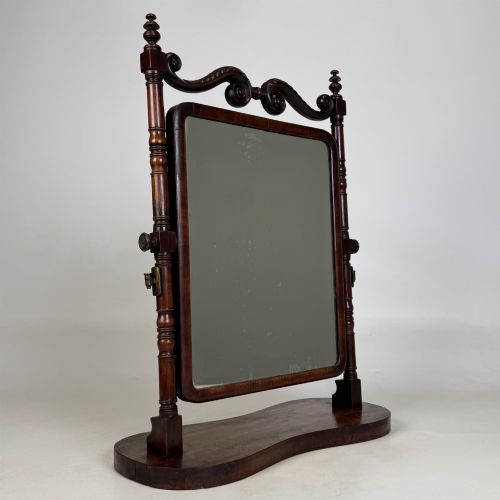
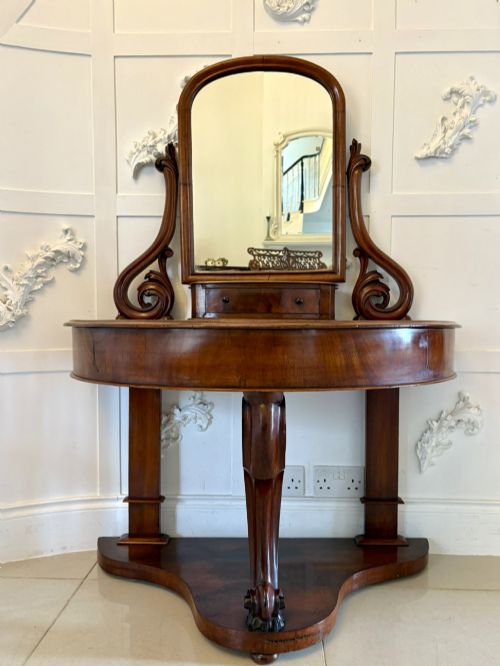
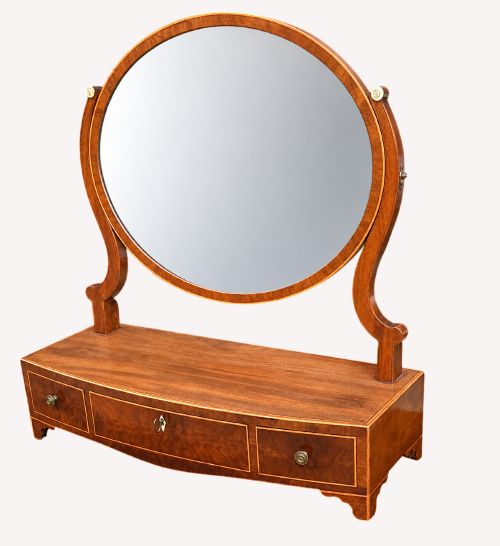
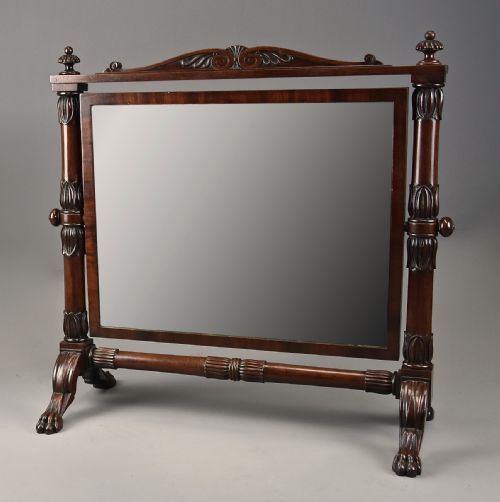
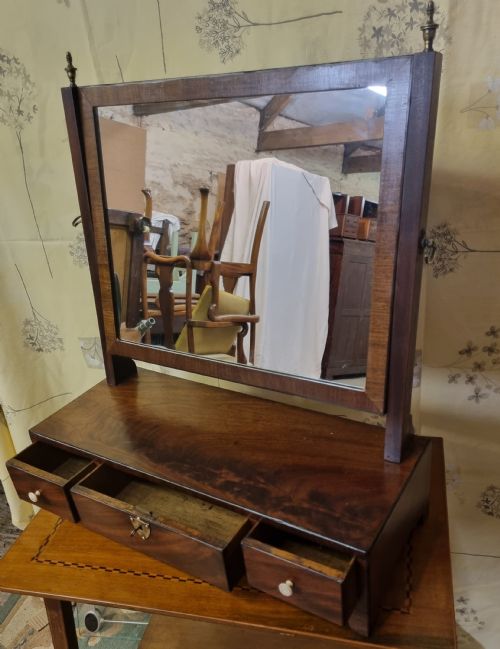
These mahogany vanity dressing mirror examples offer pivoting glass set in timber frames, designed for tabletop personal grooming across Georgian and Victorian interiors.
Mahogany Vanity Dressing Mirror
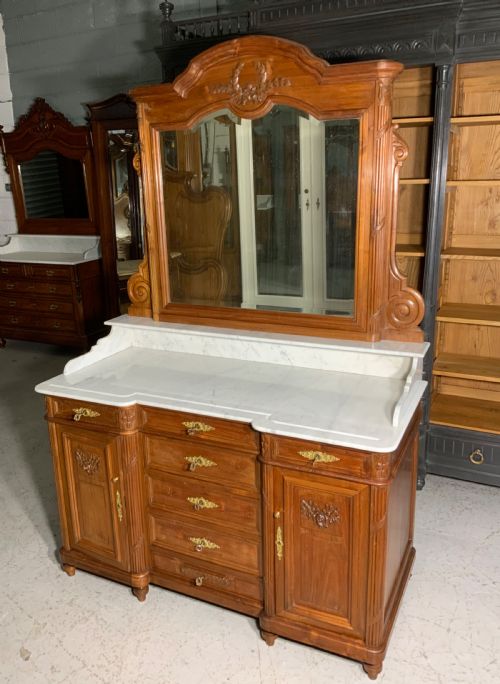
A mahogany vanity dressing mirror sits on tables or acts as an independent dressing glass, appearing in forms such as toilet mirrors, swing mirrors, and cheval mirrors. The selection spans Georgian, Victorian, Regency, and Edwardian periods, alongside French Empire and Art Deco pieces.
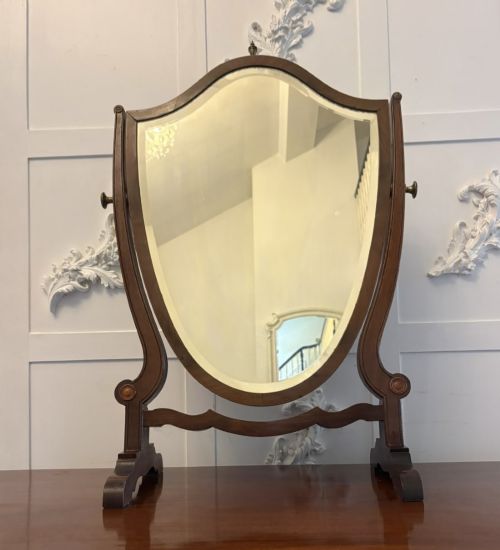
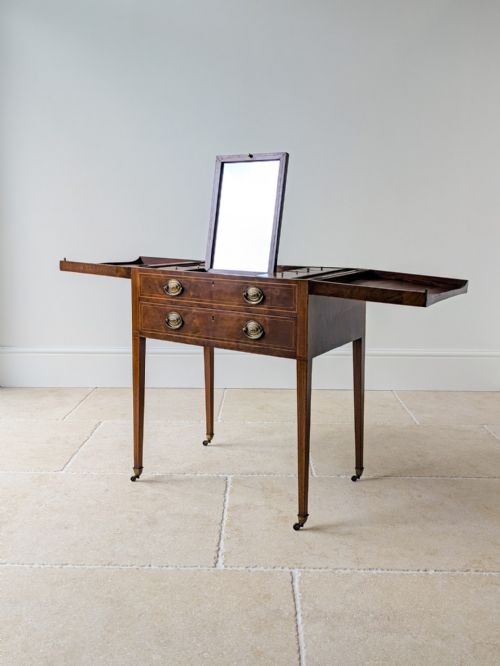
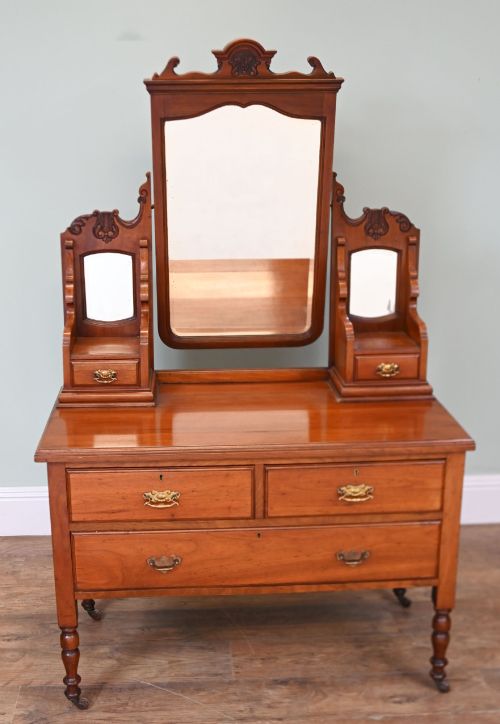
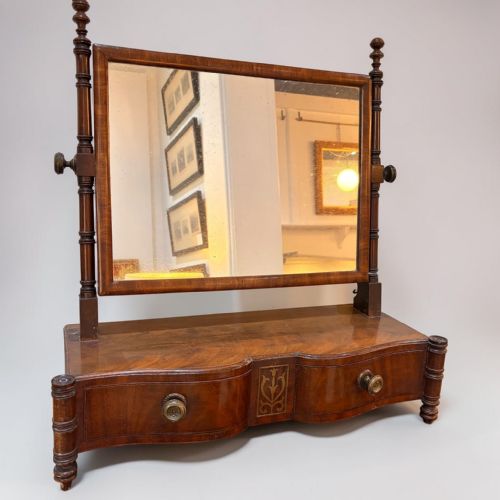
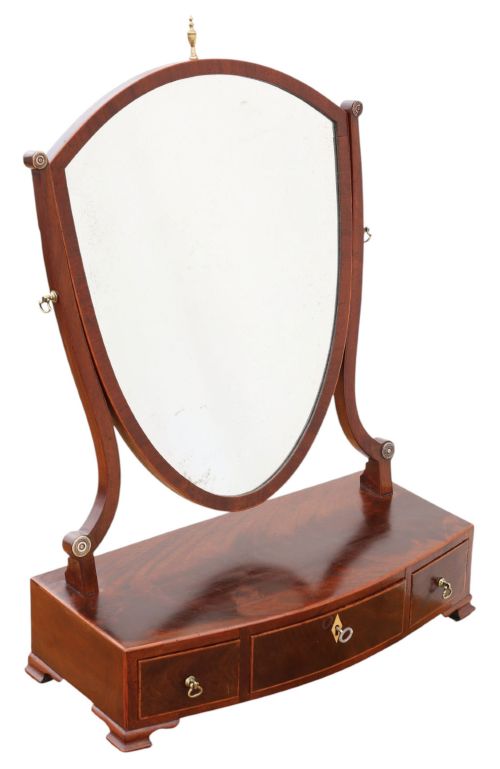
Most items on this page are compact table-top dressing mirrors featuring rectangular, oval, or shield-shaped glass plates held by upright posts. Base units commonly incorporate small drawers for trinkets, resting on bracket feet or ogee brackets.
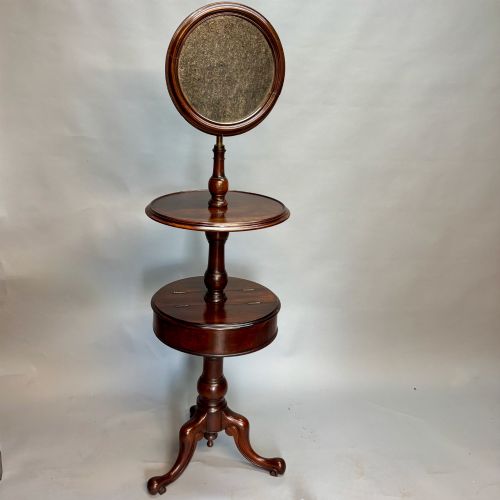
Objects range from simple 18th-century toilet mirrors to elaborate Regency and Victorian standing or cheval designs. Variants include double-sided hand mirrors, telescopic shaving mirrors on tripod bases, and triplate dressing tables.
How they were made
Frames and bases rely predominantly on solid mahogany, sometimes utilising Cuban mahogany, paired with secondary timbers like maple and satinwood. Boxwood inlay, brass fittings, bone escutcheons, and occasional ormolu mounts add structural contrast and decorative detail.
Mirror glass is mounted within pivoting frames that tilt via adjustable brass screw pins or wooden trunnions. Tables and box bases utilise traditional joinery, including dovetail construction for the small drawers often built into the stands.
Some Victorian gentleman could adjust their shaving glass height using a clever telescopic tripod mechanism.
What varies in quality
The sophistication of the timber figure and the crispness of secondary details dictate the standing of a piece. Finer examples display carefully selected crossbanding, stringing, and boxwood inlay rather than plain surfaces.
Hardware quality distinguishes everyday items from superior works. Original cast brass swing-nuts, delicate bone knobs, and cleanly cut dovetails on base drawers indicate higher workshop standards.
P & MA Nicholson·Heal & Sons·Harrods
The Mahogany Vanity Dressing Mirror Glossary
- Cheval mirror
- A full-length dressing glass suspended on a vertical floor-standing frame that allows the plate to tilt fully. These large mirrors permit a view of the entire outfit.
- Toilet mirror
- A smaller tabletop dressing mirror designed to sit on a chest of drawers or washstand during the Georgian and Victorian eras. These portable glasses usually feature a small drawer base.
- Shield mirror
- A dressing glass cut into the shape of a heraldic shield, popular during the Georgian period. The curved upper outline softens the rectangular geometry of typical dressing tables.
- Crossbanding
- A border of veneer laid around the perimeter of a panel with the grain running perpendicular to the centre. This decorative technique frames the primary mahogany surface.
- Trunnion
- A cylindrical pivoting pin or pivot block that allows the mirror frame to tilt back and forth between upright supports. They are frequently made of brass with adjustable thumb screws.
Mahogany Vanity Dressing Mirror: Frequently Asked Questions
What is a toilet mirror?
A toilet mirror is a small tabletop dressing glass designed for personal grooming, typically equipped with a box base containing tiny drawers for storage.
These pieces sat atop larger tables or chests before dedicated dressing tables became common in British homes.
How do swing mirrors tilt?
Swing mirrors pivot on side screws or wooden trunnions inserted into upright support arms mounted on the base.
Tightening these brass or wooden pins holds the glass plate at the desired viewing angle.
What is a cheval mirror?
A cheval mirror is a tall, freestanding dressing mirror supported by four legs and a vertical frame that allows the entire glass to rotate.
Unlike tabletop toilet mirrors, these larger units stand directly on the floor.
Are these mirrors original?
Many surviving pieces retain their original glass and timber frames, though antique mirror plates often exhibit light foxing or silvering loss.
Secondary components like brass hardware and drawer linings are evaluated individually by period.