
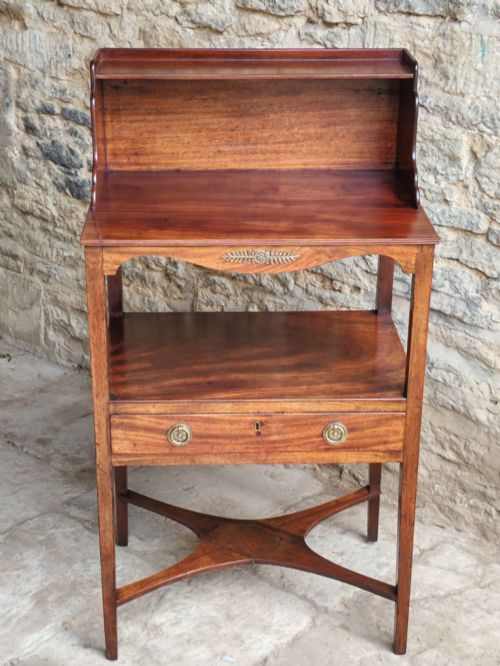
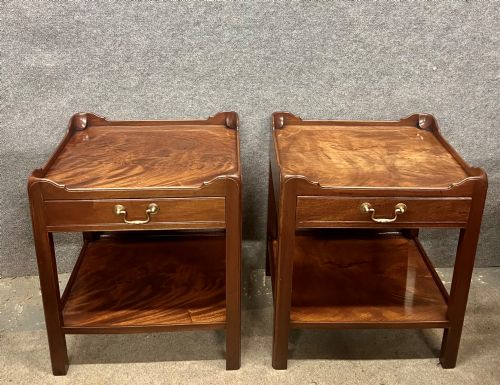
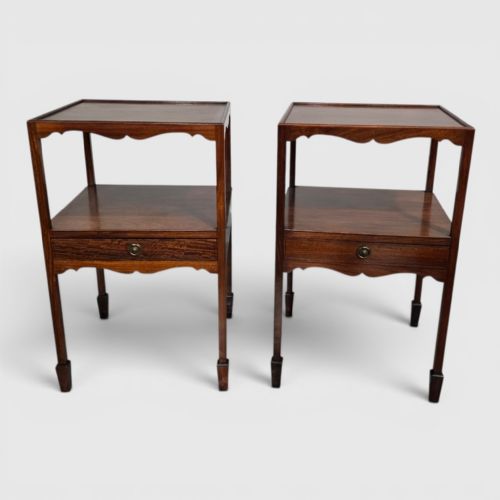

Mahogany Tray Top Nightstand
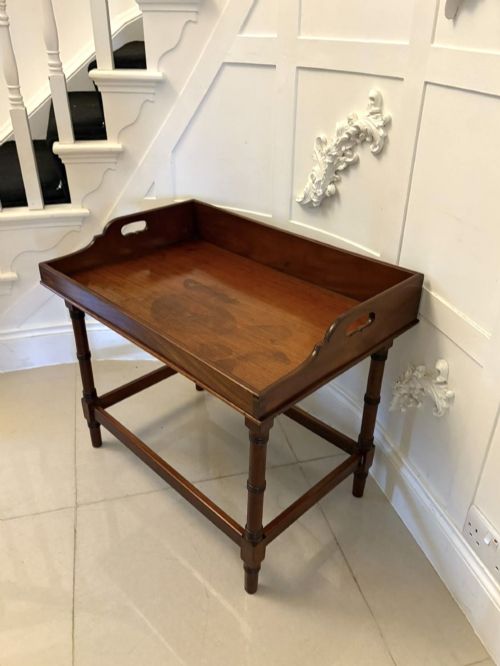
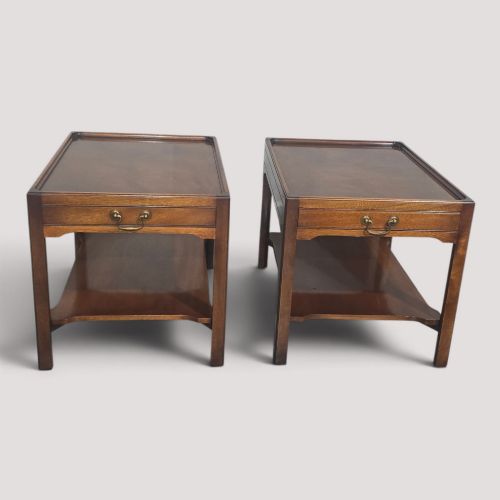
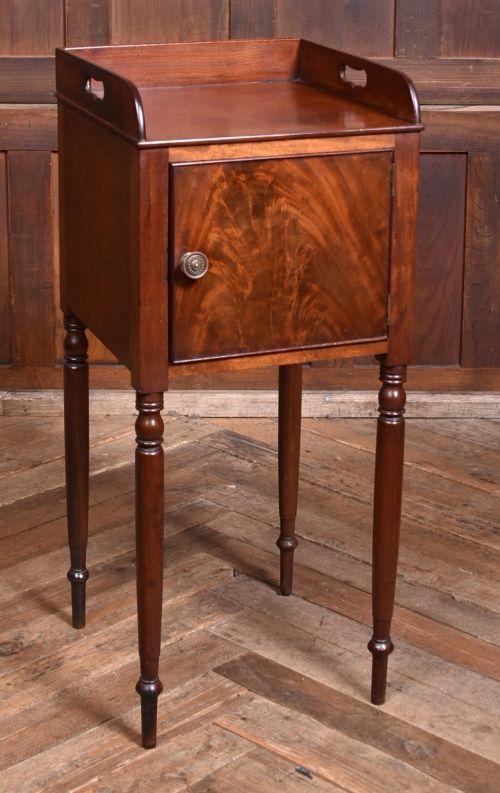
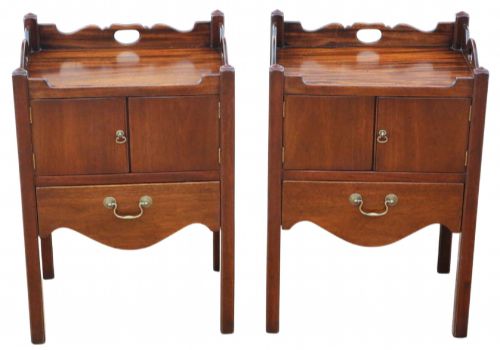
A mahogany tray top nightstand brings disciplined Georgian utility to the bedroom, offering a raised edge to secure bedside objects.
Mahogany Tray Top Nightstand
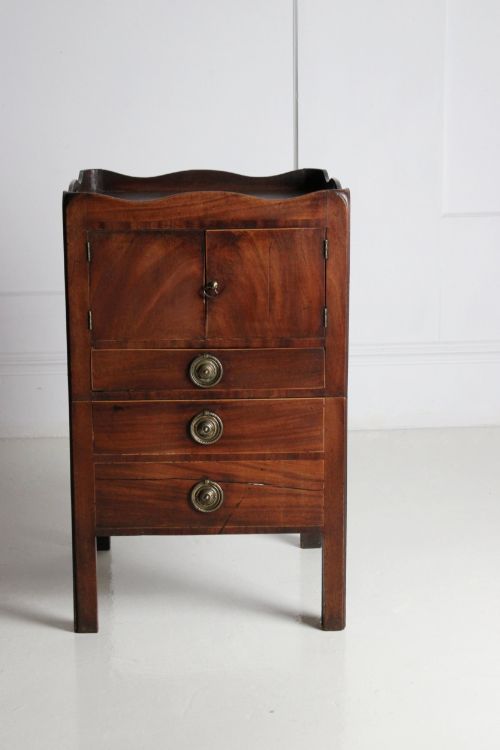
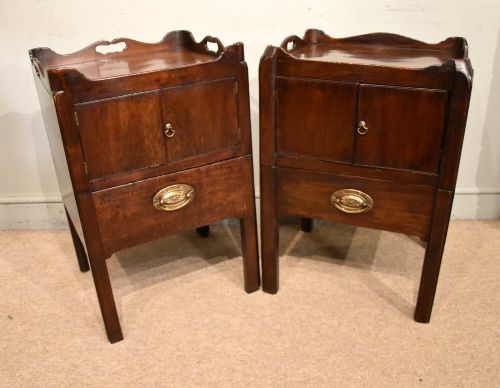
A mahogany tray top nightstand provides a compact surface designed for eighteenth and nineteenth-century chambers, frequently appearing as a bedside cabinet, pot cupboard, or lamp table. These pieces serve primarily to hold chamber lighting or personal items while concealing storage beneath.
The versions most commonly found here date from the Georgian and Regency periods, alongside later revival pieces produced in the early twentieth century. Cabinets often feature enclosed lower compartments or drawers, balancing practicality with restrained domestic elegance.
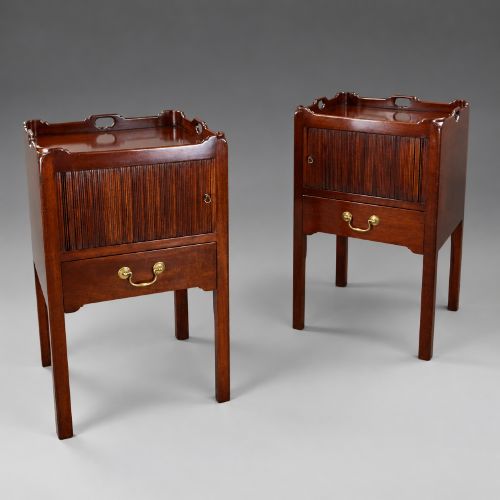
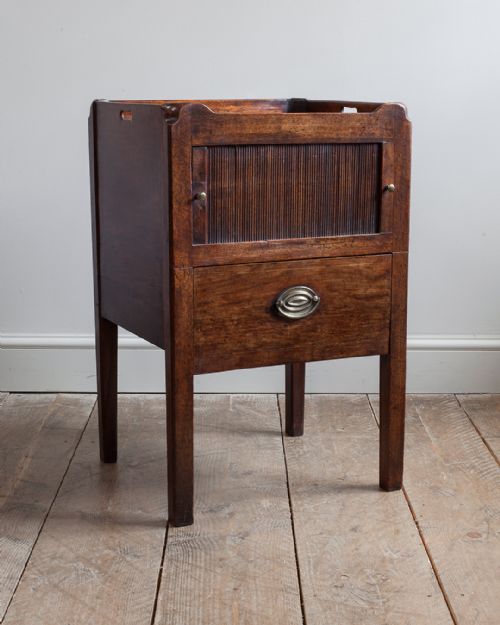
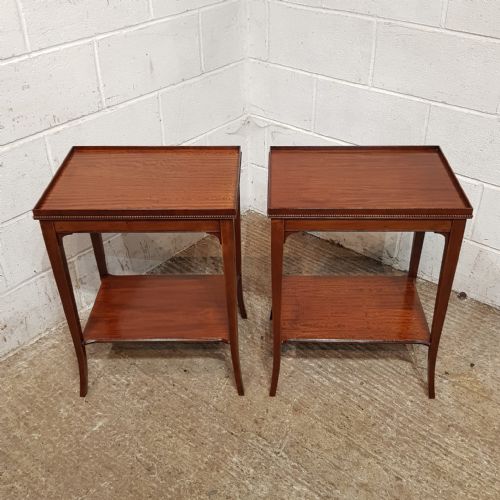
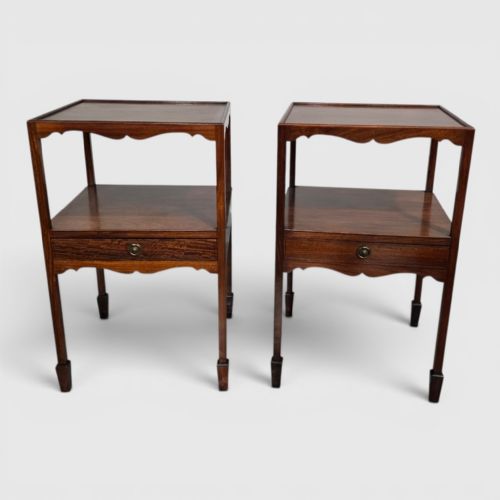
Makers utilised various forms such as commodes and tambour-front cupboards alongside open lamp tables. The defining characteristic across these variations remains the raised tray top, which prevents items from sliding off the surface.
Materials and Construction
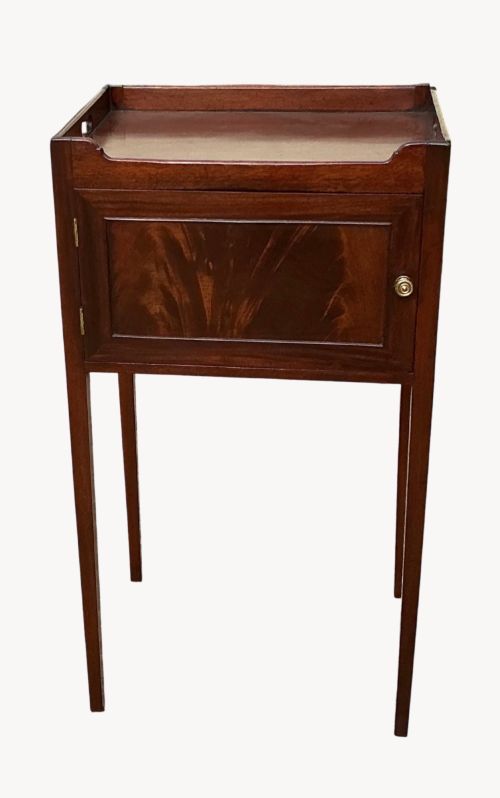
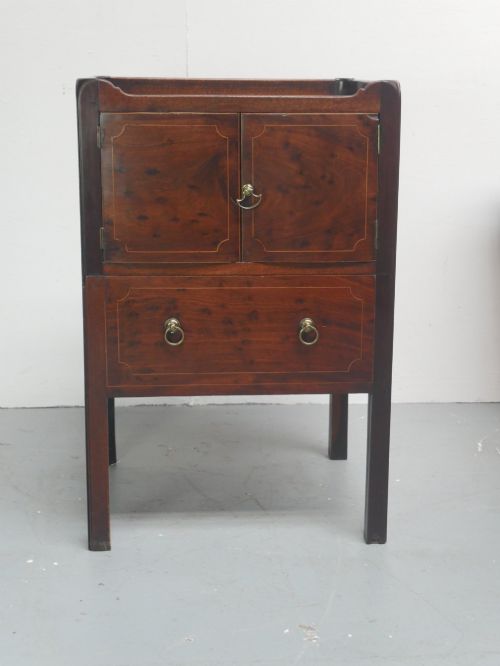
Cabinetmakers constructed these tables predominantly from solid mahogany and flame mahogany veneer, sometimes enhanced by contrasting boxwood inlay. The dense grain of the timber allowed workshops to shape delicate tray edges and secure tight joints without excessive bulk.
Hardware typically included brass handles and fittings, which complemented the rich dark tones of the wood. Craftspeople also incorporated leather surfaces on specific working variations designed for personal grooming or writing.
Some eighteenth-century nightstands hid chamber pots behind convincing false drawer fronts to maintain polite drawing-room illusions.
Standards of Execution
Quality in a mahogany tray top nightstand rests on the crispness of the timber carving and the subtlety of the veneer selection. Superior examples display carefully matched flame mahogany grains across the door panels and drawer fronts.
The structural integrity of the raised tray rim dictates much of the piece's refinement, requiring precise joinery at the corners rather than rushed assembly. Workshops that invested time in delicate boxwood inlay or well-fitted tambour fronts achieved a higher tier of domestic furniture.
The Mahogany Tray Top Nightstand Glossary
- Tray top
- A raised rim encircling the upper surface of a table to retain small objects. This feature distinguishes specific bedside commodes and lamp tables from flat-topped variants.
- Pot cupboard
- A small enclosed bedside cabinet historically designed to house a chamber pot. Many survive adapted simply as general bedside storage tables.
- Tambour
- A flexible shutter constructed from vertical strips of wood glued to a canvas backing, allowing cabinet doors to slide smoothly around a curved track.
- Flame mahogany
- A veneer cut from the fork of the mahogany tree where the branch meets the trunk. This produces a distinctive flickering flame pattern highly prized in high-end cabinetmaking.
- Commode
- A low enclosed cabinet with doors or drawers standing on legs. In eighteenth-century contexts, this term frequently describes bedside storage units.
Mahogany Tray Top Nightstand: Frequently Asked Questions
What is a mahogany tray top nightstand used for?
These pieces function primarily as bedside storage and display surfaces, holding lamps, books, or personal items within easy reach. The raised edge prevents rolling objects from falling onto the floor.
Historically, many versions doubled as enclosed pot cupboards or commodes to conceal utilitarian chamber items. Today, collectors utilise them purely as accent tables or functional bedside cabinets.
How do I date a mahogany nightstand?
Dating relies on observing structural characteristics, timber selection, and prevailing historical styles such as George III, Regency, or Edwardian revival. Earlier eighteenth-century pieces often display solid timber construction and hand-cut dovetails.
Later twentieth-century reproductions from the 1920s and 1930s replicate these Georgian proportions using machinery, which produces more uniform internal joints and standardised hardware fittings.
Are these nightstands sturdy enough for daily use?
Solid mahogany construction provides robust structural integrity capable of enduring regular modern use as a bedside table or lamp stand. The dense hardwood resists everyday wear remarkably well.
Care should be taken with veneered surfaces and delicate tray edges to avoid impact damage or moisture rings from unsealed drinking glasses.