




Georgian Gallery Top Nightstand
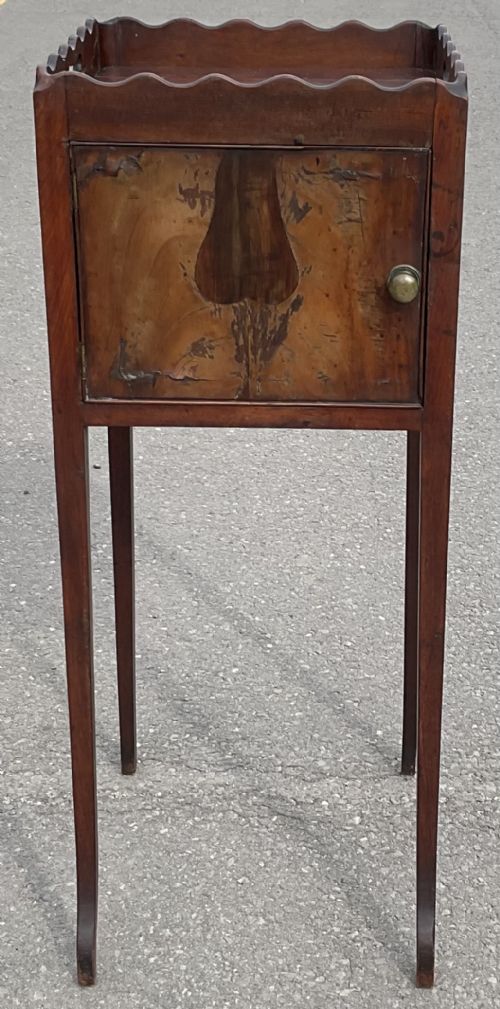
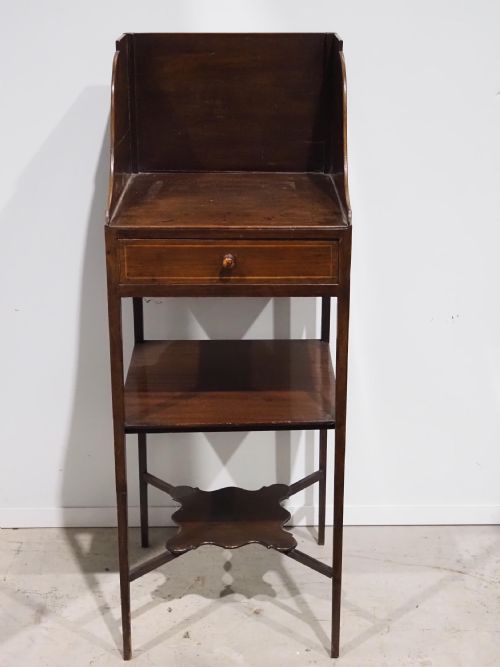
A georgian gallery top nightstand brings timber work from the eighteenth and nineteenth centuries straight to the bedside.
Georgian Gallery Top Nightstand
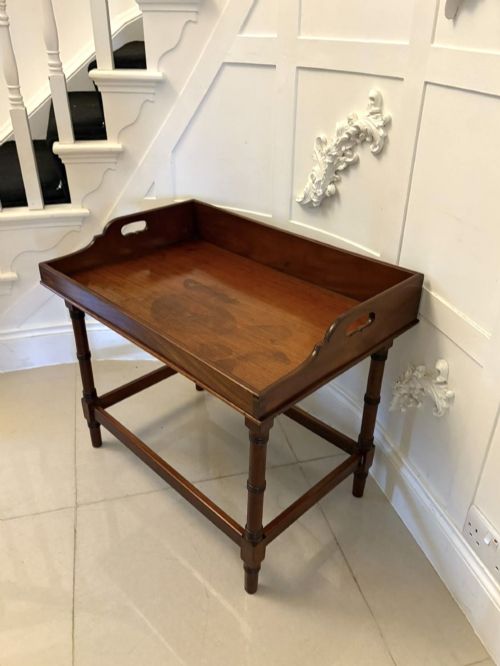
A georgian gallery top nightstand spans bedside tables, cabinets, commodes, and lamp tables across the eighteenth and nineteenth centuries, alongside later revival pieces. These items serve as compact bedroom storage or side surfaces, drawing on periods such as George III, Regency, and the Edwardian era.
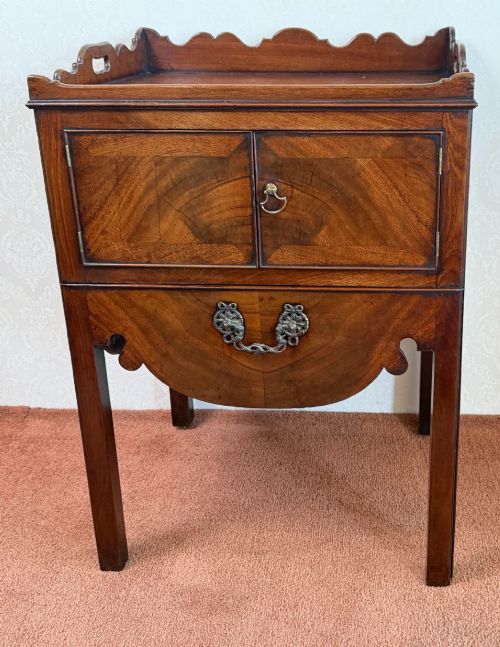
The most common forms seen here are bedside tables and cabinets featuring raised tray tops or galleries, constructed primarily in mahogany with occasional burr walnut or satinwood details.
Origins stretch from the robust cabinet-making traditions of the eighteenth century through to twentieth-century revivals like Chippendale and Queen Anne styles, offering practical surfaces with distinct historical character.
How they were made
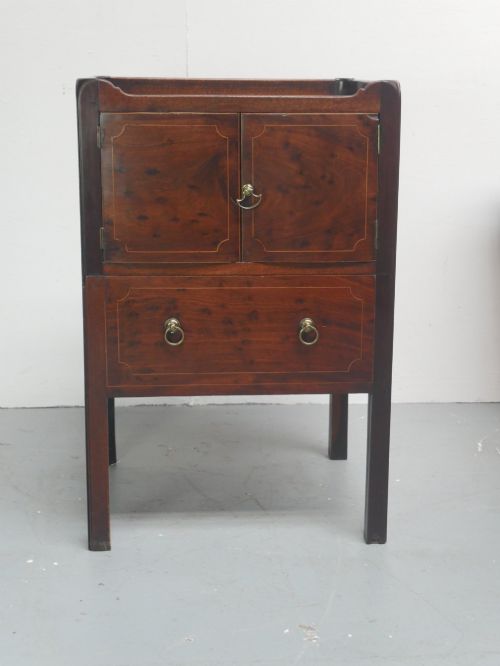
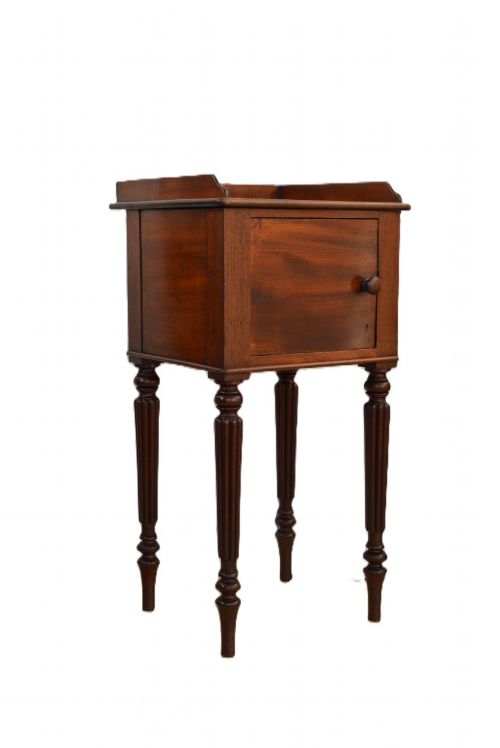
Construction relies heavily on solid mahogany and mahogany veneers, often accented with boxwood inlay or satinwood for contrast on cabinet fronts and tabletops. Cabinet-makers shaped these woods into sturdy frames, incorporating reeded legs, drawer boxes, and cupboard enclosures.
Hardware typically involves brass handles and pulls, while tray tops are formed with raised wooden galleries designed to keep items secure on the surface.
Early bedside companions designed to hide chamber pots now quietly host modern alarm clocks and bedside reading.
What varies in quality
Quality reveals itself in the crispness of the boxwood inlay, the precision of the reeded legs, and the figuring of the mahogany or burr walnut timber selected for the top and panels. Finer examples display meticulous attention to drawer linings, dovetail joints, and the integration of the gallery rails.
Later revival pieces show distinct shifts in timber selection and joinery methods compared to authentic eighteenth-century examples, shifting the balance between decorative impact and period integrity.
Gillows
The Georgian Gallery Top Nightstand Glossary
- Gallery top
- A raised wooden border surrounding the perimeter of a tabletop to prevent items from rolling off. This feature appears frequently on bedside commodes and lamp tables.
- Pot cupboard
- A small enclosed bedside cabinet historically used to house a chamber pot. These pieces usually feature a door above enclosed storage space.
- Commode
- A low cabinet or chest with drawers and cupboards. In earlier periods, this term often described bedside tables with enclosed lower sections.
- Reeded legs
- Pillar legs carved with parallel convex mouldings running vertically. This decorative turning method appears on select nineteenth-century bedside furniture.
- Boxwood inlay
- Narrow strips of pale boxwood inserted into contrasting darker wood surfaces to create geometric borders or decorative motifs. It adds refined detail to tabletops and cabinet doors.
Georgian Gallery Top Nightstand: Frequently Asked Questions
What is a gallery top nightstand?
A gallery top nightstand is a small bedside table featuring a raised wooden edge around the surface to secure items placed upon it.
These pieces date predominantly from the eighteenth and nineteenth centuries and function as compact storage beside a bed.
How were these nightstands used?
These tables served primarily beside beds to hold lighting, personal items, and enclosed chamber pots within the cabinet section.
Their compact footprints allowed them to fit easily into smaller bedroom spaces while providing concealed storage.
Are these tables solid mahogany?
Many examples utilise solid mahogany, while others combine mahogany veneers with secondary timbers for internal framing and drawer construction.
Cabinet-makers also incorporated decorative elements like boxwood inlay and satinwood accents across various surfaces.
How do I identify a Georgian nightstand?
Georgian pieces display construction methods, timber selections, and proportions characteristic of the eighteenth century, including George III designs.
Comparing the hardware, leg turning, and joinery style helps distinguish eighteenth-century originals from later revival pieces.