

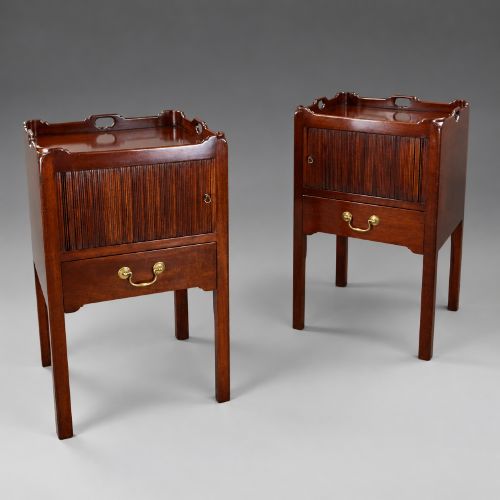
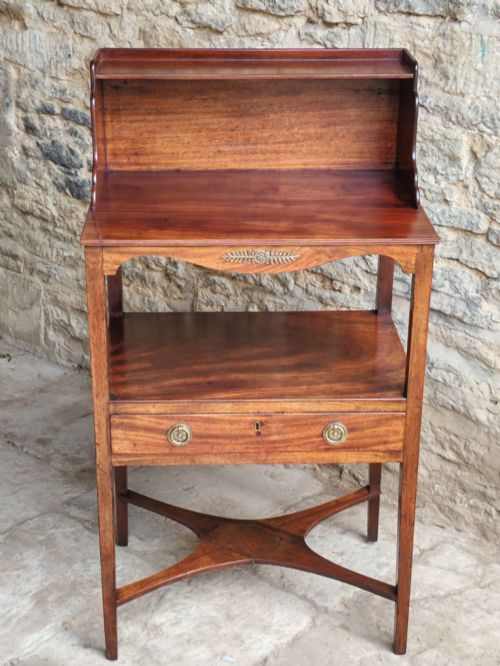
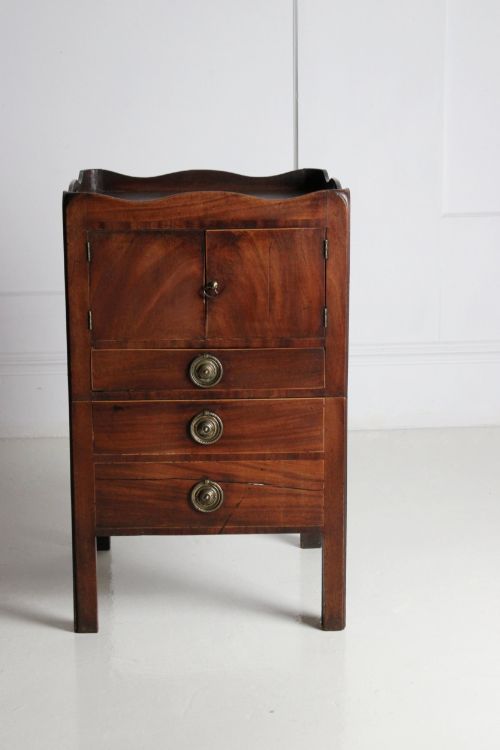
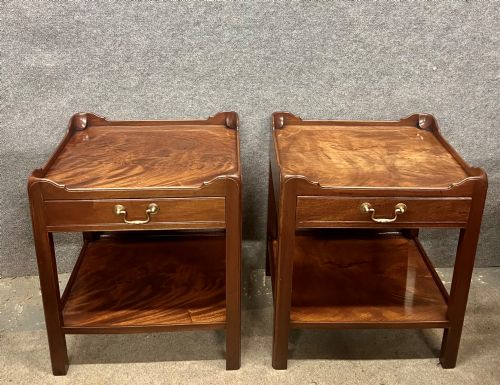
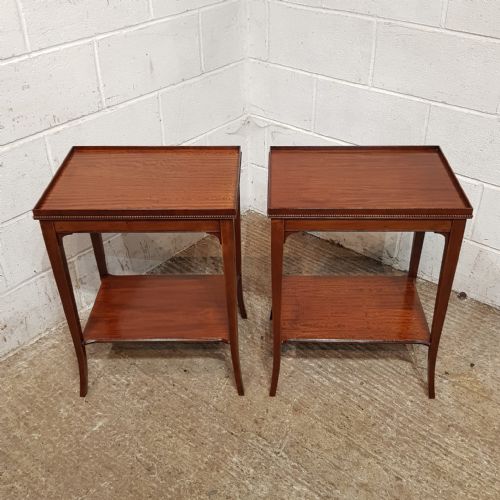
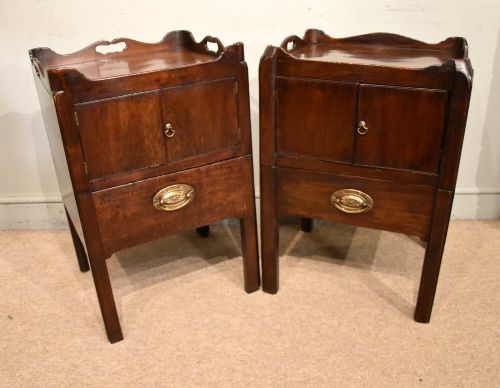
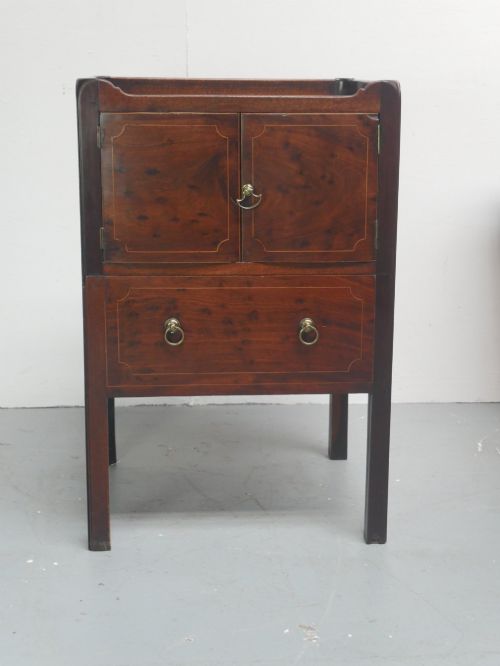
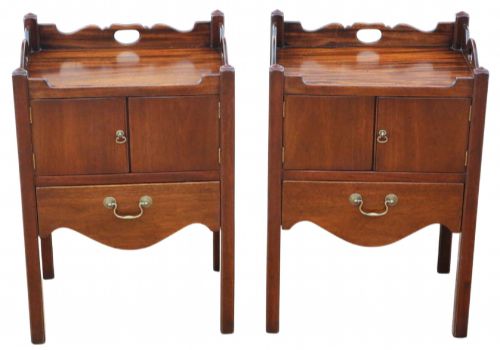




Vintage Tray Top Nightstand
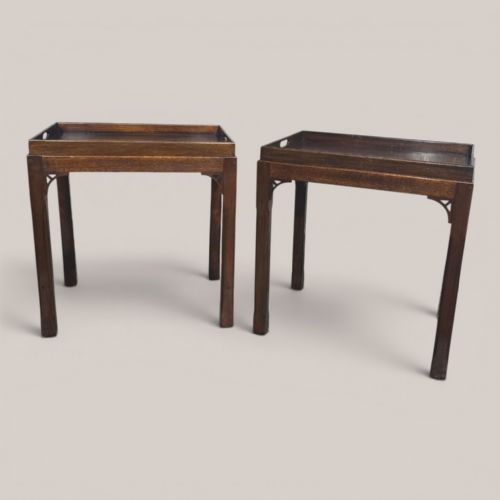
A vintage tray top nightstand brings practical bedside storage and defined edges to keep your morning tea safe.
Vintage Tray Top Nightstand
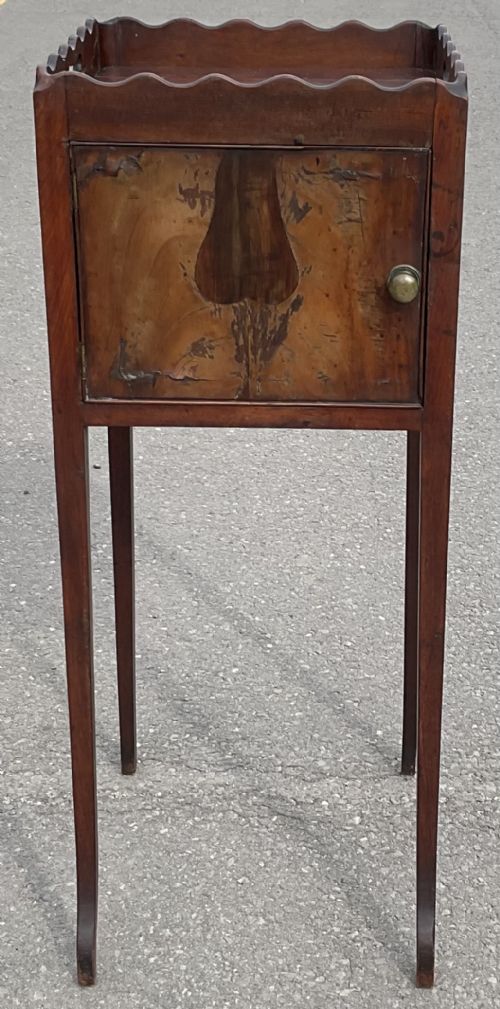
A vintage tray top nightstand functions as a bedside table or cupboard featuring a raised rim around the upper surface to prevent items from sliding off. These pieces appear across multiple eras, ranging from authentic Georgian and Regency periods to later Edwardian and twentieth-century revival interpretations.
The form often takes the shape of a compact bedside cabinet, a pot cupboard, or a commode with enclosed lower storage. Buyers encounter mahogany most frequently, alongside walnut and satinwood variations that serve beside a bed or as occasional side tables.
Originating as functional bedroom furniture, these tables bridge the gap between open side tables and secure bedside cupboards. The raised edge defines the tabletop character, distinguishing them from standard flat-topped tables.
Materials and construction methods
Cabinet makers relied heavily on solid mahogany and flame mahogany veneer, often pairing them with contrasting boxwood and satinwood inlay to add linear detail around drawers and doors. Timber selection dictated the structural integrity and visual depth of the bedside cabinet.
Brass fittings such as drop handles, hinges, and occasional pull-out steps appear across Georgian and Regency examples. Hand-painted detailing and delicate satinwood inlay characterise the later Edwardian and revival pieces produced in the early twentieth century.
One Regency bedside cabinet includes a pull-out step, prepared for the morning descent onto cold chamber floors.
Markers of quality and craftsmanship
The refinement of the tray top itself dictates much of the visual success, from subtle moulded galleries to shaped wooden rims. Superior examples display careful joinery in the raised edges and harmonious timber grain across the top surface.
The Vintage Tray Top Nightstand Glossary
- Tray top
- A tabletop finished with a raised rim or gallery on three or four sides to contain small objects. This feature prevents items from rolling off the surface.
- Pot cupboard
- A compact bedside cabinet historically designed to enclose a chamber pot. Modern buyers utilise the interior space for general bedside storage.
- Commode
- A low enclosed cabinet with doors or drawers, often used interchangeably with bedside cupboards in Georgian and Regency inventories. These pieces provide concealed storage beside a bed.
- Satinwood inlay
- A contrasting light timber veneer inserted into the primary mahogany surface in geometric or floral patterns. This technique defines decorative revival styles.
- Cock-beading
- A narrow rounded moulding projecting around the edges of drawer fronts. This detail protects the drawer edges and adds a refined finish.
Vintage Tray Top Nightstand: Frequently Asked Questions
What is a tray top nightstand used for?
These pieces serve primarily as bedside tables where the raised gallery edge keeps items secure. They provide a surface for lamps and glasses while offering concealed storage below.
Buyers also place them in living rooms as small side tables or lamp tables. The enclosed cupboards keep small necessities hidden from view.
How do I date an antique bedside cabinet?
Dating relies on timber choices, construction techniques, and stylistic markers found in the listings. Georgian and Regency pieces show period-specific cabinet-making methods and primary use of solid mahogany.
Revival pieces from the Edwardian era and the 1920s or 1930s often adopt earlier styles like Chippendale or Sheraton. Examining the secondary timbers and hardware helps confirm the actual manufacturing period.
What is the difference between a nightstand and a commode?
Historical nightstands and commodes often overlap in form as enclosed bedside cupboards. Eighteenth and nineteenth-century commodes frequently housed chamber pots behind doors or dummy drawer fronts.
Today, buyers use both terms to describe compact bedroom storage units with doors or drawers. The internal configuration determines the original purpose rather than the exterior designation.
Are these tables suitable for small bedrooms?
Compact dimensions make these bedside cabinets ideal for restricted spaces beside a bed. Many listings specify narrow widths, such as thirty-seven centimetres, to fit tight layouts.
The enclosed storage prevents clutter from accumulating on the surface. A raised tray top ensures that bedside essentials remain contained within a small footprint.