




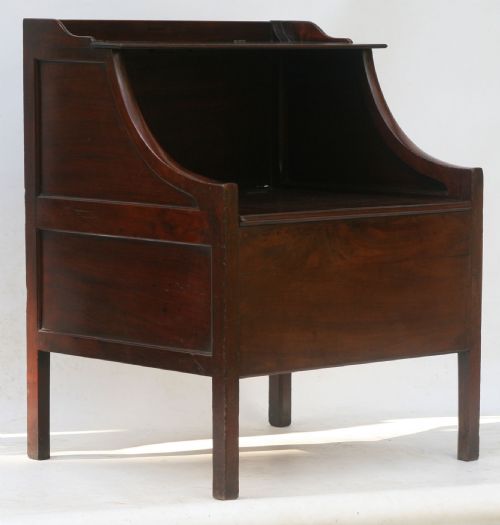
Mahogany Step Commode
A mahogany step commode offers dual utility, hiding a necessary container beneath practical climbing rungs for high beds.
Mahogany Step Commode
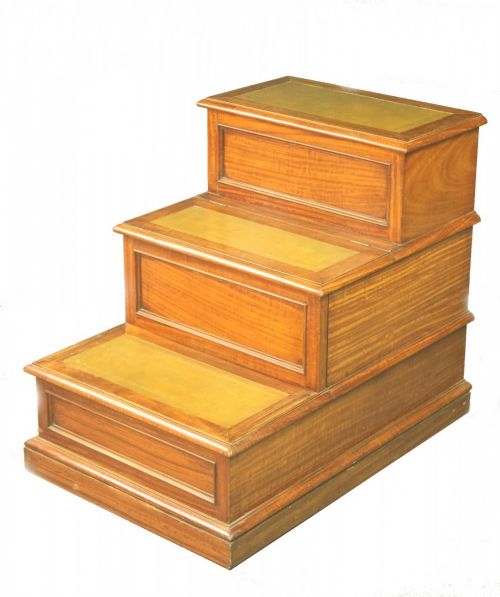
A mahogany step commode combines a set of climbing steps with an enclosed cabinet or box seating a hidden chamber pot. These multi-functional pieces date primarily through the Georgian, Regency, and Victorian periods, often appearing as compact bedside items or library furniture.
The most frequent examples on this page merge the top surfaces of bed steps with hinged treads that lift to reveal a compartment. Makers designed them for refined bedrooms where space and convenience required clever integration of separate furnishings.
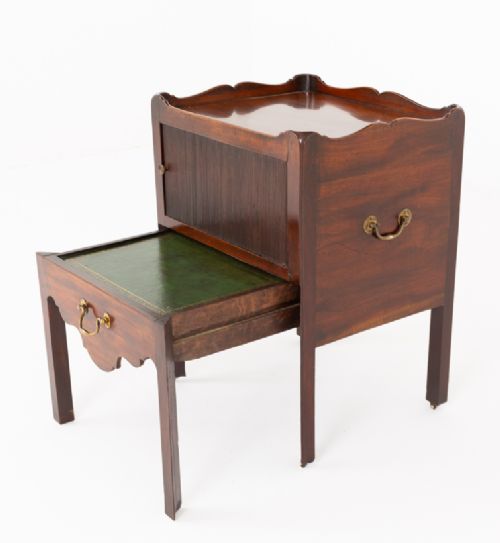
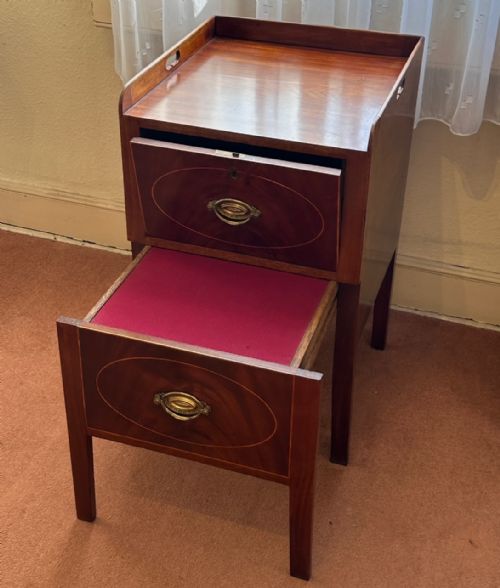
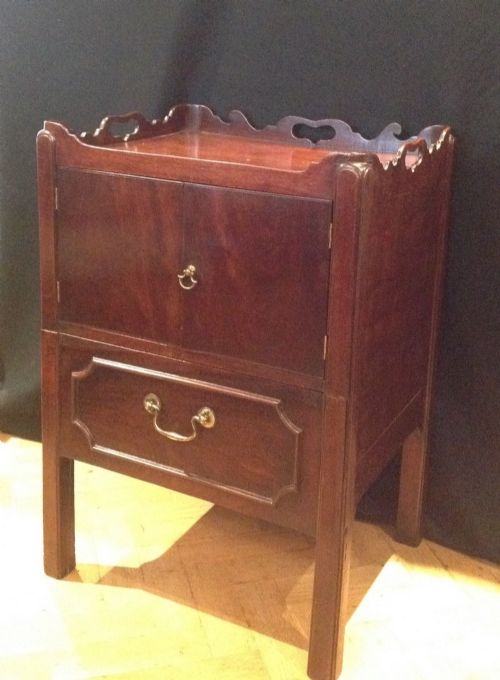
Forms range from two-tier and three-tier step configurations to disguised box stools and bedside cabinets with pull-out mechanisms. Timber selection leans heavily on rich mahogany and flame mahogany veneer, occasionally accented with satinwood details.
Judging execution and proportion
Superior examples display balanced proportions that conceal their dual purpose successfully, while lesser pieces appear boxy or clumsy when closed. The crispness of the cabinet joinery and the cleverness of the pull-out step mechanism distinguish finer workshops from standard production.
The selection of timber grain, particularly matched flame mahogany veneer on the drawer fronts and treads, marks the distinction between utilitarian items and high-status commissions. Interior fitting execution, such as clean cedar or mahogany linings within the commode compartments, further indicates grade.
Bed steps doubled as secret seating for midnight snackers.
J.Jarvis
The Mahogany Step Commode Glossary
- Commode
- A piece of furniture containing a concealed chamber pot or sanitary container. In this context, it is integrated directly into a set of steps or a bedside cabinet.
- Bed steps
- A small flight of steps used to climb into high-post beds during the Georgian and Victorian eras. They often doubled as storage or seating units.
- Flame mahogany
- A veneer cut from the fork of a mahogany tree where the branches join the trunk, producing a rippling, flame-like pattern. Furniture makers utilised this figure for prominent surfaces.
- Regency
- An English design period spanning the early nineteenth century, characterised by classical restraint, refined veneers, and architectural lines.
- George III
- The period of British design spanning the long reign of the third monarch of that name, associated with balanced proportions and quality mahogany cabinetwork.
Mahogany Step Commode: Frequently Asked Questions
What is a mahogany step commode?
A mahogany step commode is a dual-purpose piece of antique furniture that combines a set of climbing steps for high beds with a concealed chamber pot enclosure.
Cabinet makers disguised the sanitary compartment beneath hinged treads or within a cabinet base to maintain bedroom decor standards.
How were these pieces used?
Owners used the steps each night and morning to reach elevated sleeping quarters, while the built-in compartment served nocturnal sanitary needs.
During the day, the folded steps and closed cabinet functioned as standard bedside tables or small stools.
How do I date a mahogany step commode?
Dating relies on stylistic markers, timber choice, and mechanical construction, moving from Georgian architectural restraint through Regency classical lines to heavier Victorian proportions.
Examining secondary woods and hinge types provides additional clues regarding the manufacturing decade.
How do I live with one today?
These versatile items function easily as bedside tables, lamp stands, or decorative corner cabinets in modern bedrooms and studies.
The hidden compartments now serve as useful storage for small household items rather than their original purpose.