

Mahogany Tiered Display Stand
A mahogany tiered display stand offers stacked surfaces for books or ornaments, bringing practical height and rich timber grain to a room.
Mahogany Tiered Display Stand
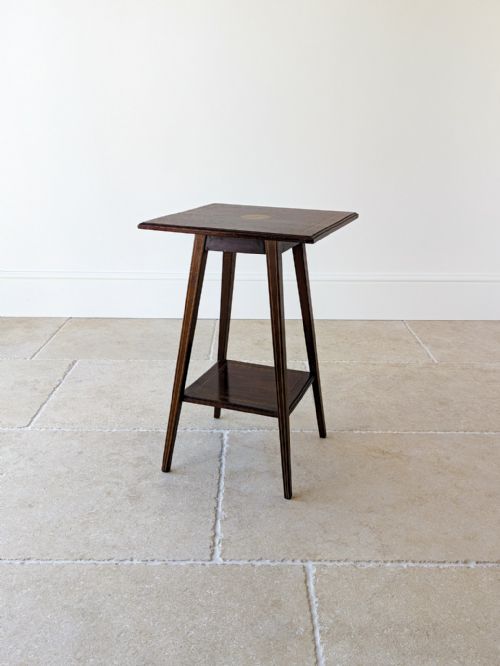
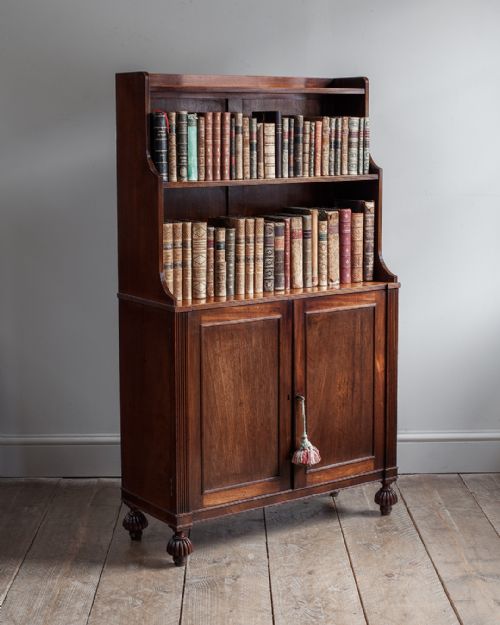
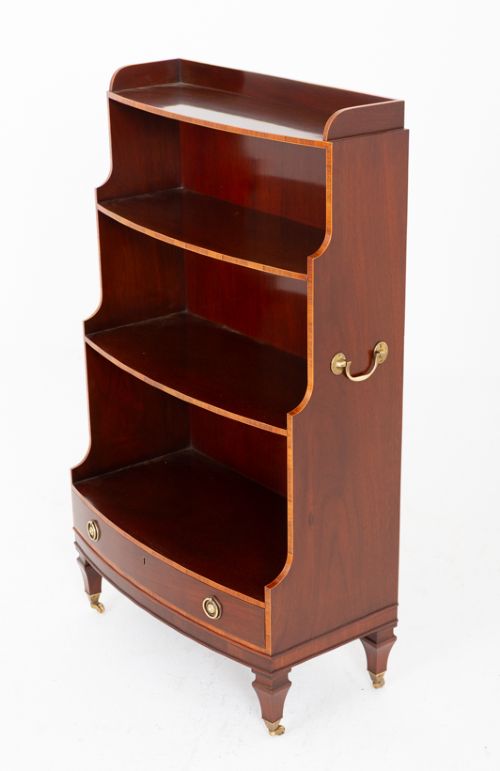
A mahogany tiered display stand encompasses multi-level furniture such as whatnots, etageres, waterfall bookcases, and cake stands designed to hold objects across several vertical levels. These pieces emerge primarily from the Georgian, Regency, Victorian, and Edwardian eras, spanning the late eighteenth century into the early twentieth century.
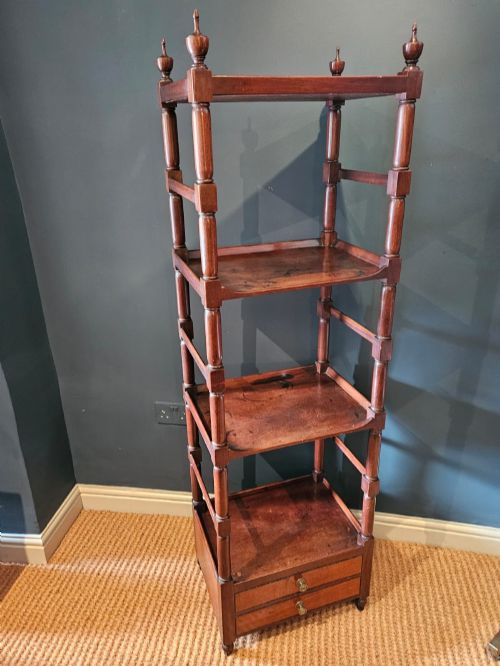
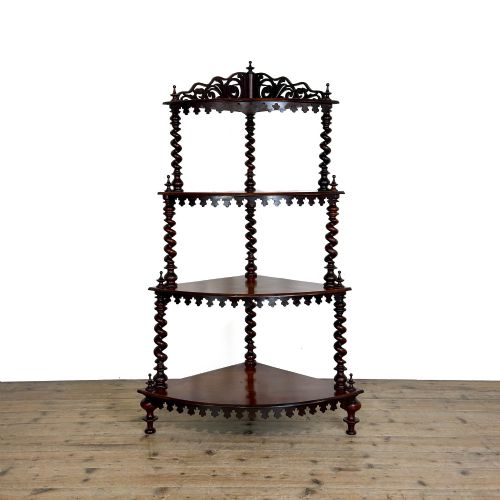
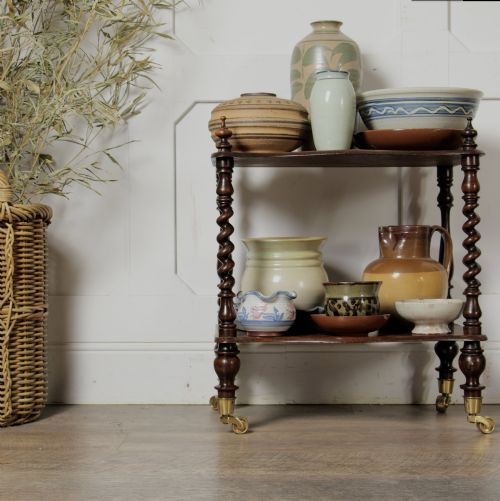
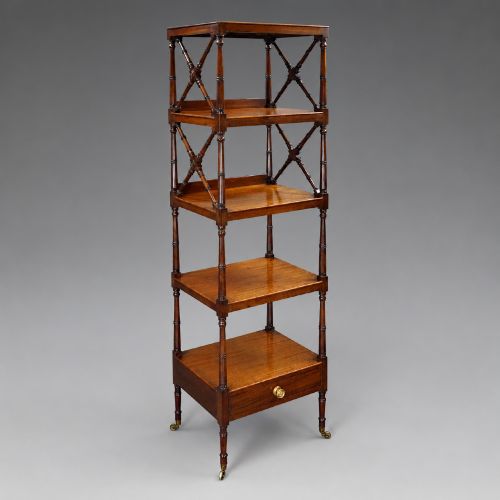
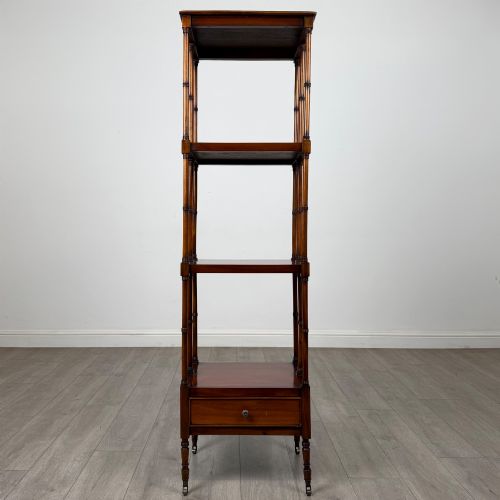
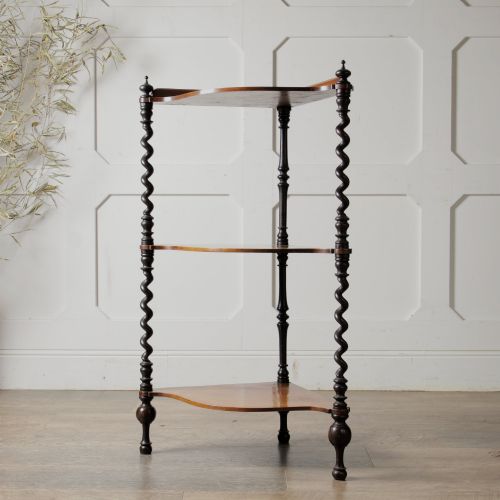
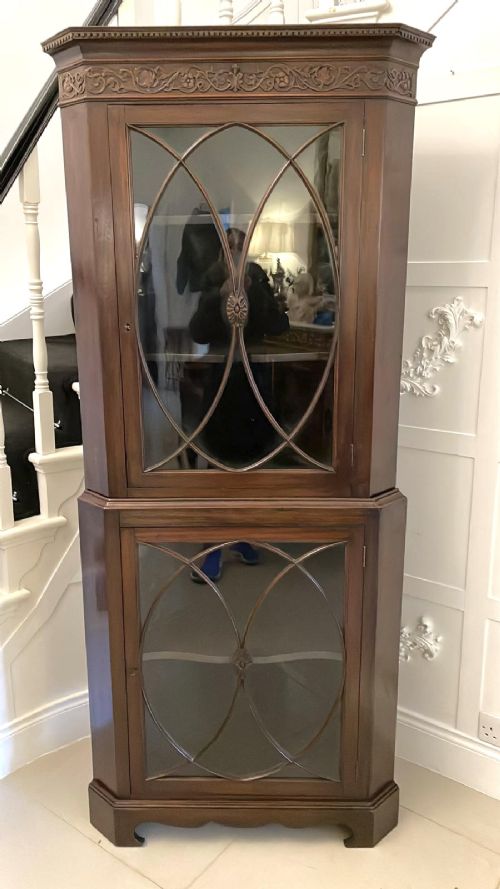
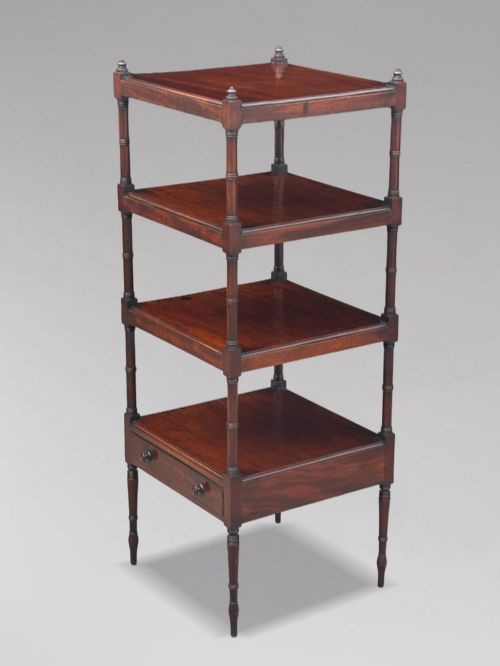
The version most commonly met on this page is the multi-tiered whatnot or open bookshelf, often constructed with three or four ascending shelves supported by turned columns or uprights. Corner designs and side-standing units appear frequently among the pieces, utilising vertical space efficiently in smaller rooms or tight corners.
Makers and workshops across these periods also produced specialised variants including music stands, dumb waiters, and inlaid torchères. While the core function remains the display or storage of books and small items, the silhouette shifts from formal George III proportions to lighter Edwardian and revival styles.
How they were made
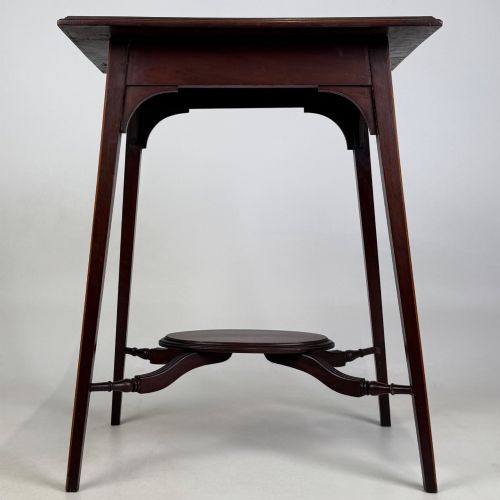
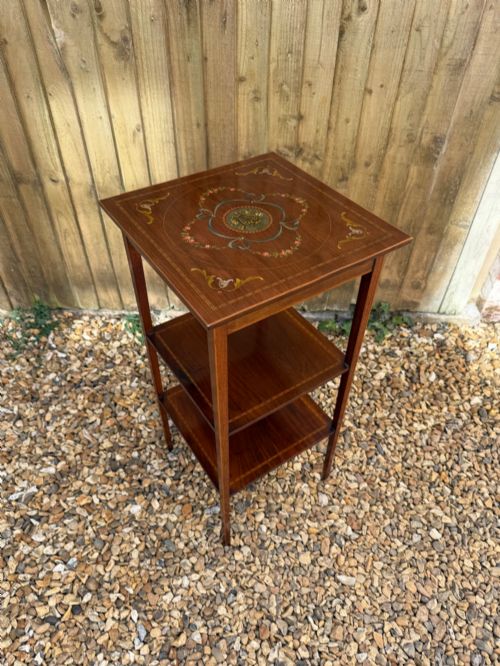
Cabinet makers relied principally on solid mahogany and mahogany veneers, sometimes enhanced by contrasting boxwood and satinwood inlay to define shelf edges and panels. Structural integrity depended on sturdy timber frames joined with traditional cabinet-making methods.
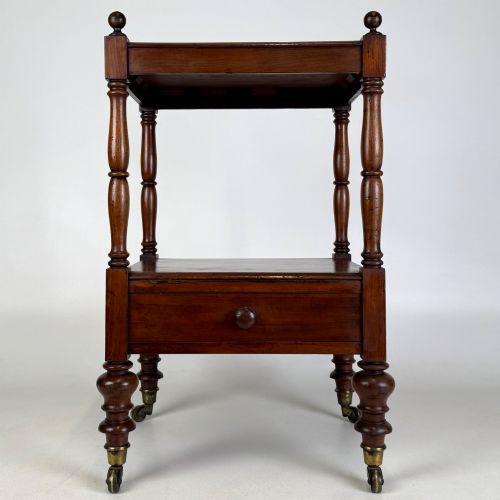
Metal and glass components frequently augmented the wood construction, with brass castors fitted to feet and occasional brass fittings supporting shelves or rails. Certain pieces incorporated glass panels, such as astragal glazed doors on cabinet hybrids, alongside marble inserts on specific continental forms.
Listings feature mahogany, walnut, and satinwood across periods from Georgian craftsmanship to Edwardian revival pieces.
What varies in quality
The distinction between standard production and finer examples rests upon the selection of timber and the precision of decorative details such as stringing and inlay. Richness of grain figure in the mahogany and crispness in turned elements like barley twist columns elevate the standing of a piece.
Structural refinement also separates grades, visible in the stability of tiered platforms, the integration of original brass castors, and the overall balance of proportion. Pieces attributed to specific workshops demonstrate a higher degree of joinery finesse than utilitarian items.
The Mahogany Tiered Display Stand Glossary
- Whatnot
- A piece of furniture with shelves for displaying ornaments or books, developed in the eighteenth century and popular throughout the Victorian period.
- Etagere
- A French term for a display stand with multiple tiers, functionally similar to a whatnot or small open shelving unit.
- Waterfall bookcase
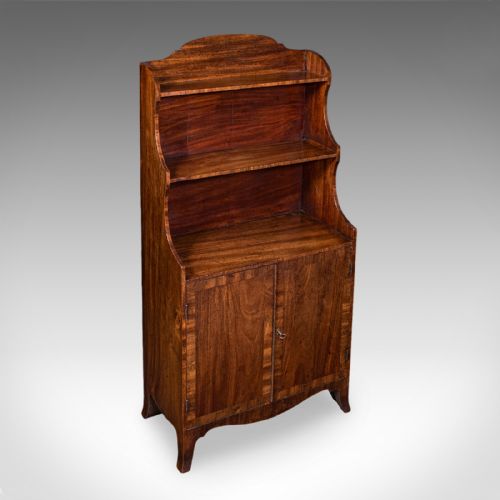
- A set of open shelves where each tier steps back progressively from bottom to top, creating a stepped profile resembling cascading water.
- Astragal glazed
- Fitted with slender wooden glazing bars dividing glass panes within a cabinet door or bookcase front.
- Torchere
- A tall, slender stand designed to support a lamp or decorative object, frequently featuring inlaid mahogany during the Edwardian era.
Mahogany Tiered Display Stand: Frequently Asked Questions
What is a mahogany tiered display stand used for?
These stands served traditionally to display ornaments, hold books, or present small household items across multiple elevated surfaces.
Today, owners utilise the tiers in living spaces and hallways to exhibit collections, plants, or lamps without occupying excessive floor area.
How do I identify a Regency period stand?
Regency pieces often display classical proportions, dark Cuban mahogany, and restrained brass detailing dating from the early nineteenth century.
Look for architectural turned supports and clean lines that distinguish the style from heavier Victorian or lighter Edwardian furniture.
Are corner models common?
Corner units appear frequently across Victorian and Georgian listings, shaped specifically to fit into ninety-degree room angles.
These pieces maximise awkward or unused spaces while providing the same multi-tiered display capacity as freestanding variants.
What materials accompany the mahogany?
Construction frequently incorporates secondary woods alongside mahogany veneers, while boxwood and satinwood provide contrasting string inlay.
Metal elements such as brass castors and fittings appear regularly, and certain continental examples introduce marble tops or glass doors.