

Mahogany Tier Whatnot
Mahogany tier whatnots are open-shelved display pieces designed to hold books and ornaments, bringing practical tiered storage to traditional rooms.
Mahogany Tier Whatnot
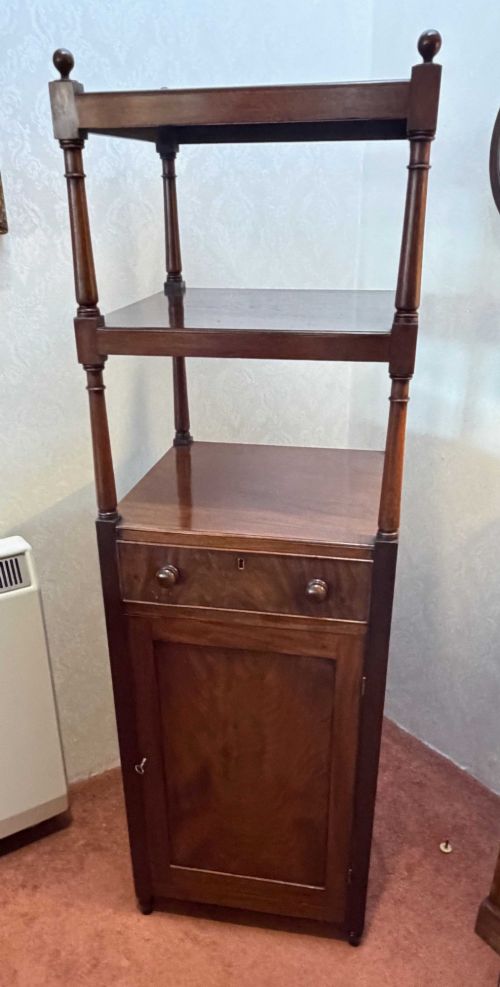
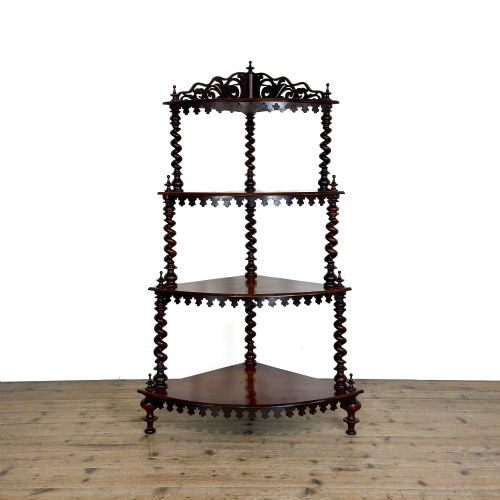
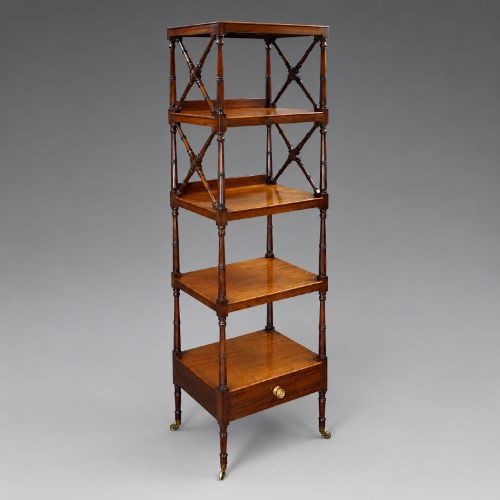
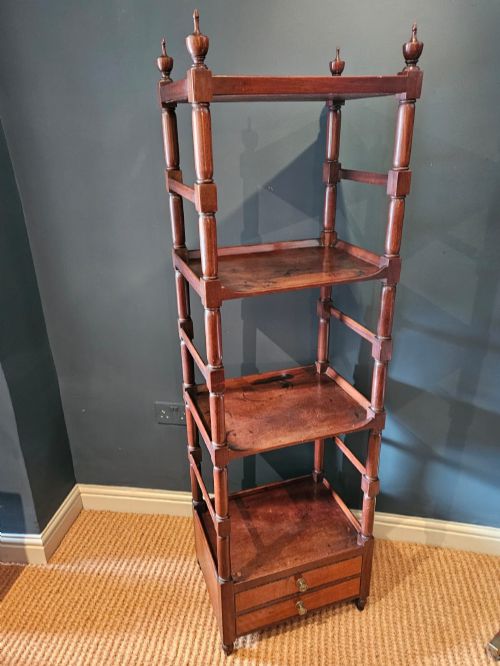
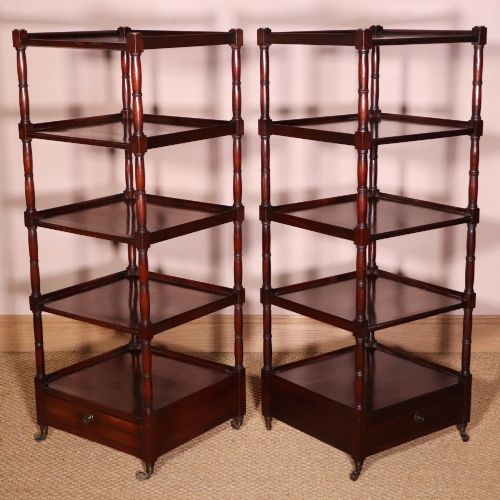
A mahogany tier whatnot provides multiple open levels supported by upright posts, occasionally incorporating lower cupboards, drawers, or cellarettes for enclosed storage. These pieces emerged strongly during the Georgian and Regency periods, continuing through the Victorian era in various formats including corner units, reading stands, and music stands.
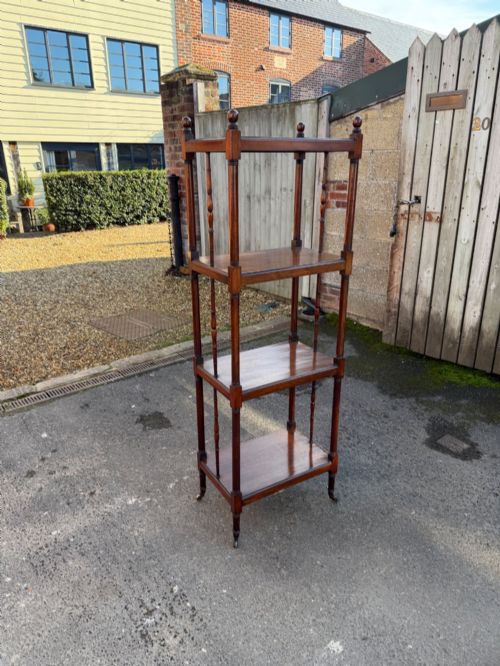
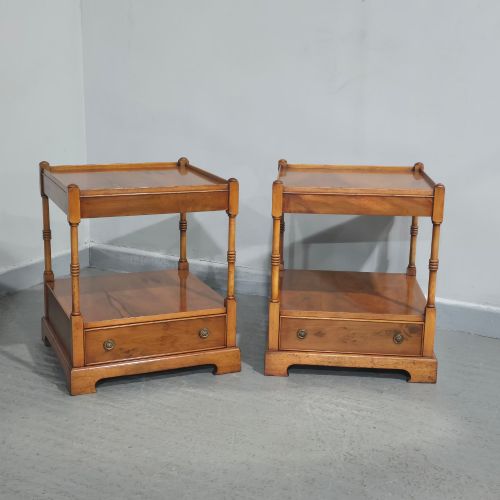
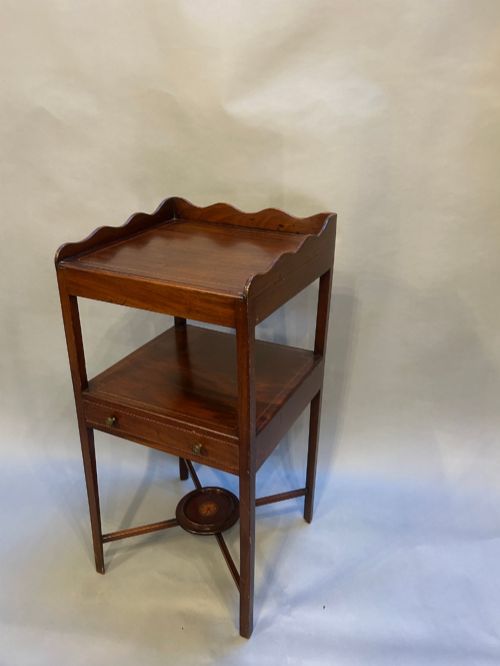
The standard versions encountered here range from simple three-tier and four-tier shelving units to more elaborate etagères and tapering display stands. Makers adapted the form for domestic utility, creating corner pieces to fit tight spaces and freestanding units to serve as side tables or dumb waiters.
Materials and construction methods
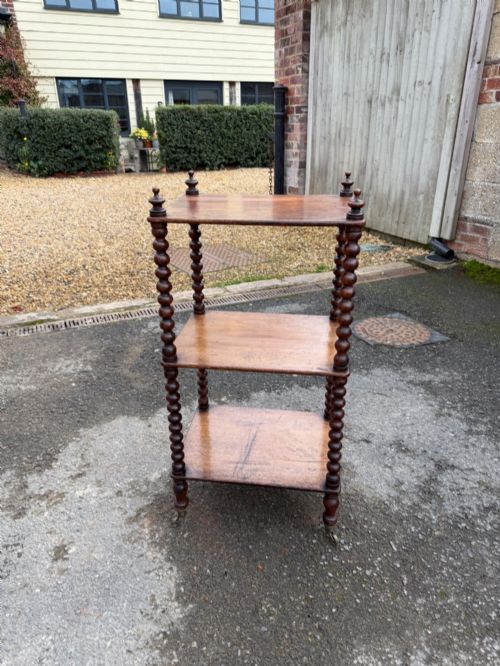
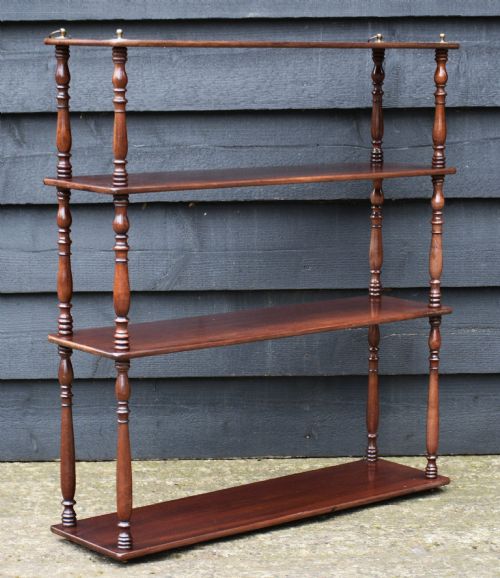
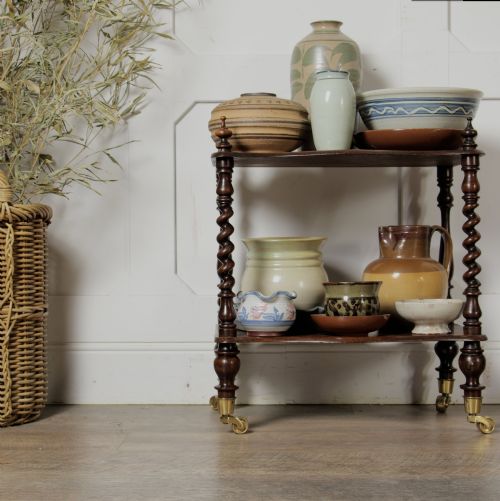
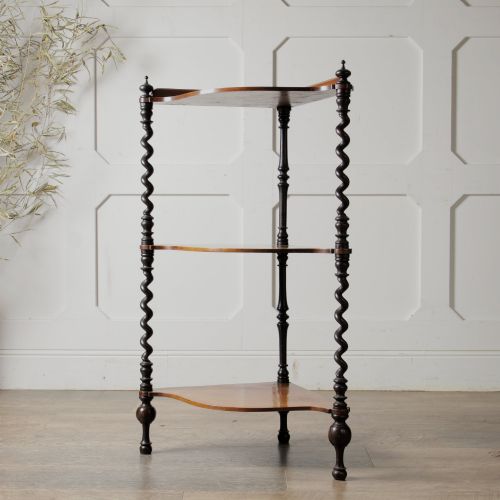
Craftsmen built these tier whatnots primarily using solid and veneered mahogany, often supplemented by secondary woods like rosewood, walnut, and yew wood. Structural uprights frequently utilised decorative turning techniques such as bobbin turning and barley twist profiles.
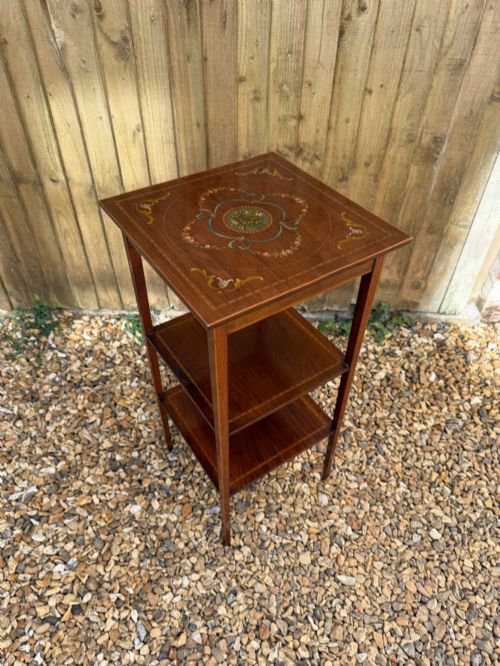
Detailing often included fine inlays using boxwood, alongside functional brass castors and fittings to allow movement. Painted finishes and mirrored backs appear on later Victorian and Edwardian examples to enhance the display capacity of the shelves.
Mahogany Tier Whatnot Retail Price Guide 2026
Typical asking prices for mahogany tier whatnot among the pieces listed under this phrase on Sellingantiques today, from the lower quarter to the upper quarter. They describe what is for sale here now, not the wider market.
Listings span from the 18th Century to the Edwardian period, utilising mahogany, rosewood, walnut, and boxwood.
Judging the quality of tier whatnots
Quality rests upon the selection of timber grain, the crispness of turned supports, and the structural integrity of the tier joints. Finer examples display carefully matched mahogany veneers and robust framing that prevents the individual shelves from sagging under weight.
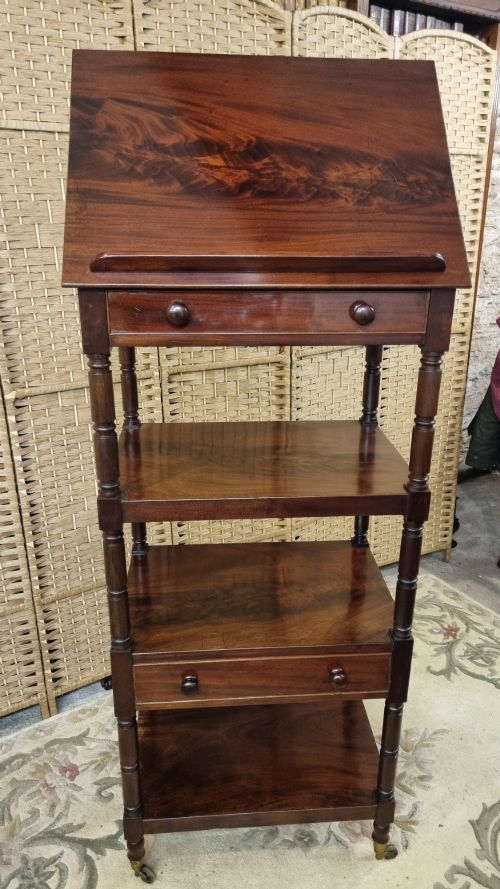
Distinction also lies in functional additions such as integrated drawers, panelled cupboards, or adjustable reading mechanisms. Pieces exhibiting unusual configurations, such as tapering forms or music stand formats, generally demonstrate higher craftsmanship than standard multi-tier models.
Gillows
The Mahogany Tier Whatnot Glossary
- Whatnot
- A movable set of open shelves used for displaying ornaments and holding books. These pieces became popular in British homes during the late eighteenth century.
- Etagère
- A piece of furniture consisting of a set of open shelves for displaying small objects. The term originates from French terminology for staging items.
- Cellarette
- A lockable container or cabinet built into furniture for holding bottles of wine or spirits. Some large whatnots incorporate this feature in the lower section.
- Bobbin turned
- A type of furniture turning shaped to resemble a string of beads or bobbins. This decorative woodworking technique appears frequently on nineteenth-century supports.
- Barley twist
- A spiral carving resembling a twist of barley sugar. It provides strong vertical decoration on the upright posts of Victorian stands.
Mahogany Tier Whatnot: Frequently Asked Questions
What is a mahogany tier whatnot used for?
These pieces served primarily as multi-level display stands for books, ceramics, and ornaments in nineteenth-century sitting rooms. Their tiered open design allowed decorative items to be seen easily from various angles.
Today, they function well in modern interiors for organising books, plants, or collections while occupying minimal floor space due to their vertical footprint.
How do I identify a Regency whatnot?
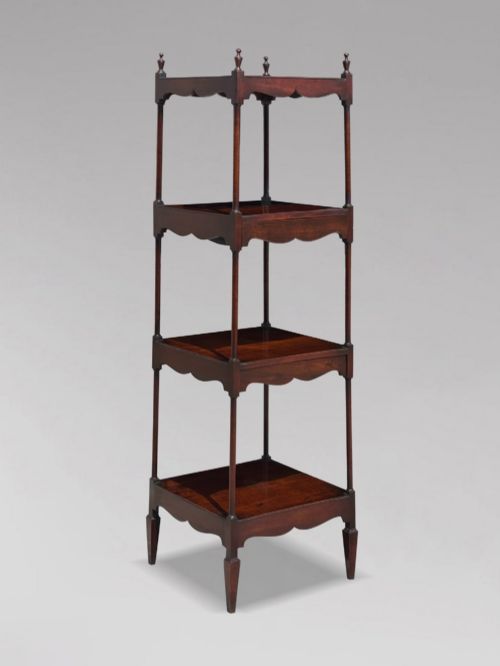
Regency examples typically exhibit clean architectural lines, precise brass fittings, and elegant turned supports characteristic of the early nineteenth century. They often feature four graduated tiers and sometimes incorporate tapering forms or reading stands.
Examining the underside and joint construction helps confirm the period, alongside the characteristic warm reddish-brown tone of the early mahogany timber.
Where should I place a corner whatnot?
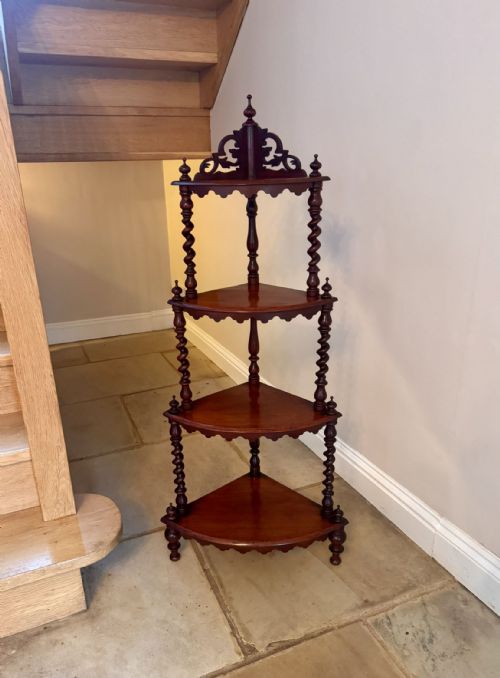
Corner whatnots fit directly into ninety-degree room angles, making use of otherwise neglected spaces in hallways, studies, or living rooms. Their triangular shelves accommodate smaller decorative objects securely.
Ensure the wall angles are square before placement so the back uprights sit flush against the plasterwork without tilting.