
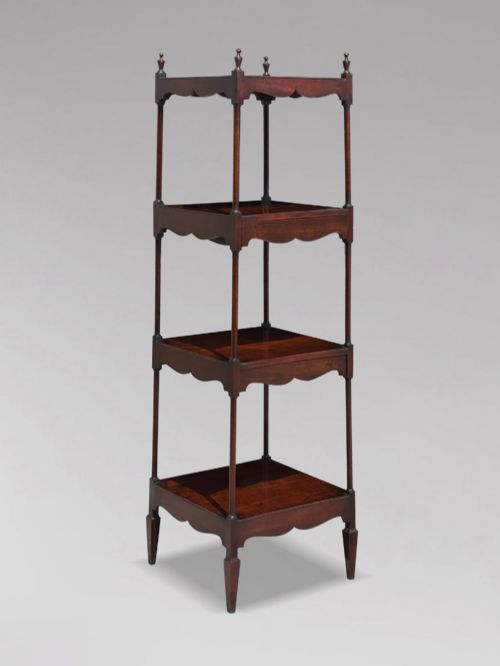
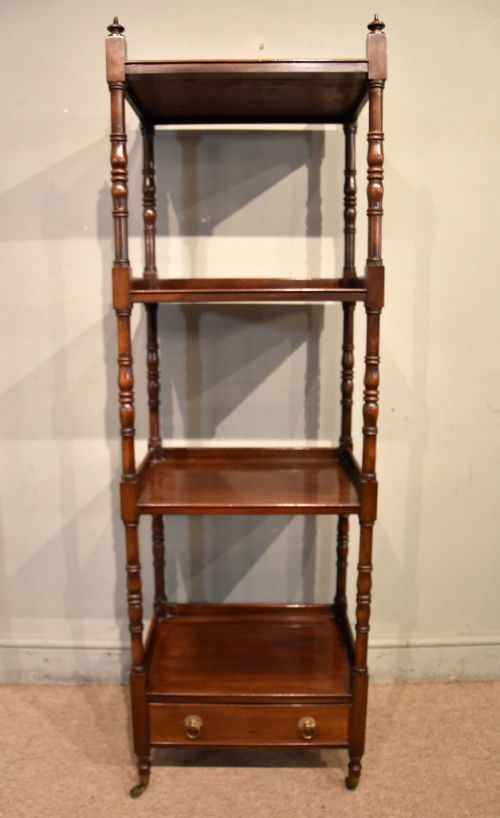


Mahogany Four Tier Whatnot
A mahogany four tier whatnot provides stacked open shelving designed for display and utility across Georgian, Regency and Victorian interiors.
Mahogany Four Tier Whatnot
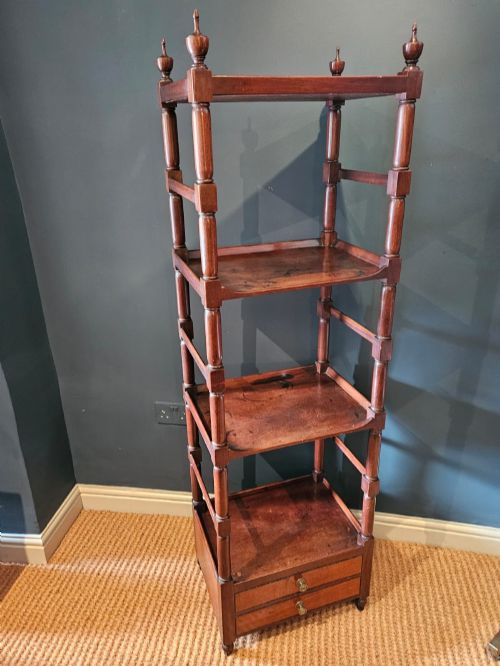
A mahogany four tier whatnot is a multi-level shelving unit designed to hold books, music, and decorative items. These stands appear in forms ranging from simple open shelves to pieces fitted with drawers, reading stands, or music stand formats.
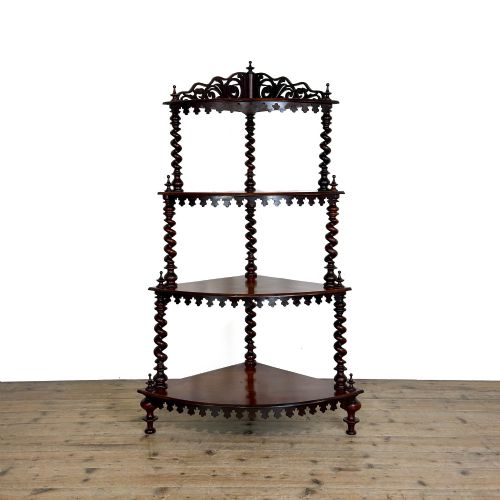
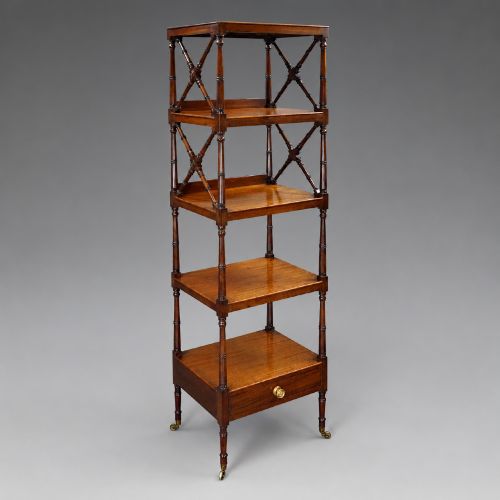
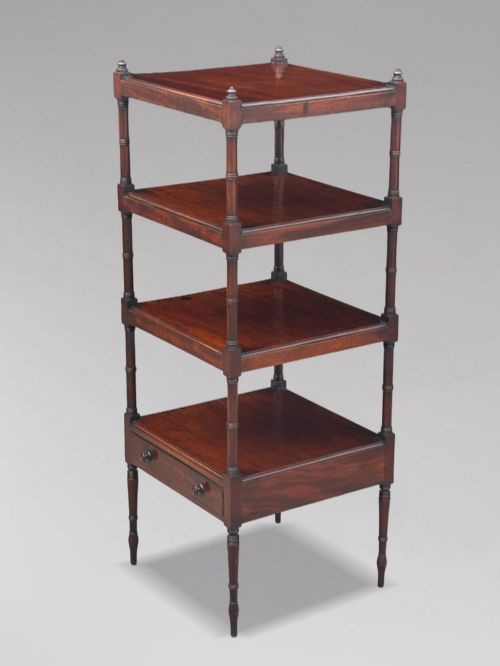
The pieces listed here span the Georgian, Regency, William IV, and Victorian periods, reaching into the late nineteenth century. Most examples present four graduated tiers supported by turned or carved uprights, often resting on castors for mobility.
How they were made
Cabinet makers utilised solid mahogany and mahogany veneers for the shelves and structural supports, shaping the timber with fine turning and joinery. Brass components, including castors and shelf supports, appear frequently across the periods.
Some examples incorporate cane or secondary timbers alongside the primary mahogany framework, while others feature integrated drawer bases constructed using traditional dovetail joints.
What varies in quality
Simpler vernacular examples meet everyday utility, whereas those attributed to notable makers or exhibiting sophisticated architectural details reflect higher craftsmanship and design ambition.
The Mahogany Four Tier Whatnot Glossary
- Whatnot
- A piece of furniture with multiple tiers used for displaying or storing small objects. It originated in the eighteenth century and remained popular through the Victorian era.
- Etagere
- A piece of furniture consisting of a number of open shelves for displaying ornaments. The term is often used interchangeably with whatnot in period descriptions.
- Regency
- An English stylistic period dating from the early nineteenth century, characterised by classical restraint and refined proportions. Pieces from this era often show elegant turning and clean lines.
- Georgian
- A period spanning the eighteenth and early nineteenth centuries under the reigns of Georges I to IV. Furniture from this time emphasises proportion, classical detail, and quality mahogany construction.
Mahogany Four Tier Whatnot: Frequently Asked Questions
What was a whatnot used for?
A whatnot served as a multi-purpose stand for holding books, sheet music, ornaments, and tea wares in principal rooms. The open tiers allowed everyday items to be kept close to hand while remaining orderly.
Over time, specialised formats emerged, incorporating reading slopes or drawer bases to accommodate specific domestic activities in libraries and drawing rooms.
How do I tell Regency from Victorian examples?
Regency pieces typically display leaner proportions, crisper turned uprights, and restraint in ornament, reflecting classical restraint. Timber selection often favours rich, dark mahogany with subtle grain figures.
Victorian examples tend to be heavier in build, sometimes featuring more elaborate carving, burr walnut veneers, or bulkier turned supports that reflect later nineteenth-century tastes.
Are all four tier whatnots freestanding?
Most four tier whatnots are designed to stand independently within a room, often fitted with small brass castors for ease of movement. These freestanding versions feature finished backs and detailed turning visible from all angles.
Corner whatnots also appear in the record, specifically constructed to fit against intersecting walls to maximise space in smaller apartments or rooms.
How do I care for mahogany shelves?
Mahogany responds best to regular dusting with a dry, soft cloth and occasional treatment with traditional beeswax to nourish the timber. Avoiding direct sunlight and sudden temperature changes preserves the polish and prevents warping.
Care should be taken when placing heavy books or damp objects on the open shelves to protect the polished surface from indentation and moisture rings.