
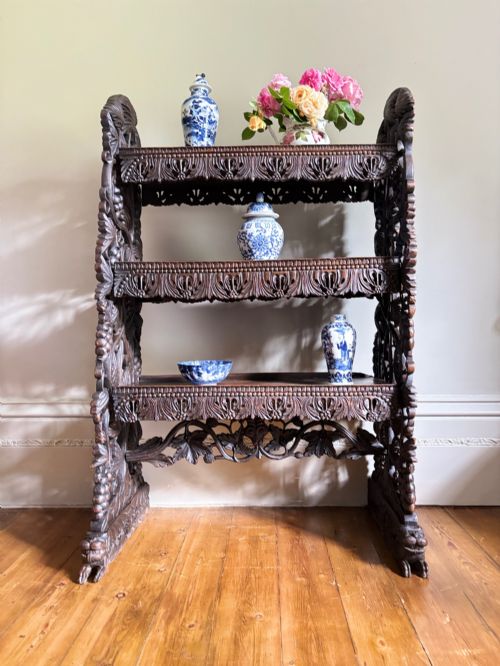
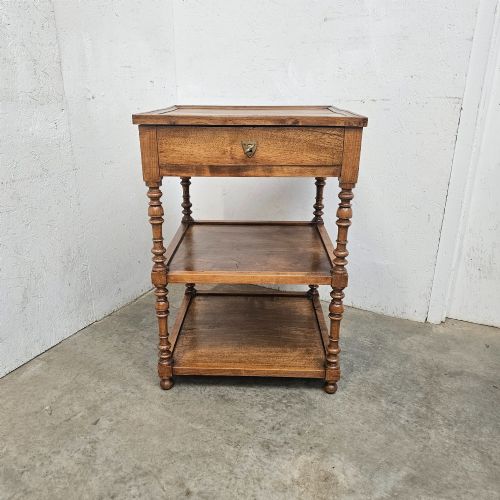
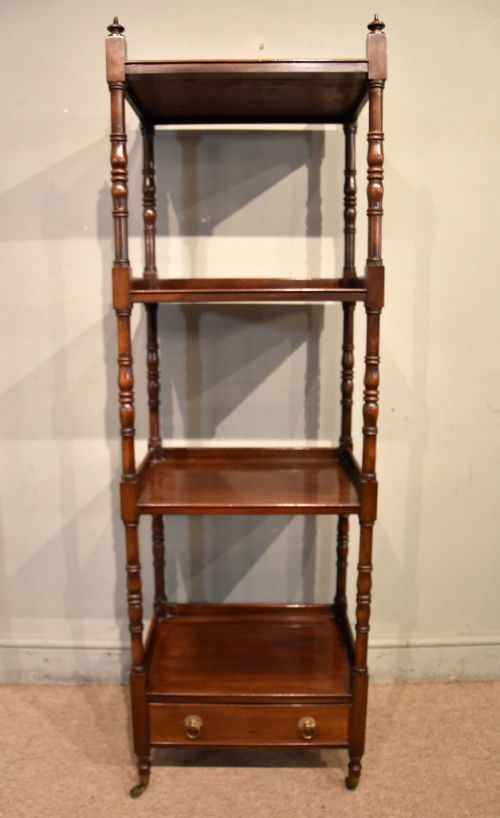
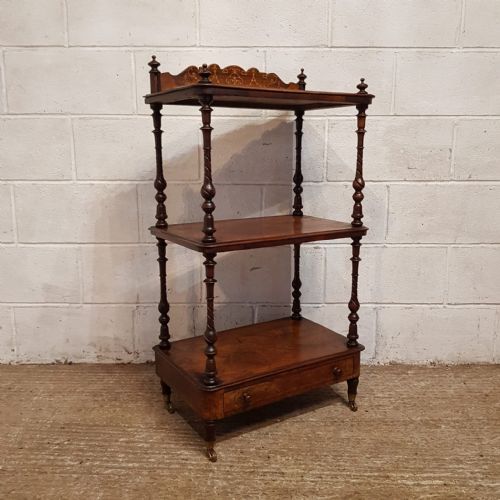
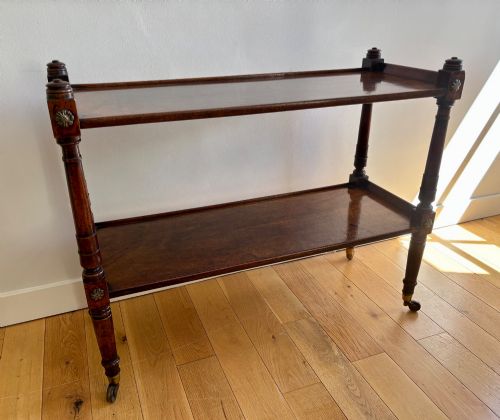
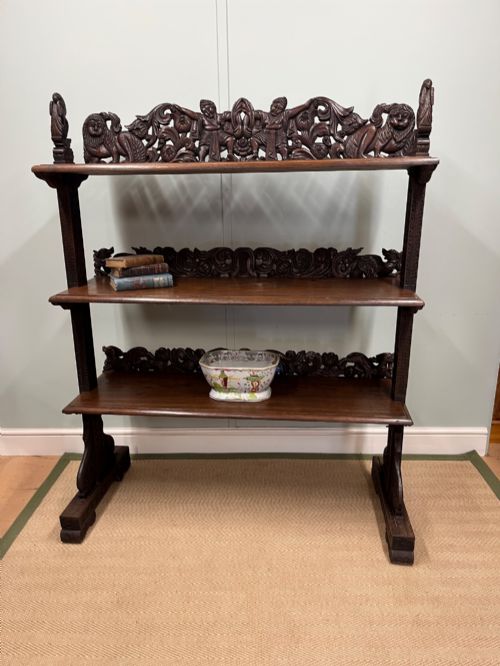


Antique Wooden Etagere Shelf
These antique wooden etagere shelf designs offer tiered open display for rooms that need vertical storage.
Antique Wooden Etagere Shelf
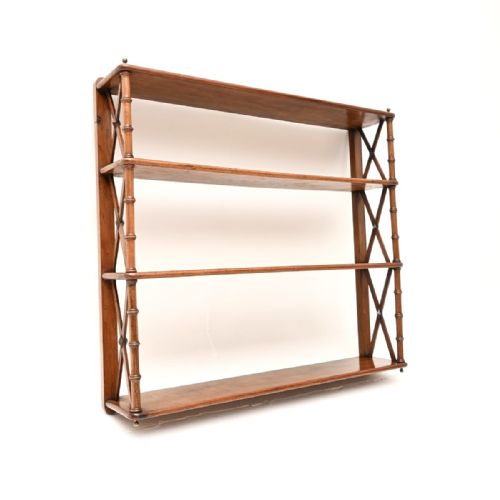
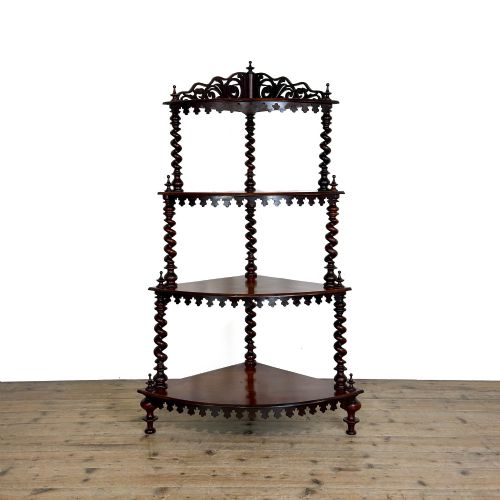
An antique wooden etagere shelf is a multi-tiered piece designed to hold books, ceramics, and ornaments in domestic spaces. When you search for an antique wooden etagere shelf, you meet tiered whatnots, wall-mounted display units, and corner shelving forms.
The pieces on this page span the Georgian, Regency, and Victorian eras, alongside Edwardian examples. Mahogany, walnut, and burr walnut dominate the selection, appearing alongside rosewood, satin birch, and teak.
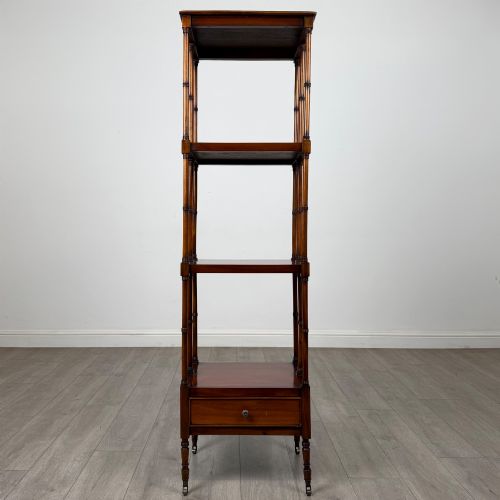
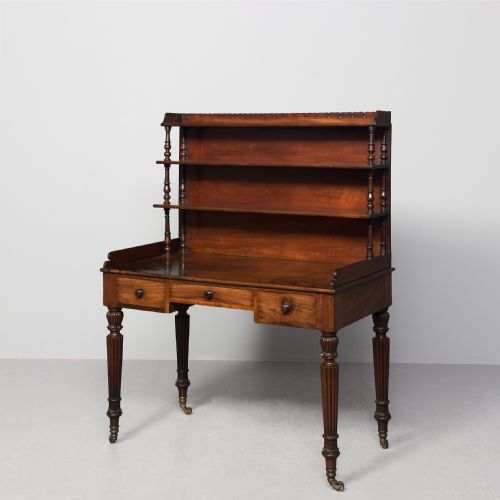
Makers utilised these tiered stands in drawing rooms, libraries, and bedrooms for prominent display. Most examples feature three or four open tiers, occasionally incorporating small lower cupboards, drawers, or mirrored backs.
Materials and Construction
Cabinetmakers constructed these frames primarily from dense hardwoods like mahogany and walnut, often selecting figured veneers such as burr walnut and birdseye maple for visual impact. Secondary timbers provided internal support for shelves and drawers.
Joinery techniques included turned columns, slender upright supports, and bracketed wall fixings. Brass fittings appeared on castors, hinges, and gallery rails, while marquetry inlay decorated select Victorian surfaces.
Listings feature nineteen-century periods including Georgian, Regency, Victorian, and Edwardian eras, utilising mahogany, walnut, rosewood, and satin birch.
Distinctions in Quality
Quality rests in the selection of timber veneers and the crispness of turned supports. Superior examples exhibit finely figured burr walnut or rich mahogany grain across every visible tier.
Construction rigidity separates standard production from exhibition pieces. Finer etageres display precise joinery, balanced proportions, and well-integrated drawer or cabinet bases that remain steady under weight.
James Mein of Kelso
The Antique Wooden Etagere Shelf Glossary
- Etagere
- A piece of furniture consisting of a set of open shelves for displaying small objects. They became popular in the nineteenth century for drawing room display.
- Whatnot
- A multi-tiered stand used for storage and display. The term emerged in the Victorian period for these versatile shelving units.
- Burr walnut
- Timber taken from a walnut tree growth, yielding intricate swirling grain patterns. Cabinetmakers prized it for high-status veneered surfaces.
- Canterbury
- A low stand with partitioned sections, often incorporated into etageres to hold sheet music or folios. Regency and Victorian makers frequently combined this form with shelving.
- Marquetry
- Decorative veneer patterns formed by fitting together small pieces of wood and other materials. It adorned select Victorian cabinet doors and shelf backs.
Antique Wooden Etagere Shelf: Frequently Asked Questions
What is an etagere?
An etagere is an open shelving unit designed for displaying decorative objects, small books, and ceramics. The form developed in France before becoming a staple of nineteenth-century British interiors.
These pieces provide vertical storage without blocking light or making a room feel crowded. They suit corners, walls, and freestanding positions in living spaces.
How do I date an antique etagere?
Dating relies on timber choices, leg turning styles, and construction details recorded across the nineteenth century. Georgian and Regency examples favour straight mahogany uprights and simpler tiers, while Victorian pieces often introduce burr walnut veneers, mirrors, and carved details.
Secondary woods and fixing methods inside drawers provide further chronological clues. Examining the timber grain and joinery helps place a piece within its period.
Where should I place an etagere?
Freestanding etageres and corner whatnots fit well in drawing rooms, libraries, and hallways for displaying collections. Wall-mounted shelving units suit smaller rooms where floor space is limited.
Keep wooden pieces away from direct heat sources and strong sunlight to protect the polish and prevent veneer warping.
What is the difference between a whatnot and an etagere?
The terms largely overlap in nineteenth-century furniture, though whatnot is the traditional British term for a multi-tiered display stand. Etagere often implies a French influence or lighter decorative use.
Both forms served the same purpose of holding ornaments, books, and small personal items in prominent rooms.