


Four Tier Whatnot Stand
A four tier whatnot stand offers tiered open shelving for display and storage, bringing practical elegance to any room.
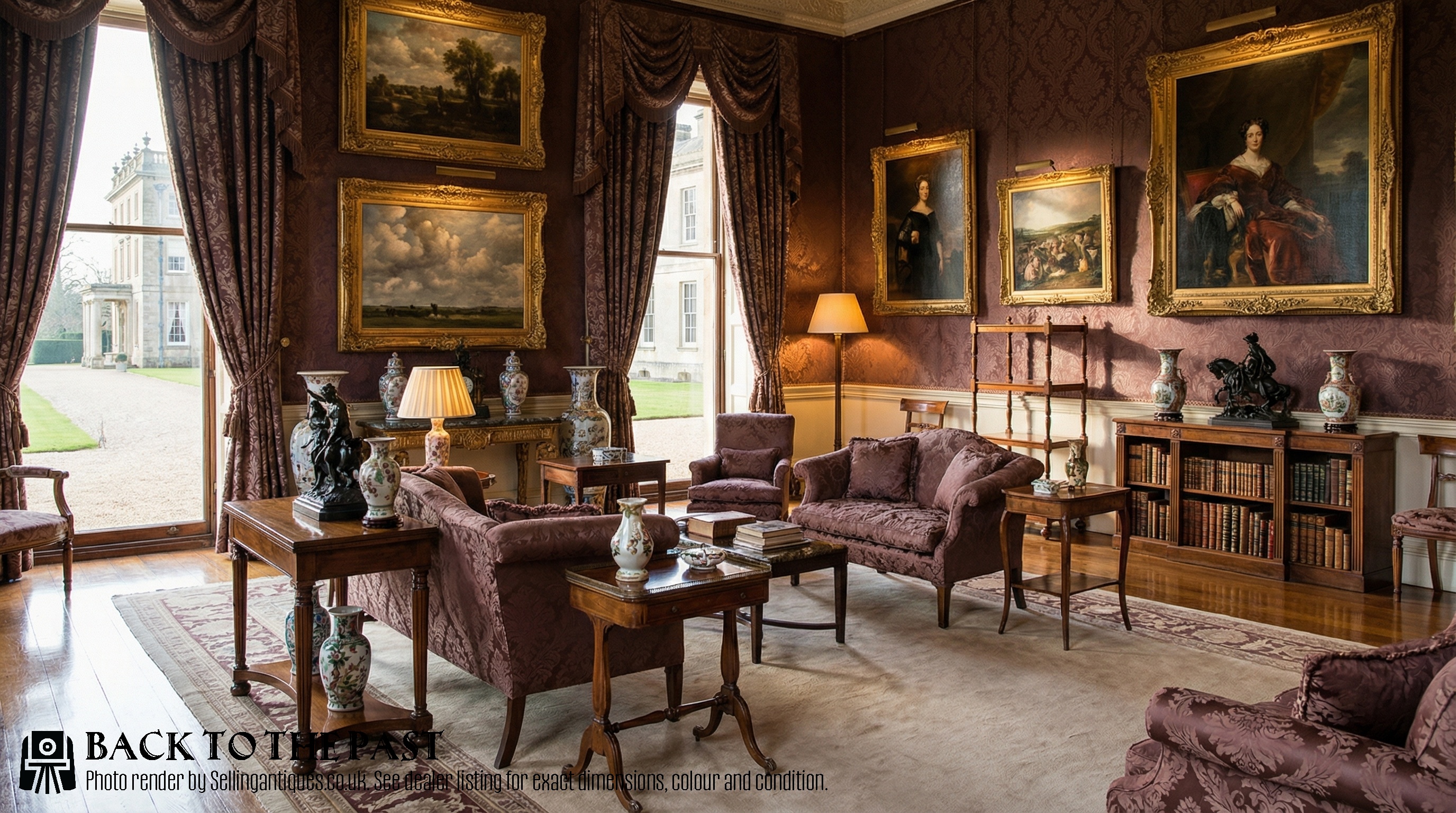
Four Tier Whatnot Stand
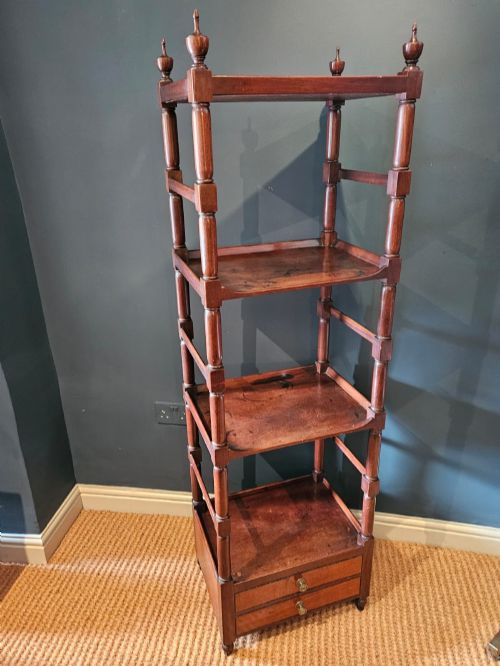
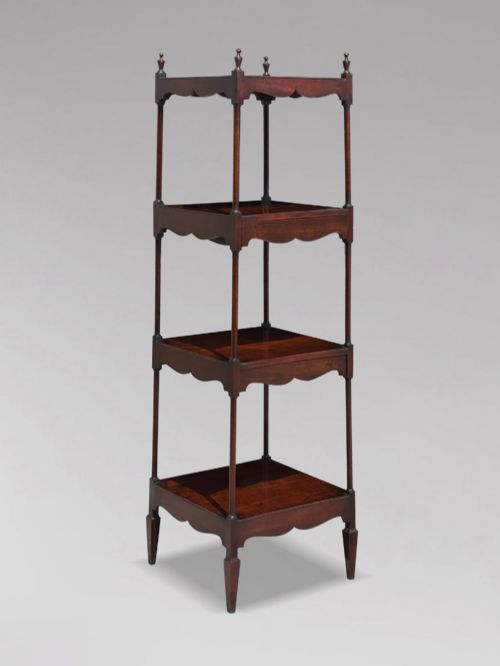
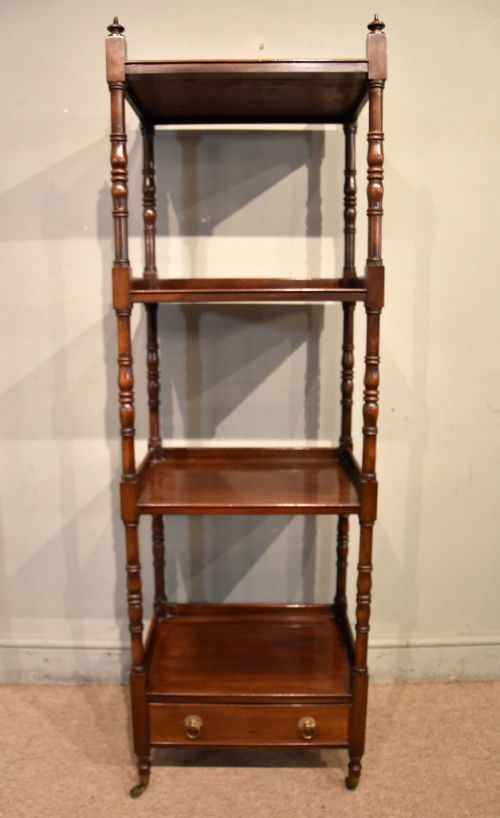
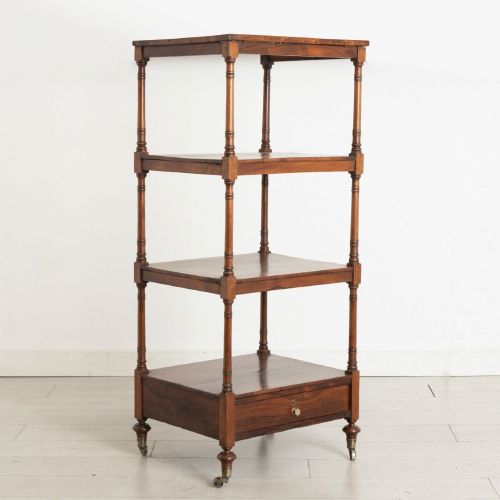
A four tier whatnot stand is an open-shelved display unit designed for books, ornaments and decorative objects. These pieces appear across several periods, most commonly taking the form of tiered mahogany or walnut furniture from the nineteenth century.
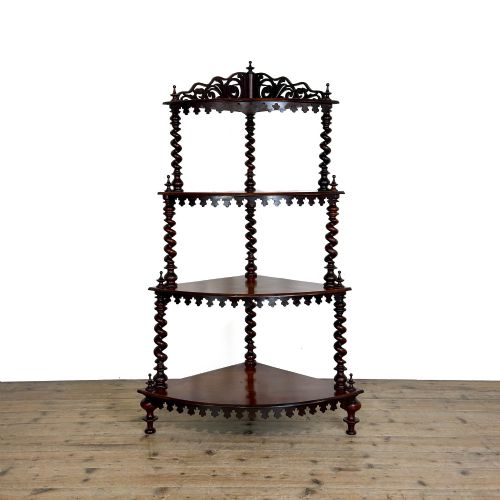
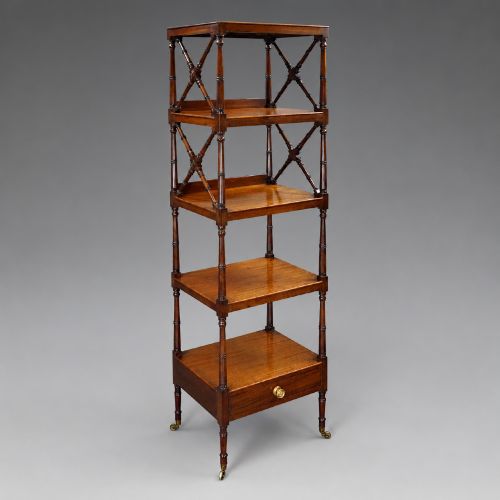
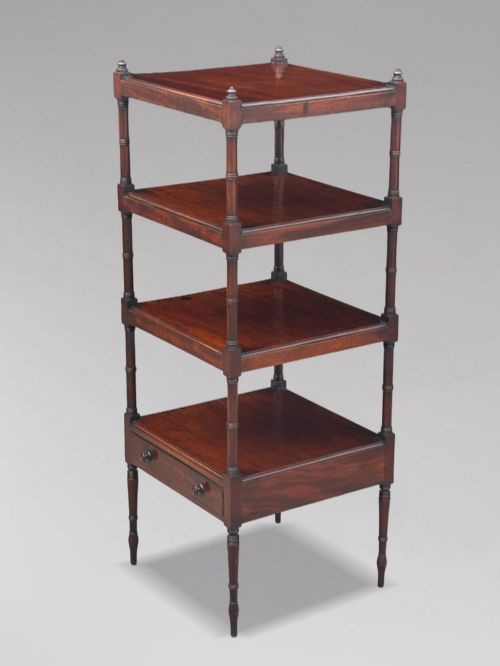
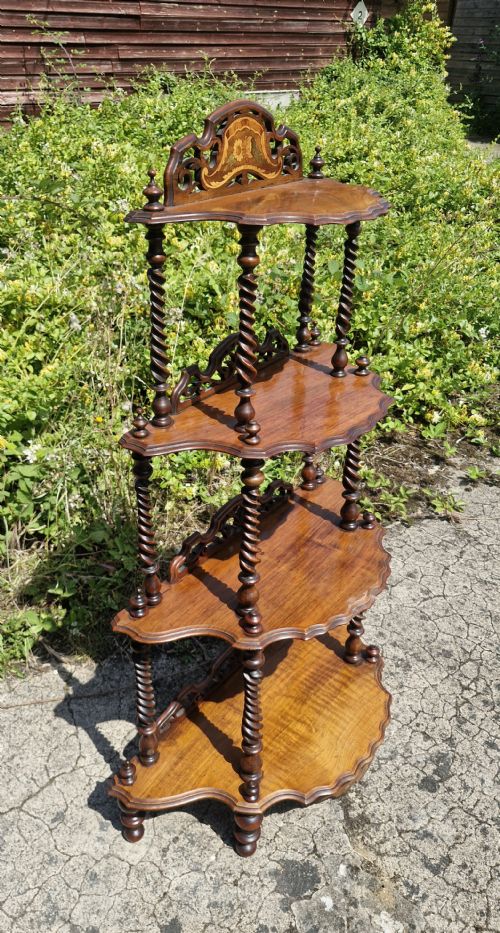
Buyers encounter both freestanding rectangular designs and corner models configured to fit domestic interiors. The form evolved to serve as a versatile stand for daily use, incorporating four graduated tiers held by slender uprights.
How they were made
Cabinet makers constructed these stands using dense timbers such as mahogany, rosewood and walnut, often selecting figured veneers for the display surfaces. Many examples integrate fine wood inlay and marquetry detail into the top shelves or friezes.
The vertical supports frequently take the form of turned columns or slender posts that connect each tier securely. Some iterations include brass castors on the feet and adjustable reading surfaces mounted to the upper framework.
Listings feature four tier whatnot stands executed in mahogany, walnut, rosewood, and exotic ebony with satinwood.
What varies in quality
Quality rests upon the selection of timber grain, the crispness of the turned supports and the subtlety of any inlay work. Finer pieces demonstrate careful timber matching across all four tiers and robust structural joinery.
The proportion and stability of the framework separate standard utility pieces from superior examples made for prominent nineteenth century interiors. Details such as fine banding and well-figured burr walnut indicate higher workshop standards.
Gillows
The Four Tier Whatnot Stand Glossary
- Whatnot
- An open shelving unit designed for displaying ornaments, books and decorative objects in domestic rooms. These pieces emerged in the eighteenth century and remained popular throughout the Victorian era.
- Etagere
- A French term for a piece of furniture consisting of a set of open shelves for displaying small objects. This form shares similarities with the English whatnot.
- Burr walnut
- A specialised timber cut from the wart-like growths on walnut trees, yielding highly figured and swirling grain patterns. Cabinet makers prized this material for decorative veneering on prominent furniture surfaces.
- Marquetry
- The art of applying pieces of veneer to a structure to form decorative patterns and pictures. Craftsmen utilised contrasting timbers to achieve intricate floral or geometric designs.
- Turned
- Shaped on a lathe by rotating the timber against cutting tools to create cylindrical or baluster-form uprights. This technique provides the structural columns supporting the tiers.
Four Tier Whatnot Stand: Frequently Asked Questions
What is a four tier whatnot stand?
A four tier whatnot stand is an open-shelved piece of furniture featuring four ascending tiers supported by upright posts. It functions primarily as a display unit for books, ceramics and decorative objects.
Cabinet makers produced these stands in various timbers including mahogany, rosewood and walnut. They serve as practical furniture for corners or freestanding positions within a room.
How were these stands used historically?
Historically, households utilised these stands to hold books, collections, and decorative ornaments within living spaces and drawing rooms. Some specialised variations included built-in reading desks or music stands for specific daily tasks.
The open design allowed owners to display valued possessions where guests could easily view them. Their versatility meant they could adapt to different rooms across domestic properties.
How do I identify a Victorian whatnot?
Victorian examples frequently employ walnut, burr walnut or mahogany timbers, often featuring applied inlay and turned structural columns. They date from the nineteenth century and reflect the period's preference for decorative domestic display furniture.
Examining the construction methods and timber characteristics helps distinguish these pieces from earlier Georgian or Regency iterations.
Are corner whatnot stands common?
Corner whatnot stands appear frequently in nineteenth-century designs, shaped specifically to fit into room angles. These units maximise floor space while providing multiple tiers for display.
They share the same construction materials and turning details as freestanding rectangular versions from the same period.