
Mahogany Swivel Table Mirror
A mahogany swivel table mirror sits ready on a surface to catch the light and the morning routine.
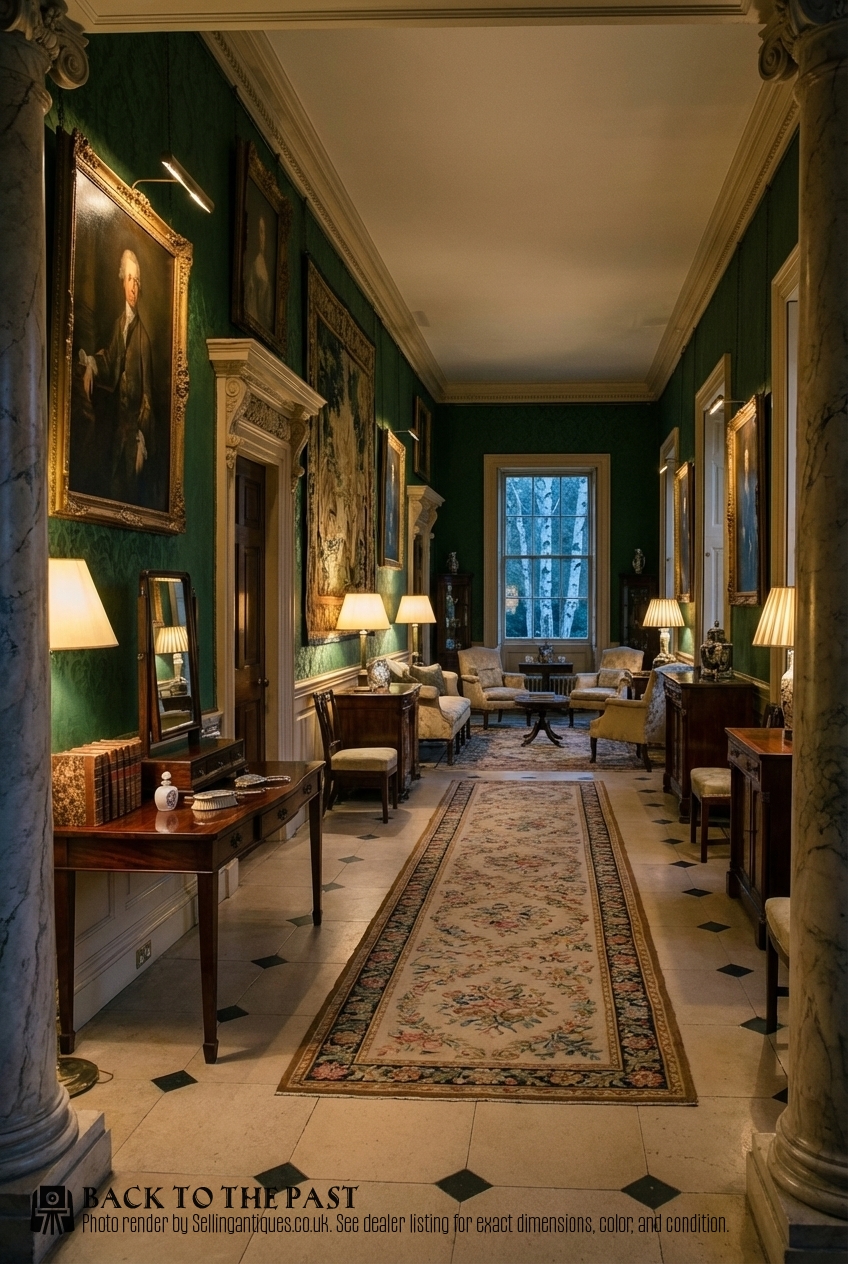
Mahogany Swivel Table Mirror
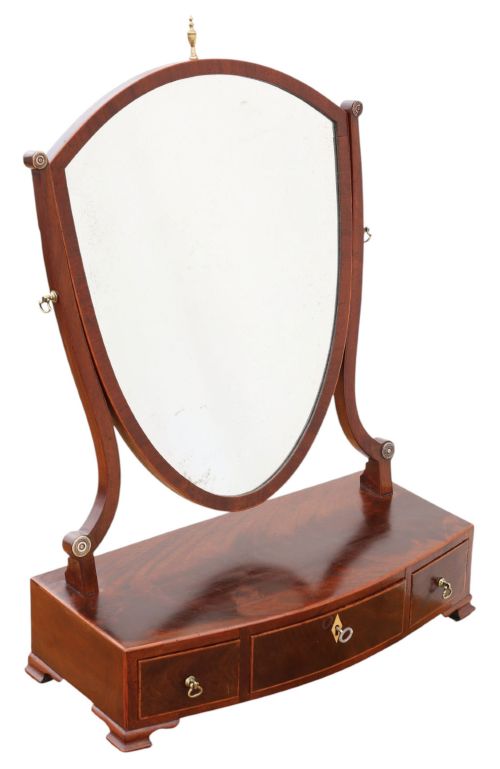
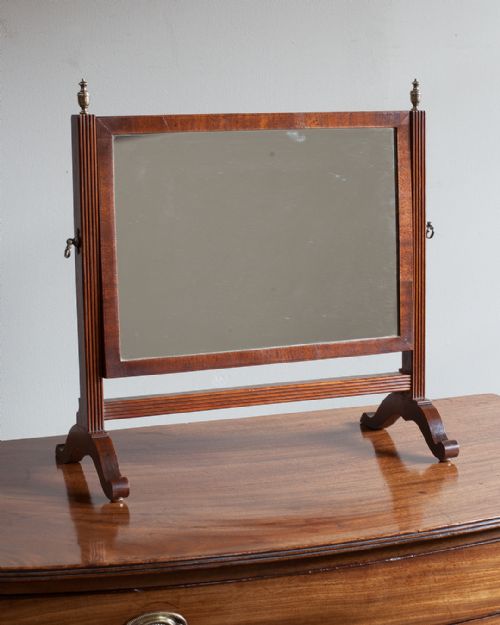
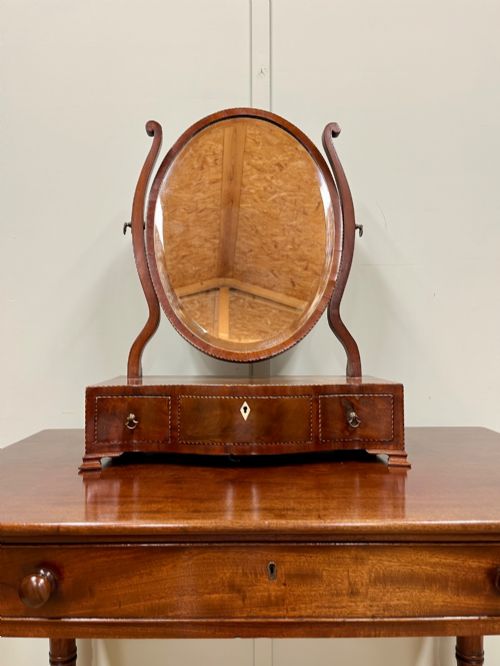
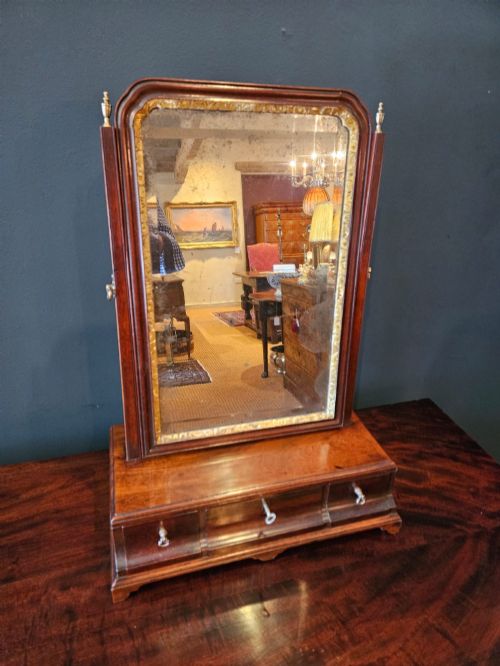
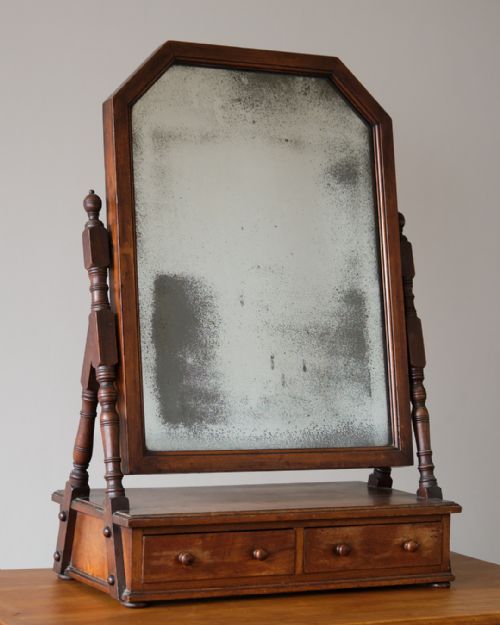
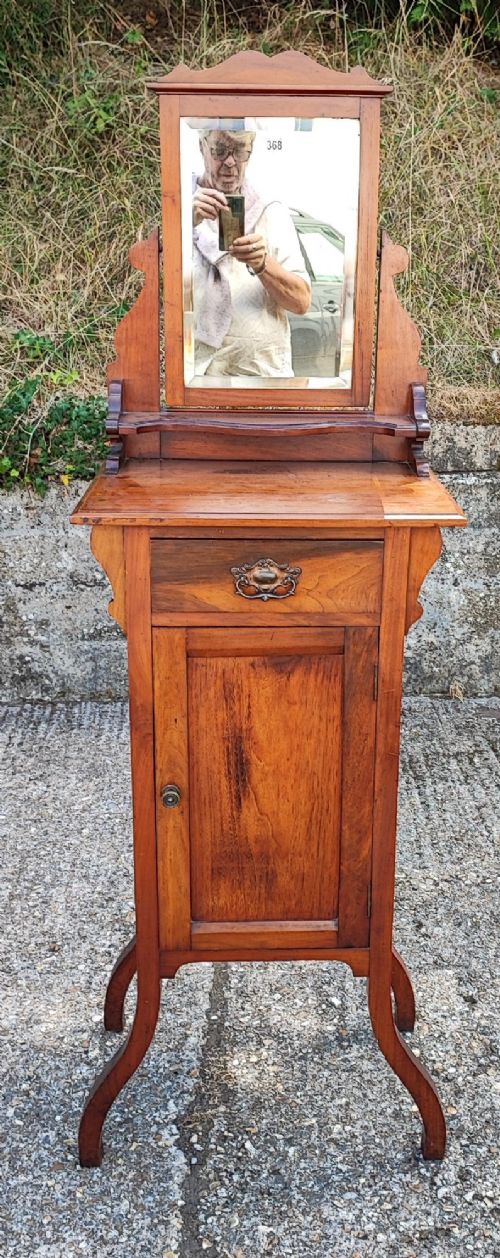
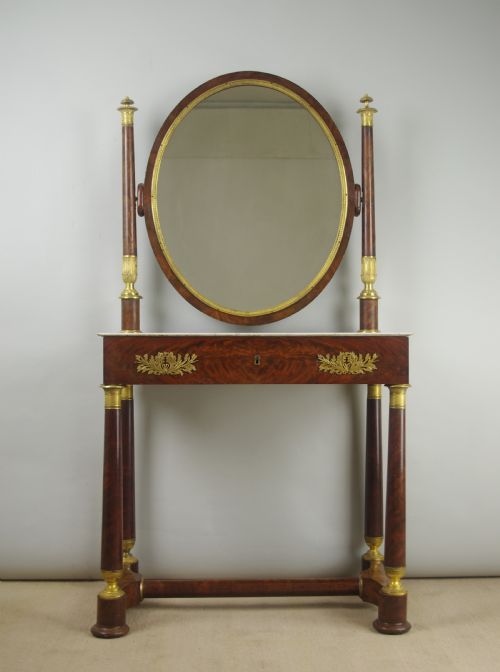
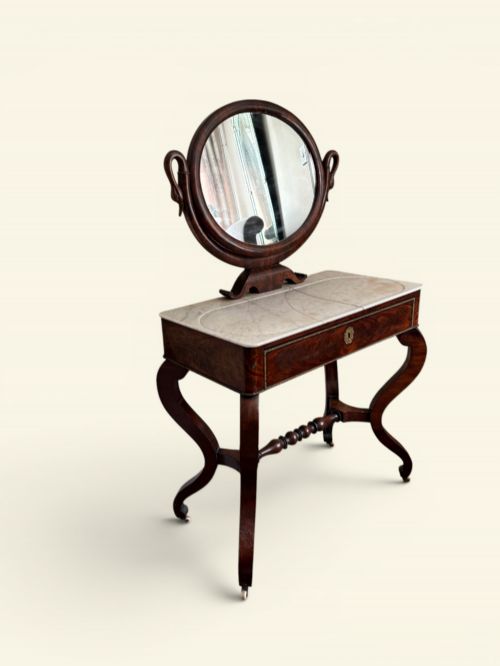
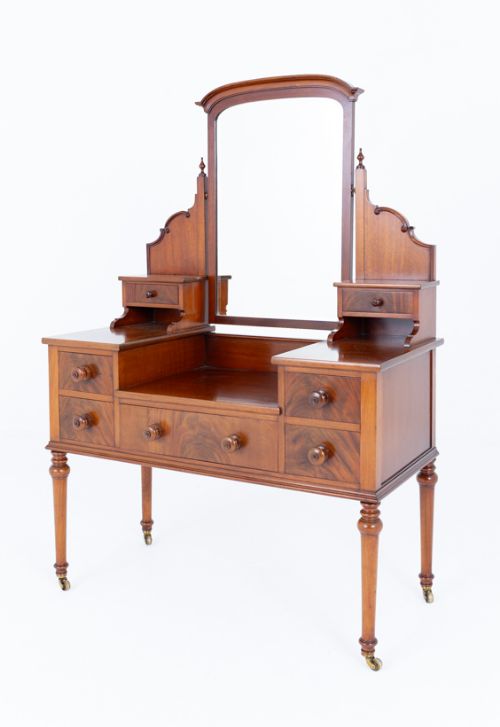
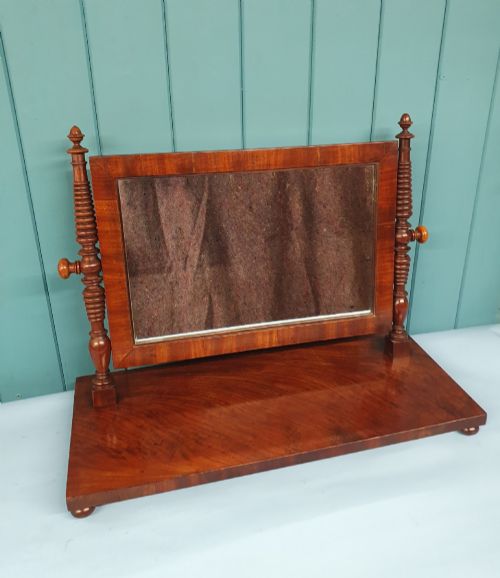
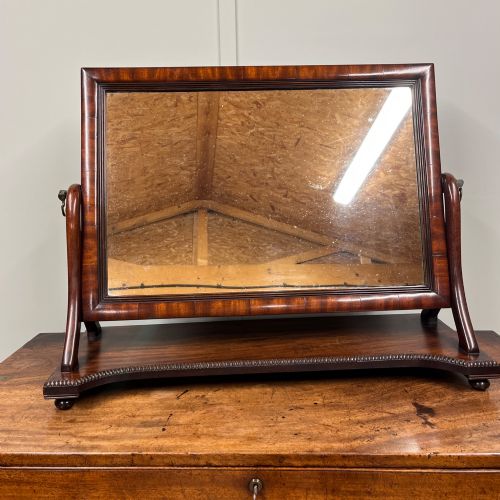
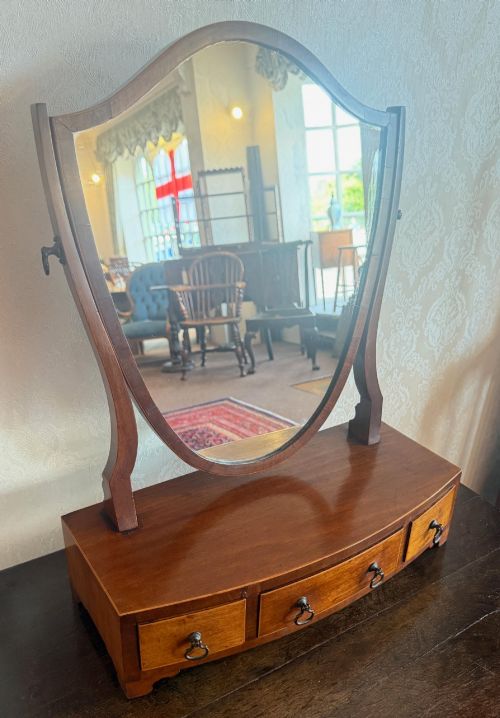
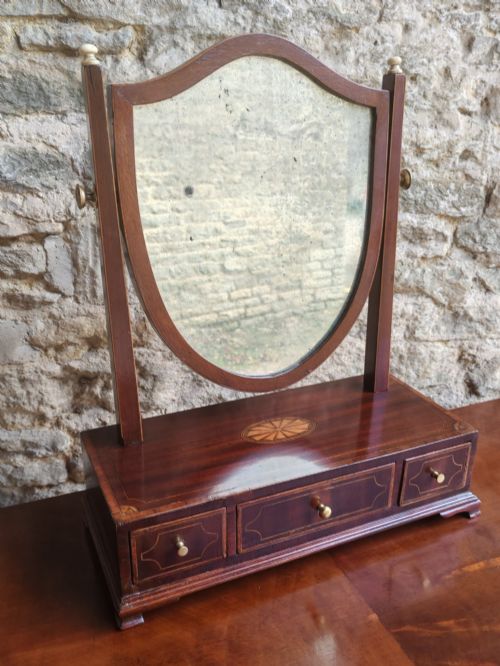
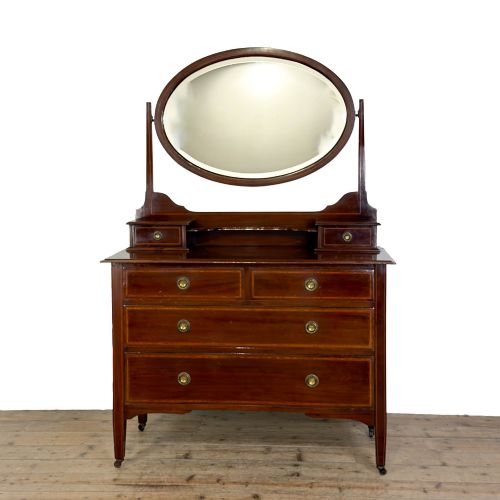
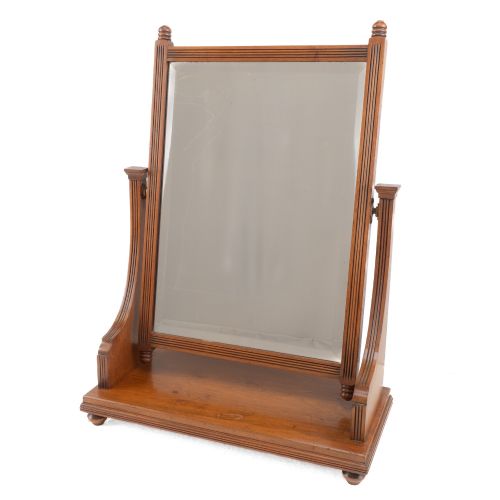
A mahogany swivel table mirror provides a movable glass plate held within uprights, designed to sit upon a chest or dressing surface. These pieces appear in forms ranging from simple rectangular swing frames to arched shield shapes and oval plates mounted on shaped boxes containing small drawers.
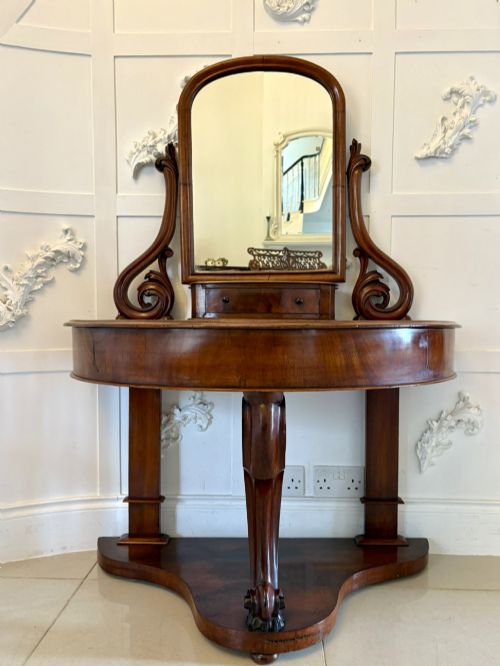
The versions most frequently met on this page belong to the Georgian and Victorian periods, where cabinetmakers paired figured timber with brass fittings and functional drawer bases. Examples span from austere George II toilet mirrors to ornate Victorian and Edwardian specimens, sometimes incorporating French Empire styling or ormolu mounts.
Materials and Construction
Makers relied primarily on mahogany for the frames and box bases, often selecting timber with rich grain patterns to showcase the polished surface. Brass screw caps, pivots and bone escutcheons punctuate the woodwork, whilst glass provides the reflective plate.
Joinery techniques united the uprights to sturdy plinths, frequently housing small drawers beneath the swinging plate. Certain pieces integrated marble tops, giltwood details or ormolu mounts alongside the standard mahogany and mirror glass.
Materials appearing across these pieces include mahogany, glass, brass, bone, marble, giltwood, and ormolu.
Assessing Quality
The grade of a mahogany swivel table mirror rests upon the selection of timber and the crispness of the carpentry. Superior examples display carefully matched grain across the frame and drawer fronts, alongside robust pivots that hold the glass steady at any chosen angle.
Proportion and detail separate standard workshop output from exceptional pieces. Finer mirrors feature refined mouldings, well-turned uprights, and secondary timbers of equal consideration, whereas lesser items rely on heavy proportions and basic joints.
Heal & Sons·Thomas Rubergall of London
The Mahogany Swivel Table Mirror Glossary
- Swing mirror
- A glass plate suspended on pivots between two uprights allowing it to tilt. This mechanism permits the user to adjust the angle of reflection easily.
- Toilet mirror
- A smaller mirror designed to sit on a dressing table or chest. These often incorporate a box base fitted with small drawers for trinkets.
- Shield mirror
- A glass plate cut into the outline of a heraldic shield. This shape gained popularity during the Georgian period.
- Parcel-gilt
- Woodwork partially decorated with gold leaf applied to carved details. This treatment highlights specific mouldings on the frame.
- Ormolu
- Gilt-bronze mounts applied as decorative ornaments. French Empire pieces frequently employ this technique on mahogany surfaces.
Mahogany Swivel Table Mirror: Frequently Asked Questions
How were these mirrors used?
They served as desktop or tabletop accessories for daily dressing, shaving, and arranging hair in bedrooms or dressing rooms.
The integrated drawers held small valuables, cosmetics, and pins close to hand.
Where should I place one?
Position the piece on a sturdy chest of drawers, sideboard, or dedicated dressing table where the height suits your eye level.
Ensure the surface receives good natural or artificial light to make the most of the adjustable glass.
How do I identify the period?
Look to the overall silhouette, wood selection, and edge treatments to guide your dating.
Georgian examples tend to show lighter proportions and shield or oval shapes, while Victorian pieces often feature heavier frames and pedestal box bases.