

Mahogany Study Armchair
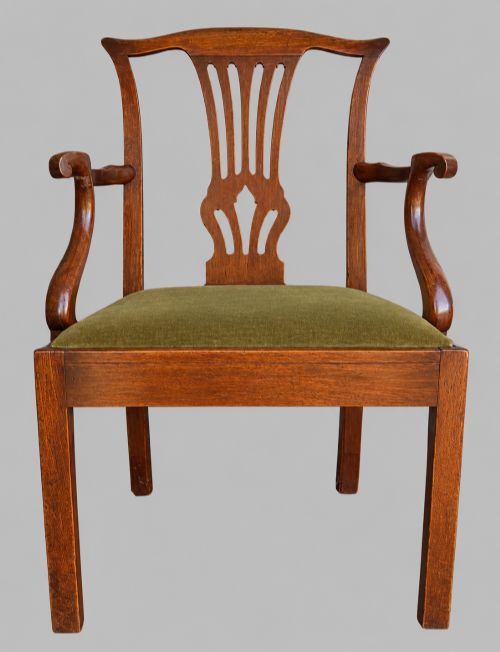
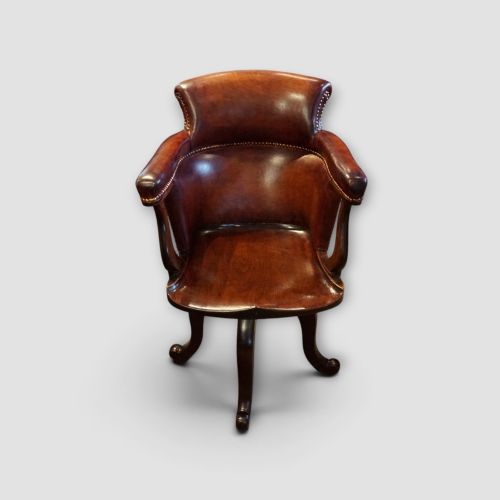
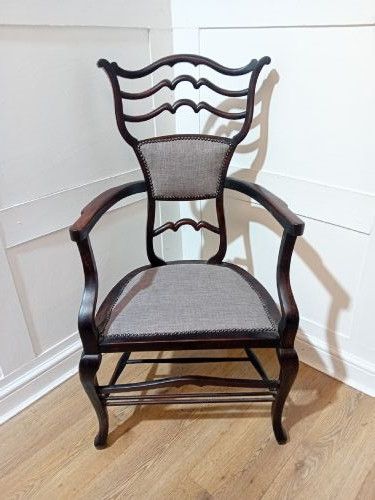
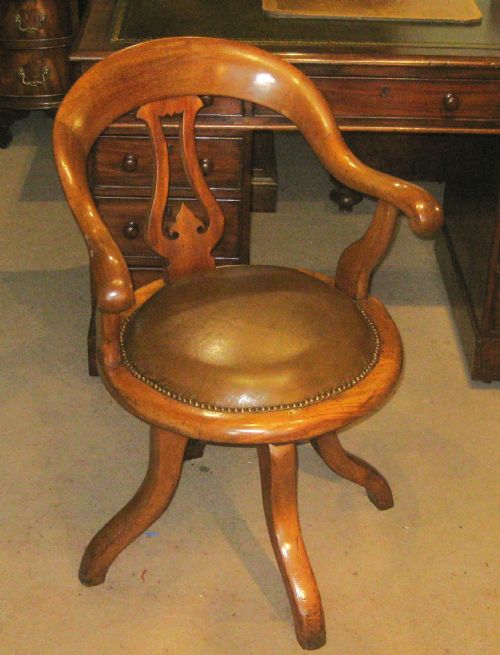
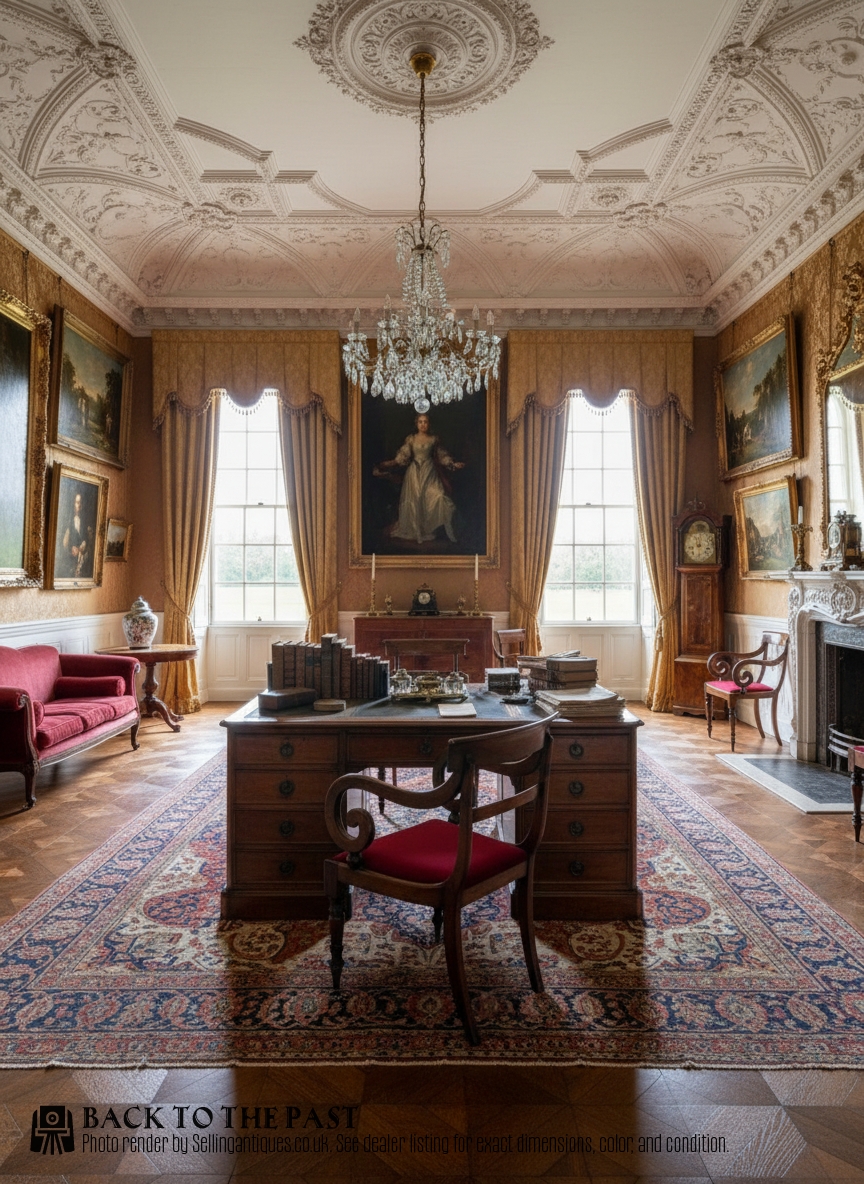
A mahogany study armchair brings solid timber and sensible upholstery together for serious work at a partner desk or library table.
Mahogany Study Armchair
A mahogany study armchair is a practical seat designed for a library, office or partner desk, combining a supportive back with sturdy armrests. When you search for a mahogany study armchair, you encounter pieces spanning the Georgian, Regency, William IV, Victorian and Edwardian periods.
The selection ranges from standard office and desk chairs to revolving models, library armchairs and Gainsborough chairs. Victorian and Edwardian examples dominate the listings, alongside earlier Georgian and Regency designs and later revivals.
Materials and construction
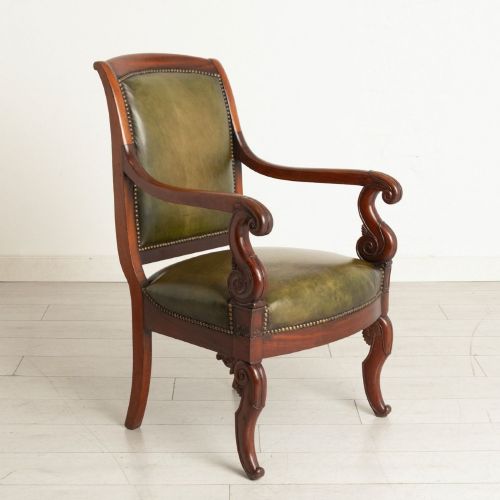
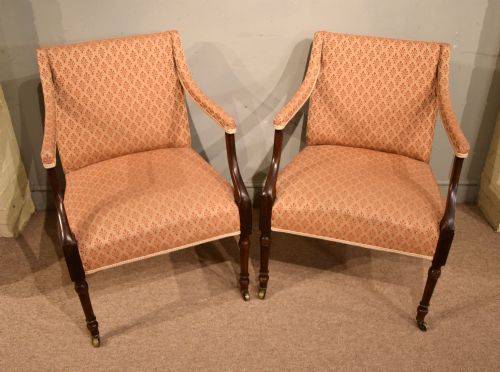
Makers built the frames primarily from solid mahogany, often combined with secondary woods, turning to brass for castors and hardware. Leather, fabric, velvet and tapestry provide the primary upholstery coverings for seats and backs.
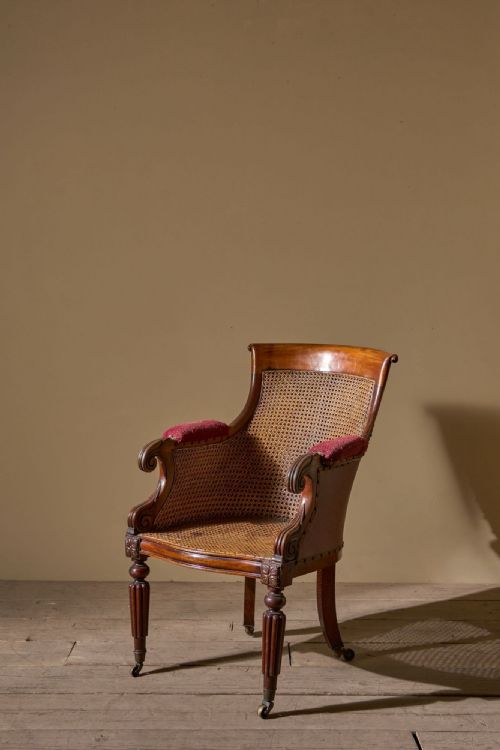
Cane panels and iron mechanisms appear on specific variants like revolving desk chairs and bergères. Carved details define styles from Chippendale through to Victorian interpretations.
The listings span the Georgian, Regency, William IV, Victorian and Edwardian periods, utilising mahogany, leather, cane and brass.
Standards of construction
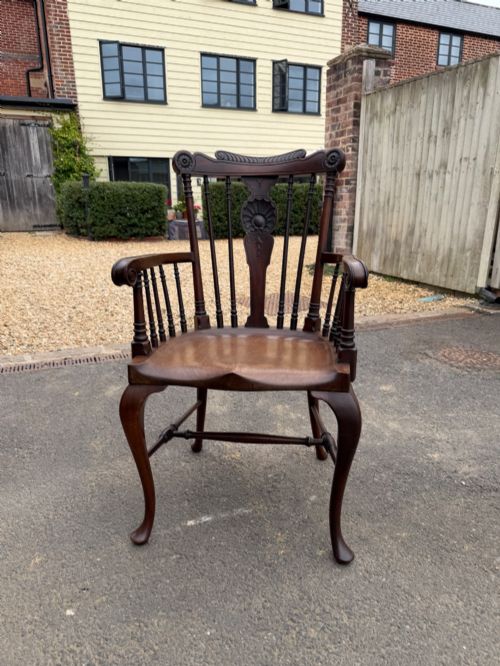
Quality rests in the weight of the timber, the crispness of any carved detail and the integrity of the frame joints. Earlier periods display finer hand-carving and denser mahogany stock compared to later mass-produced office variants.
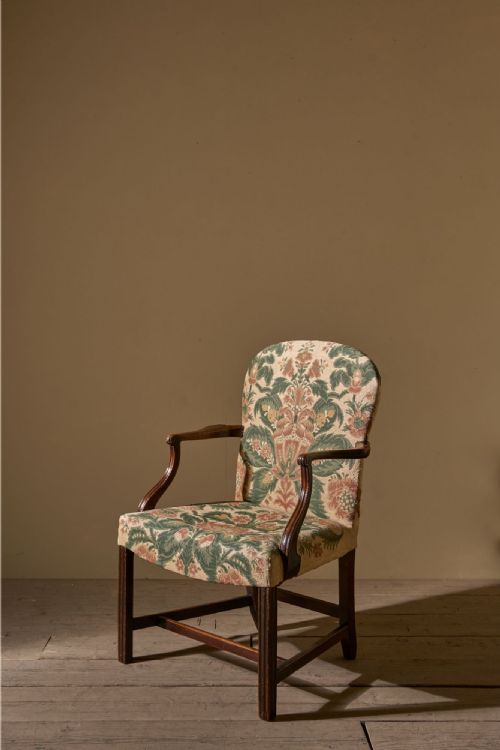
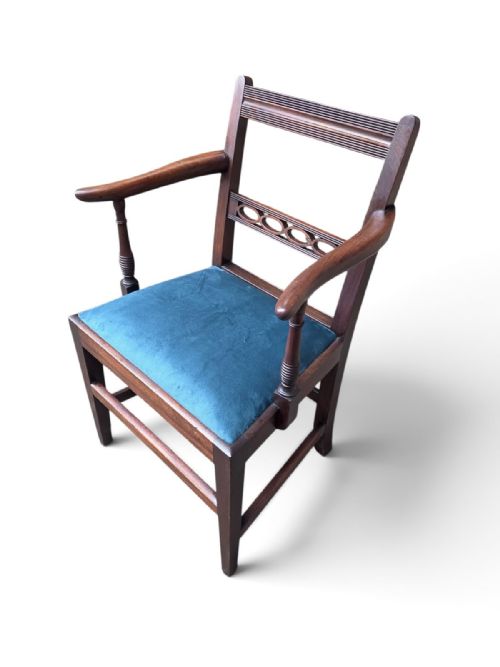
The choice of covering also shifts the piece's character, from humble cane and simple fabric to deep-buttoned leather and fine tapestry.
The Mahogany Study Armchair Glossary
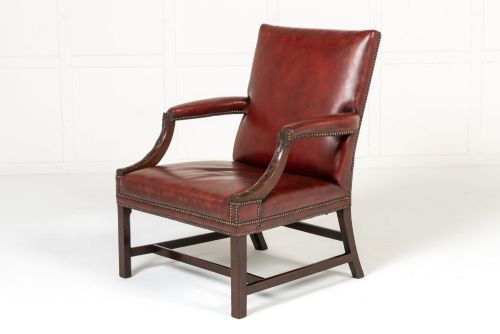
- Gainsborough chair
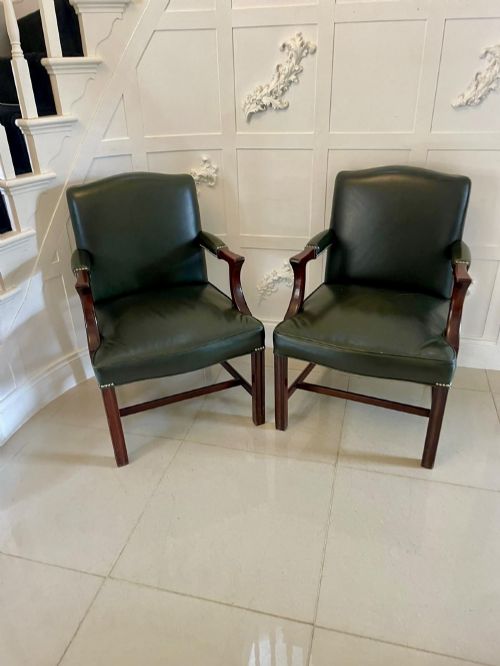
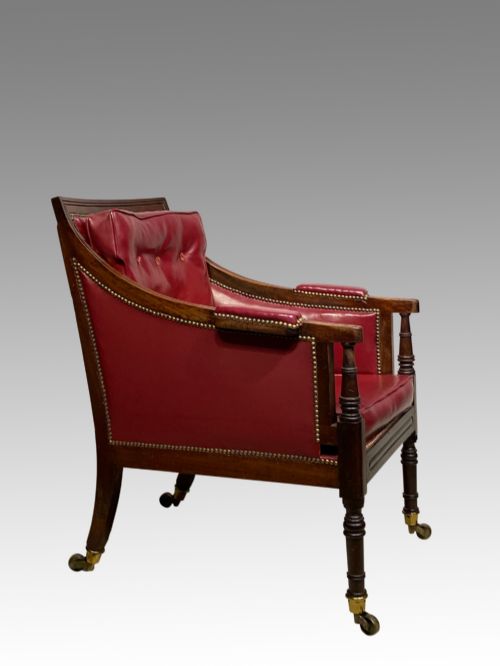
- A wide, upholstered armchair with open arms, designed in the 18th century for writing or reading. These typically feature mahogany frames and leather seats.
- Bergère
- An enclosed armchair with stuffed upholstery and cane panels filling the sides and back. This French-inspired form offers a lighter silhouette for a study.
- Revolving desk chair
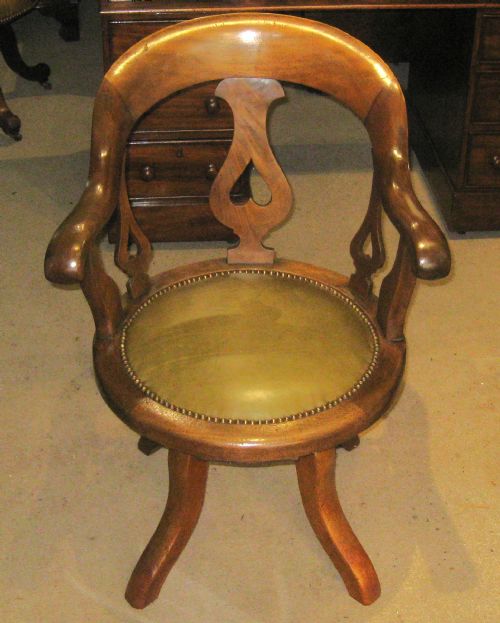
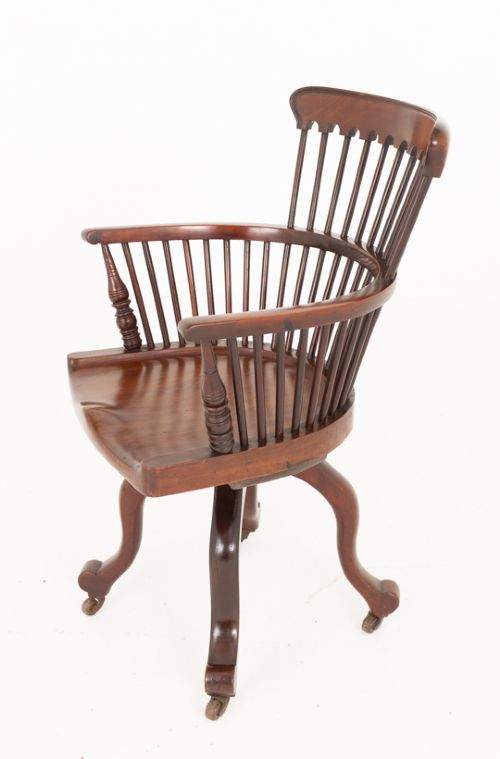
- A swivel seat mounted on a central pillar, often supported by brass castors and fitted with a mechanism for turning. This form caters directly to office work.
- William IV
- A British design period spanning the 1830s, characterised by heavy proportions, bold scrolls and rich mahogany. Pieces from this era often incorporate robust buttoned leather.
Mahogany Study Armchair: Frequently Asked Questions
What is a Gainsborough chair?
A Gainsborough chair is a wide, open-armed desk chair designed during the 18th century for reading and writing.
These pieces feature mahogany frames and leather upholstery tailored for a study or library.
How do I spot a revolving desk chair?
Revolving desk chairs sit on a central pivot mechanism hidden beneath the seat, allowing the user to turn.
They frequently appear in Victorian and Edwardian versions paired with brass castors.
What wood was used?
Makers relied heavily on solid mahogany for the structural frames of these armchairs across multiple centuries.
Golden mahogany and dense dark variants both appear alongside secondary framing timbers.
Are cane seats original?
Cane panels form a traditional backing or seating material found on Edwardian and earlier library armchairs.
This woven plant material offers a lighter visual weight compared to solid wood or heavy leather.