
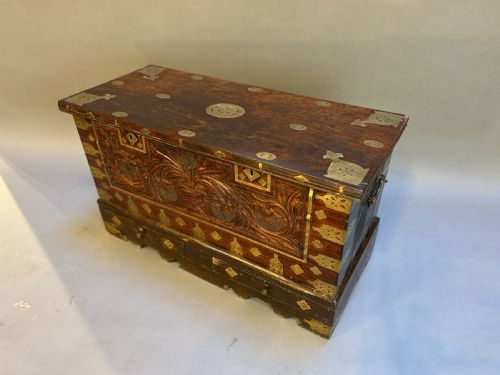


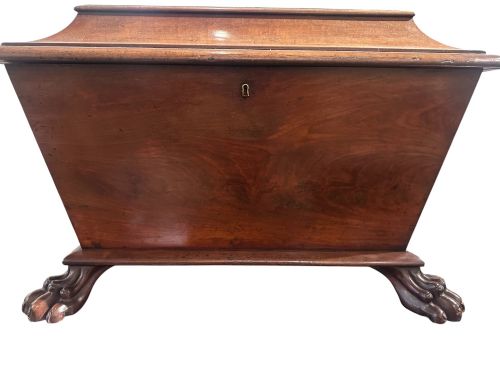
Mahogany Storage Coffer
These substantial mahogany storage coffer pieces offer enduring utility, combining rich timber grains with robust construction for domestic interiors.
Mahogany Storage Coffer
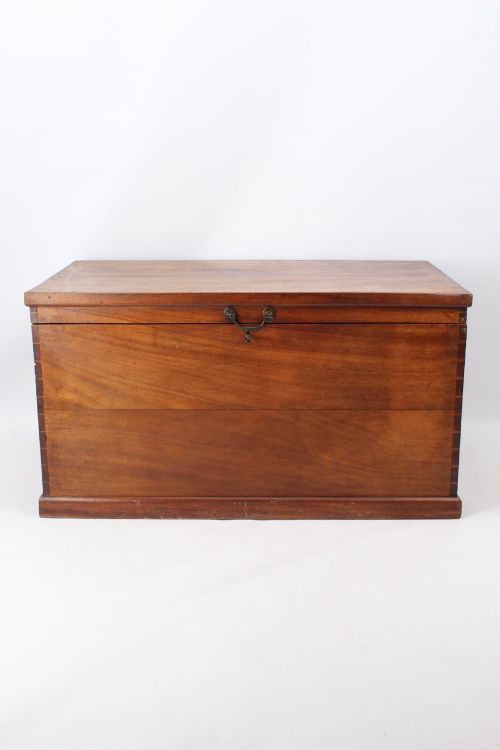
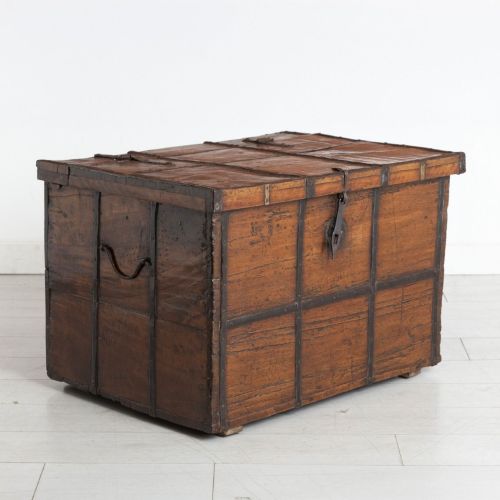
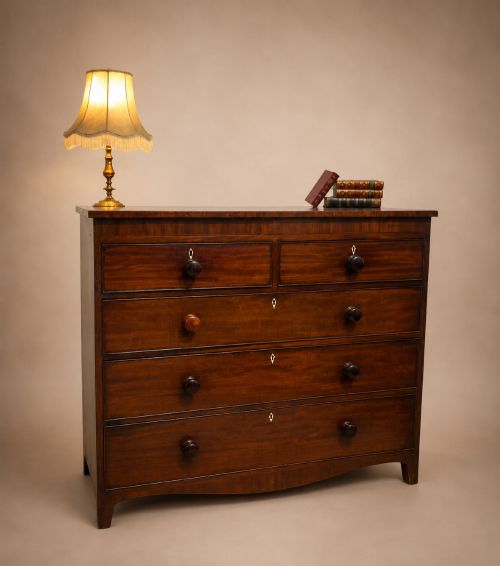
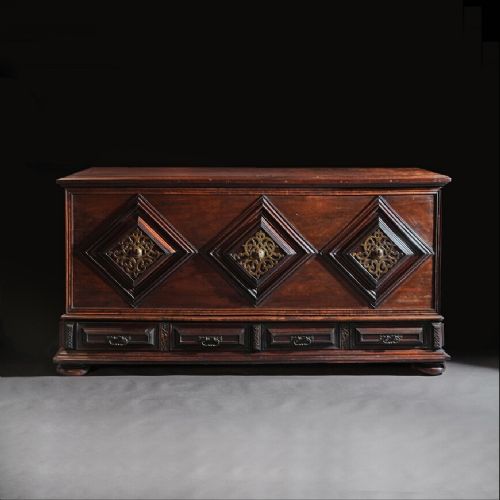
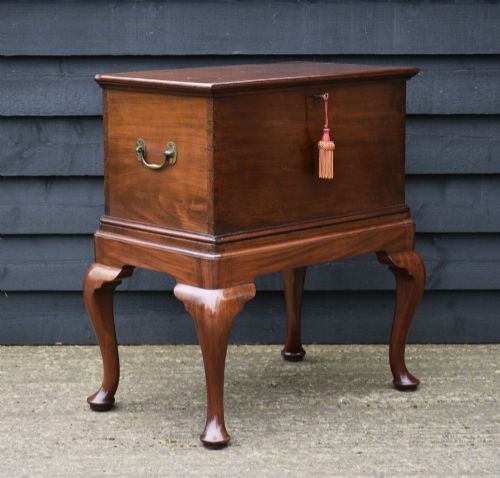
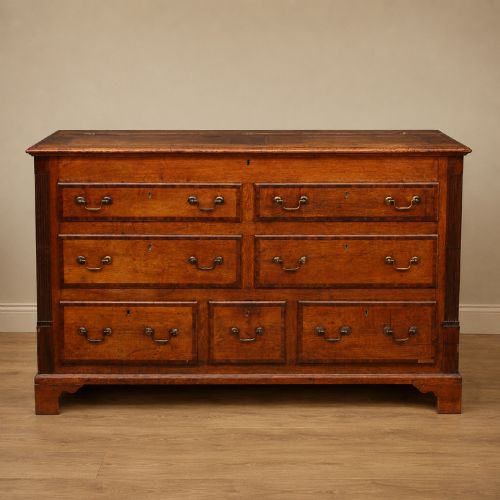
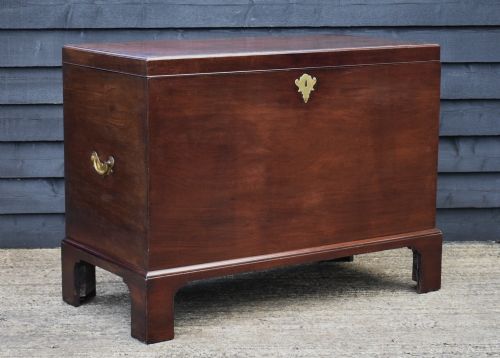
A mahogany storage coffer serves as a versatile receptacle, encompassing diverse forms such as mule chests, trunks, cellarettes, and blanket boxes. Buyers searching for a mahogany storage coffer encounter pieces spanning the Georgian, Victorian, and Edwardian eras, alongside earlier 17th and 18th-century examples.
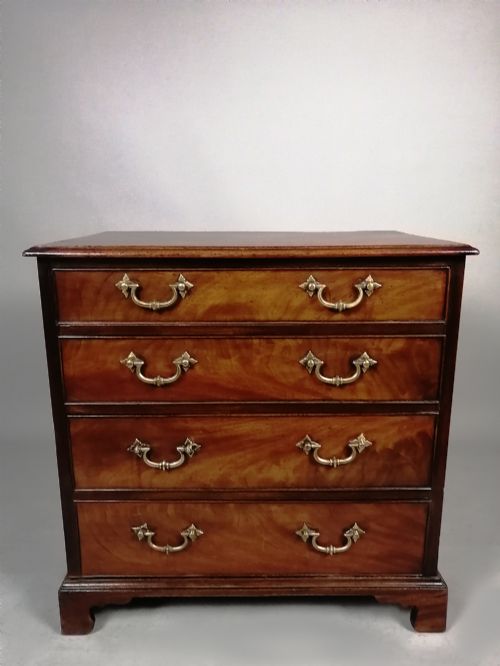
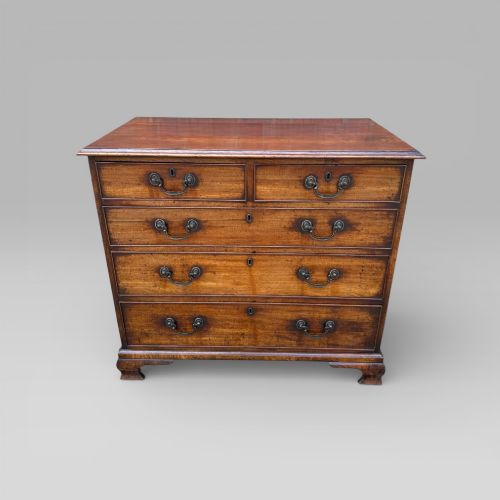
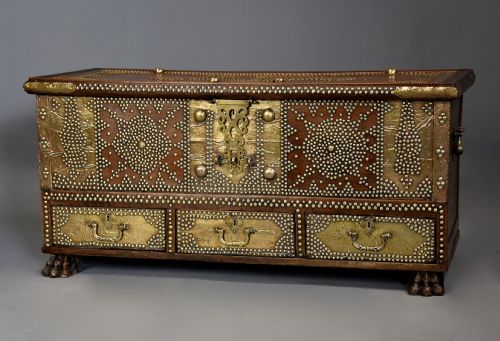
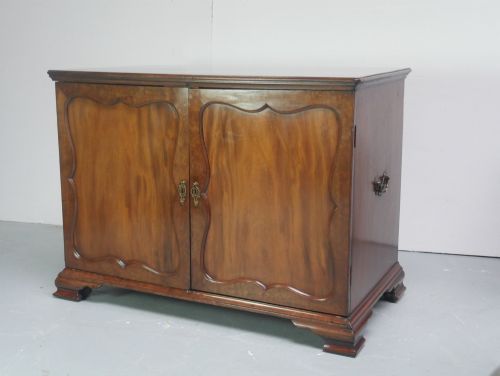
The selection ranges from campaign boxes and military trunks bound in brass and iron to domestic chests of drawers and low linen cupboards. Construction often employs solid timber or veneers, reflecting the utilitarian or decorative requirements of its original context.
Materials and Construction
Cabinet makers utilised dense hardwoods, predominantly mahogany and Cuban mahogany, sometimes complemented by secondary timbers like oak, pine, and boxwood inlay. Metalwork played a structural role, with brass corners, iron banding, and stud decoration reinforcing transportable trunks and campaign boxes.
Joinery techniques varied according to function, uniting panelled lids, dovetailed drawer carcases, and internal zinc linings designed for secure storage. Surface finishes relied on the natural grain of flame mahogany or crossbanded details rather than heavy pigmentation.
Materials documented across the inventory include Cuban mahogany, brass, iron, boxwood inlay, and pine.
Craftsmanship and Proportion
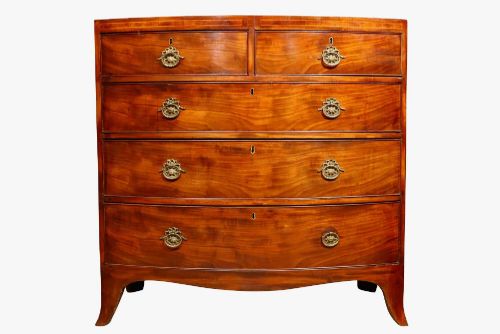
The distinction between tiers of manufacture lies in the selection of timber figures, such as flame mahogany, and the precision of boxwood inlay or brass mounts. Superior pieces display integrated hardware and harmonious proportions, whether configured as a sarcophagus cellarette or a bow front chest.
Provenance and specialised internal fittings, including secret drawers or original key mechanisms, elevate the standing of a box or trunk. Simpler vernacular items prioritise robust utility over decorative refinement while retaining period integrity.
J Moorcroft
The Mahogany Storage Coffer Glossary
- Cellarette
- A lockable container designed for holding bottles of wine or spirits, often shaped as a sarcophagus or fitted with internal partitions. These vessels appeared in dining rooms during the Georgian and Regency periods.
- Mule chest
- A storage chest featuring one or more drawers at the base beneath a primary compartment. This form bridges the evolution between the traditional blanket box and the chest of drawers.
- Campaign chest
- A modular chest made in two or more sections for ease of transport during military deployment. They typically feature recessed brass handles and corner brackets to prevent snagging.
- Crossbanding
- A decorative border technique where thin strips of veneer are laid perpendicular to the grain of the primary surface. It appears frequently on Georgian cabinet work to frame drawer fronts and tabletops.
- Sarcophagus
- A monumental, coffin-like form with a rounded or stepped lid, adopted for large wine coolers and cellarettes in the 19th century. The style reflects classical architectural influences.
Mahogany Storage Coffer: Frequently Asked Questions
How were cellarettes used?
Cellarettes served as secure containers for storing wine bottles near the dining table. Servants accessed the contents during meals while keeping the bottles locked away.
Interior partitions protected individual bottles from rolling and breaking during transport or household use.
What is a campaign chest?
Campaign chests were built in modular sections with flush brass fittings for military officers on the move. The design allowed luggage to be packed securely and transported easily on expeditions.
Removable feet and side carrying handles further assisted officers travelling across distant territories.
How do I date a mahogany chest?
Dating relies on stylistic clues, construction methods, and hardware types characteristic of specific reigns and centuries. Georgian pieces often display different proportions and foot styles compared to later Victorian iterations.
Secondary woods used inside drawers and backboards also help establish the era of manufacture.
What is a mule chest?
A mule chest combines a top-opening storage box with one or more lower drawers. This hybrid form gained popularity as households required easier access to linens without unloading the entire chest.
Earlier versions usually featured oak construction before mahogany became widely adopted by cabinet makers.