



Antique Mahogany Ottoman Chest
An antique mahogany ottoman chest combines timber storage with upholstered seating, offering a practical centrepiece for a traditional room.
Antique Mahogany Ottoman Chest
An antique mahogany ottoman chest is primarily found from the Victorian, Regency, and Georgian periods, alongside pieces dated around 1870 and 1880. These items function as seating while providing hidden storage space inside for blankets, shoes, or clothing.
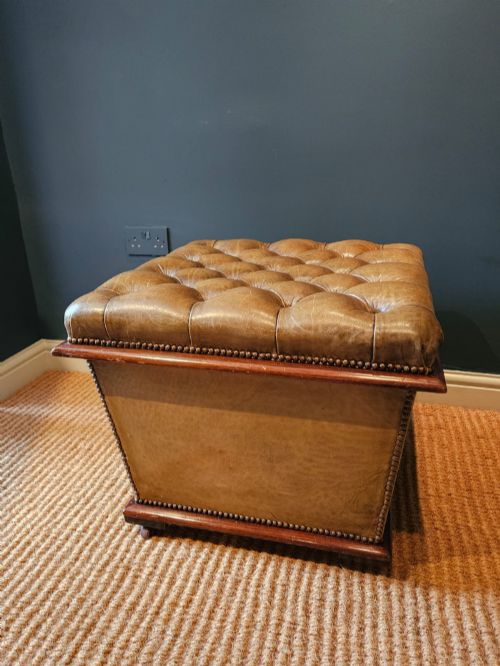
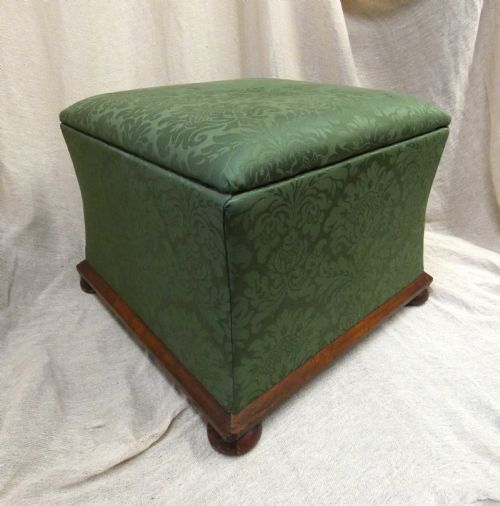
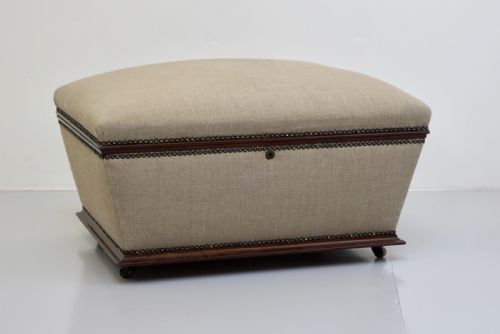
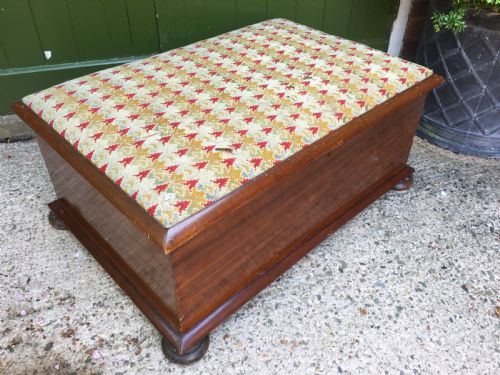
The forms vary across the selection, ranging from standard storage ottomans and blanket boxes to specialised shoe box cabinets, work boxes, and large country house trunks. Buyers commonly encounter mahogany frames paired with upholstered lids in velvet, damask, leather, or gros-point needlework.
Origins span formal Regency designs with lions paw feet to concave shaped nineteenth-century blanket boxes and substantial William IV pieces. Each example reflects the domestic utility and cabinet-making standards of its respective nineteenth-century era.
How they were made
Makers constructed the primary framework using solid mahogany and hardwood, ensuring structural longevity for daily seating and storage use. The timber surfaces typically show a rich grain, finished to highlight the natural qualities of the wood.
Upholstered sections utilise traditional stuffing techniques beneath fabrics such as velvet, leather, damask, and gros-point needlework. Metal elements, particularly brass, appear on castors, hinges, and decorative mounts where specified by the design.
Listings feature mahogany, brass, leather, velvet, and damask across Victorian, Regency, Georgian, and William IV styles.
What varies in quality
The refinement of the mahogany framing and the ambition of the overall design separate standard utility boxes from exceptional examples. Cabinet work ranges from simple box construction to sophisticated concave shapes and carved details like lions paw feet.
The choice and execution of the upholstery material heavily influence the character of the piece, from robust leather finishes to intricate gros-point needlework tops. The integration of functional storage with balanced proportions marks the distinction between ordinary and superior pieces.
Hallett & Sons
The Antique Mahogany Ottoman Chest Glossary
- Mahogany
- A durable hardwood prized for its deep reddish-brown colour and fine grain. It served as the primary material for high-end nineteenth-century furniture.
- Gros-point
- A type of heavy needlework stitch used for durable upholstery. It often creates textured, patterned surfaces on nineteenth-century seat tops.
- Regency
- A stylistic period spanning the early nineteenth century. Furniture from this era often incorporates classical motifs and substantial timber work.
- William IV
- A transitional design period during the 1830s bridging Regency and early Victorian styles. Pieces often feature robust proportions and restrained ornamentation.
- Damask
- A reversible figured fabric traditionally woven on a Jacquard loom. It provides a decorative, patterned texture suitable for formal upholstery.
Antique Mahogany Ottoman Chest: Frequently Asked Questions
What is an antique mahogany ottoman chest?
An antique mahogany ottoman chest is a nineteenth-century furniture piece featuring a wooden body made from mahogany and hardwood with an upholstered top. These items combine the function of a seat or footstool with a concealed interior compartment for storage.
They appear in various forms throughout Victorian, Regency, and Georgian eras, ranging from simple blanket boxes to specialised shoe cabinets and work boxes.
How were these chests used historically?
Historically, these chests served multiple domestic purposes in country houses and town residences alike. They provided extra seating in bedrooms or living spaces while keeping household textiles, blankets, or footwear neatly stored out of sight.
Some specialised variations, such as work boxes, accommodated sewing supplies and smaller personal items alongside seating utility.
How do I care for mahogany and leather?
Mahogany woodwork benefits from occasional cleaning with a soft cloth and maintenance with appropriate furniture wax to preserve the finish. Leather upholstery requires conditioning to keep the material supple and prevent drying over time.
Placing these pieces away from direct sunlight and excessive heat sources protects both the timber frame and the fabric coverings.
How can I tell a Regency piece from a Victorian one?
Regency pieces often display classical influences, simpler architectural lines, and specific decorative elements like lions paw feet. Victorian examples tend to show heavier proportions, varied upholstery styles, and occasionally more enclosed storage configurations.
Examining the construction methods and secondary timbers inside the chest helps confirm the specific nineteenth-century period of manufacture.