



Mahogany Stacking Tables
Mahogany stacking tables bring together clever space-saving design and rich timber tones, offering multiple surfaces that tuck neatly away when floor space matters.
Mahogany Stacking Tables
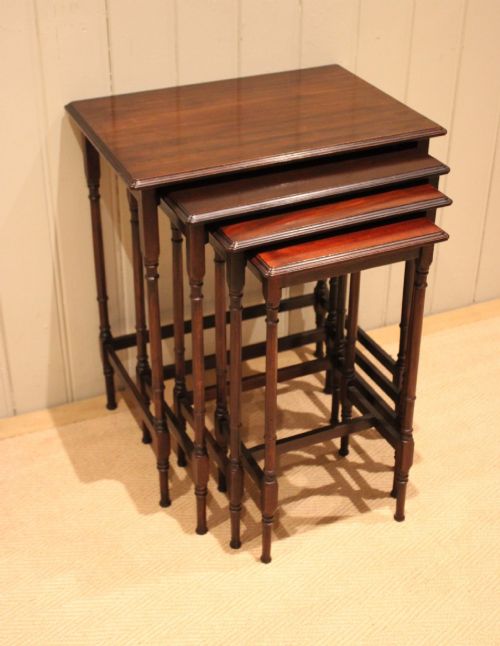
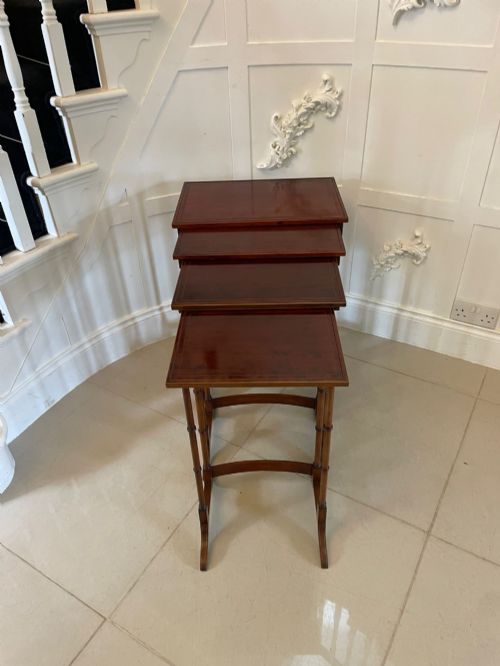
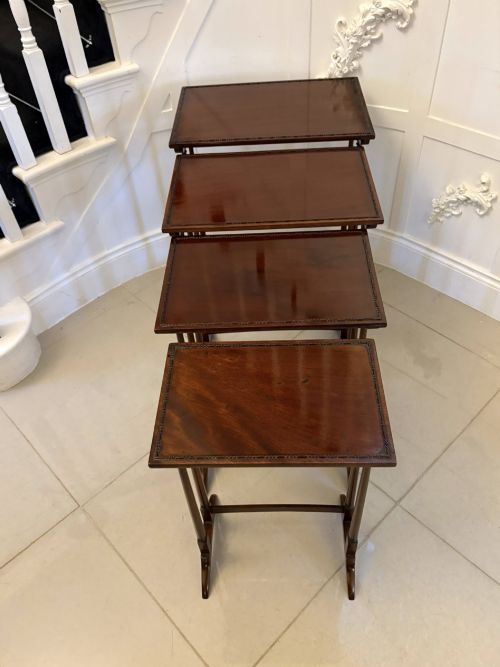
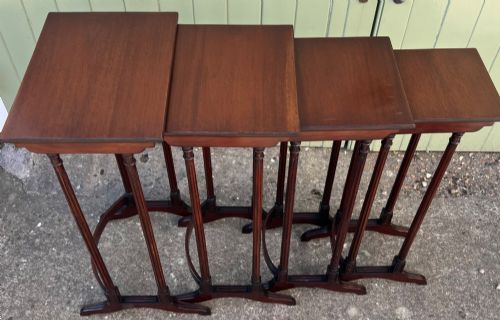
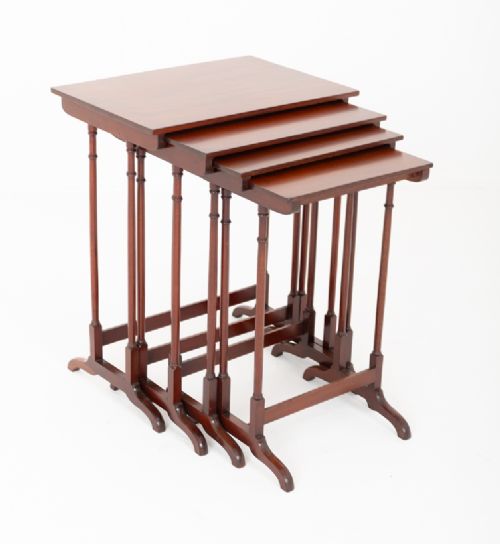
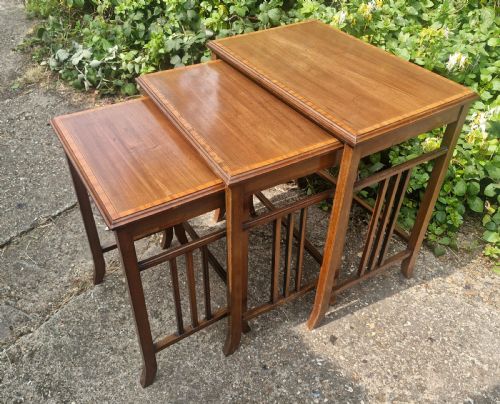
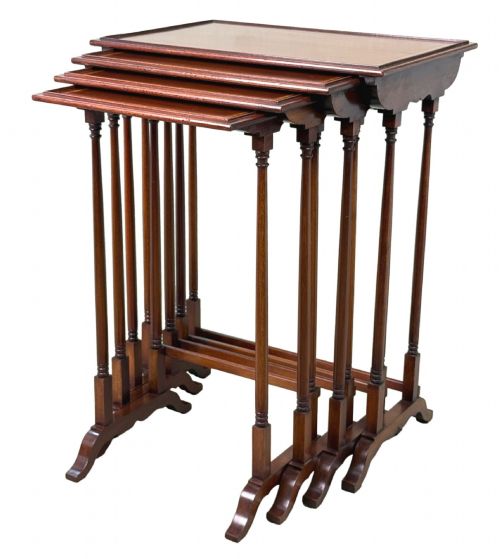
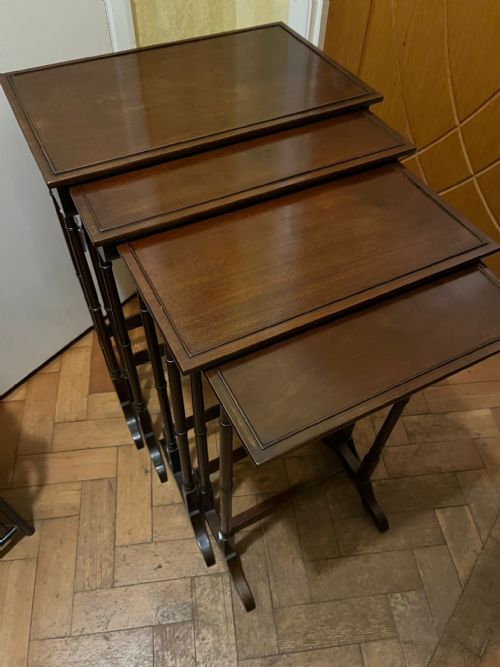
When you search for mahogany stacking tables, you encounter sets of graduated occasional tables designed to slide one beneath another into a single compact footprint. These pieces appear primarily as Edwardian and Victorian creations, alongside nineteenth-century examples and twentieth-century revivals.
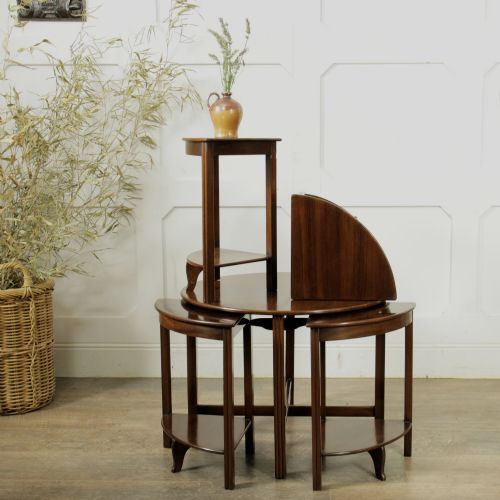
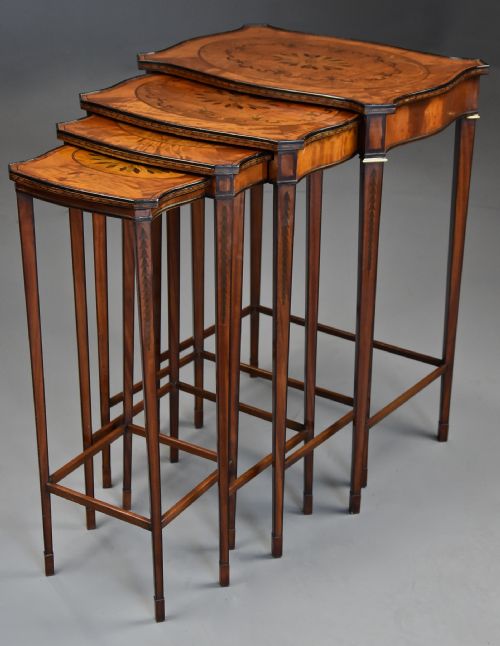
The evidence shows these items most frequently under alternative historical terms such as nests of tables or quartetto sets, occasionally configured with three or four graduating surfaces. Makers shaped these sets in rectangular, circular, oval, and serpentine forms to suit domestic sitting rooms.
Examples on this page span several stylistic interpretations including Georgian and Regency revivals, alongside English country house and traditional designs. Buyers select these tables for practical entertaining, deploying the smaller tiers for drinks or lamps before nesting the set together again.
Materials and Construction
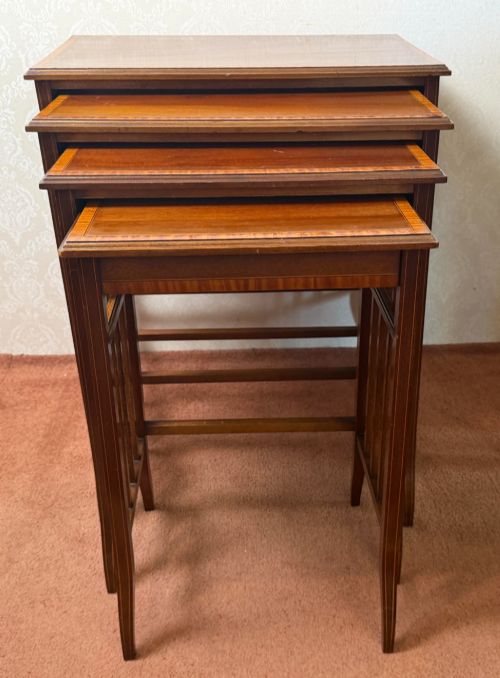
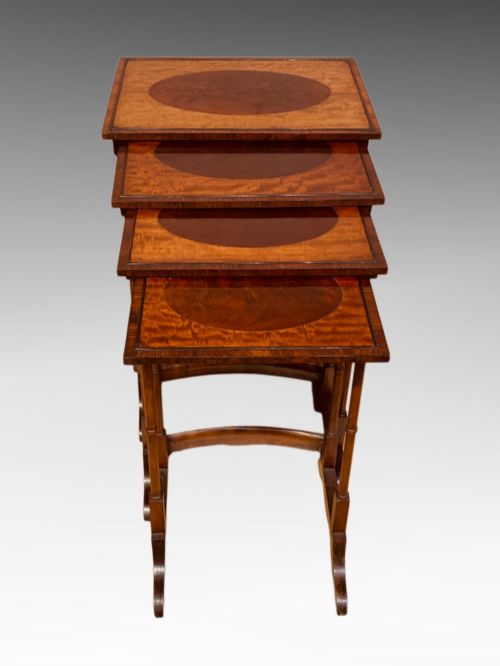
Cabinetmakers built these nests using solid mahogany and figured mahogany veneers, often selecting timber with deep natural grain patterns for the primary surfaces. Many sets incorporate contrasting inlay work, utilising satinwood, boxwood, and yew veneer to create delicate stringing and border details.
Structural integrity relied on slender supports, predominantly featuring square tapered legs or turned columns that allowed each tier to slide smoothly into position. Selected pieces integrate specialist additions such as embossed leather table tops or fine brass inlay within the mahogany framework.
The listings span the Victorian, Edwardian, and Regency revival periods, uniting mahogany with satinwood inlay and boxwood details.
Distinctions in Quality
Quality rests in the precision of the fit and the crispness of the timber work, where superior sets slide together without binding or excessive clearance. The choice of materials dictates the upper tier of the range, marked by figured mahogany grains and intricate satinwood cross-banding rather than plain timber.
Attention to secondary details separates standard production from finer craftsmanship, seen in delicate inlay work, well-proportioned legs, and stable joints across all graduating tables in the set.
The Mahogany Stacking Tables Glossary
- Quartetto
- A matched set of four graduating tables designed to stack neatly inside one another. This traditional term appears frequently on nineteenth- and early twentieth-century listings.
- Cross-banding
- A decorative border technique where veneer strips run perpendicular to the main grain of the table top. It creates a defined frame around the central panel.
- Stringing
- Thin inlaid lines of contrasting wood, such as boxwood or satinwood, embedded into the mahogany surface to form geometric borders. This technique highlights the edges of table tops and legs.
- Serpentine
- A gently undulating curved line forming the edge of a table top or the front of a piece. It requires skilled woodworking to shape accurately.
Mahogany Stacking Tables: Frequently Asked Questions
What is a quartetto nest?
A quartetto nest refers specifically to a set of four tables that scale down in size to fit one beneath another. This term was widely used in the nineteenth and early twentieth centuries.
Such sets typically utilise mahogany construction, sometimes enhanced with satinwood inlay or cross-banding along the table rims.
How were stacking tables used originally?
These tables served as versatile occasional surfaces in Victorian and Edwardian drawing rooms. Families pulled out the smaller tiers as needed for tea, books, or writing.
When not in use, the entire group stacked back into the footprint of the largest single table to preserve floor space.
How do I date a mahogany nest?
Dating relies on leg shapes, timber selection, and inlay styles recorded across the periods. Edwardian and late Victorian examples often feature crisp satinwood inlay and slender square tapered legs.
Earlier nineteenth-century pieces tend to show heavier mahogany figures and simpler structural lines without elaborate stringing.
Are these tables sturdy enough for daily use?
The clever design distributes weight across graduated tiers, making them stable for everyday items like lamps and cups. Solid mahogany frames provide natural durability.
Care should be taken when sliding the tiers to avoid friction marks on the polished timber surfaces.