



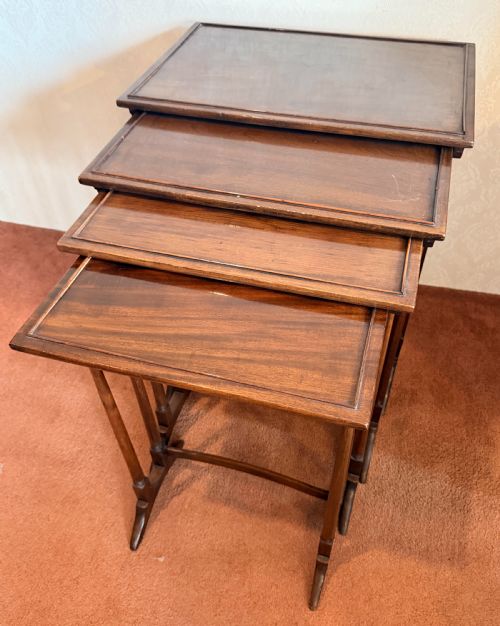
Brown Nesting Side Tables
Brown nesting side tables offer clever tiered function, bringing together multiple matching surfaces that tuck neatly away when floor space matters.
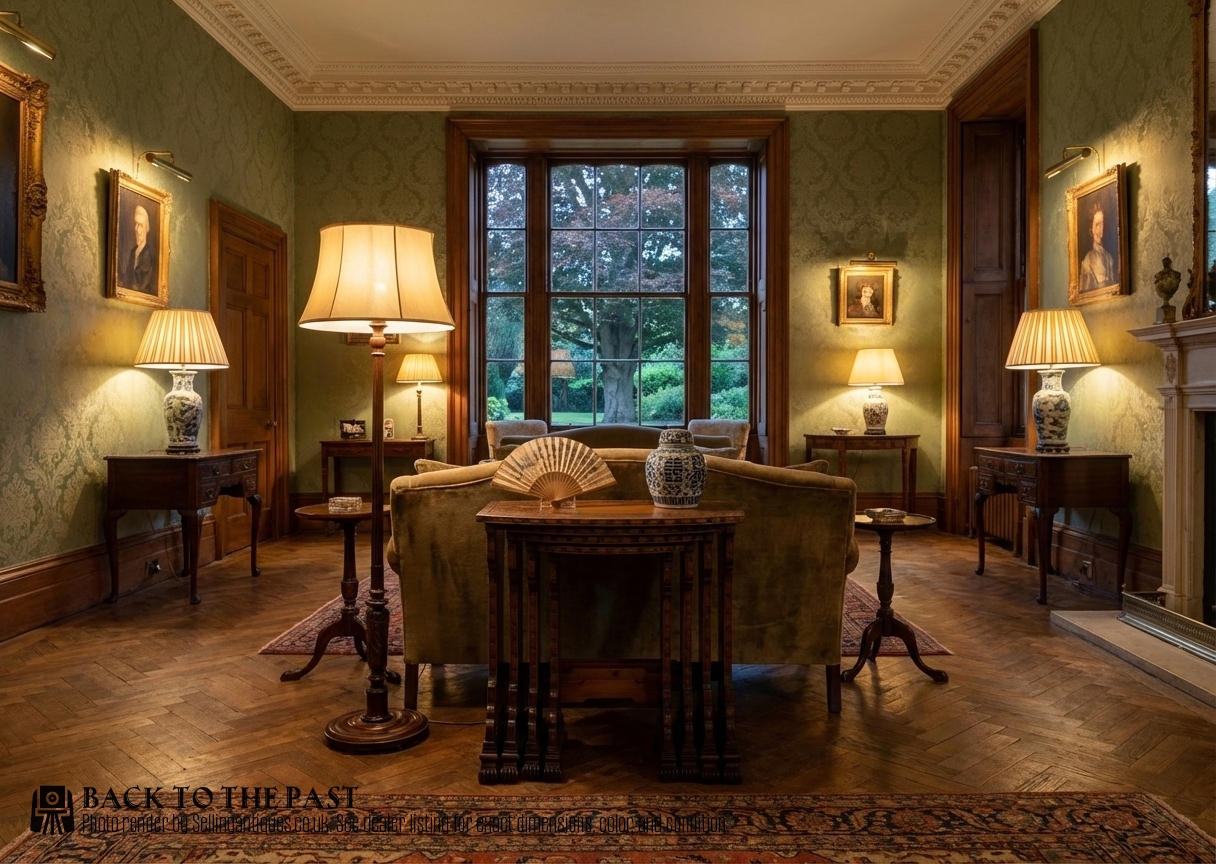
Brown Nesting Side Tables
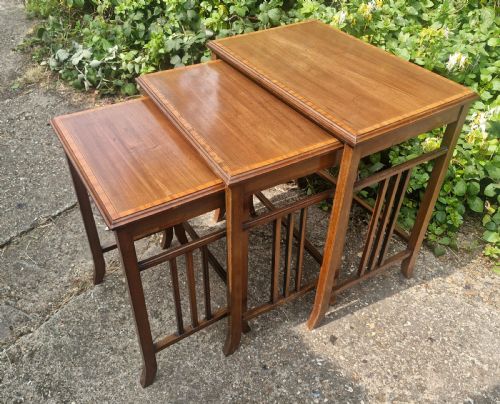
Brown nesting side tables gather sets of graduated surfaces designed to slide inside one another. These practical arrangements emerge across the nineteenth and twentieth centuries, spanning periods from the Victorian era through Edwardian times and into the Art Deco period.
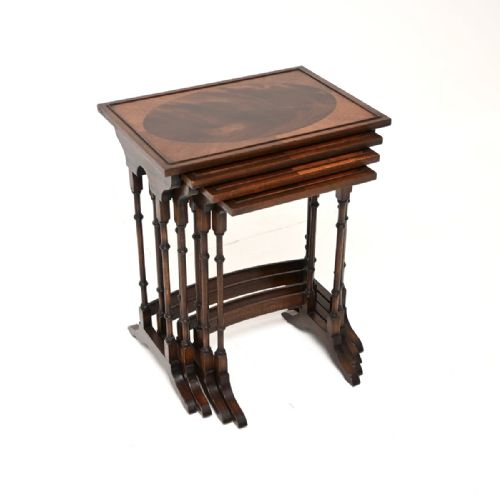
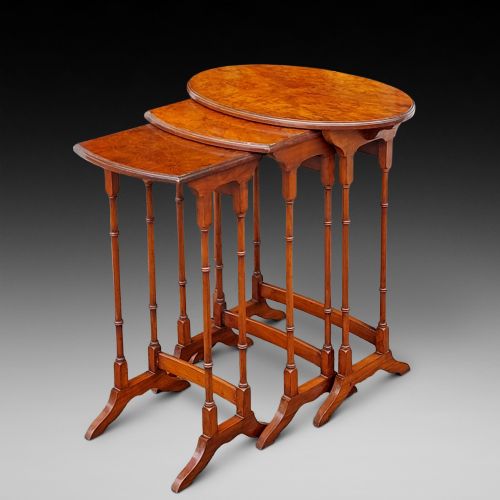
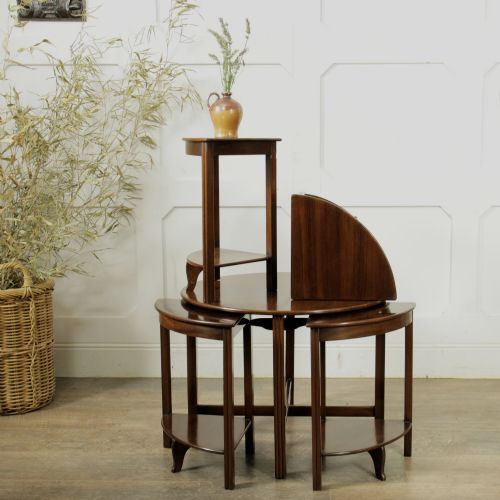
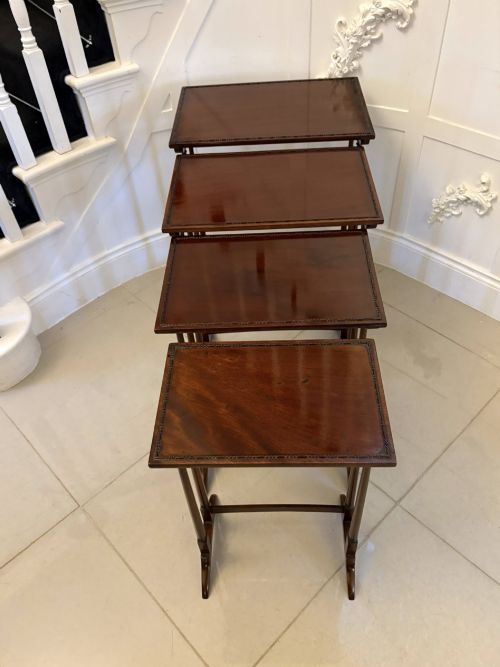
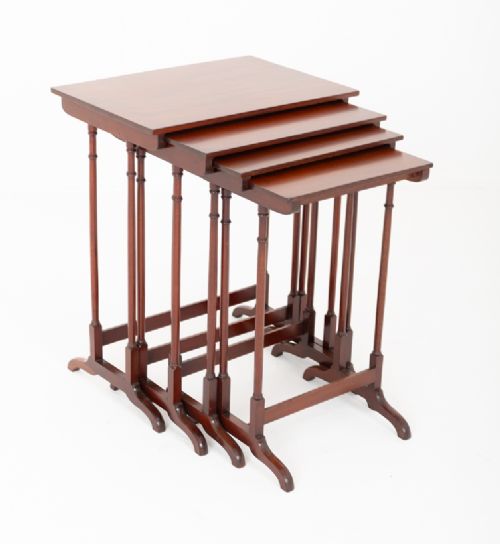
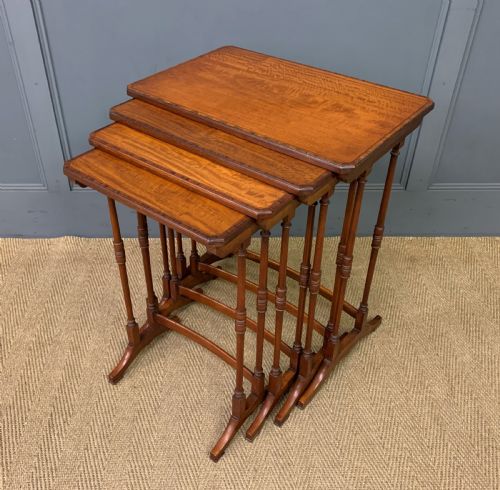
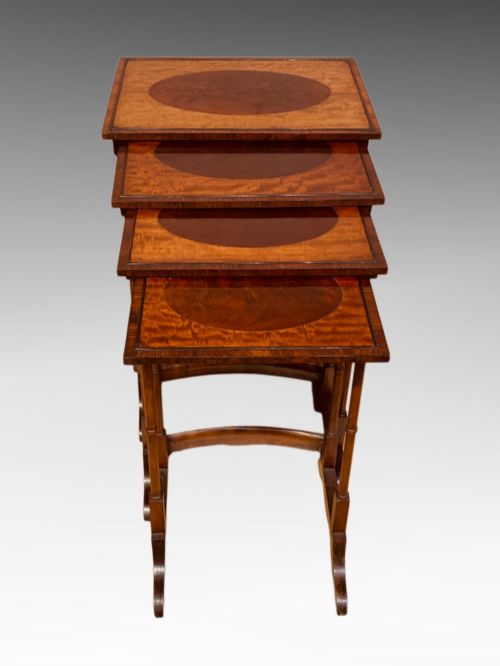
The Edwardian iterations appear most frequently on this page, typically formed as sets of three or four mahogany tables often enriched with satinwood inlay or stringing. Alongside these standard quartetto sets, buyers encounter circular configurations, serpentine forms, and occasional tables dating from the nineteenth century onward.
Makers and workshops across different decades adapted the form to changing tastes, producing pieces in styles ranging from Georgian revivals to French Art Nouveau and streamlined Art Deco. The fundamental utility remains consistent: a collection of tables that occupy the footprint of one while providing multiple surfaces for lamps, cups, or books.
Materials and construction
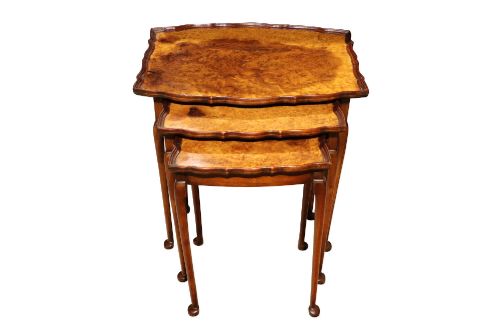
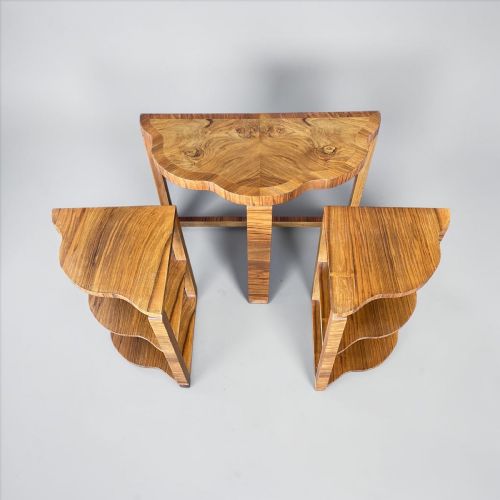
Cabinetmakers constructed these brown nesting side tables primarily using dense hardwoods such as mahogany, walnut, and rosewood, frequently applying decorative veneers like burr walnut or satinwood to the top surfaces. Workshops utilised boxwood and various contrasting stringing materials for delicate inlay work, delineating borders and tabletops with precision.
Many examples incorporate clever structural joinery to ensure the smaller tables glide smoothly beneath the largest frame without binding. The application of French polish or traditional oil finishes protects the timber while accentuating the natural grain patterns and rich brown tones of the wood.
Some Edwardian tables came in sets of five, creating a remarkably tall stack that required considerable patience to reassemble correctly after tea.
Assessing quality and craftsmanship
Distinction across these tables rests largely on the selection of timber and the precision of the cabinetwork. Finer examples display carefully matched veneer grains across the graduated tops and crisp, symmetrical inlay work that remains intact without lifting.
The structural integrity of the frame joints and the smoothness with which each smaller table slides into its companion indicate the maker's skill. Superior sets maintain rigidity and balance across all surfaces, whereas simpler productions show heavier construction and less refined detailing in the legs and aprons.
Émile Gallé·Harry and Lou Epstein·Heal's
The Brown Nesting Side Tables Glossary
- Quartetto
- A matched set of four nesting tables designed to slide sequentially one beneath another. This nineteenth-century term derives from musical terminology.
- Veneer
- A thin layer of figured wood applied over a secondary timber base to provide decorative visual impact. Craftsmen select woods like burr walnut or satinwood specifically for this purpose.
- Inlay
- Small pieces of contrasting timber or light-coloured wood set flush into the primary surface to create geometric or floral patterns. Boxwood and satinwood serve commonly in these decorative borders.
- Serpentine
- A gently undulating tabletop or furniture front curving outward at the centre and inward toward the corners. This profile demands advanced woodworking skill to execute cleanly.
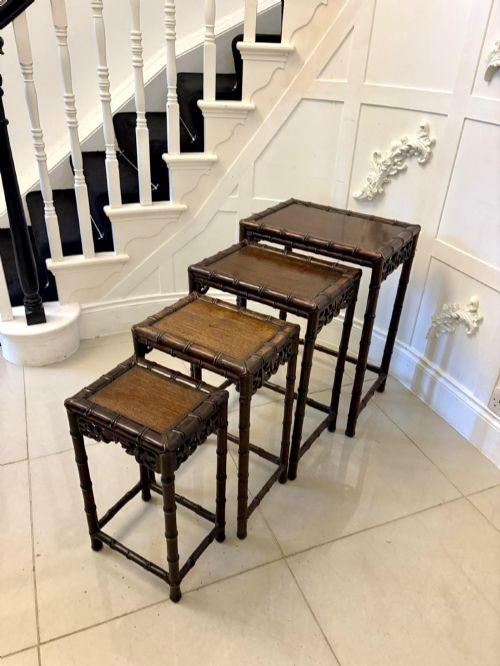
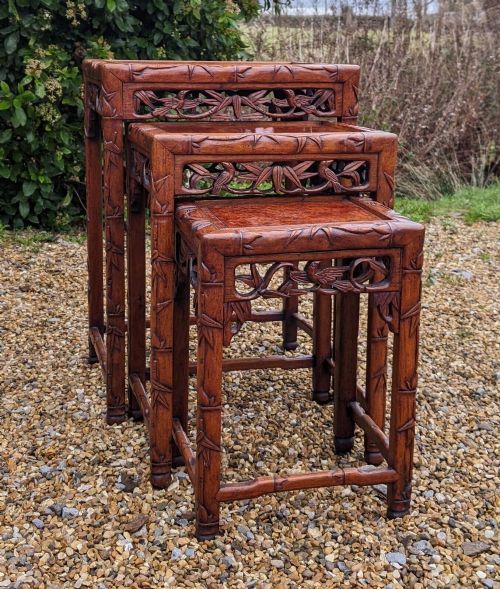
- Faux bamboo
- Turned and carved timber moulded to imitate the natural nodes and segments of real bamboo stems. This decorative technique appears frequently on nineteenth-century pieces.
Brown Nesting Side Tables: Frequently Asked Questions
How do I care for wooden nesting tables?
Maintain these surfaces by dusting regularly with a soft, dry cloth and avoiding placement near direct heat sources or strong sunlight, which can dry out timber and crack delicate veneers.
Apply a traditional beeswax polish occasionally to nourish the wood and preserve the depth of the finish without building up excessive residue.
Were these tables always sold as sets of four?
While many traditional quartetto sets comprise four graduated tables designed to slide together, workshops frequently produced configurations of three or five pieces depending on the period and design.
Edwardian makers particularly favoured sets of three or four, while some specialised designs offered up to five circular or shaped tiers.
How can I tell an Edwardian set from a Victorian one?
Edwardian versions often display lighter mahogany frames with delicate satinwood crossbanding, stringing, or neoclassical inlay inspired by Sheraton designs. Victorian iterations tend to feature heavier timbers, simpler edge profiles, and more robust construction without elaborate decorative stringing.
Examining the underside of the tabletops and the interior framing often reveals the joinery techniques characteristic of each specific era.
How were nesting tables used historically?
These versatile pieces served primarily in drawing rooms and parlours where space-saving furniture was essential for entertaining guests. Servants or hosts could easily pull out the smaller tables to distribute tea cups, writing materials, or reading lamps across the room before tucking them neatly away.
Their modular nature made them ideal for Victorian and Edwardian domestic interiors that required flexible arrangement of occasional furniture.