
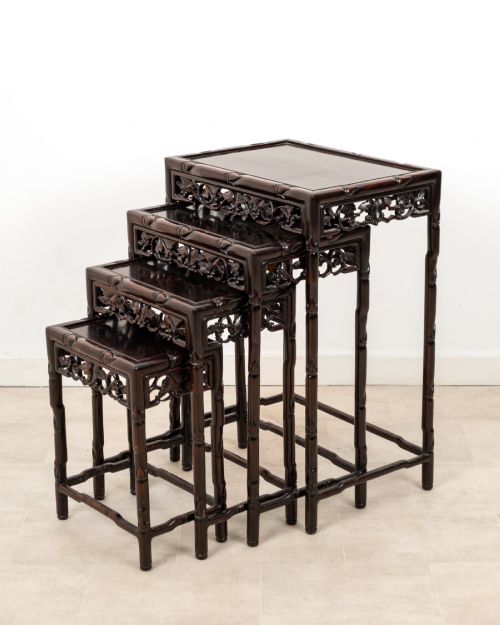


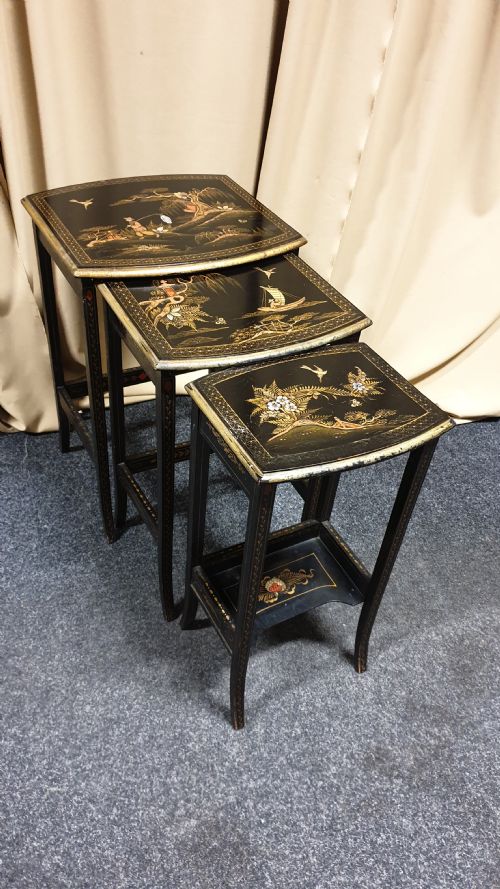


Asian Export Nesting Tables
Asian export nesting tables are graduated sets designed for versatility, offering rich woods and intricate carving that elevate any interior.
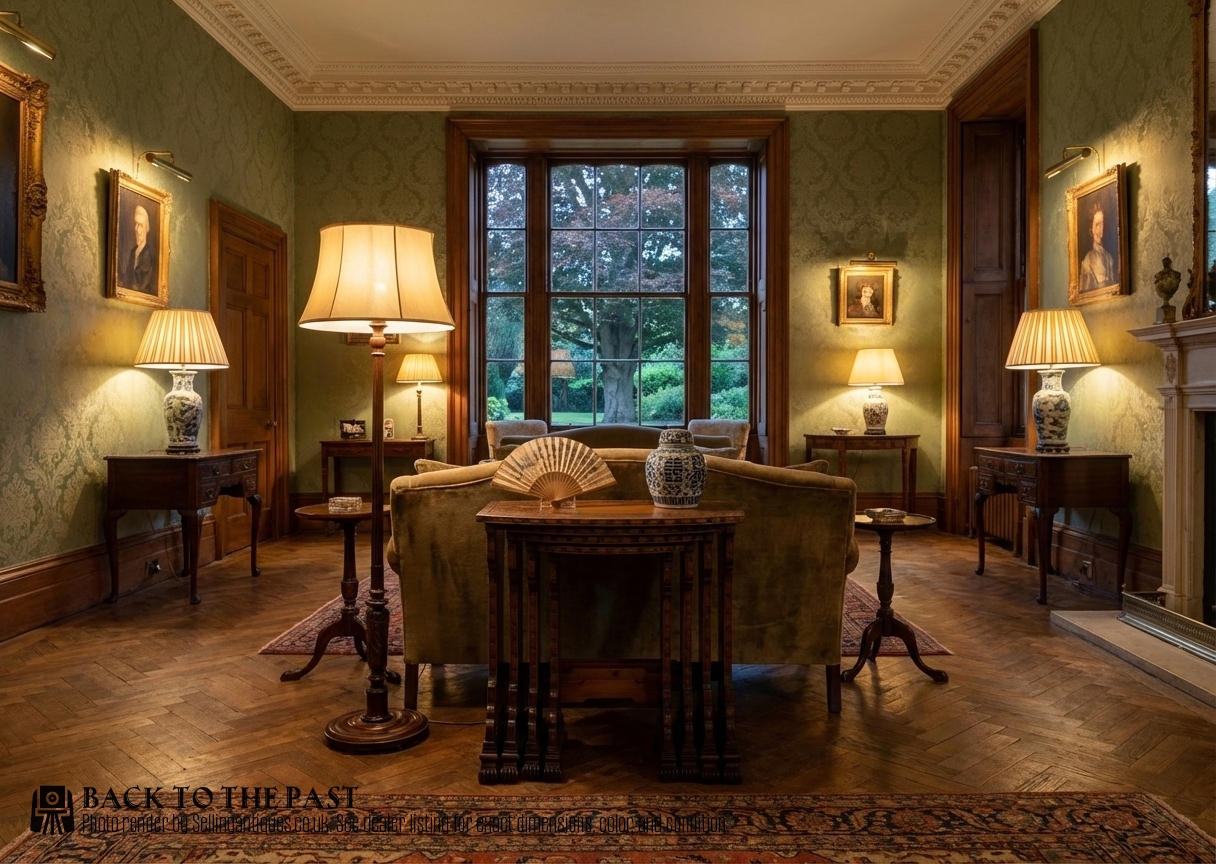
Asian Export Nesting Tables
Asian export nesting tables comprise sets of graduating tables that slide neatly beneath one another when not in use. These pieces primarily appear from the nineteenth century through the early twentieth century.
The selections on this page feature Chinese Qing Dynasty creations alongside Anglo-Indian examples and Chinoiserie interpretations. Most sets consist of four graduated tables, though occasional sets of three also appear.
Woods such as hongmu, teak, rosewood, and general hardwood form the primary structure of these items. Workshops produced them specifically for export, combining traditional craftsmanship with European furnishing demands.
How they were made
Artisans utilised dense timbers like hongmu, rosewood, and teak to construct these durable frames. These heavy hardwoods allowed for precise joinery and deep carving without compromising structural integrity.
Surface decoration frequently incorporated intricate carved hardwood details, lacquered wood finishes, and inlaid mother-of-pearl or gold leaf accents. These decorative techniques required steady hands and specialist knowledge passed down through generations.
The clever grading means four distinct tables occupy the floor space of just one.
What varies in quality
The depth and crispness of the carving distinguish finer sets from simpler workshop output. Skilled carvers produced crisp relief work that remains sharp and well-defined across all surfaces.
Timber selection and grain matching across the graduated set dictate overall visual harmony. Superior examples utilise carefully selected burrwood or uniform hardwoods that age gracefully together.
The Asian Export Nesting Tables Glossary
- Hongmu
- A dense, heavy tropical hardwood used in fine Chinese furniture. It translates literally as red wood and develops a rich patina over time.
- Nesting tables
- A set of graduated tables designed to fit one beneath another to save space. They serve well as occasional or side tables in sitting rooms.
- Chinoiserie
- European artistic styles that reflect Chinese aesthetic influences. Artisans applied these motifs to furniture produced for Western markets.
- Qing Dynasty
- The final imperial dynasty of China, spanning from sixteen forty-four to nineteen twelve. Many export pieces originate from the later decades of this period.
Asian Export Nesting Tables: Frequently Asked Questions
How were asian export nesting tables used?
These sets served primarily as versatile occasional furniture in nineteenth and early twentieth century drawing rooms. Servants deployed the smaller tables independently for tea or writing as guests required.
When entertainment concluded, the tables slid back into a single compact stack underneath the largest surface. This space-saving design made them particularly popular in parlours and drawing rooms.
What woods were used for these tables?
Craftsmen relied heavily on dense tropical timbers such as hongmu, teak, and rosewood. These heavy hardwoods provided the necessary strength for slender table legs and intricate carved aprons.
Selected sets also incorporate burrwood panels or contrasting lacquered wood surfaces. These materials ensured durability while offering a striking appearance for the export market.
How do I distinguish between periods?
Nineteenth-century examples often display heavier timber construction and deep, traditional carving motifs. Pieces from the early twentieth century occasionally lean towards simpler lines or specific regional export styles.
Examining the grain, joinery methods, and wear patterns helps indicate the age of each set. Comparing the graduation of sizes also reveals workshop standards from different decades.
Can I use them as everyday side tables?
These sturdy hardwood tables function well for everyday placement beside armchairs or sofas. Their graduated nature allows you to separate the set around a room when hosting visitors.
Care should be taken with moisture and direct sunlight to protect the polished wood surfaces and delicate inlay work. Regular gentle polishing maintains the natural lustre of the timber.