
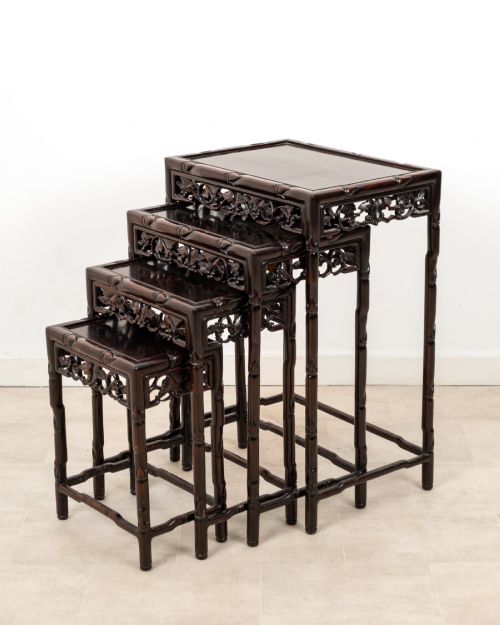


Oriental Occasional Table Set
An oriental occasional table set brings nested utility and distinct craftsmanship into a room.
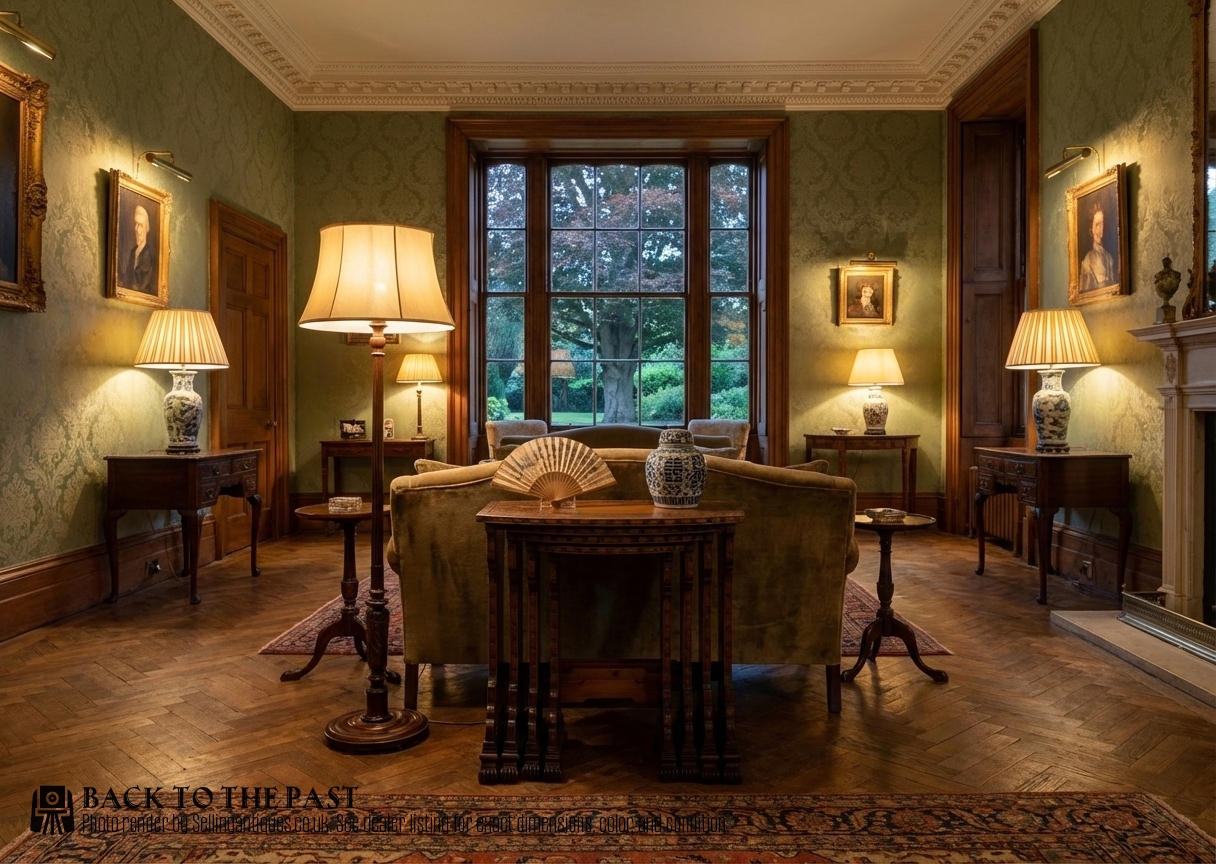
Oriental Occasional Table Set
An oriental occasional table set provides multiple surfaces that store neatly inside one another when floor space is needed. These sets typically comprise three or four graduated pieces designed to slide together in a descending sequence.
The selections encountered here span the nineteenth century through the early twentieth century, including Edwardian interpretations and Qing dynasty pieces. Buyers frequently encounter sets formed of four separate tables, alongside occasional groupings of three.
Originating largely from Chinese export workshops or European interpretations of Asian design, these furnishings served practical drawing room functions. The forms range from plain hardwood constructions to heavily decorated lacquer surfaces.
How they were made
Cabinetmakers utilised dense hardwoods such as teak and rosewood, often carving the aprons and legs with floral or geometric motifs. These timbers provided the structural weight necessary to support the nested configuration.
Surface decoration frequently involved layers of lacquer applied to ebonised wood, sometimes accented with gold leaf. Chinoiserie ornamentation was painted by hand to depict traditional oriental scenes across the tabletops.
Listings feature items dated from the nineteenth century, the Edwardian era, and the early twentieth century up to nineteen-twenty.
What varies in quality
The integrity of the nesting mechanism dictates much of the standing value, as lesser sets bind or sit unevenly when packed together. Superior examples maintain precise tolerances so that each table slides smoothly into position beneath its larger partner.
The depth and sharpness of the hand carving on hardwood frames separates standard workshop production from finer studio output. Similarly, the preservation of original lacquer and gilt work governs the visual impact of decorated surfaces.
The Oriental Occasional Table Set Glossary
- Nest of Tables
- A group of graduated tables designed to fit neatly one beneath another. This space-saving form gained popularity during the nineteenth and early twentieth centuries.
- Chinoiserie
- European artistic imitation of Chinese and East Asian artistic traditions. It appears on furniture through decorated lacquer and painted motifs.
- Lacquer
- A durable finish applied in multiple layers to wooden surfaces. It provides a smooth, glossy coating often used as a base for painted ornamentation.
- Qing Dynasty
- The final imperial dynasty of China, lasting from the mid-seventeenth century until the early twentieth century. Pieces from this era often feature traditional carving and joinery.
- Quartetto
- A traditional term for a set of four pieces, frequently applied to nests of tables during the Victorian and Edwardian periods.
Oriental Occasional Table Set: Frequently Asked Questions
What is an oriental occasional table set?
It is a collection of graduated tables designed to slide underneath one another to save space. They function individually as tea or side tables and combine into a compact unit when not in use.
Most sets consist of three or four pieces built from materials like hardwood or decorated lacquer. They emerged from both Asian export traditions and European revival periods.
How were these tables used historically?
Owners deployed the individual tables around a room to hold cups, books, or decorative objects during gatherings. When the room needed to be cleared, the smaller tables slid sequentially beneath the largest one.
This nested design made them practical for entertaining in parlours and drawing rooms where permanent surface space was limited. Their dual nature as movable stands and single compact blocks suited Victorian and Edwardian interiors.
How do I date an antique set?
Dating relies on examining the timber species, construction joinery, and decorative style applied to the surfaces. Pieces from the nineteenth century often show heavier hardwood framing, while Edwardian versions may adopt lighter Queen Anne influences.
Matching the stylistic markers of Chinoiserie decoration or Qing dynasty carving helps narrow the period of origin. Comparing the wear patterns and finish to documented examples from the same era provides further clarity.
How should I care for lacquer surfaces?
Lacquer requires gentle dusting with a soft, dry cloth to prevent surface scratching from abrasive particles. Avoid placing them in direct sunlight or near heat sources, which can cause the finish to dry out and crack.
Polishing products and moisture should be kept away from antique lacquer unless specified by a conservator. Maintaining stable room humidity protects both the wooden core and the delicate decorative layers above it.