
Mahogany Side Cupboard
When you search for a mahogany side cupboard, you are looking at practical storage pieces built from durable timber to serve living rooms, hallways and bedrooms.
Mahogany Side Cupboard
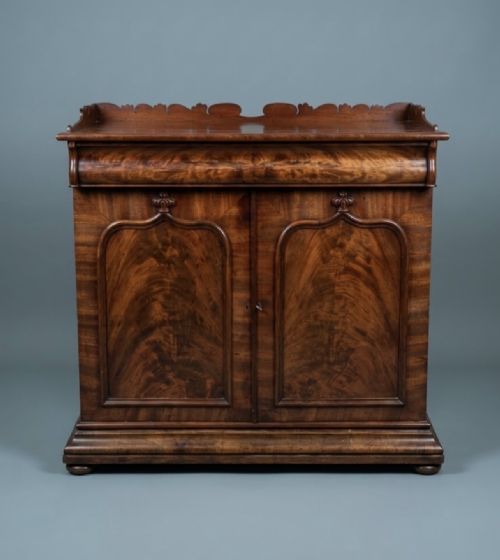
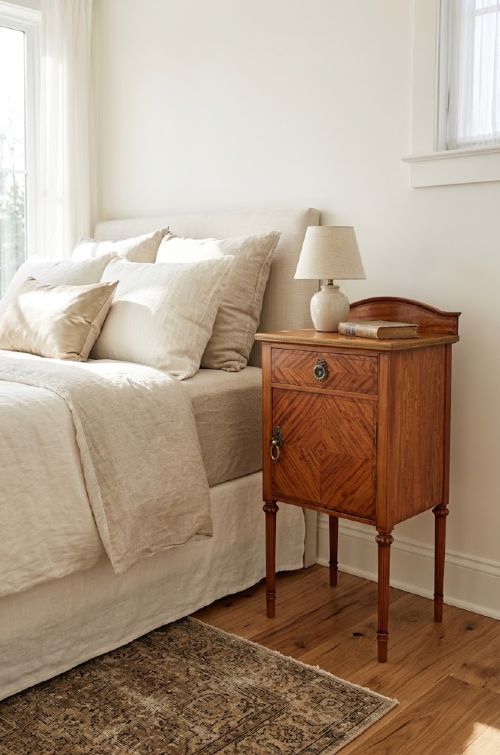
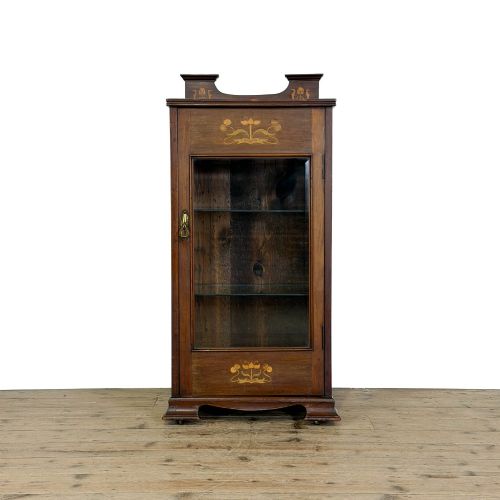
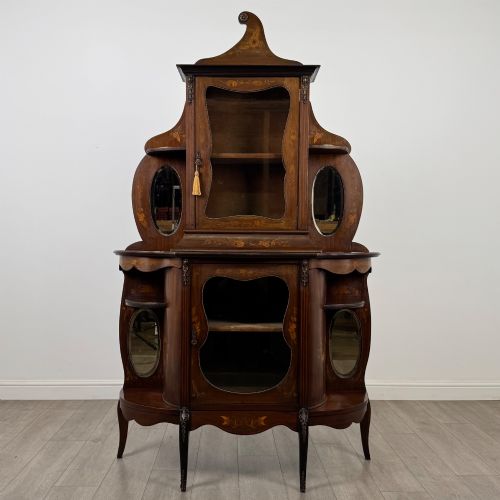
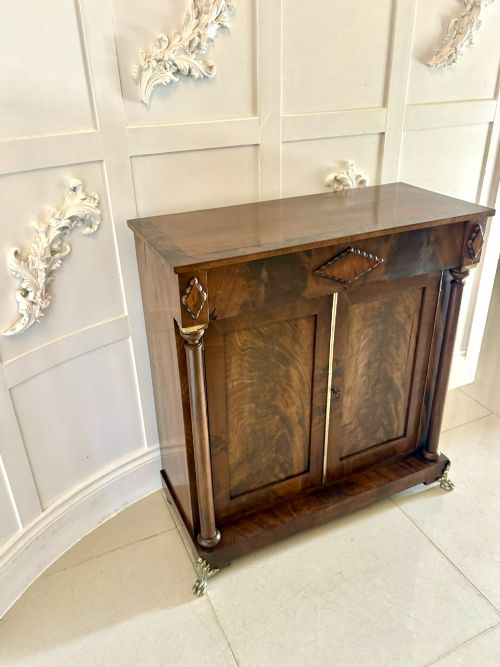
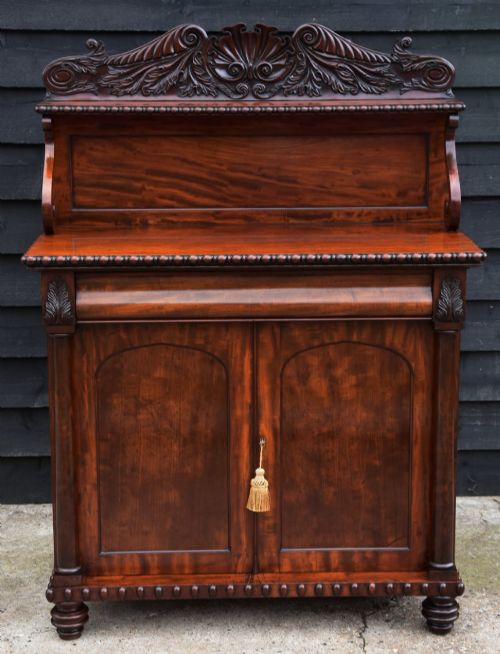
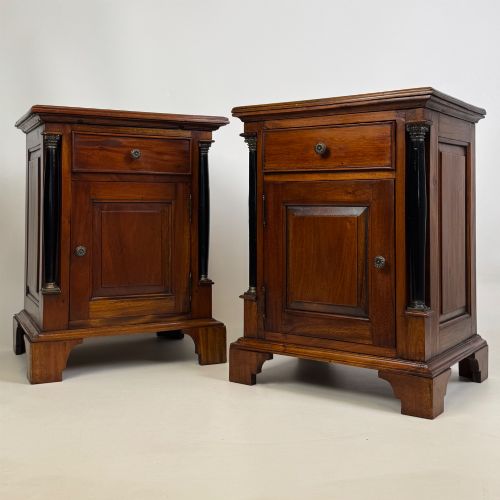
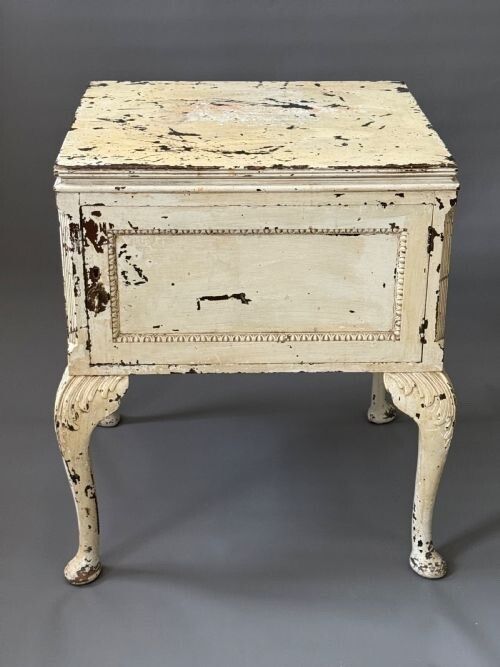
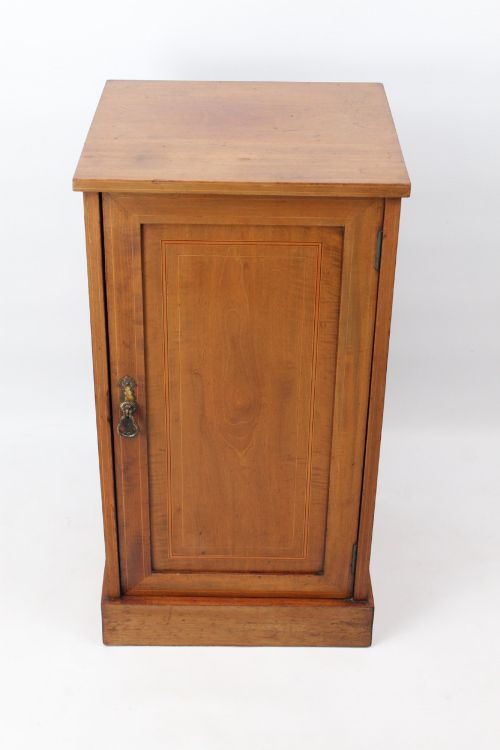
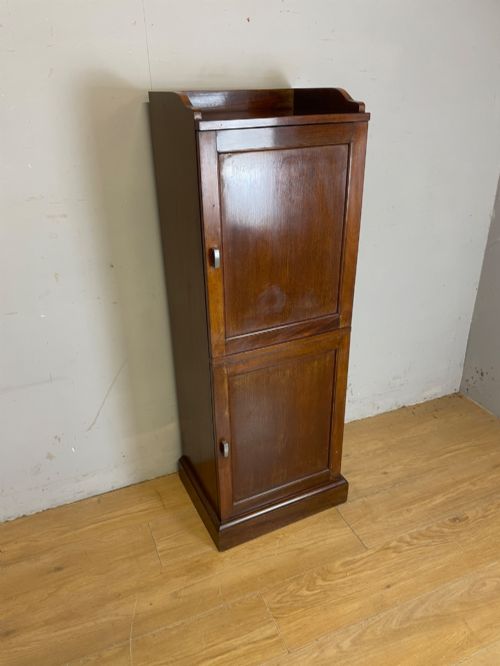
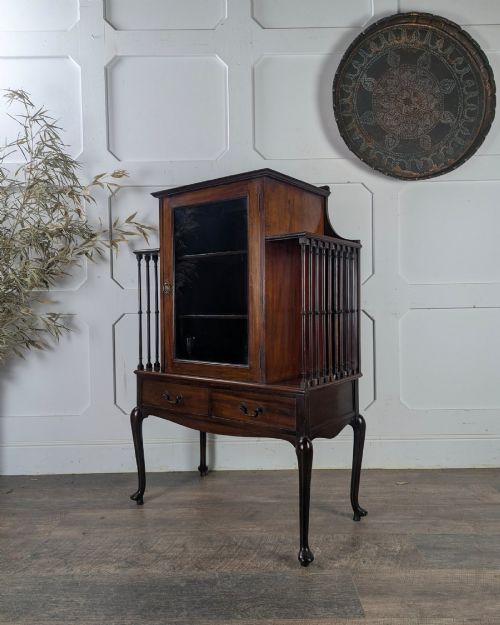
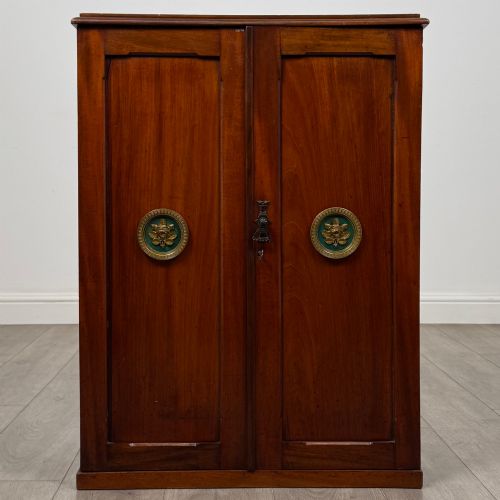
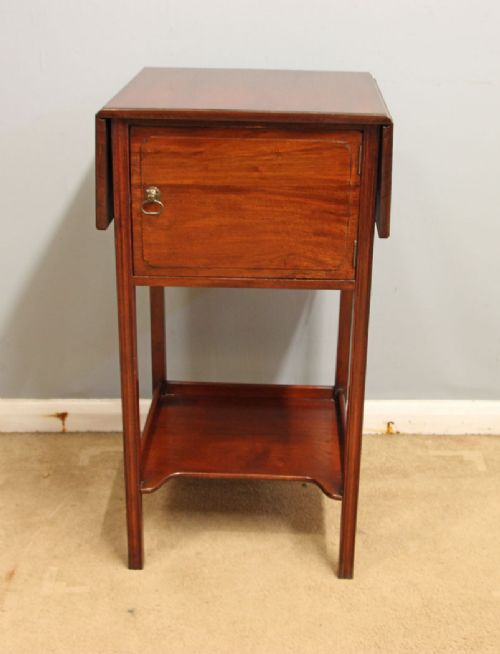
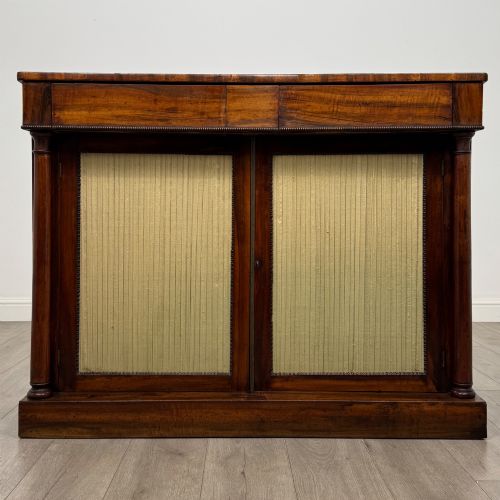
A mahogany side cupboard serves as a versatile storage piece, encompassing bedside tables, small commodes, and taller display cabinets designed to fit against walls in domestic interiors. These items range from compact Georgian pot cupboards to elaborate Victorian chiffoniers and Edwardian inlaid cabinets.
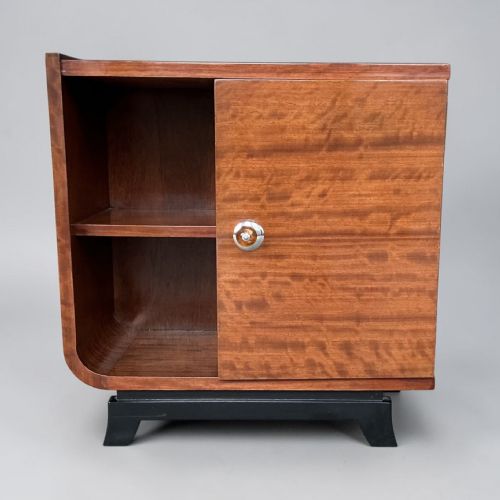
The most common formats on this page include compact bedside cupboards and low side cabinets featuring hinged doors, drawers, or open shelving. Pieces span several eras, showing the evolution from utilitarian Georgian designs to decorative Edwardian and revival styles.
Materials and construction
Cabinet makers relied primarily on solid mahogany and flame mahogany veneers, often enhanced with contrasting satinwood stringing, paint, or ebonised wood details. Structural stability was achieved through traditional joinery, while decorative appeal came from polished wood grain rather than heavy ornamentation.
Hardware played a functional and aesthetic role, incorporating brass handles, locks, and hinges alongside occasional glass panels for display doors and mirror-backs on later pieces. Marble tops appear on specific continental and upscale English variants, adding weight and a smooth surface.
Mahogany Side Cupboard Retail Price Guide 2026
Typical asking prices for mahogany side cupboard among the pieces listed under this phrase on Sellingantiques today, from the lower quarter to the upper quarter. They describe what is for sale here now, not the wider market.
Listings feature pieces spanning the Georgian, Victorian, and Edwardian periods, constructed primarily in mahogany with brass, glass, and satinwood additions.
Distinctions in craftsmanship
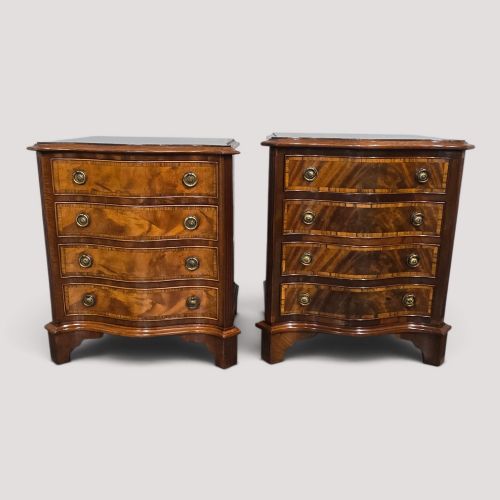
Quality in a mahogany side cupboard rests on the selection of timber figures, such as symmetrical flame mahogany grain, and the precision of inlaid details like satinwood banding. Superior examples demonstrate tight joinery in the drawer linings and crisp carving on mouldings or feet.
The integrity of the original hardware, including working brass locks and matching handles, elevates a piece alongside well-executed secondary timbers. Workshop attribution, such as pieces linked to Gillows, distinguishes standard domestic furniture from high-end commission work.
Gillows
The Mahogany Side Cupboard Glossary
- Pot cupboard
- A small bedside cabinet originally designed to enclose a chamber pot. These practical items often feature a single door and a small enclosed compartment above a shelf or drawer.
- Chiffonier
- A low sideboard or cabinet developed in the Regency and Victorian periods. They typically combine enclosed lower cupboards with an upper shelf or tier supported by pillars.
- Flame mahogany
- A veneer cut from timber where the branch meets the trunk, producing a striking, flamelike grain pattern. Cabinet makers used this on prominent drawer fronts and doors for visual impact.
- Serpentine
- A furniture front or top curving outward at the centre and inward at the sides. This shape required advanced woodworking skill to execute cleanly in solid mahogany.
- Satinwood
- A pale, lustrous exotic timber used extensively for contrasting inlay and banding on Edwardian and Sheraton revival furniture. It provides a bright border against dark mahogany.
Mahogany Side Cupboard: Frequently Asked Questions
What is a pot cupboard?
A pot cupboard is a compact bedside cabinet originally built to house a chamber pot behind a single door. These pieces date predominantly from the Georgian and Victorian eras.
Today, they function well as small bedside tables or lamp stands, offering discreet enclosed storage for modern household items.
How do I date a mahogany cabinet?
Dating relies on examining construction methods, timber choice, and hardware styles. Georgian pieces often show hand-cut dovetails and simpler lines, while Victorian examples introduce heavier mouldings, mirror-backs, and flame mahogany veneers.
Later Edwardian and revival pieces frequently incorporate satinwood inlay and machine-made screws alongside lighter framing.
Were these always used in bedrooms?
While many smaller variants served as bedside tables or pot cupboards, larger forms functioned as sideboards, chiffoniers, or display cabinets in dining rooms and living spaces. Their versatile proportions allowed them to adapt to hallways and reception rooms.
Makers tailored the internal layouts with shelves, drawers, or filing spaces depending on the intended room.
How do I care for mahogany?
Mahogany requires basic maintenance to keep the polished surface stable over time. Keeping furniture away from direct heat sources and sudden humidity changes prevents the timber and veneer from splitting.
Applying natural wax polish occasionally preserves the depth of the grain without building up synthetic residues.