


Mahogany Shop Counter Cabinet
A mahogany shop counter cabinet stands ready to organise merchandise while offering clear viewing to customers across the retail floor.
Mahogany Shop Counter Cabinet
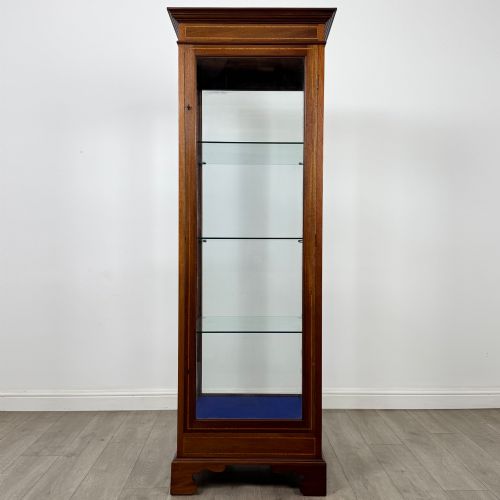
A mahogany shop counter cabinet brings commercial heritage directly into domestic or retail interiors through dedicated display designs. These pieces range from compact countertop cases to tall freestanding units and expansive serving counters.
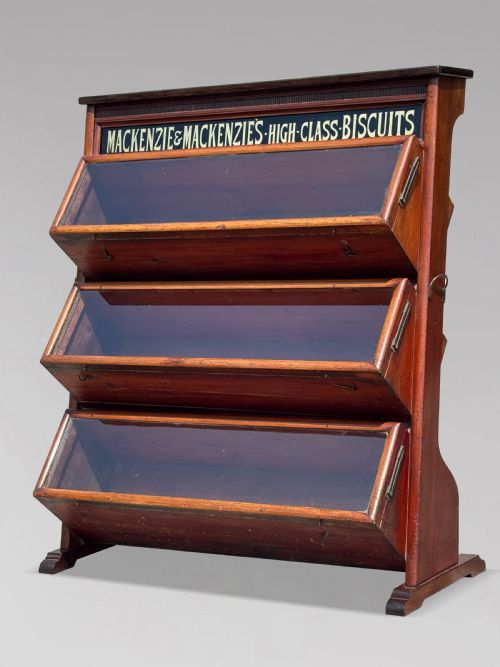
The selections span the Victorian era, the Edwardian period, and the 1920s, reflecting the golden age of high street retail fitting. Surviving examples often bear the names of prominent confectioners, chemists, and drapers on their glazing or timber frames.
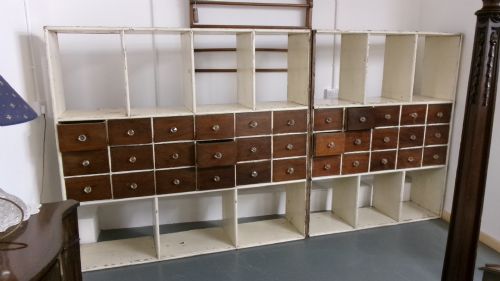
Many items combine functional storage with glazed viewing areas, including banks of drawers and specialised haberdashery or apothecary cases. Buyers will find variations from simple glazed boxes to elaborate bow front and pentagonal shapes.
Materials and construction
Makers utilised solid mahogany and select hardwoods for structural frames, ensuring sufficient strength to endure heavy daily retail use. Secondary timbers such as pine frequently appear on internal or concealed sections.
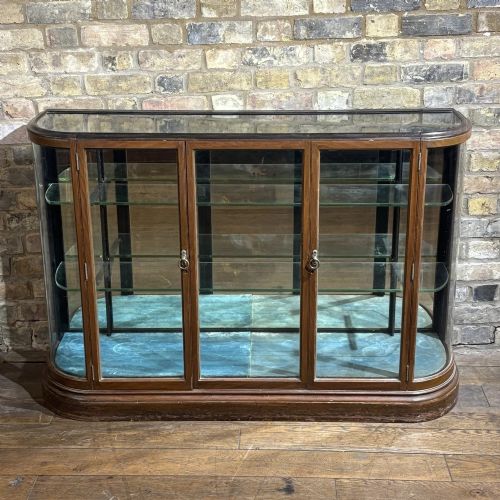
Large glass panels provide all-around visibility for merchandise, held securely within rebated timber frames. Brass hardware, including hinges, handles, and small plaques, complements the dark grain of the timber.
Mirrored interiors appear in specific configurations to amplify light and reflect the displayed goods toward the customer. Sign-written branding for historical brands is often applied directly to the glass or timber elements.
Several cabinets spent decades guarding sewing cottons and chocolate bars before retiring to domestic life.
Craftsmanship and proportion
The refinement of the timber joinery and the integrity of the original glass define the upper tier of these commercial fixtures. Pieces produced by specialised shopfitters display superior proportions and precise corner framing compared to utilitarian equivalents.
Original brass fittings and intact mirrored backplates elevate the historical importance of individual pieces. Surviving manufacturer plaques or authentic period advertising signage add significant character to the overall construction.
F. Sage & Co.·E. Pollard & Co. Ltd.·John Stow Ltd·Pollards
The Mahogany Shop Counter Cabinet Glossary
- Countertop cabinet
- A glazed display case designed to sit upon a retail counter for close customer inspection of small goods.
- Haberdashery case
- A specialised multi-drawer unit with glass fronts utilised for organising and displaying sewing cottons and small accessories.
- Apothecary box
- A lidded or front-opening chest traditionally used by chemists to store medicines, powders, and compounding ingredients.
- Bow end
- A curved glass or timber end profile that softens the rectangular geometry of a display counter.
- Shopfitter
- A commercial contractor responsible for designing and manufacturing interior retail furniture and counters.
Mahogany Shop Counter Cabinet: Frequently Asked Questions
What were mahogany shop counter cabinets used for?
Merchants utilised these fixtures to display high-value or delicate items such as chocolates, tobacco, and sewing supplies while protecting them from dust and handling.
The glass top and sides ensured prospective buyers had an unobstructed view of the wares while standing on the customer side of the counter.
How do I date a shop display cabinet?
Dating relies upon stylistic markers, timber characteristics, and structural assembly techniques typical of the Victorian, Edwardian, and 1920s commercial eras.
Maker plaques, original painted brand lettering, and historical hardware provide further clues to the exact decade of manufacture.
Are the advertising signs on these cabinets original?
Some pieces retain their original factory-applied or period sign-written branding for confectioners and chemists, while others feature later decorative applications.
Close inspection of the paint wear and its integration with the glass or timber helps distinguish period application from subsequent decoration.
How do I integrate a shop counter into a home?
These cabinets function effectively in living spaces, kitchens, or studies as focal display surfaces for collections, ceramics, or books.
The built-in glazing protects interior objects while the low profile of countertop models suits placement on existing furniture.