


Glass Fronted Shop Cabinet
Glass fronted shop cabinet pieces are utilitarian display fixtures built to showcase retail goods, sought after for their honest timber frames and generous glazing.
Glass Fronted Shop Cabinet
A glass fronted shop cabinet serves as a functional display fixture originating from commercial settings, designed to present merchandise clearly to customers. These pieces bridge the gap between utilitarian storage and decorative furniture, bringing distinct retail history into domestic spaces.
Commercial heritage appears in forms like haberdashery counters with multiple drawers and specialised brand display cases. Edwardian and Victorian examples dominate the selection, alongside later Art Deco and 1920s commercial designs.
Materials and construction methods
Makers utilised sturdy hardwoods such as mahogany, oak, and ebonised wood to build structural frames capable of supporting heavy glass panels and daily commercial use. Secondary timbers like pine appear in internal construction or simpler cabinetry.
Glazing forms the primary visual element, allowing uninterrupted views of contents from multiple angles while protecting merchandise from dust. Brass mounts, chrome detailing, and fabric linings complete the construction of these robust retail fixtures.
Design periods span the Victorian era, Edwardian period, 1920s, and Art Deco commercial styles.
Assessing quality in commercial cabinets
The hierarchy of quality rests on the integrity of the timber framing and the clarity of the original glazing. Pieces bearing maker stamps or identifiable commercial provenance stand apart from anonymous workshop builds.
Refinement shows in the joinery of drawer runs within haberdashery counters and the weight of brass or chrome hardware. Alterations such as later sign-writing or adapted surfaces alter the historical character of individual cabinets.
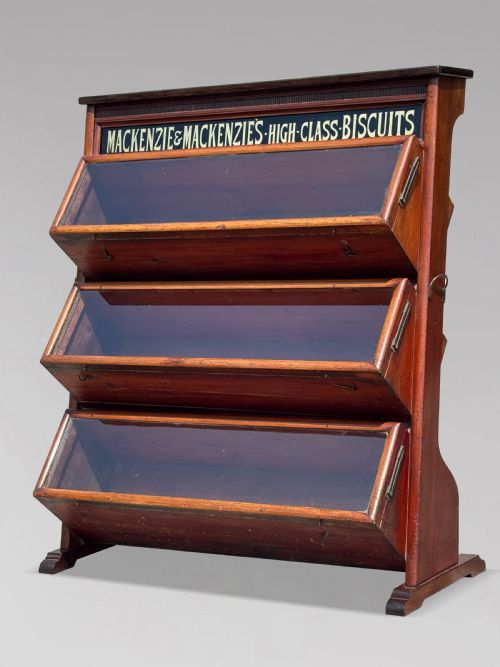
F. Sage & Co·Dudley & Co·Mackenzie's Biscuits·Ermen & Roby
The Glass Fronted Shop Cabinet Glossary
- Haberdashery counter
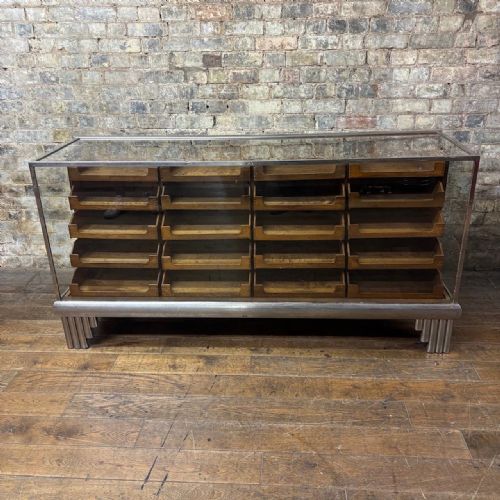
- A long shop fixture featuring multiple shallow drawers and a glazed top or front, originally used for selling sewing goods and small textiles. These units provide modular storage suited to modern domestic use.
- Ebonised wood
- Timber treated with a dark chemical finish to imitate costly ebony wood. This treatment was popular in Victorian and early twentieth-century cabinet making for creating high-contrast aesthetic frames.
- Bow front
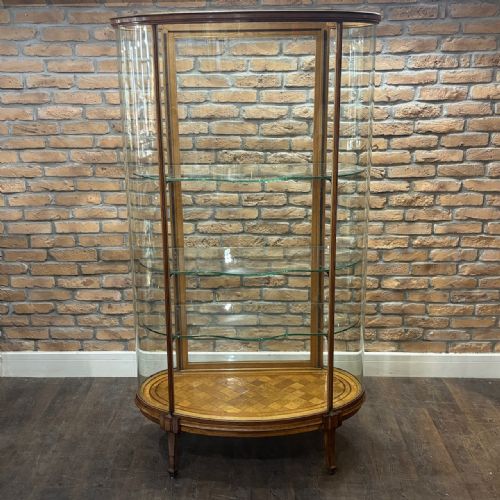
- A convex curved cabinet front that projects outward in a smooth arc. This shape increases internal display volume while softening the rectilinear geometry of standard shop fixtures.
- Counter top display cabinet
- A small glazed case designed to sit upon a shop counter for close customer inspection of high-value items. Many incorporate internal drawers or rear access doors for retail staff.
Glass Fronted Shop Cabinet: Frequently Asked Questions
What were glass fronted shop cabinets used for?
These cabinets served in nineteenth and twentieth-century retail environments to protect merchandise from handling while keeping goods visible to shoppers. Merchants used them for biscuits, sewing cottons, perfume, and haberdashery.
Today, the same glazed compartments suit the display of collections, ceramics, and textiles in domestic interiors. Their commercial durability ensures they withstand everyday use.
How do I date an antique shop cabinet?
Dating relies on identifying timber choices, hardware styles, and construction signatures such as dovetail joints and maker plaques. Victorian and Edwardian pieces often display heavier timber mouldings and brass fittings.
Later 1920s and 1930s examples introduce chrome hardware, streamlined frames, and Art Deco geometric detailing. Structural evidence and branded lettering provide further chronological markers.
Can I use a haberdashery counter at home?
Haberdashery counters function well as kitchen islands, sideboards, or workspace storage due to their flat timber tops and numerous shallow drawers. The glazed fronts allow stored items to remain visible.
Ensure floor space accommodates the elongated proportions typical of shop counters before placement. Interior clearance depths vary between drawer stacks and open display sections.
How should I care for timber and glass?
Maintain timber surfaces with appropriate wax or polish suited to oak, mahogany, or ebonised finishes, avoiding excessive moisture. Glass panels require standard non-ammonia cleaners applied to a cloth rather than sprayed directly near wood.
Protect internal fabric linings from direct sunlight to prevent fading over time. Check brass and chrome hardware periodically to ensure fixings remain secure.