
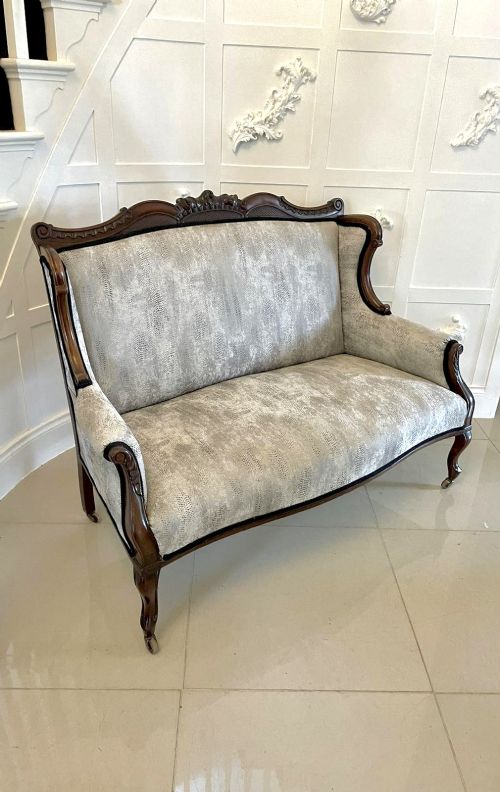
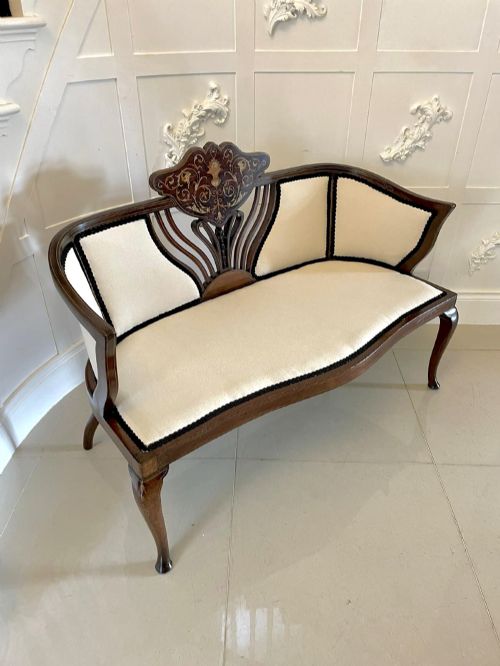
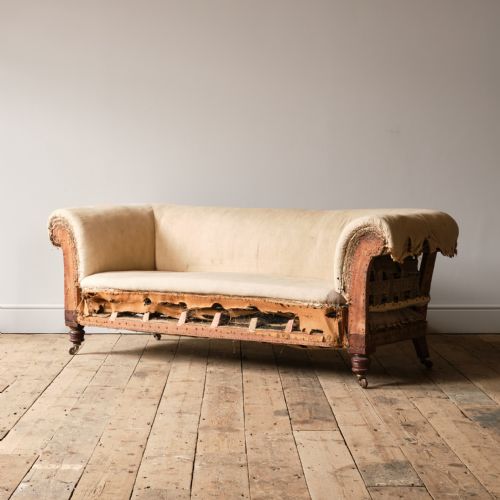
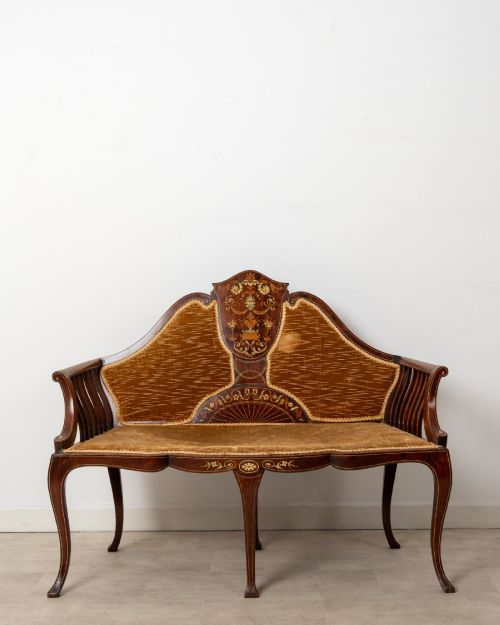
Mahogany Settee Sofa
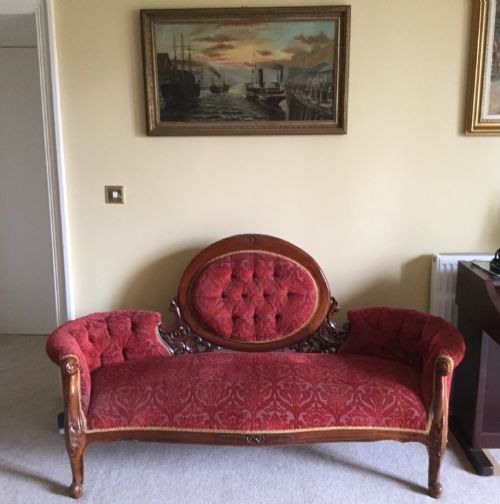
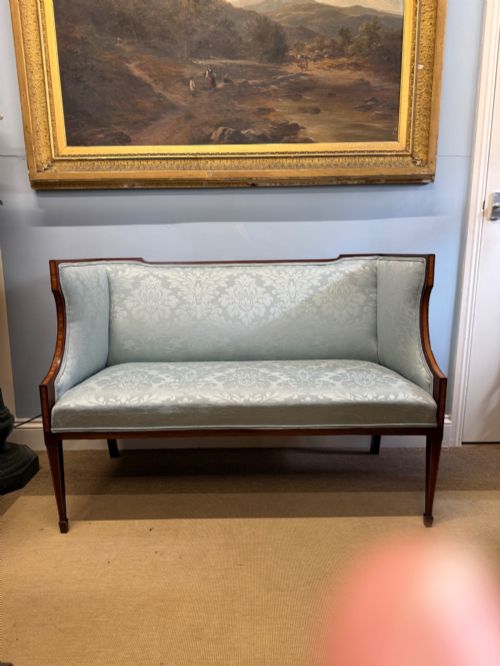
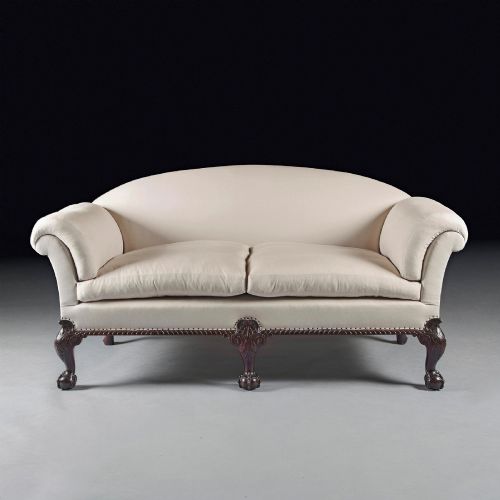
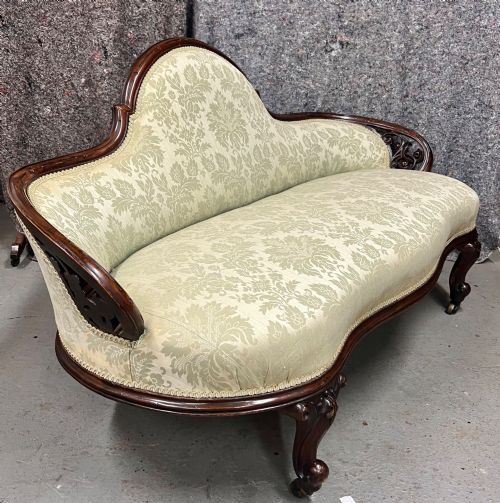
A mahogany settee sofa brings solid timber framing and traditional upholstery together, offering substantial seating with period character for a sitting room.

Mahogany Settee Sofa
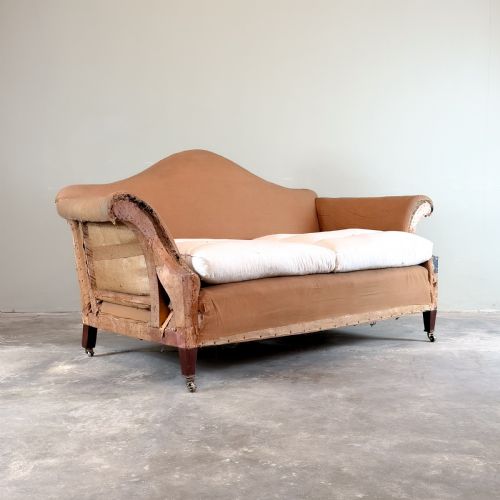
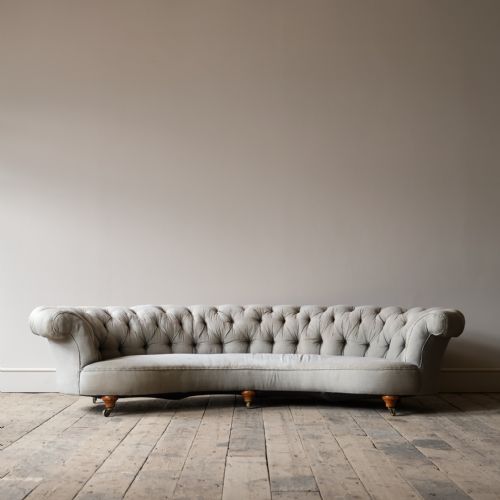
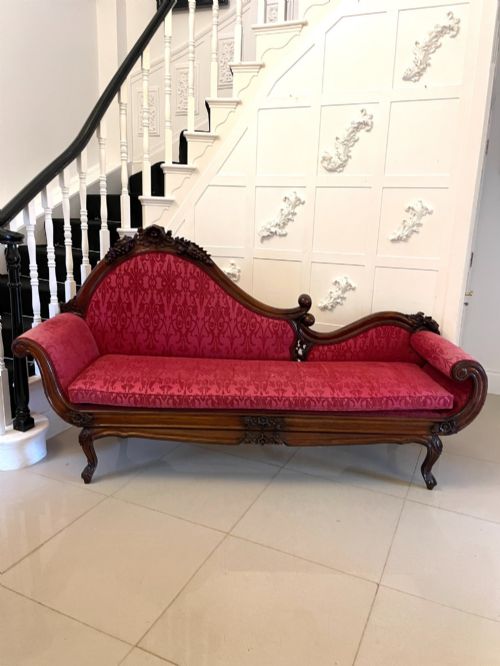
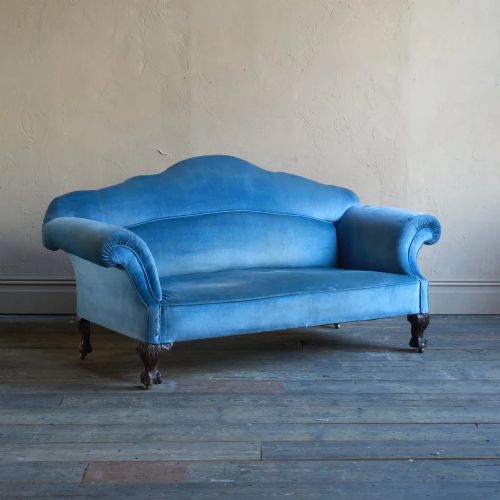
A mahogany settee sofa encompasses a broad range of nineteenth and early twentieth century seating, spanning Georgian, Regency, Victorian, and Edwardian eras. These forms include double-ended couches, scroll-end settees, camel back frames, and chaise longues.
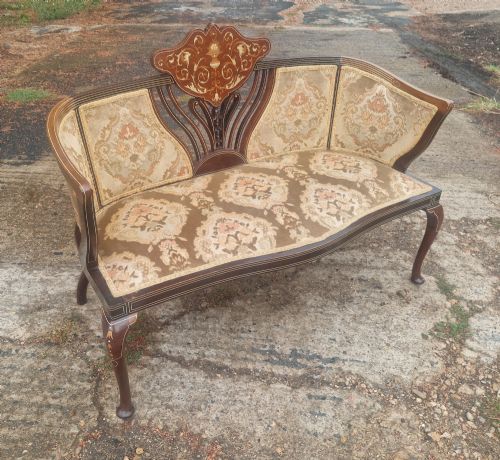
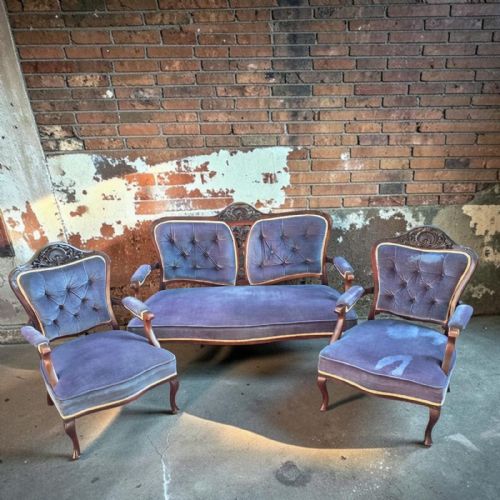
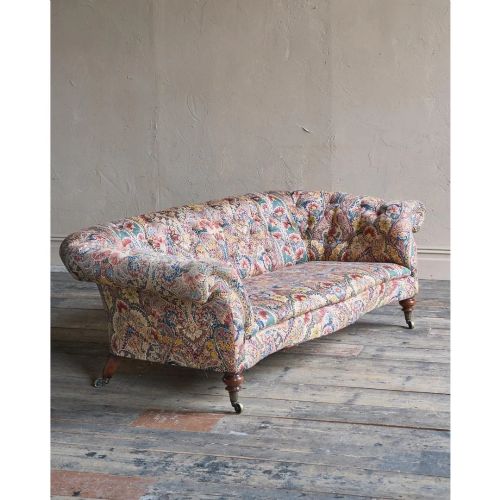
Victorian and Edwardian iterations dominate current selections, frequently featuring carved mahogany frames, inlaid satinwood details, and traditional sprung bases. Salon suites and individual parlor seats also appear alongside larger Chesterfield designs.
Originating primarily from British workshops, these items serve both formal reception spaces and intimate drawing rooms. Buyers encounter everything from compact window seats to large three-piece suites.
How they were made
Makers constructed these frames from dense timber, predominantly utilising solid mahogany alongside secondary woods like satinwood for decorative marquetry and inlay work. Brass castors frequently supported heavier legs, while structural support relied on hand-tied sprung bases.
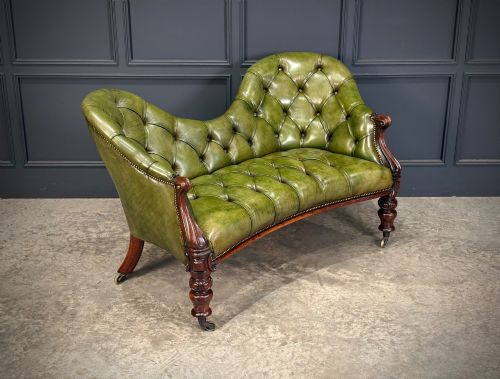
Upholstery techniques involved horsehair stuffing, hessian webbing, and deep buttoning finished with velvet, damask, leather, brocade, or cane panels. Frames showcased hand-carved motifs, ranging from plain scroll ends to elaborate ball and claw feet and Chippendale-style pierced splats.
Listings feature mahogany frames spanning the Georgian, Regency, William IV, Victorian, and Edwardian periods, alongside revival styles.
What varies in quality
Construction integrity separates standard production items from superior examples, particularly in the crispness of timber carving and the rigidity of the frame joints. Hand-carved ball and claw details and precise marquetry inlay indicate higher craftsmanship than simpler, mass-produced counterparts.
The degree of original upholstery survival and the fidelity of subsequent re-upholstery dictate historical integrity. Pieces retaining original leather, buttoning, or cane work command distinct attention compared to heavily altered frames.
Howard and Sons·C. Hindley and Sons·Hampton and Sons·J. S. Kinsey
The Mahogany Settee Sofa Glossary
- Chesterfield sofa
- A traditional upholstered design featuring rolled arms and a back of the same height, frequently finished with deep buttoning. This form provides formal upright seating.
- Chaise longue
- An elongated upholstered seat intended for reclining, often constructed with a single raised end and a supporting mahogany frame. These pieces originated as daybeds for domestic lounging.
- Bergere
- A closed-arm armchair or settee featuring cane-paneled sides and back, popular during the Edwardian period. This technique lightens the visual weight of heavy timber frames.
- Scroll end
- A sweeping, curved arm or terminal on a sofa or settee, characteristic of Regency and William IV periods. This design echoes classical Grecian furniture forms.
- Marquetry
- Decorative woodwork where thin slices of various timbers are fitted into a veneer pattern on the frame. This technique highlights Edwardian and Victorian cabinetmaking skill.
Mahogany Settee Sofa: Frequently Asked Questions
How do I identify a Regency sofa?
Regency pieces typically exhibit classical architectural lines, scroll ends, and dark mahogany grains without heavy Victorian ornamentation. They often date from the early nineteenth century and lean toward austere, refined proportions.
Look for sabre legs, brass mountings, and unadorned timber surfaces that reflect the influence of classical antiquity on British cabinetmakers.
Were these sofas used in bedrooms?
Smaller variations, such as window seats, end-of-bed settees, and tub sofas, were frequently placed in private dressing rooms and upper chambers. They offered convenient seating for removing footwear or resting.
These pieces often feature lighter frames, satinwood inlay, or cane paneling, distinguishing them from heavier ground-floor salon suites.
What is a salon suite?
A salon suite comprises a matching set of seating furniture, usually combining a settee sofa with several armchairs or matching chairs. These groupings furnished formal Victorian and Edwardian reception rooms.
Surviving sets share identical carved mahogany frames, woodwork details, and upholstery fabrics, designed to present a unified decorative scheme.
How do I care for antique leather upholstery?
Antique leather requires gentle cleaning with a damp cloth followed by specialised leather dressings to prevent the hide from drying and cracking. Avoid modern chemical solvents that strip natural patinas.
Maintaining stable room humidity preserves both the supple quality of the leather and the integrity of the underlying horsehair stuffing and wooden frame.