
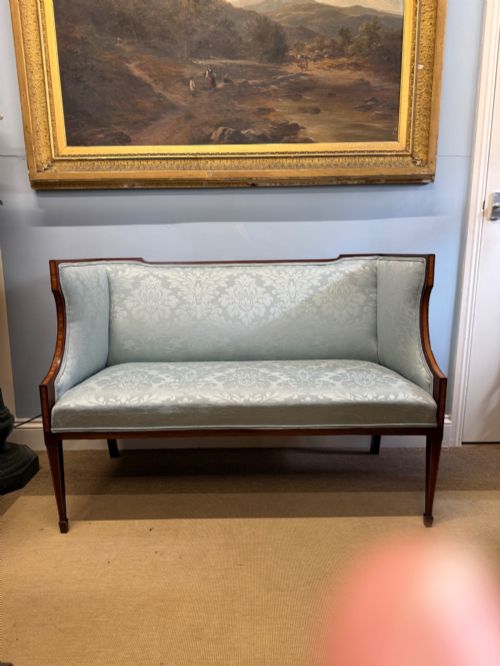


Edwardian Inlaid Loveseat
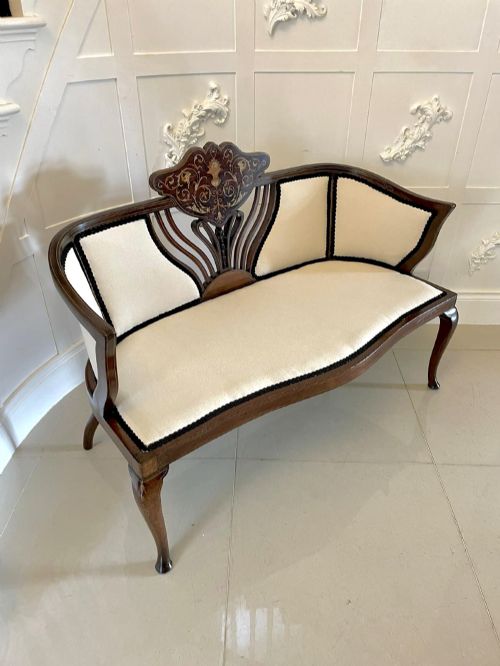
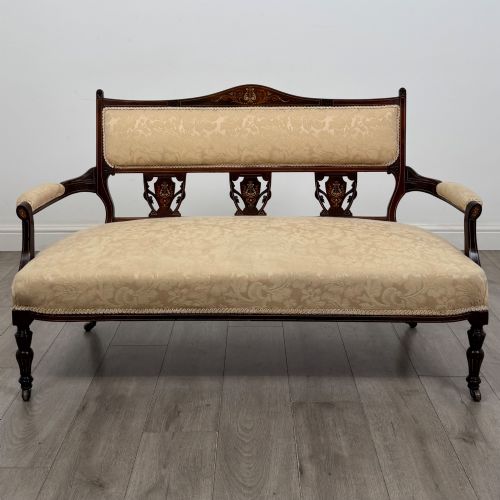
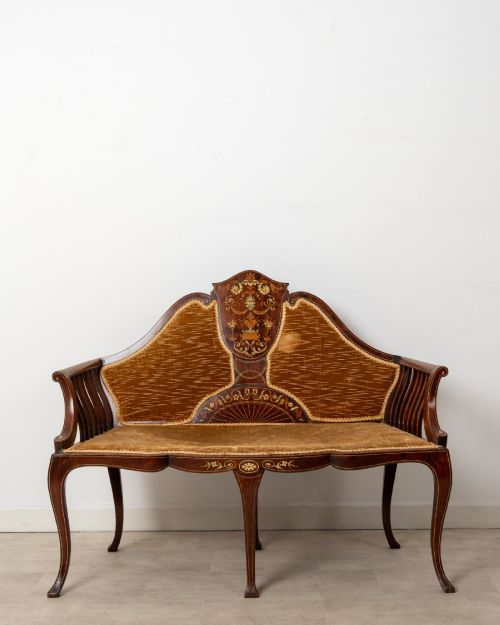
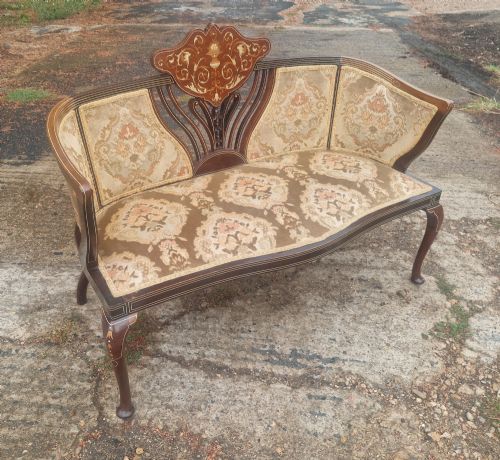
An edwardian inlaid loveseat is a compact two-seater sofa combining period elegance with intricate woodwork, offering charming seating for compact drawing rooms.

Edwardian Inlaid Loveseat
An edwardian inlaid loveseat sits within a tradition of compact seating that spans the late nineteenth century into the early twentieth century. You will encounter pieces described variously as settees, salon sofas, and two-seater sofas originating from the Victorian, late Victorian, and Edwardian periods.
The form most frequently met on this page is the Edwardian mahogany settee, often enhanced with satinwood inlay or marquetry. These smaller settees and end-of-bed sofas provide intimate seating while displaying the refined revival styles popular at the turn of the twentieth century.
How they were made
The primary structural timber across these pieces is mahogany, frequently paired with satinwood for contrasting details. Craftsmen utilised marquetry inlay and satinwood inlay to create delicate decorative motifs along the frames and backrests.
Upholstery forms an essential part of the construction, with historical examples employing fabric upholstery and damask upholstery. Brass components also appear occasionally on frames and fittings to complete the piece.
Several pieces are specifically noted as end-of-bed sofas, proving that Victorians knew the luxury of lounging before their morning tea.
What varies in quality
Quality in these settees rests primarily on the crispness and precision of the woodwork and inlay. Sharply defined marquetry and harmonious timber selection distinguish finer examples from standard production pieces.
The sophistication of the stylistic revival also dictates value, particularly where cabinetmakers blended Sheraton Revival motifs with Edwardian Art Nouveau influences.
The Edwardian Inlaid Loveseat Glossary
- Loveseat
- A small upholstered sofa designed to seat two people comfortably. These pieces are also catalogued as settees or salon sofas.
- Inlay
- A decorative technique where contrasting woods like satinwood are inserted into recesses within the mahogany base. This creates flat, ornate patterns across the timber surface.
- Marquetry
- An elaborate form of inlay utilising various wood veneers to form pictorial or geometric designs. It differs from simple linear stringing by creating complex pictures.
- Damask
- A reversible figured fabric traditionally used for heavy upholstery. It provides a patterned, textured finish suited to period seating.
- Sheraton Revival
- A late nineteenth-century design movement inspired by the lightness and classical ornamentation of eighteenth-century cabinetmaker Thomas Sheraton. Pieces in this style feature delicate legs and restrained inlay.
Edwardian Inlaid Loveseat: Frequently Asked Questions
Where did people put these small sofas?
These compact settees were designed for drawing rooms, parlours, and private bedrooms where full-sized furniture would overwhelm the space. They offered a comfortable seat for intimate conversation or resting at the foot of a bed.
Today, they serve a similar function in modern homes, fitting easily into alcoves, landings, or smaller reception rooms without dominating the floor plan.
How do I identify an Edwardian piece?
Edwardian seating typically displays lighter proportions, brighter mahogany finishes, and refined satinwood inlay compared to earlier Victorian furniture. The decorative vocabulary often draws on Sheraton Revival lines or subtle floral motifs.
Pieces from this era feel airier and less heavy than their mid-nineteenth-century predecessors, reflecting changing domestic tastes towards brighter interiors.
Can I use these for everyday seating?
While structurally sound timber frames support regular use, antique upholstery may require careful treatment or complete restoration. Many buyers choose to commission professional re-upholstery to match their interior scheme.
Once properly restored with modern supportive interiors beneath traditional fabrics, they function reliably as practical daily seating in low-traffic areas.
What is the difference between a settee and a sofa?
In historical terminology, the words are often used interchangeably, though settee traditionally implies a lighter wooden frame with partial upholstery. Sofa can denote a more heavily cushioned and completely upholstered structure.
On this page, both terms describe the same compact two-seater format designed for refined domestic spaces.